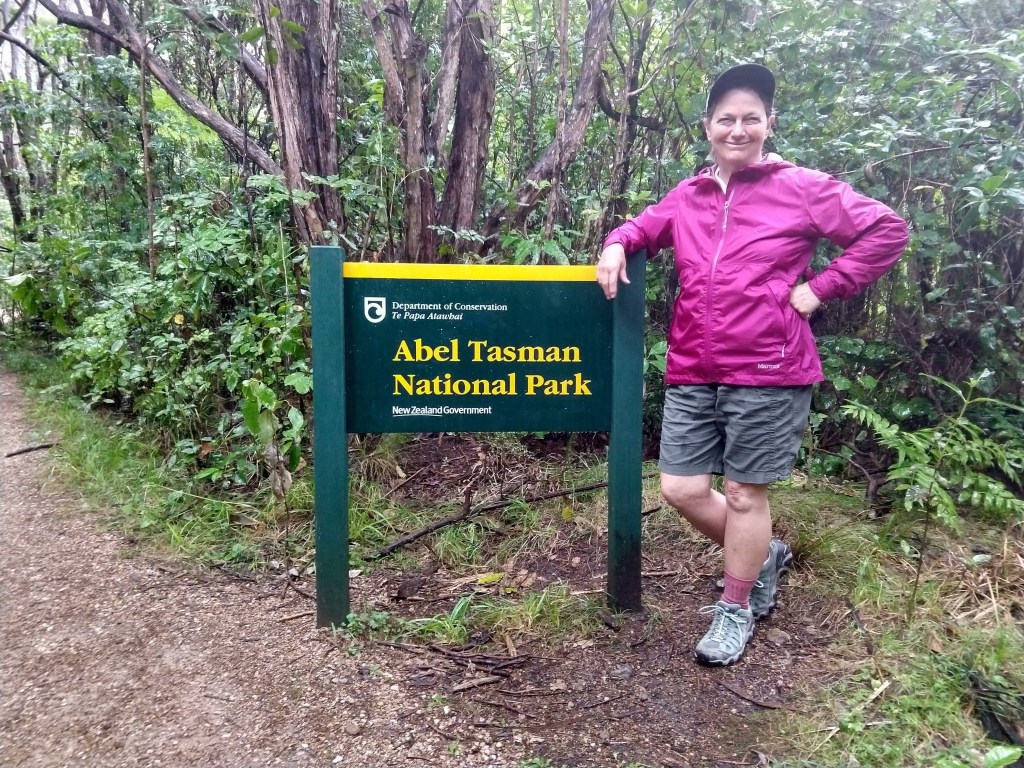
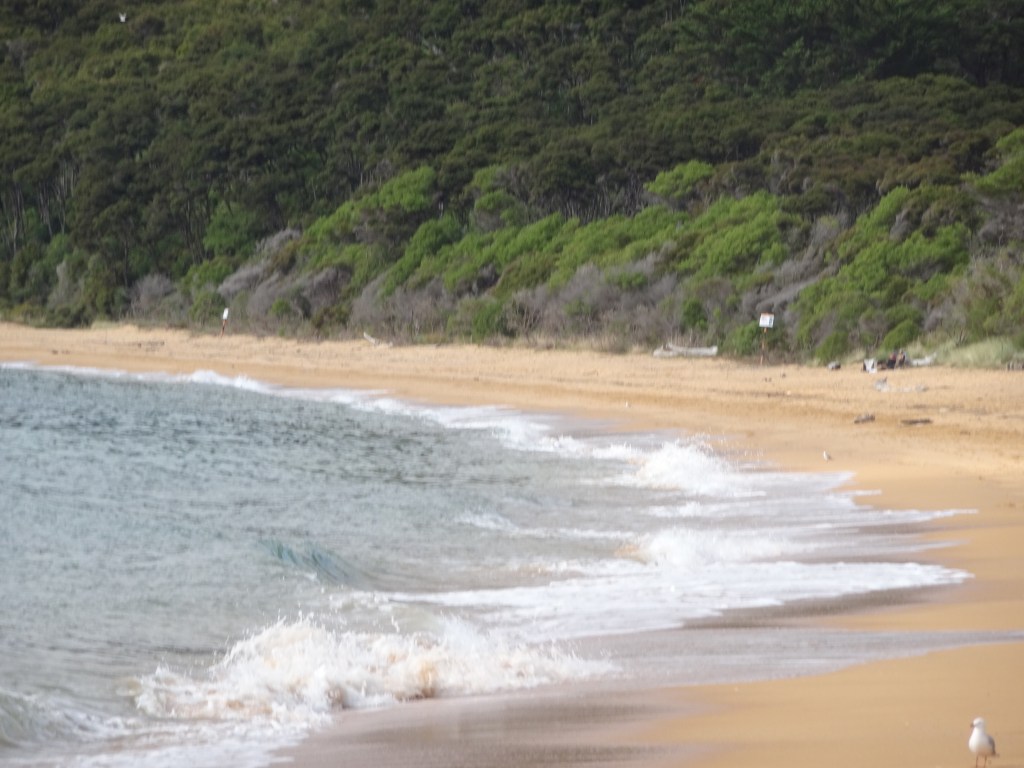
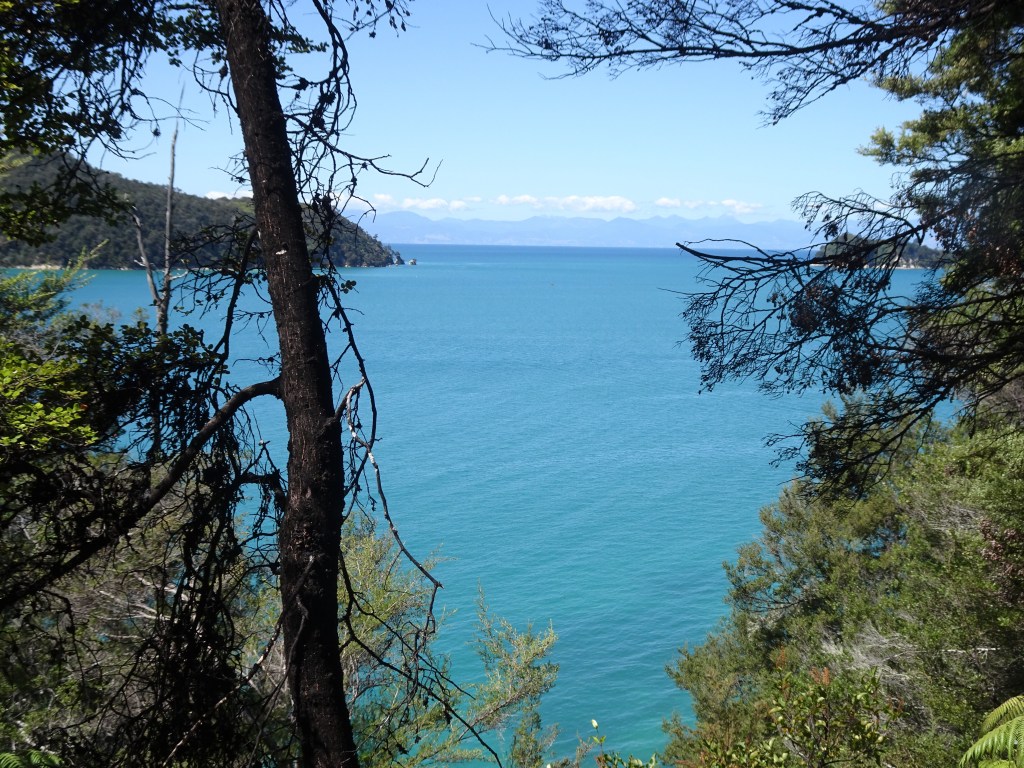
The biggest quandary we had during our five days at Pohara Beach was whether to stay home and walk and sit and watch the tide come in and go out on our beautiful beach, or to head out in the car and explore the region and see other places. We stayed in a little beach cabin right on Pohara Beach, just outside of Abel Tasman National Park. The park is the most visited park in New Zealand, even though it’s one of the smallest. It is a powerhouse of beauty and activity. The coast is a world wide magnet for kayakers. It is turquoise water up against forested headlands, bays, and beaches. We kayaked and hiked, on the coast and in the mountains, walked on tidal mudflats and on raging open beaches, and we still had time for sunset walks on our beach. We were sad to leave.
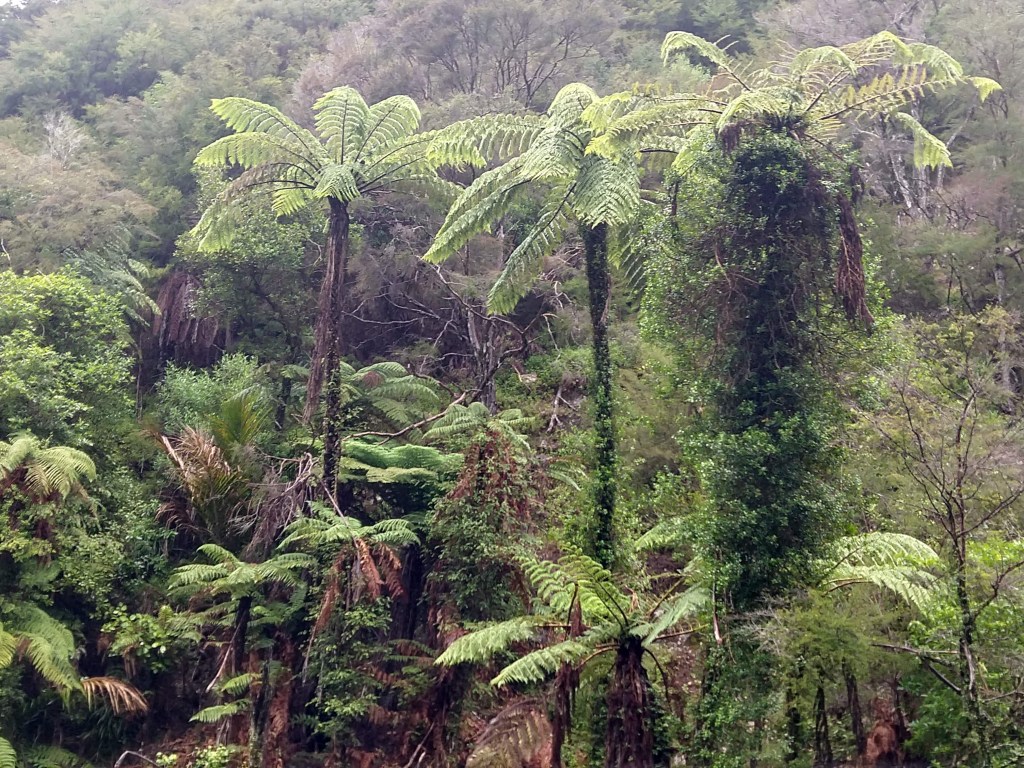
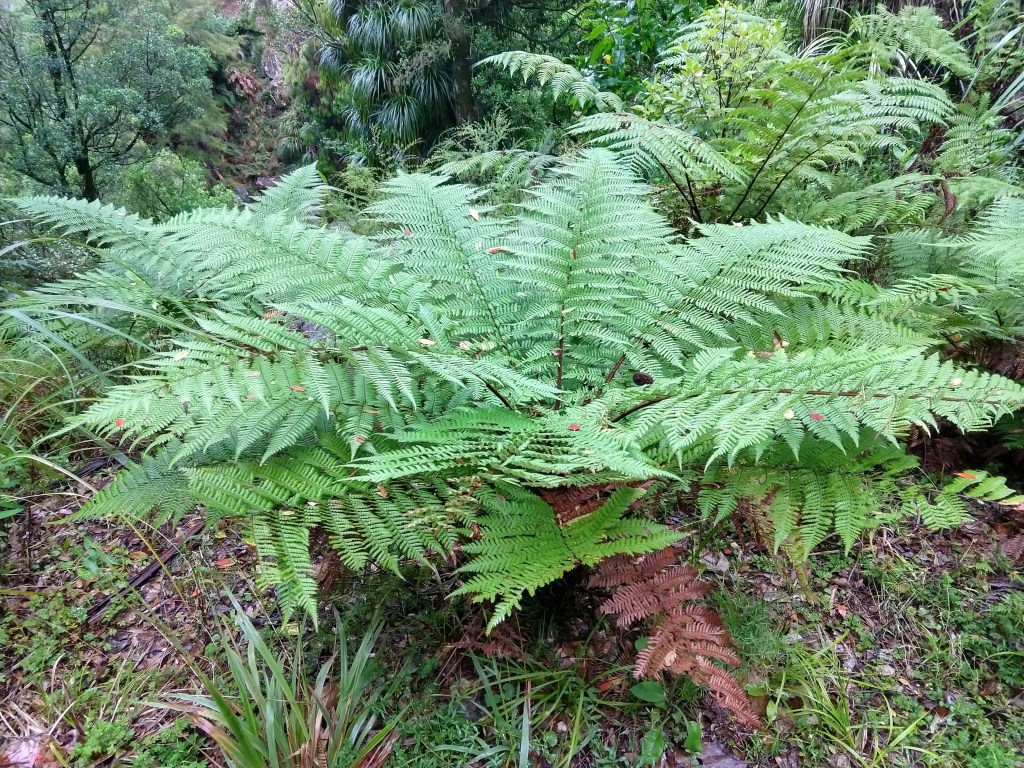
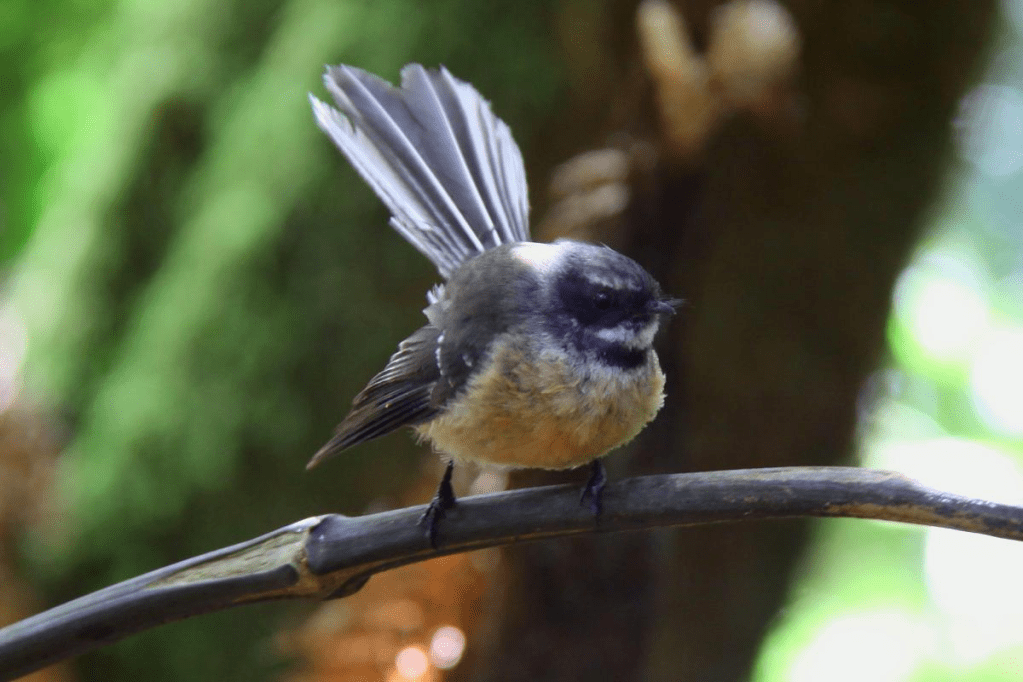
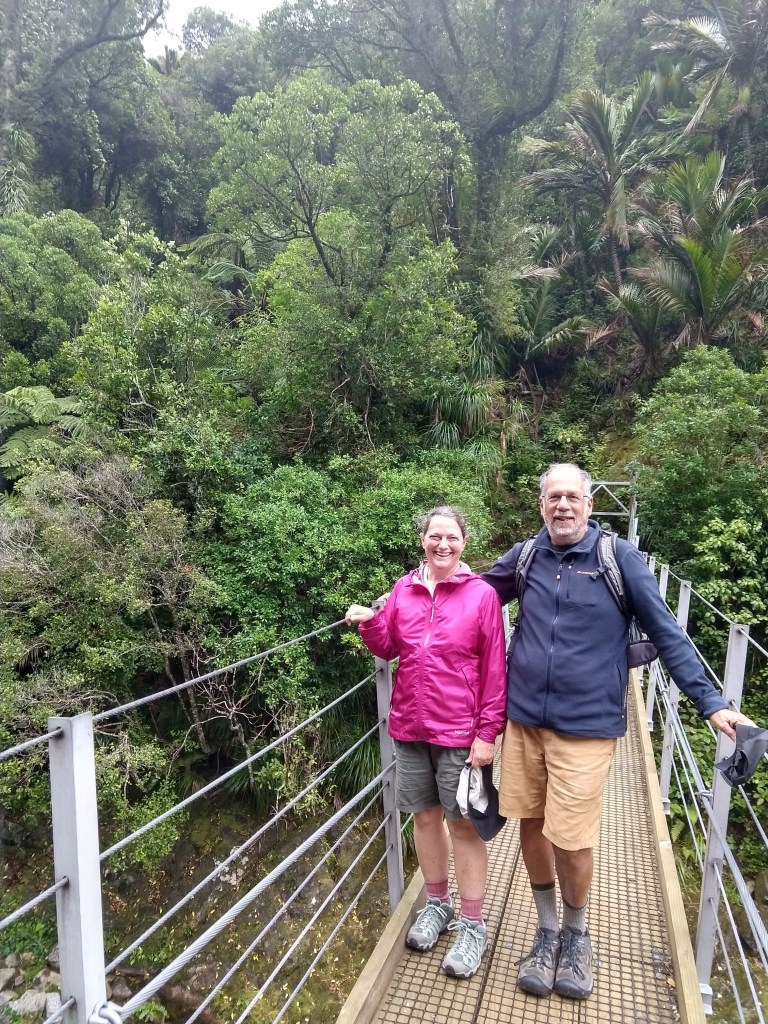
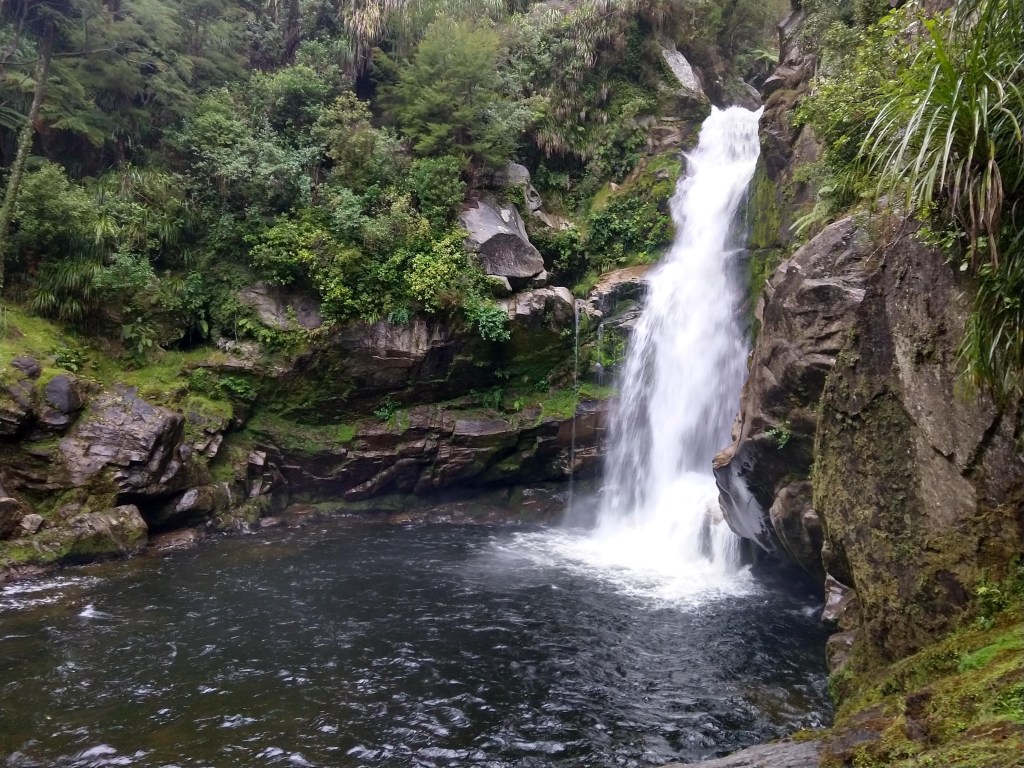
Wainui Falls is a waterfall in the park that you get to by a half-hour walk through the forest. The forest itself is very tropical and even prehistoric looking, with fern trees and silver ferns, and little fantails flitting through the trees. We took advantage of a rainy, windy day to go up there.
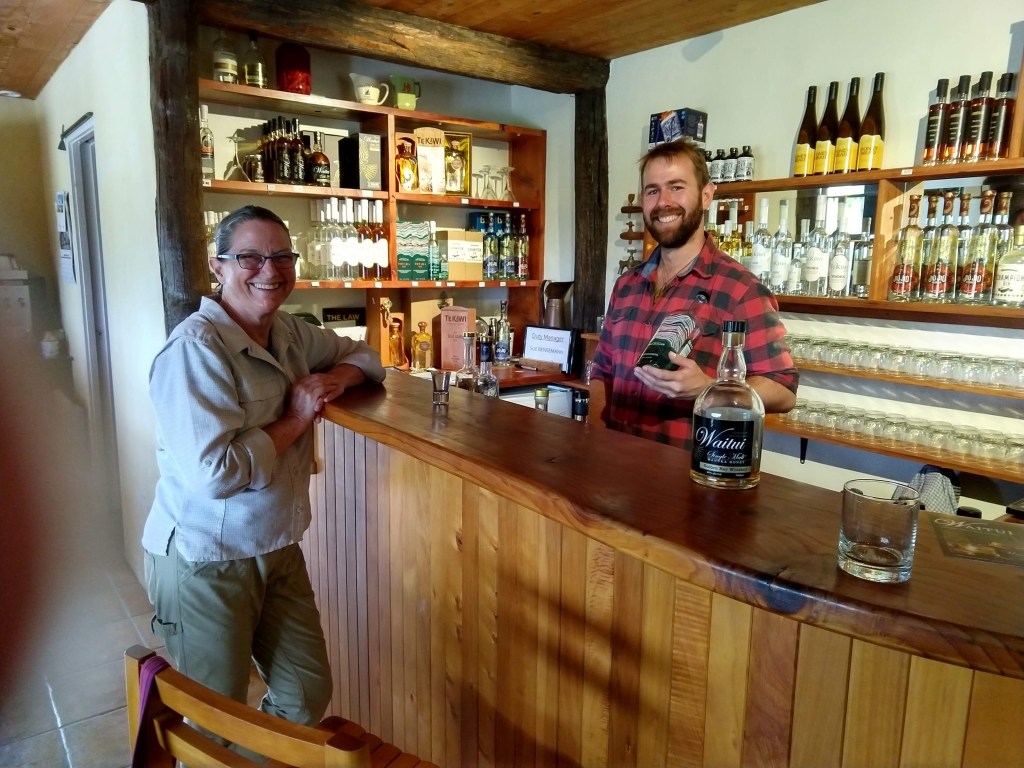
Another good rainy day activity is going to the local distillery. The town of Pohara doesn’t have much—a couple of coffee shops and restaurants, and that’s it. It is, however, also the home of Kiwi Spirit Distillery, which makes three kinds of gin, some vodka, and some great whisky. We stopped by and talked with Jeremy and tasted some of their products. Monica was impressed with the gin, I was impressed with the whisky.
In Search of Birds
The northwest corner of the South Island is a spectacular haven for shorebirds. There is a lot of protected shallow water, with enormous tidal effect, which means in some cases, during low tide, there are kilometers of mud flat. Along the southern edge of Farewell Spit, which protects much of Golden Bay from the open ocean, the mudflats extend seven kilometers during low tide, then fill right back up with the incoming tide. The spit itself is 26 kilometers long above the ocean, and many more kilometers below the surface. We could see it from our beach, about thirty kilometers in the distance. The spit is dear to the hearts of New Zealanders, because it totally looks like a Kiwi. (The bird, that is.)
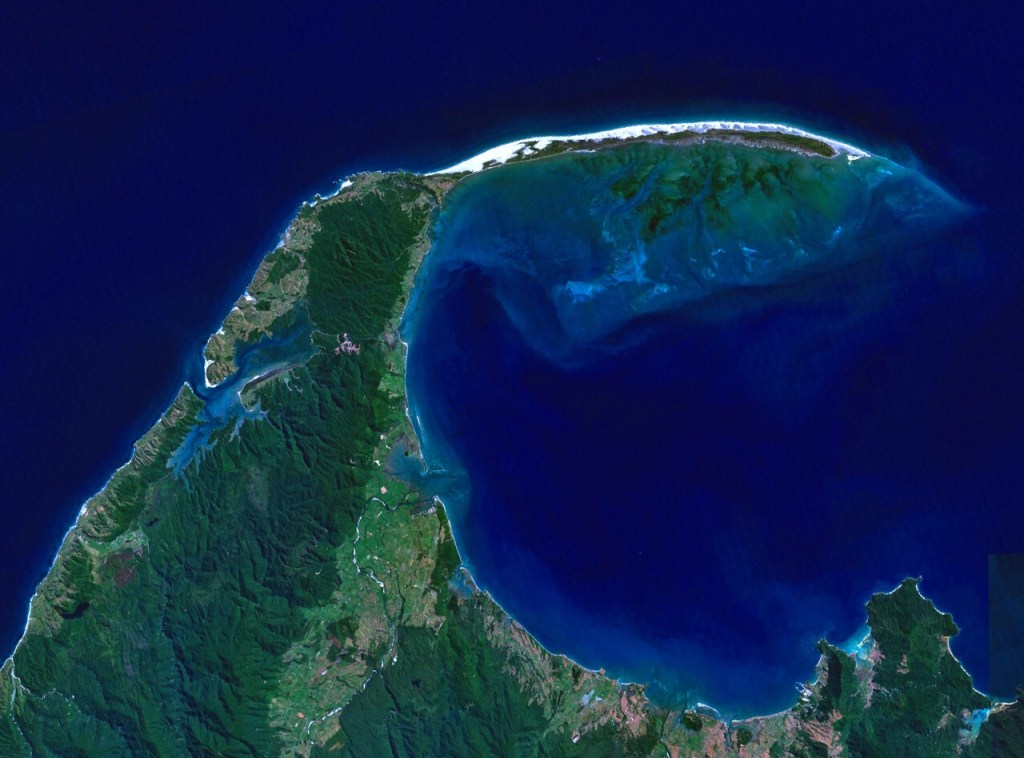
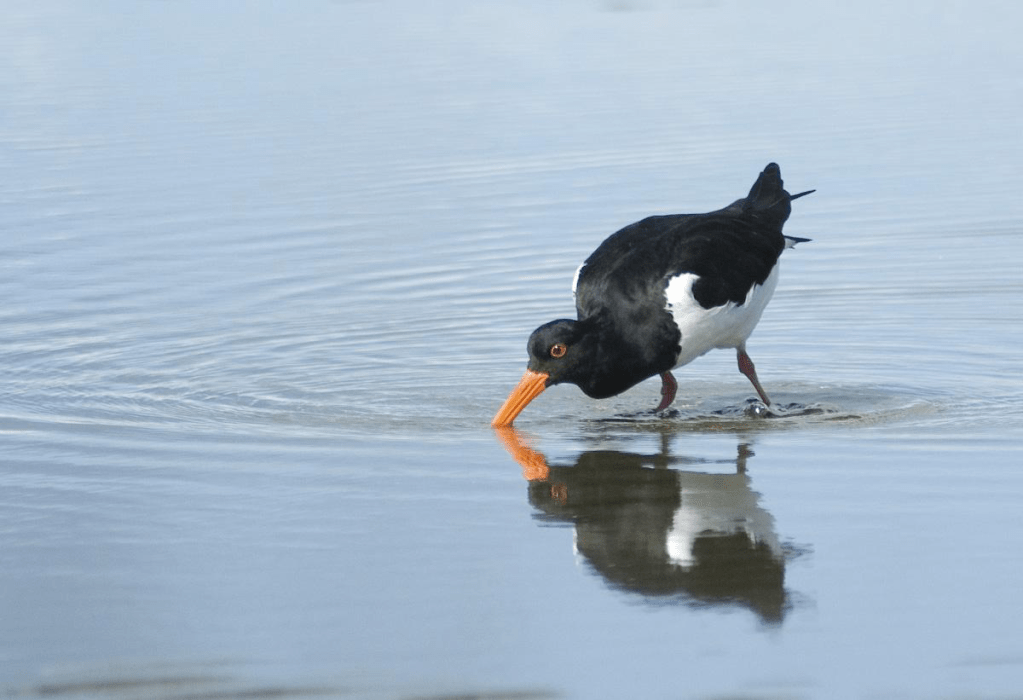
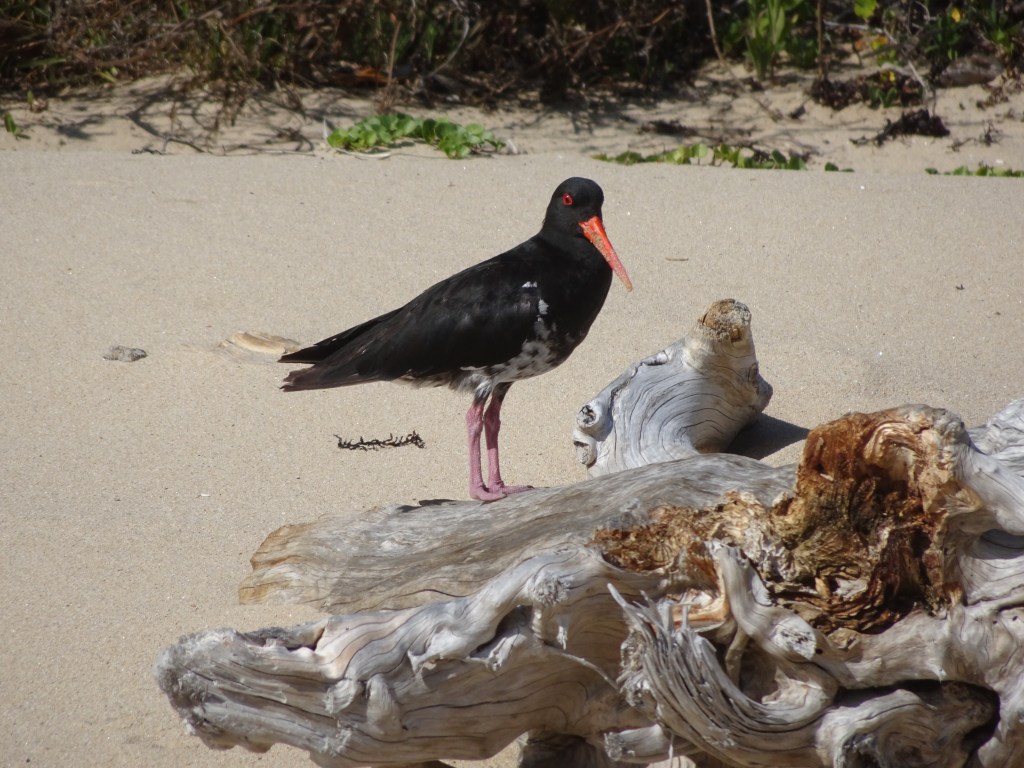
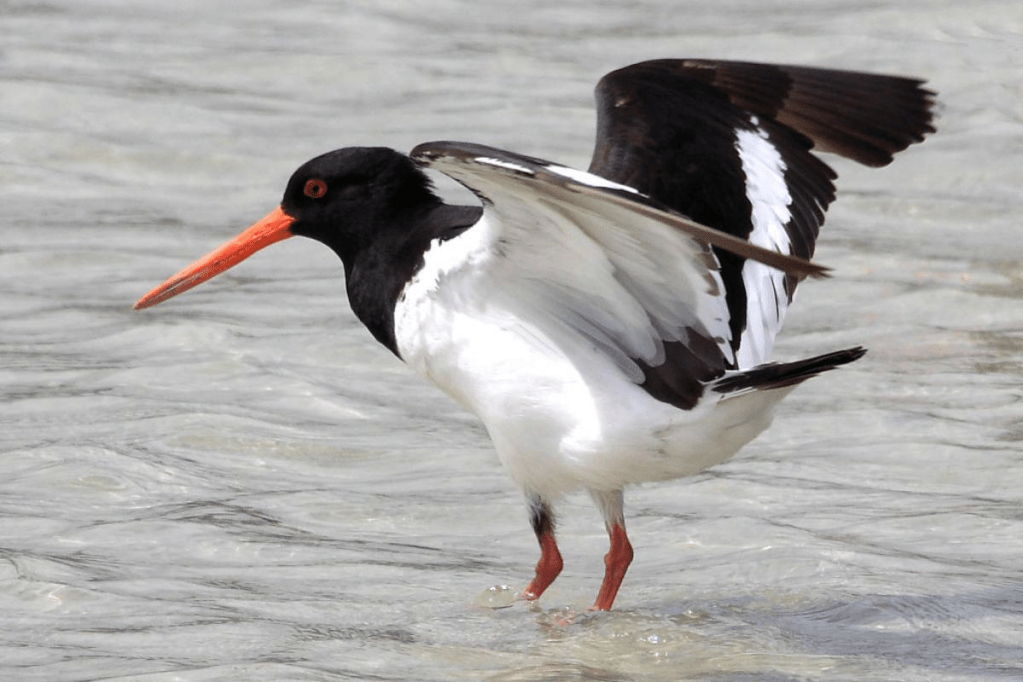
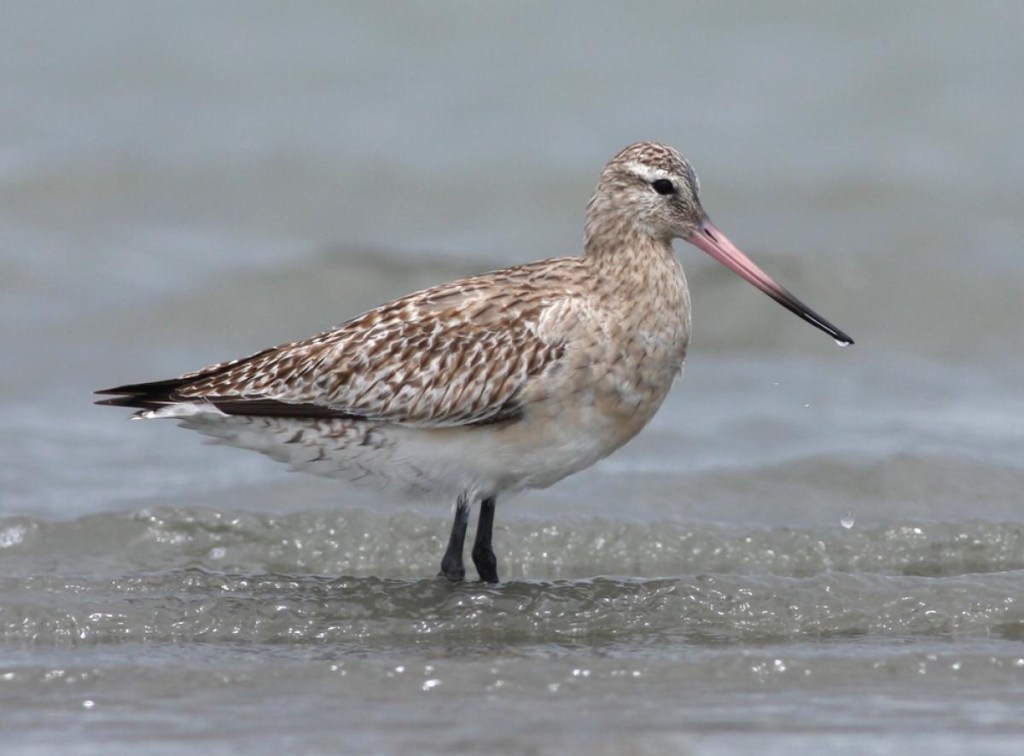
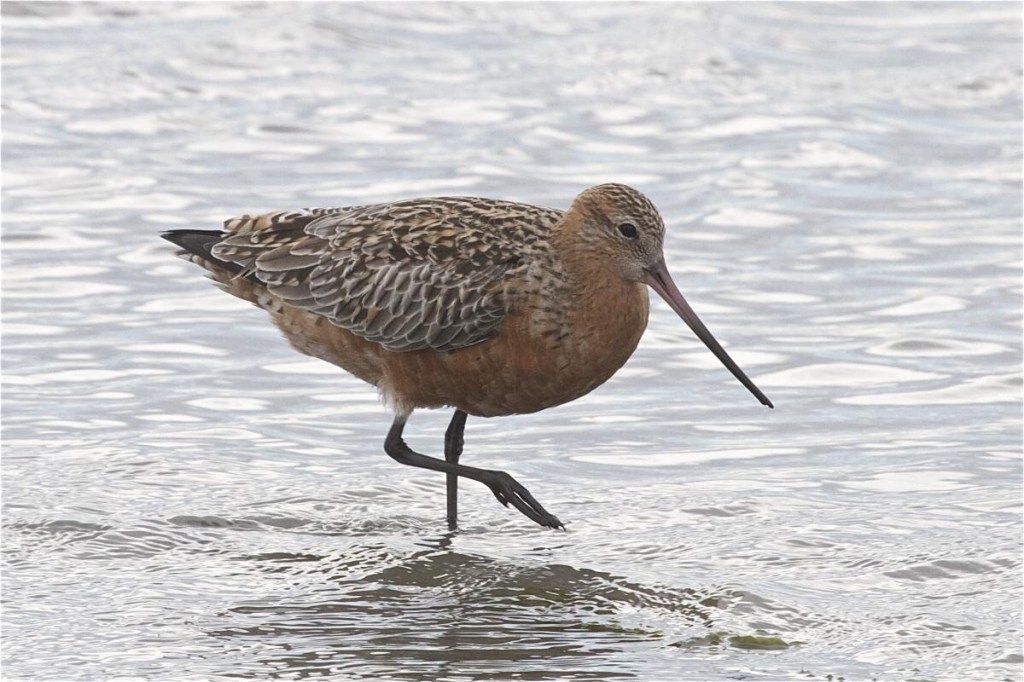
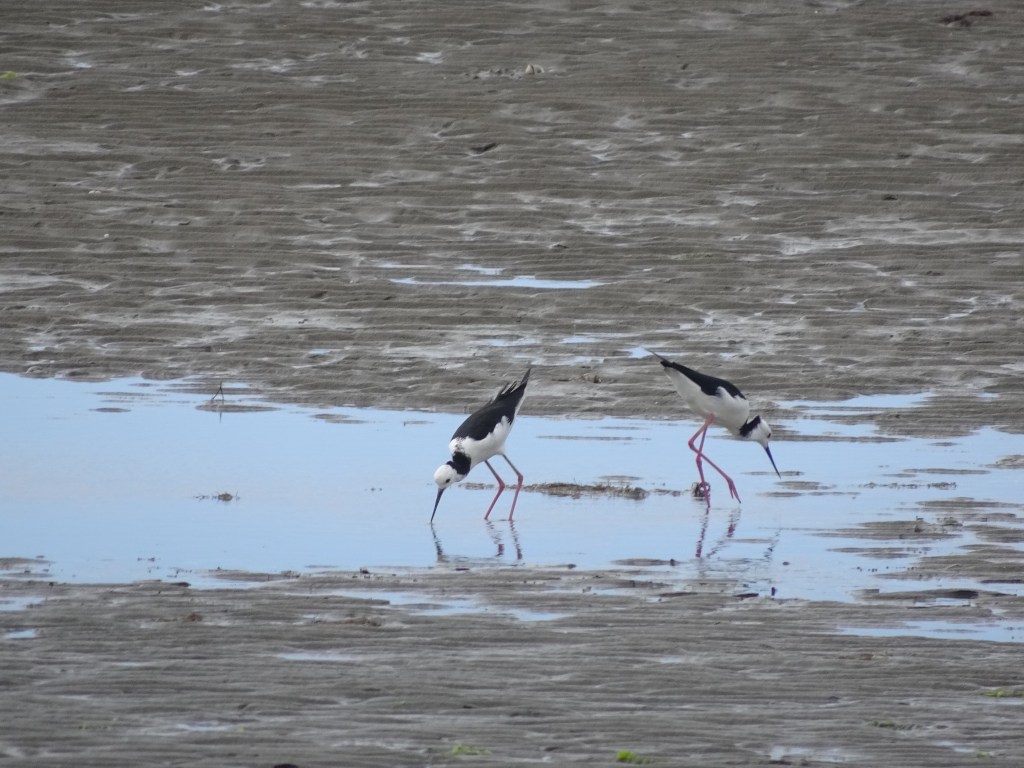
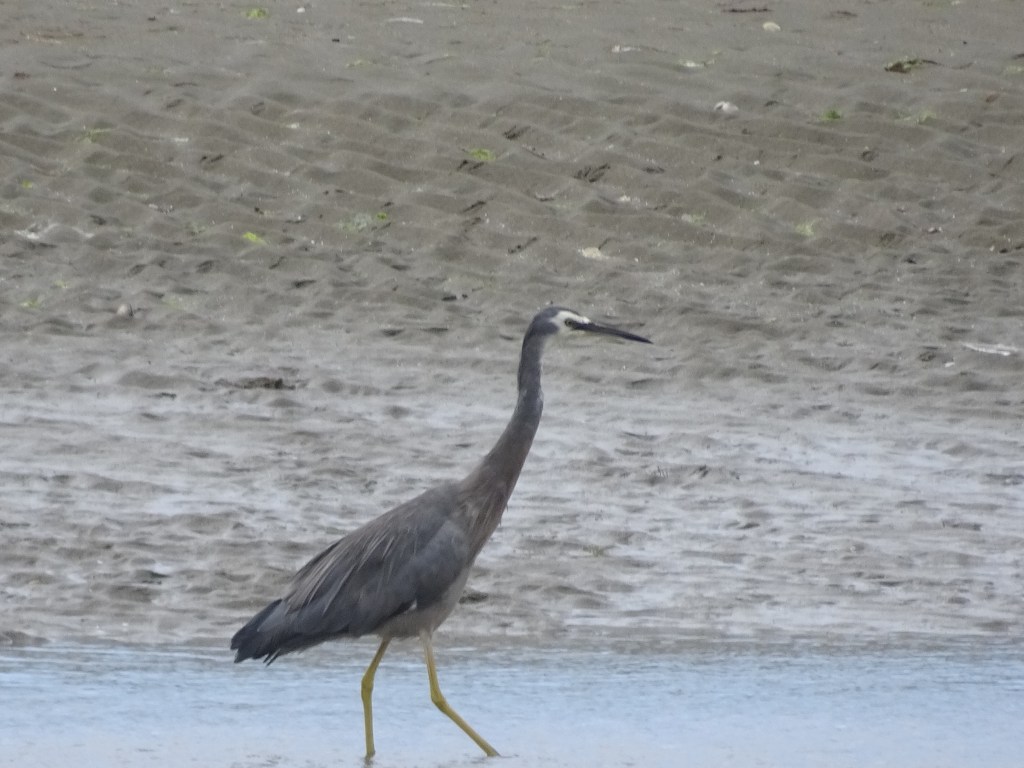
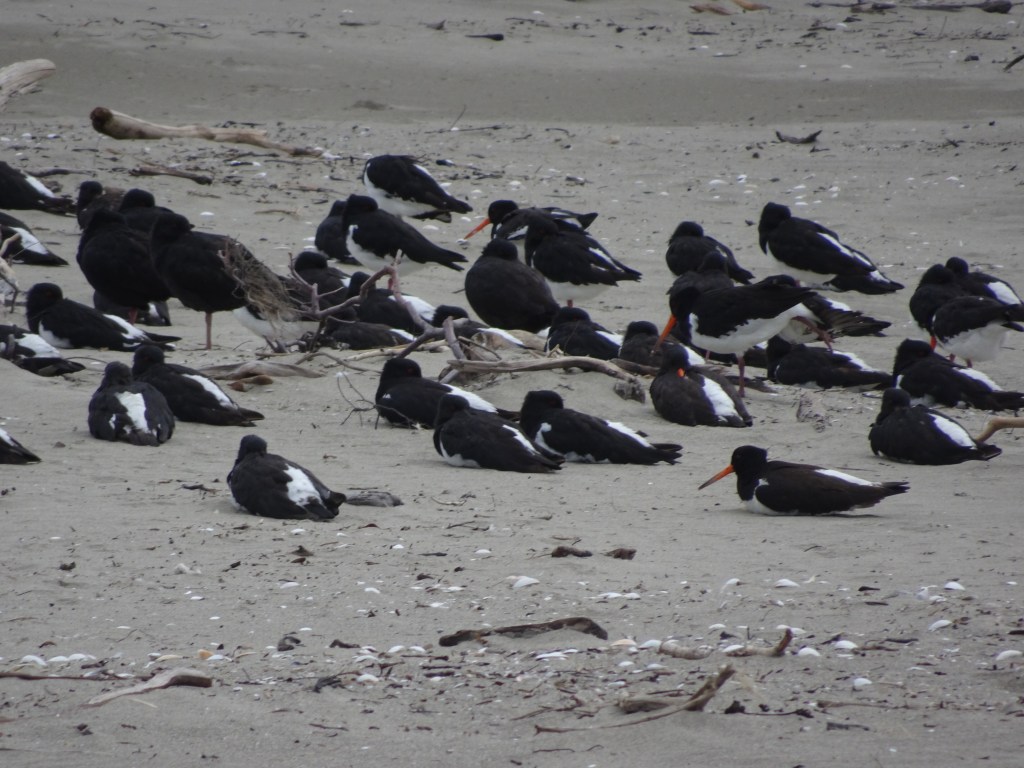
We went up to Farewell Spit, You aren’t allowed to walk very far out on the spit unless you are with one specific tour company called Farewell Spit Eco Tours. They will take you out on a four-wheel drive bus, and there are colonies of bar-tailed godwits and gannets out there. We considered it, but decided that six and a half hours on the bus was too long. Maybe next time. Colonies of godwits… Instead, we stopped at inlets and bays along the way, during low tide, and we spotted godwits, along with white-faced herons, pied stilts, and hundreds of oystercatchers. There are two kinds of oystercatchers in New Zealand—the variable oystercatcher and the South Island Pied Oystercatcher. The SIPO is the most abundant. They were on every beach. We see oystercatchers in Oregon, but they are all black. It is very striking to see the black and white.
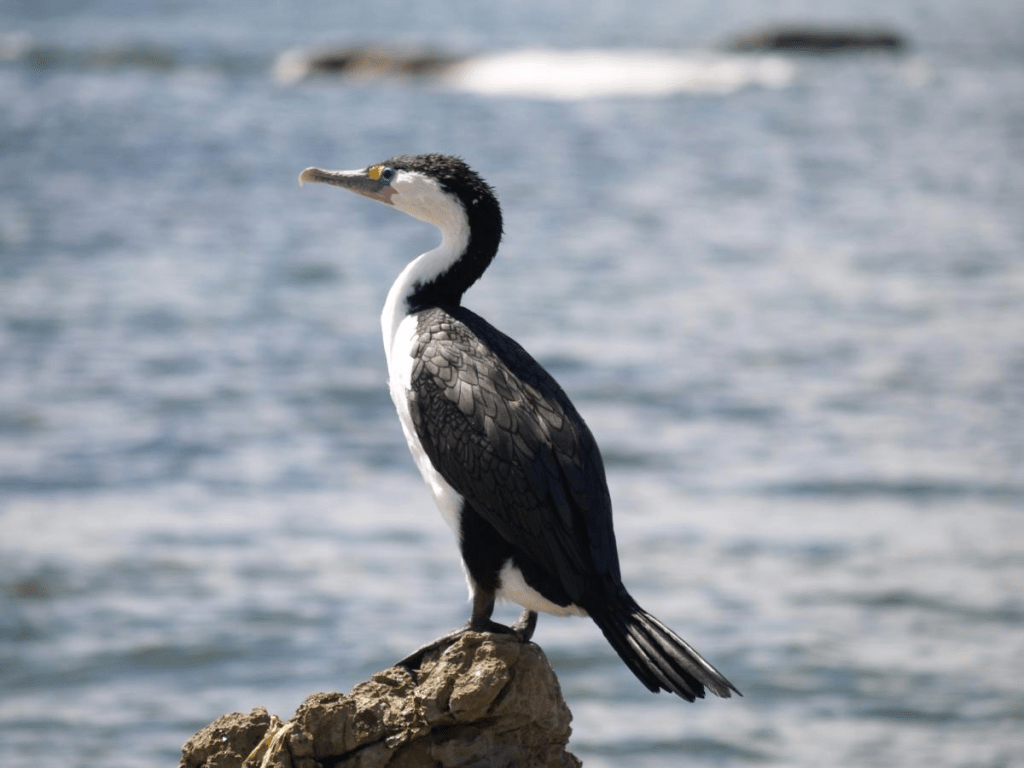
Pied shags are another example of familiar birds looking a bit different. In North America, we know cormorants as heavy sea and water birds. In New Zealand, the cormorants are just a bit different, they are called shags, like in Europe , and there are lots of different kinds. Pied shags are the most common, but there are black shags, little shags, little black shags, New Zealand King shags, and a couple more. We saw pied shags everywhere.
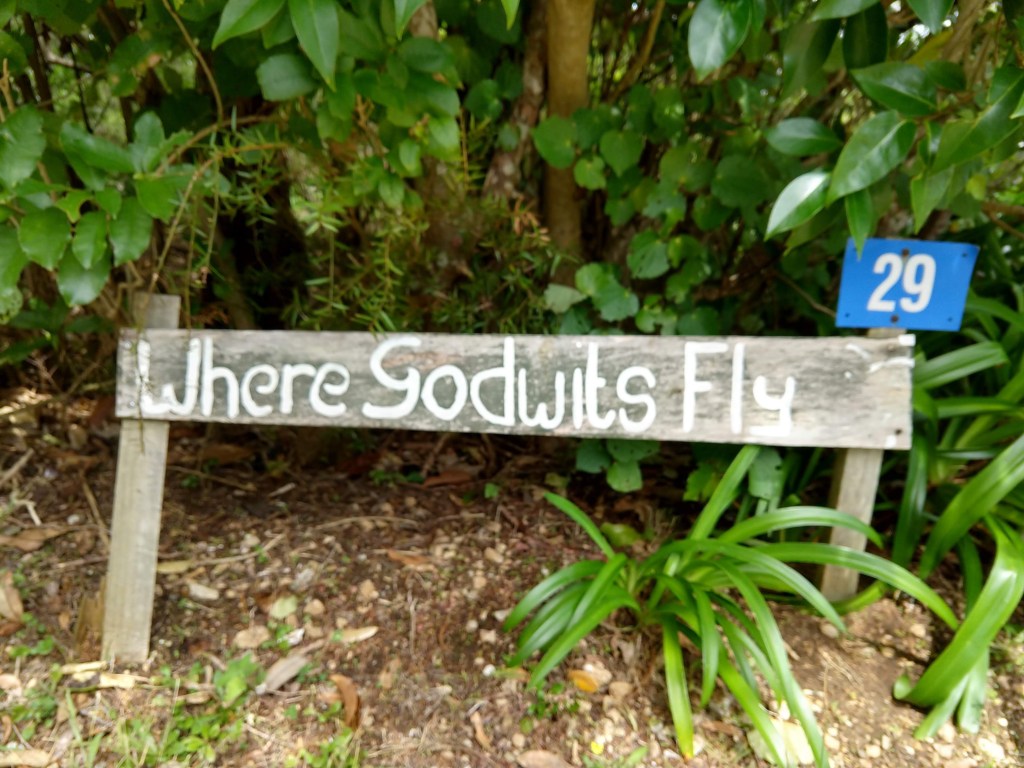
Bar-tailed godwits are super-birds. We saw them on our beach, Pohara, and on other beaches in Abel Tasman and on the way to Farewell Spit. They breed in Alaska in June, then they fly to New Zealand in September or October. They do not land or touch down on the water. It is the longest non-stop flight of any bird, around 8000 miles. They do it in seven to nine days. Then they live in New Zealand until March. In March, they fly to China. In June they fly to Alaska, breed and come back to NZ. On the past few years, it is estimated that 80,000 birds have made the trip. We saw them hanging around with the oystercatchers. Now it is mid to late February, and they are fattening themselves up for the flight north. Soon, they’ll gather into groups and take off.
Wharariki Beach
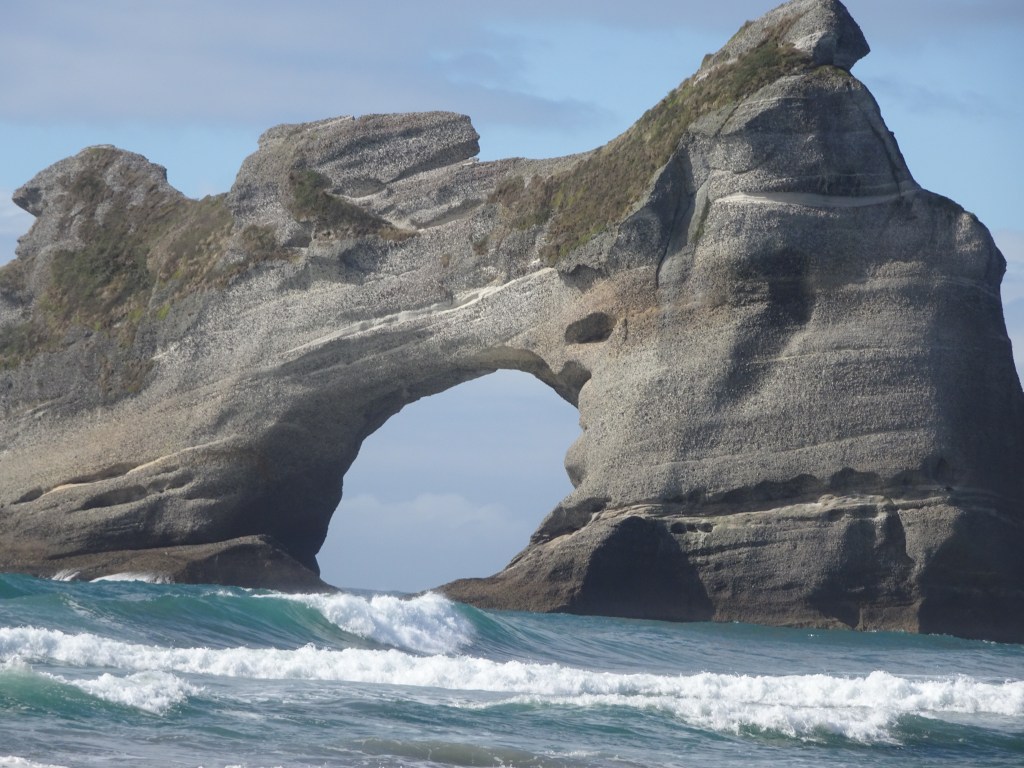
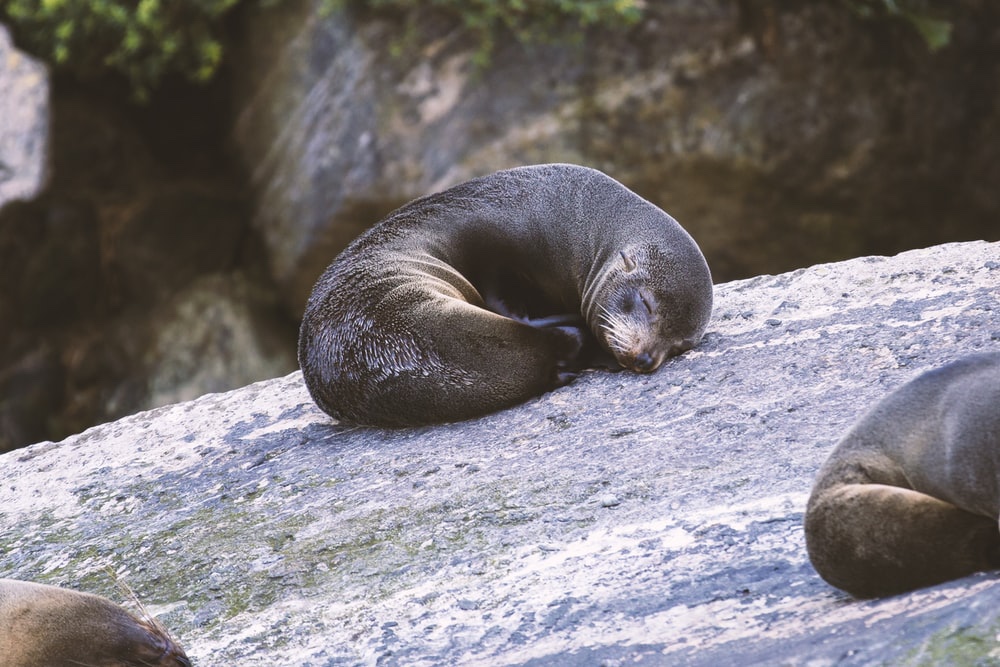
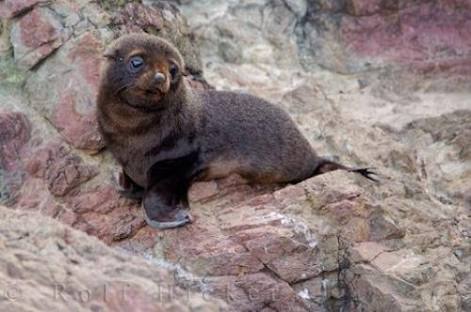
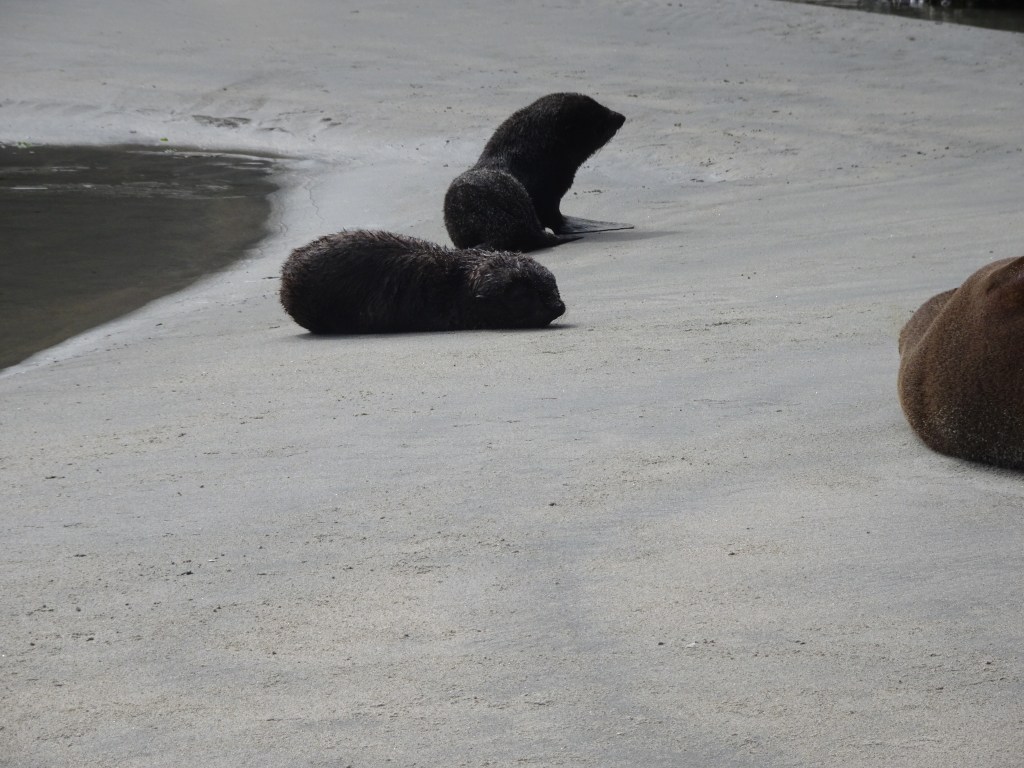
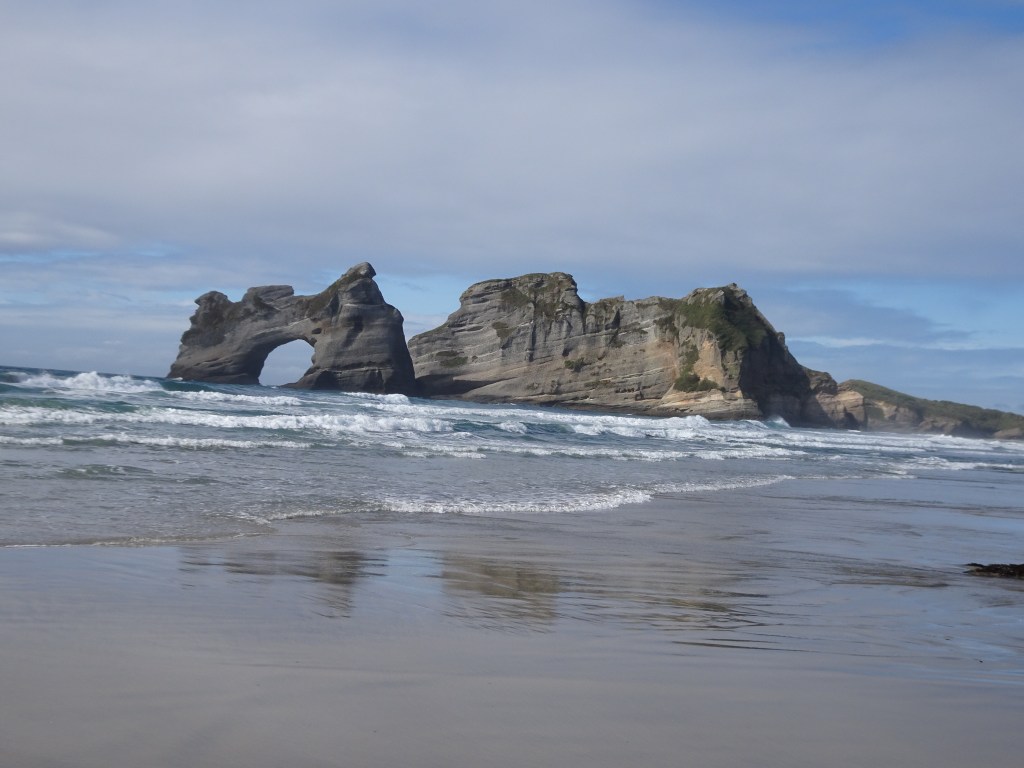
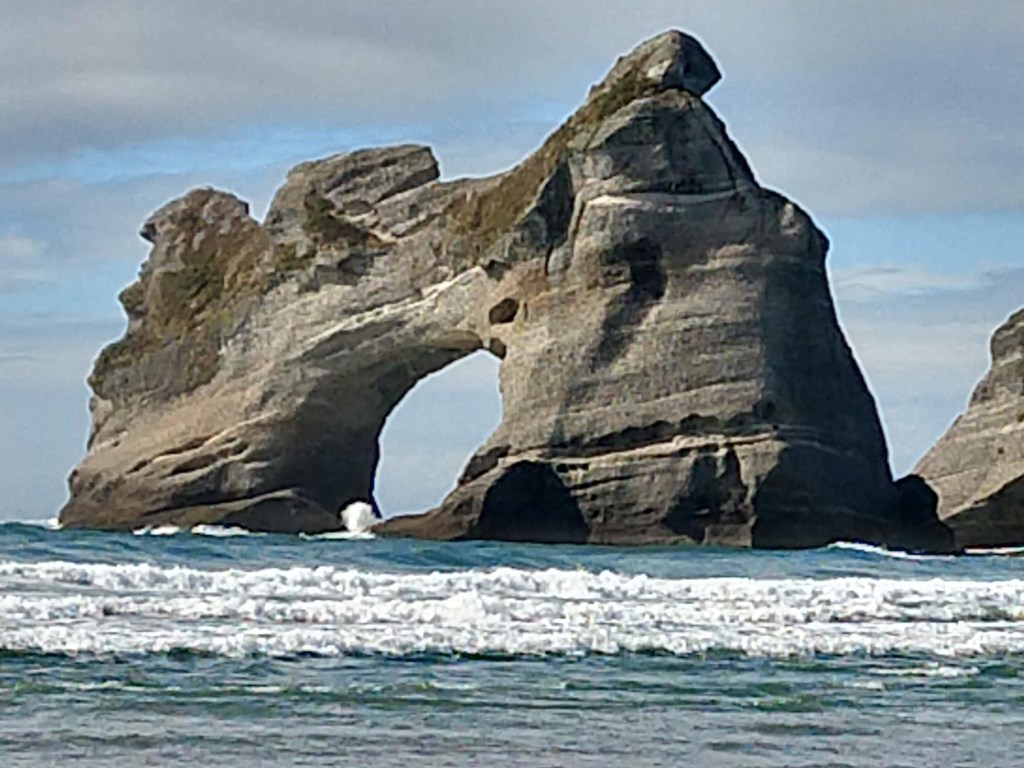
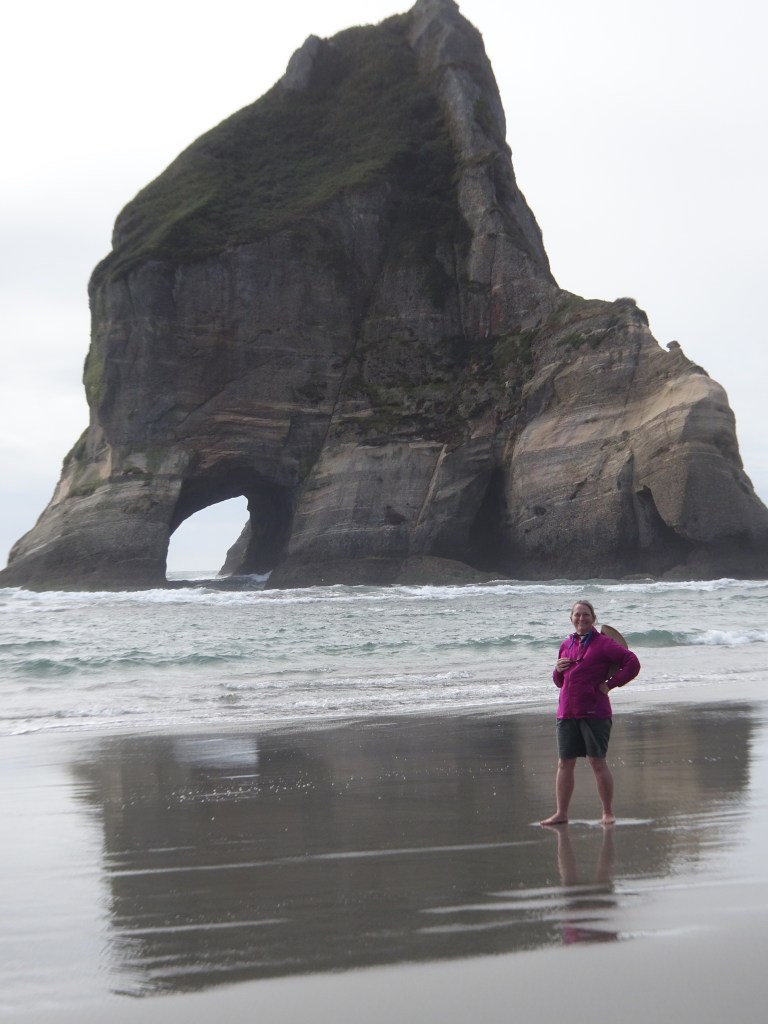
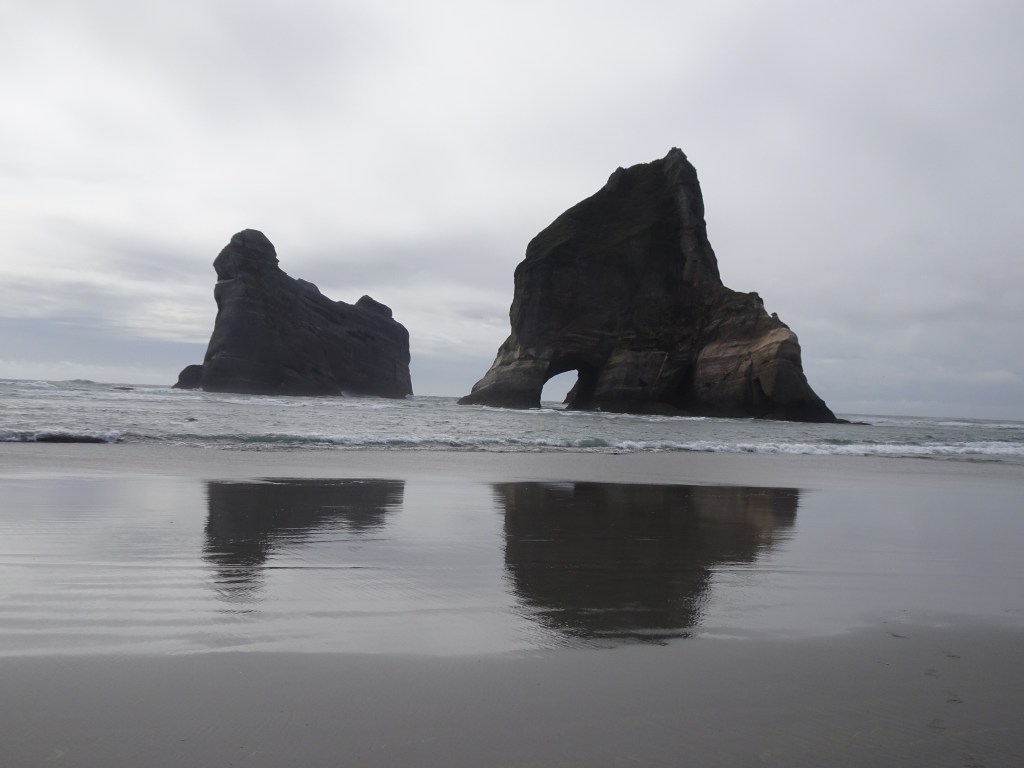
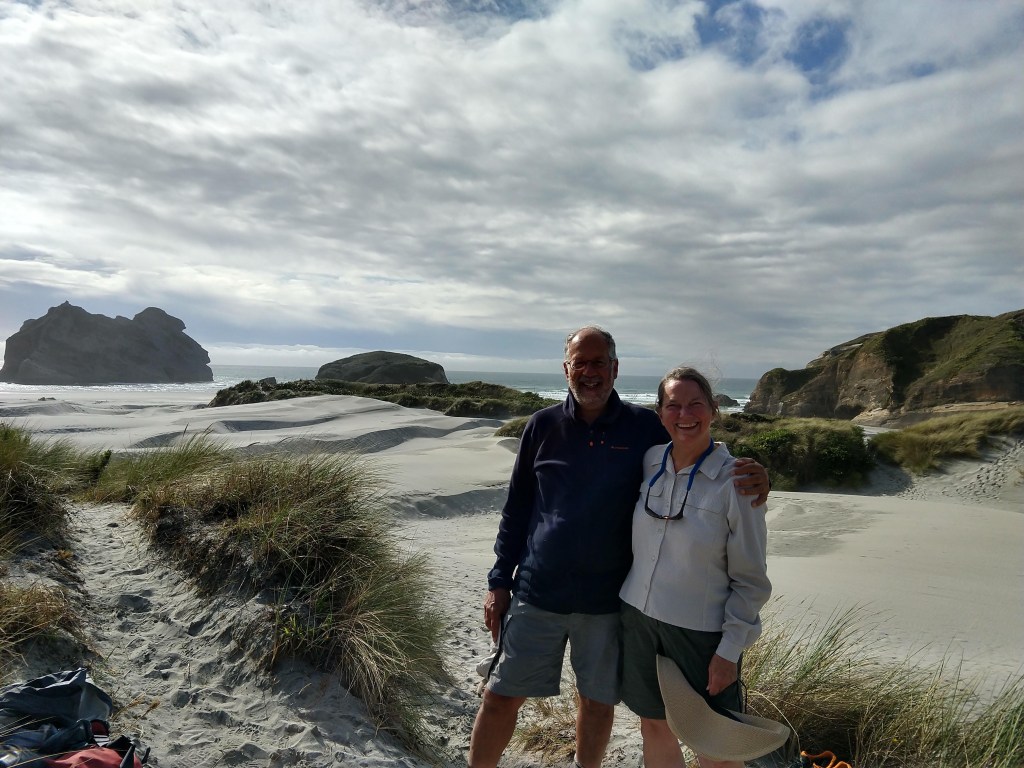
This is a wild raging beach with wicked currents, located near the “eye” of the Kiwi, a half hour walk through the dunes. Wh is pronounced like an F in New Zealand. It is Maori pronunciation. So this beach is called, “farariki.” People do not come here to swim, but rather to gape at the giant archway rocks that protrude from the water, and to witness the wild ocean. When we were there, there was a group of about ten baby seal pups swimming and playing in a tidal pool, with their parents snoozing nearby.
Into the Kayak
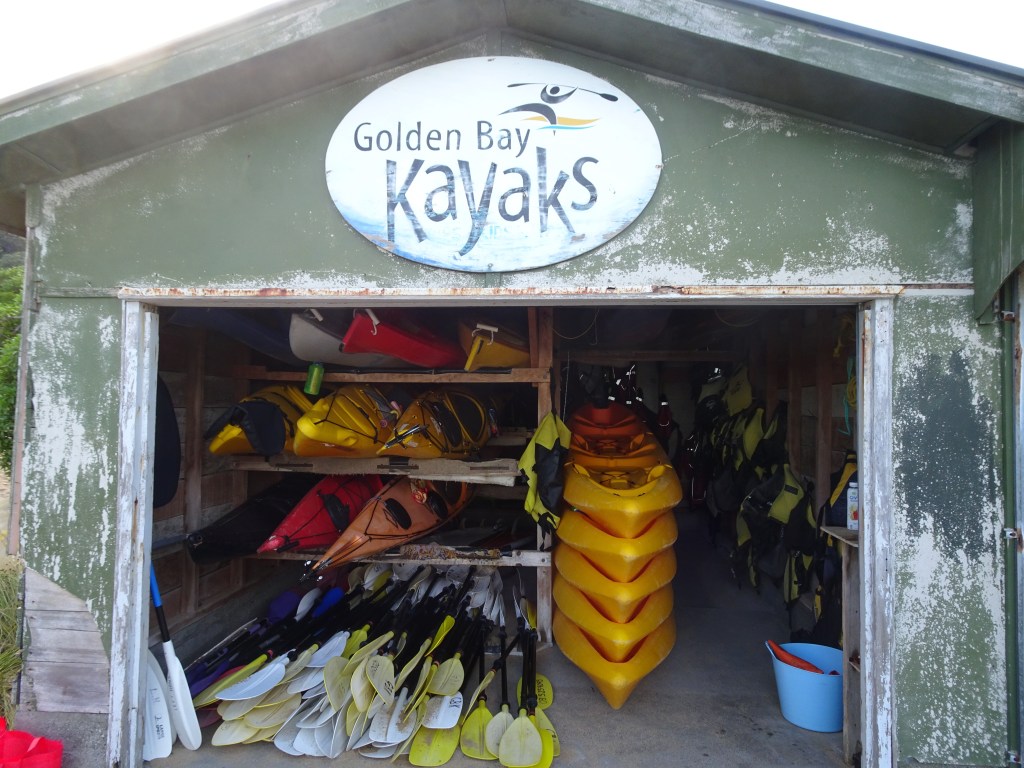
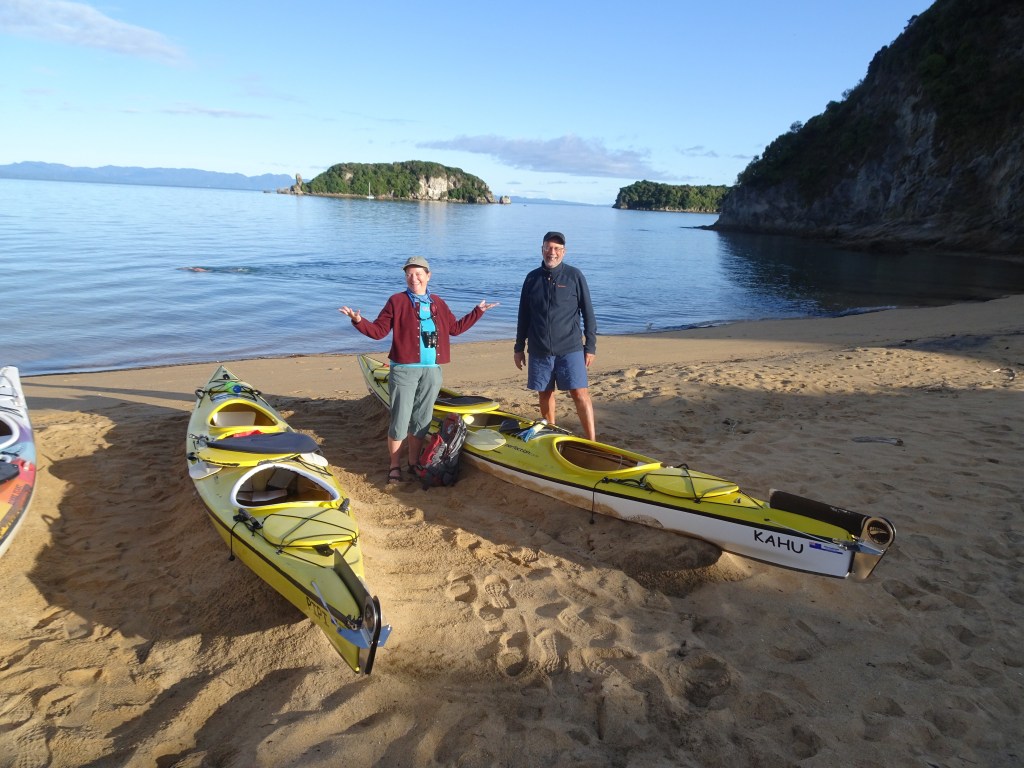
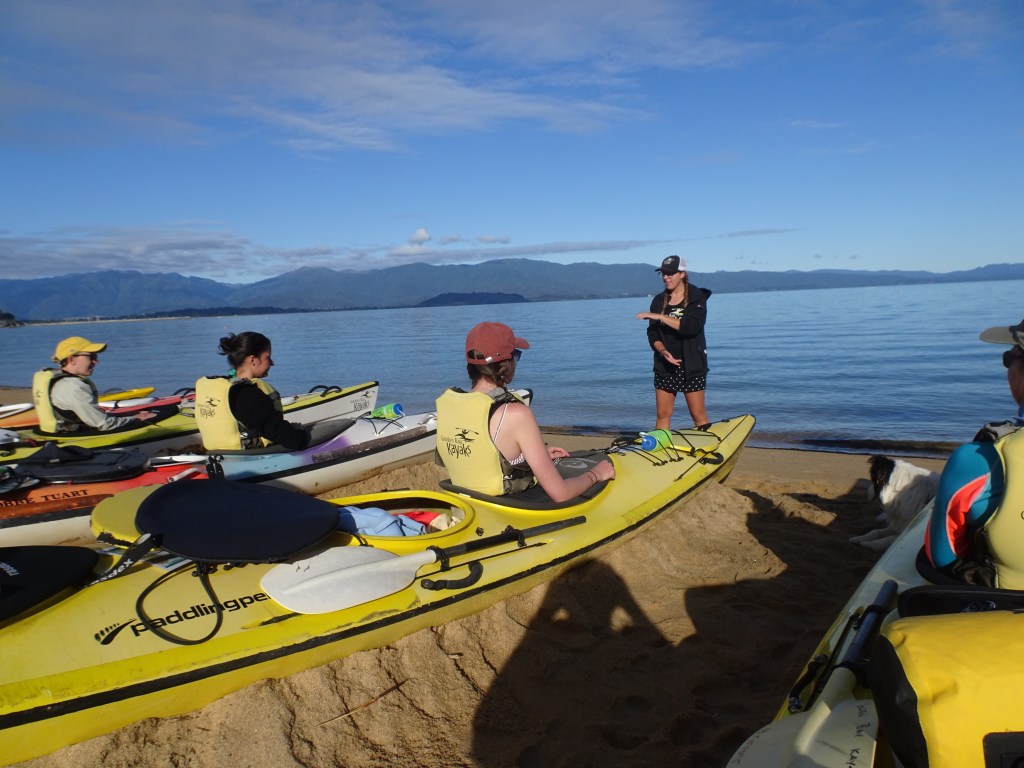
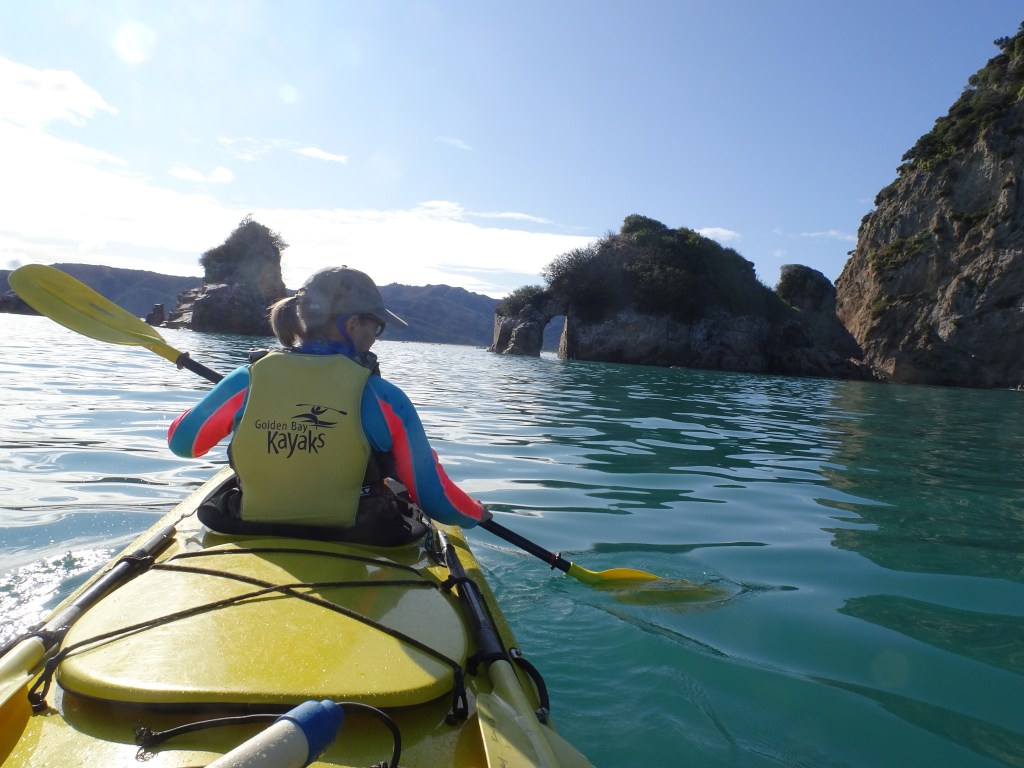
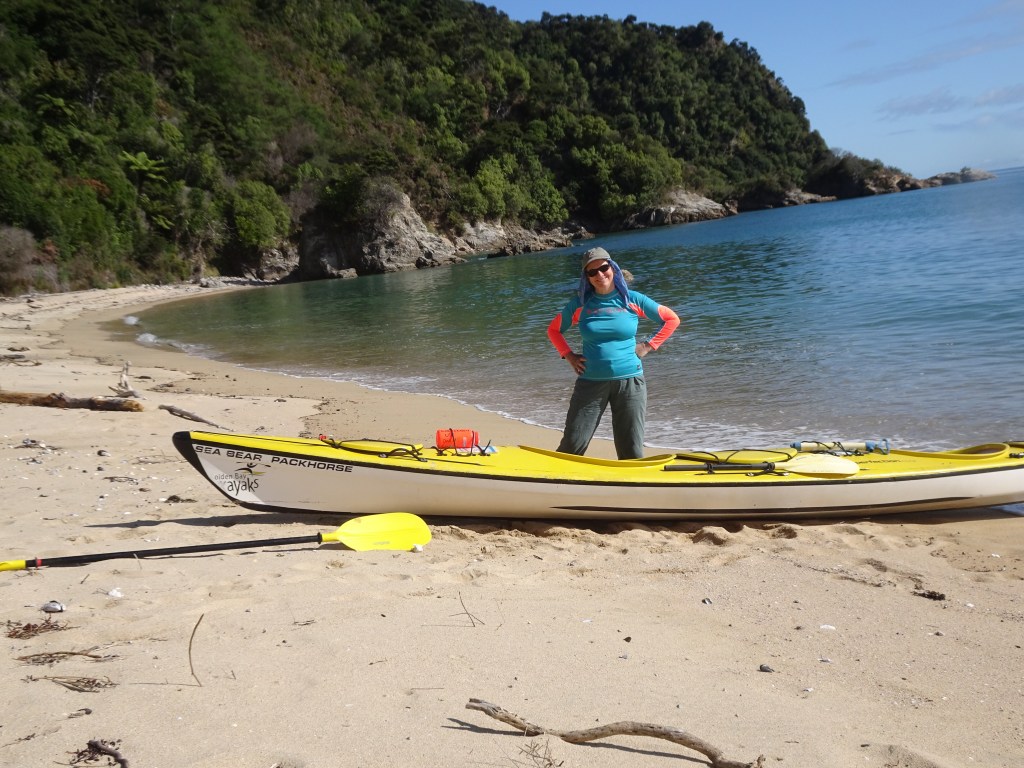
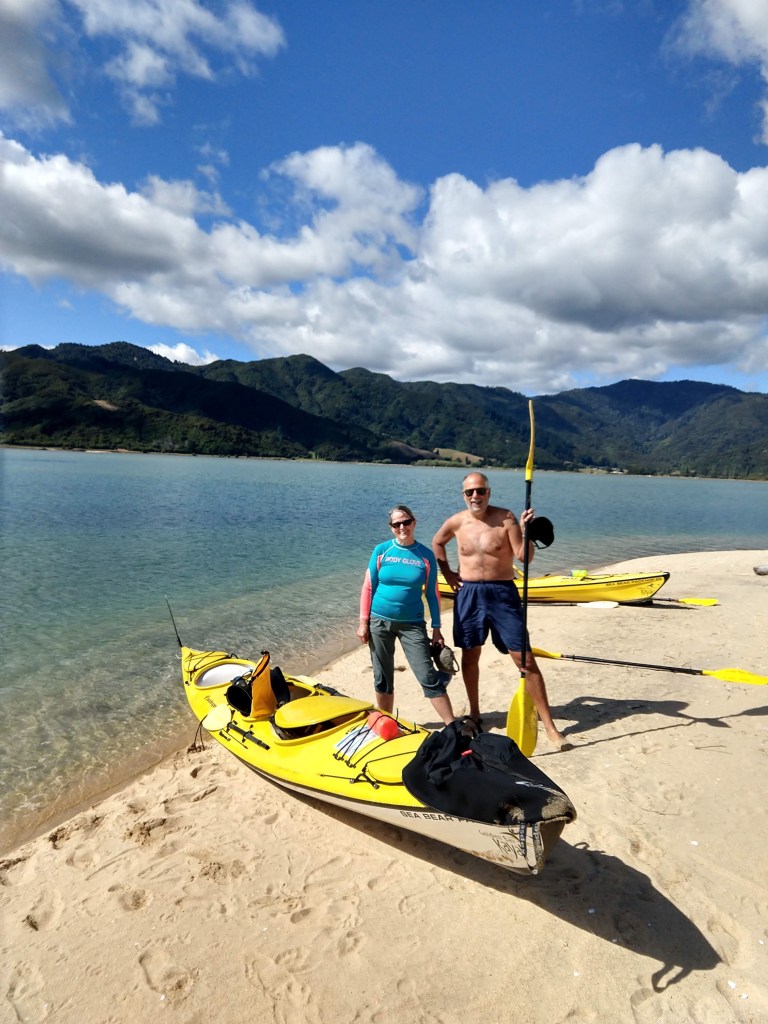
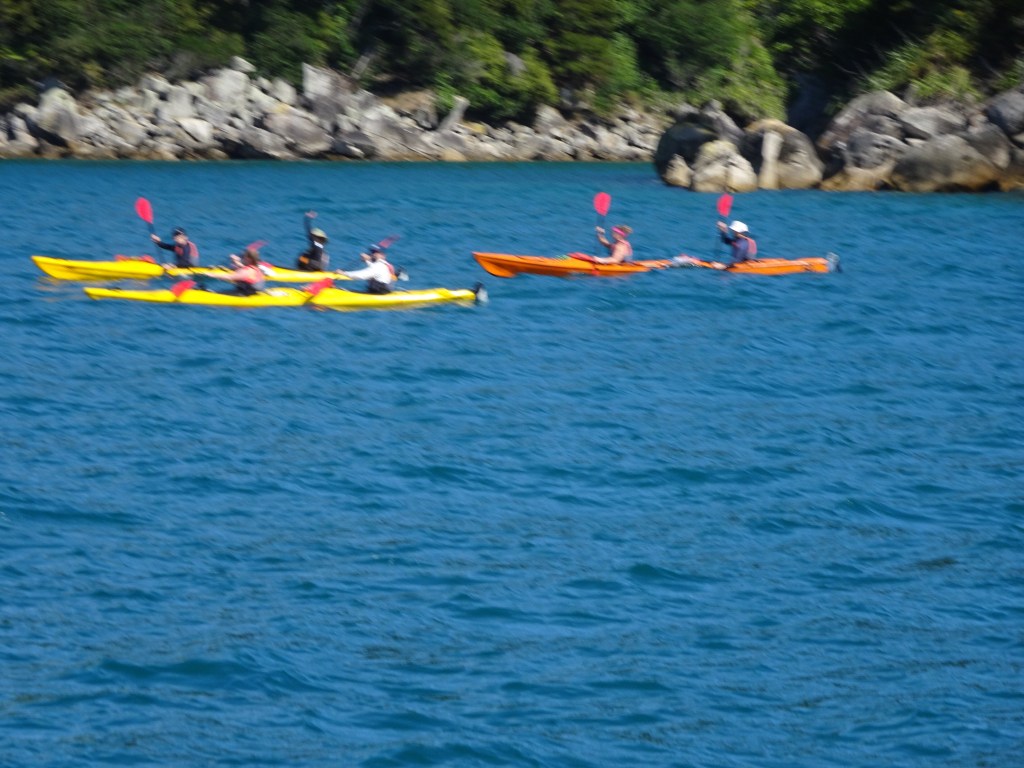
Abel Tasman Park is famous for kayaking, and we went out from Tata Beach, a ten minute drive from Pohara Beach, for a half-day paddle. Kayaks are more sea-worthy than canoes; because of their low profile, they can slice through the waves and not get blown off-course by the wind. We paddled around a headland and landed on a couple of beaches. It is wonderful to get loose from the land and move through the water.
Hiking Along the Coast Track
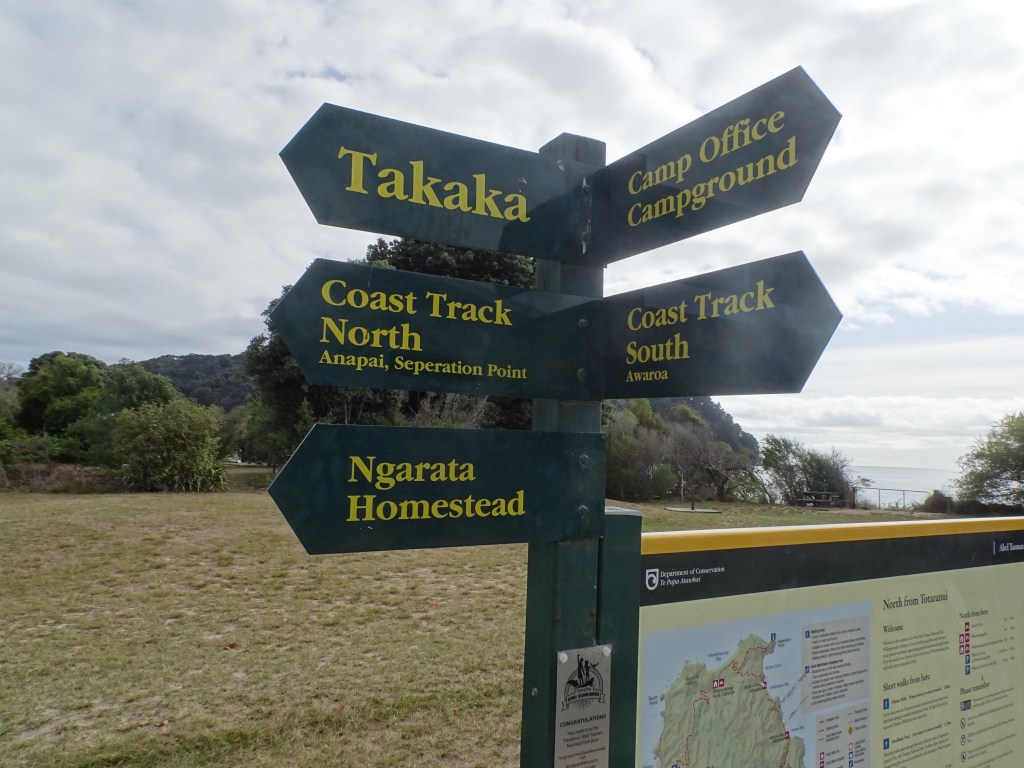
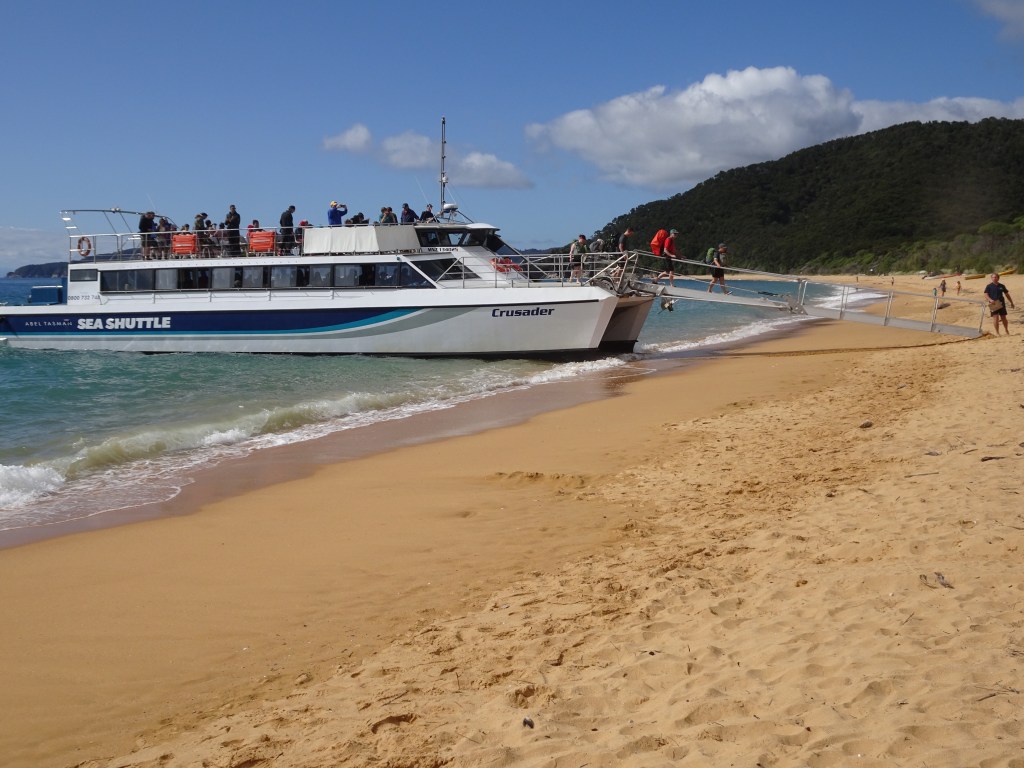
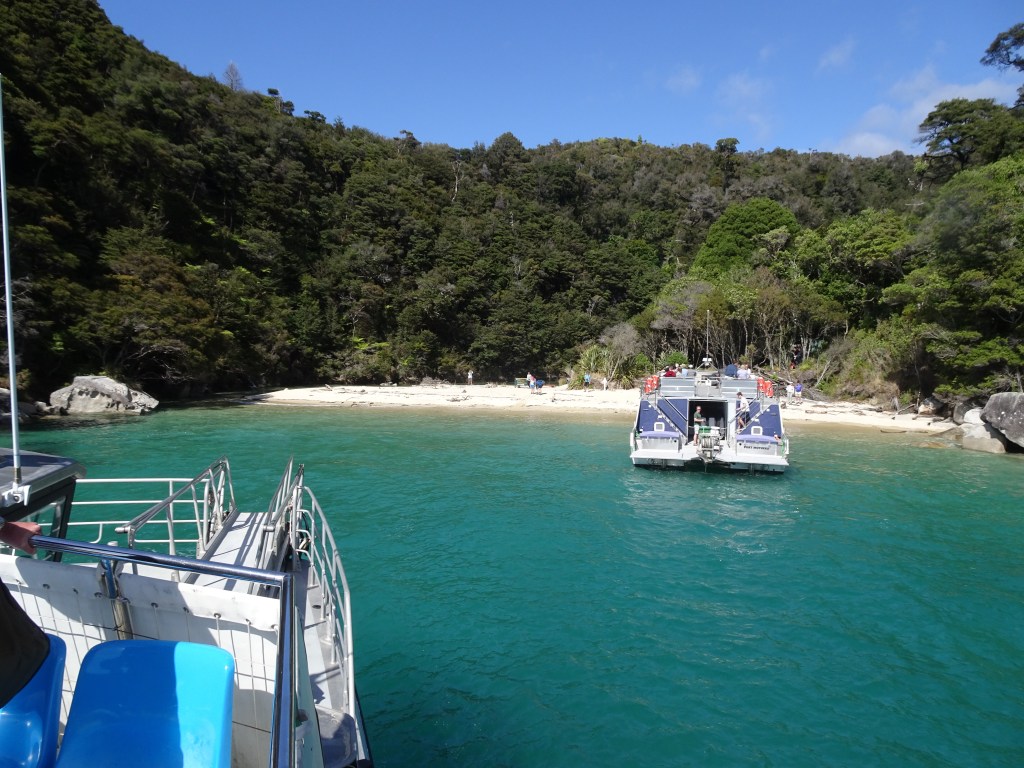
The Coast Track in Abel Tasman National Park is fifty five kilometers, and a lot of people hike the entire trail. It takes three to five days, depending. You can stay in huts or in campsites with your own tent. Or you can choose a portion or two to hike in a day. That’s what we did. We started in one bay and hiked through the forest to the next bay. A water taxi dropped us off, then picked us up three hours later in the next bay. One thing about this system is that you are under some time pressure on your hike. We were dropped off at 12:00 noon in Apple Tree Bay, and we were scheduled to be picked up at 3:15 in Anchorage Bay. It is listed as a two and a half hour hike. So that means we had forty five minutes for lunch and dawdling. We are used to more than that. But, we definitely did not want to miss the 3:15 boat because that is the last one of the day. We hiked very fast after our lunch, and we arrived at Anchorage Bay at five minutes to three. The boat pulled in, and took off at ten minutes after three. Fifteen minutes to spare. There were some people who started on the trail with us who did not make it. We will always wonder what happened to them.
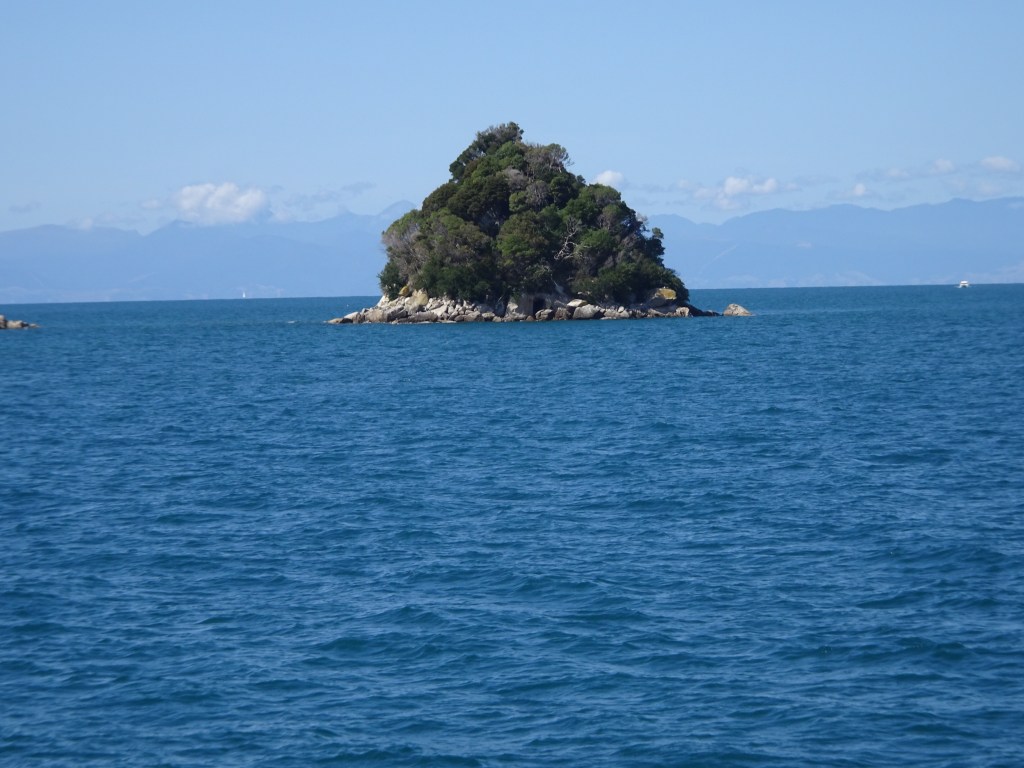
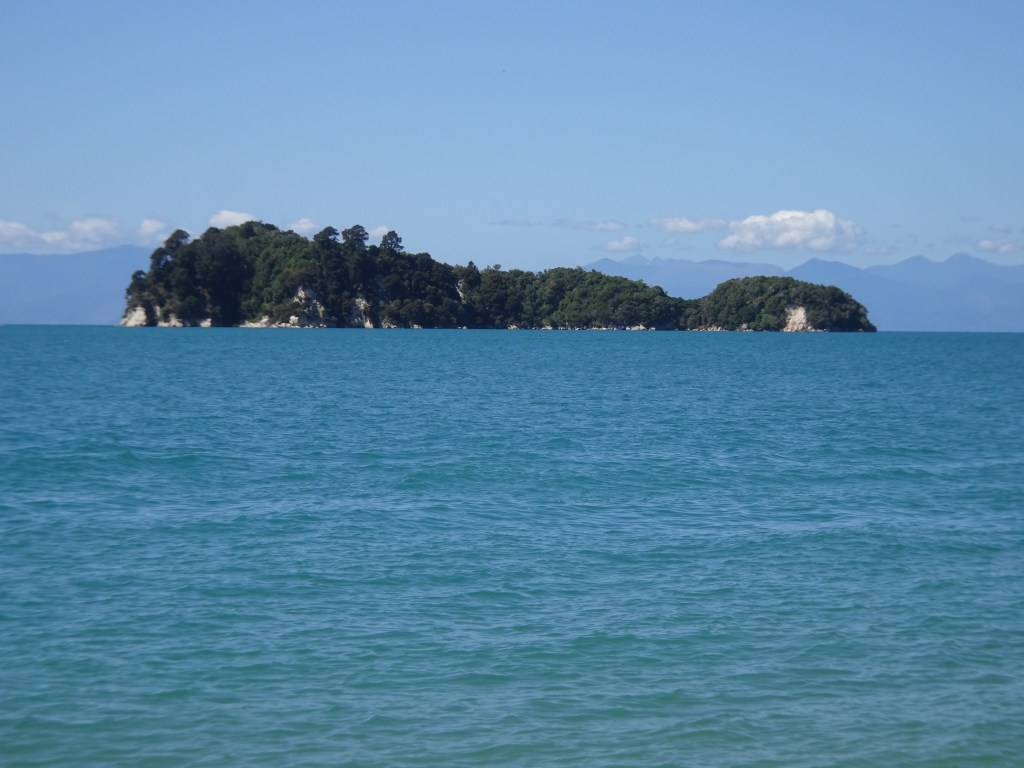
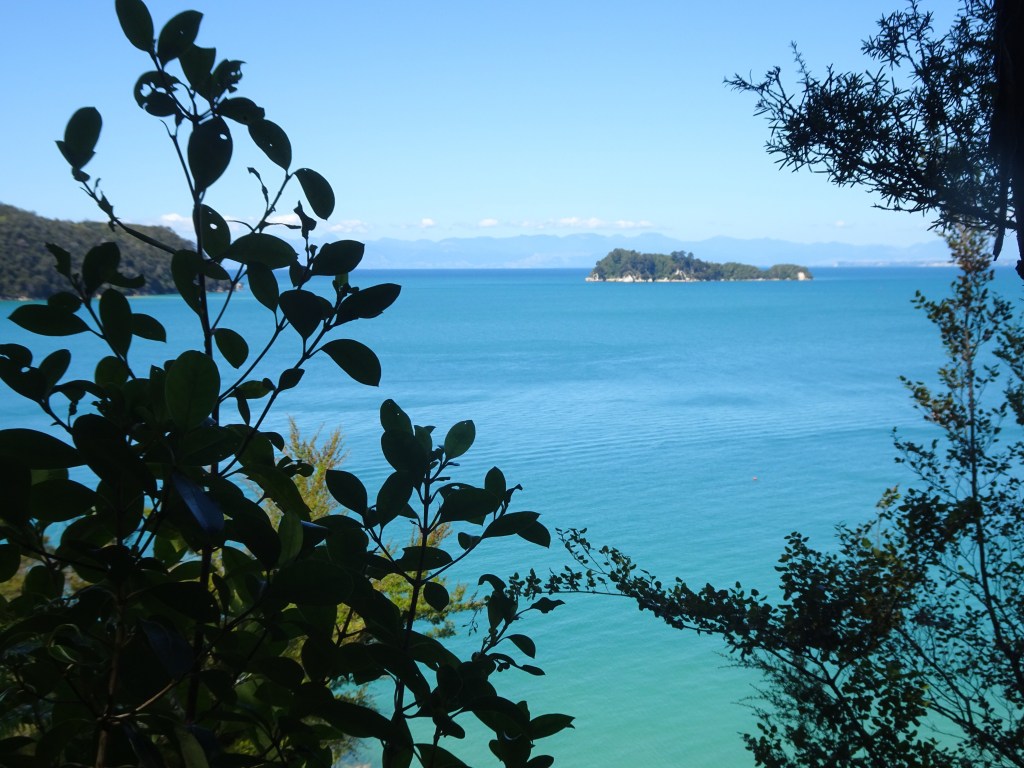
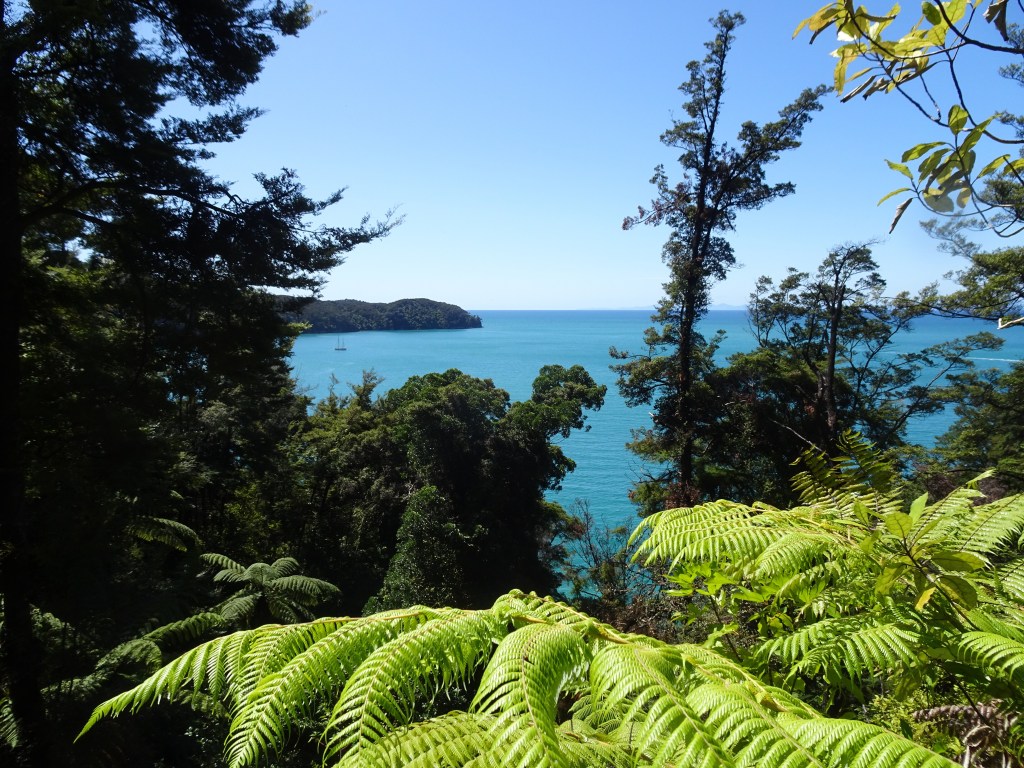
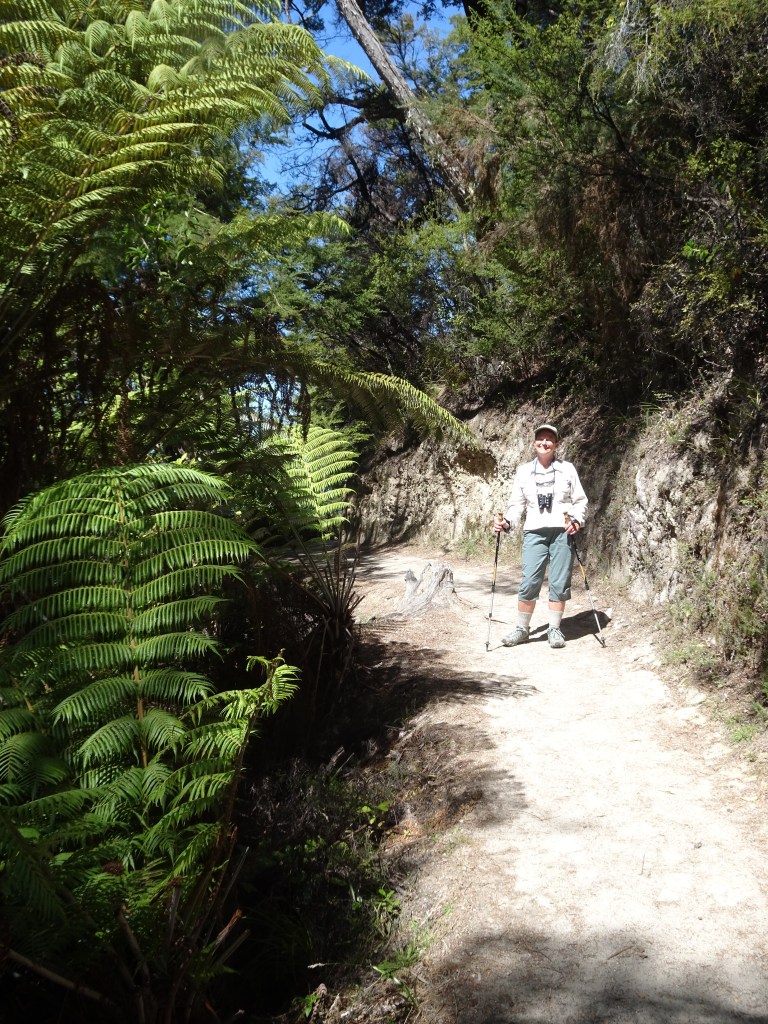
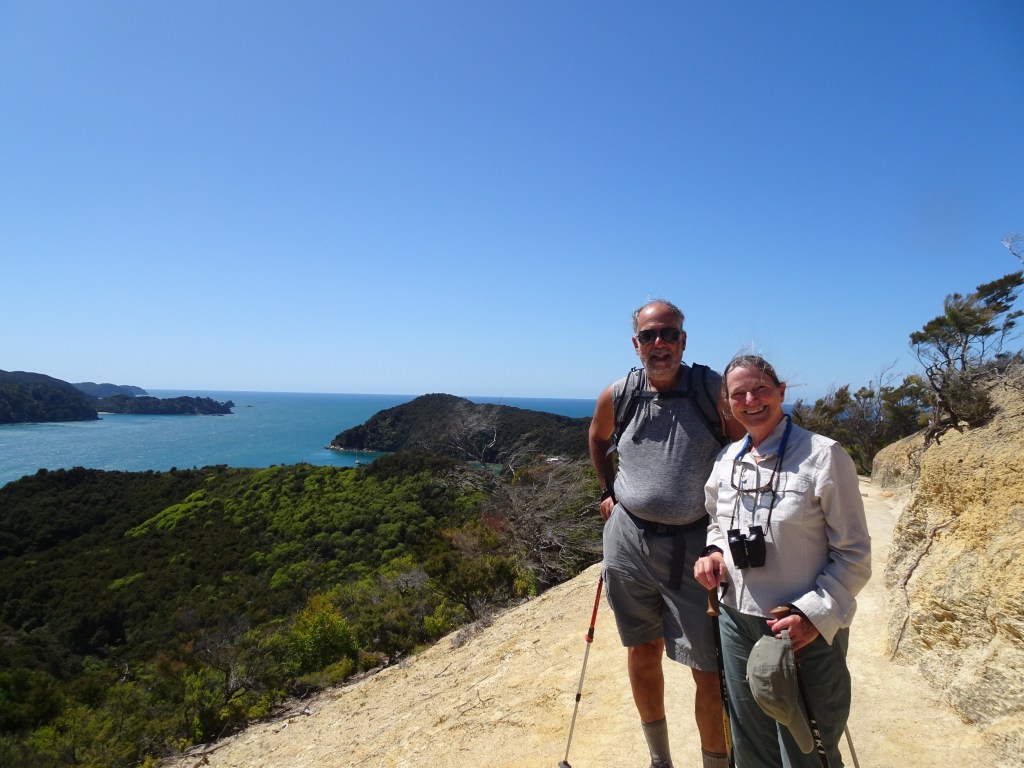
There’s something about traveling that keeps you optimistic. Maybe it’s just being on the move and always anticipating what is awaiting around the next corner. Everything is new and fresh, and once you learn your way around, it’s time to move on. Traveling simplifies your life and makes you grateful and delighted in the smallest of details, such as a returned smile or a beautiful sight around the bend. Sometimes those sights are breathtakingly gorgeous. It’s also seeing new people being excited about doing new things. Whatever it is, it seems like everything we find around the corner is better than the corner yesterday. Today is our last day on the South Island. We’ll take the ferry back to the North Island, then begin to make our way up to Auckland, with a couple of stops. We’re ready for anything.

 Rolling Through Kiwiland
Wow, you guys ! yeah, it just seems like it keeps getting better and better !!!! GREAT PICS !!! and you guys are having a complete and absolute BLAST by the looks of it !!!!! YAY ! Let the good times ROLL !!!!! You guys look just so happy and fabulous !
LikeLike
Wow what a wonderful travelogue. What kind of camera are you using? What kind of binoculars did you bring for the birding? What a great adventure. Safe travels!
LikeLike
You guys are adorable
LikeLiked by 1 person
How Amazing is that? The birds :O thank you for all those pix and info- Superbirds indeed!! So Fabulous ❤ Your posts are always a delight but this one was just chock-full of goodies. Love the water-taxis- way to go. Happy Trails! and see you 'round the next bend 😉
LikeLike
So great!! Wish I was there with you enjoying the water and kayaking!!! Glad you made it in time to be picked up by the water taxi!!!!
LikeLike
Really great post! I very much enjoyed the pictures, especially of the baby NZ fur seals! We too were in Abel Tasman and did the hike as well as the kayaks, did you get a chance to kayak the uninhabited Fisherman Island? You should check out our post on Able Tasman and see the pictures, it’s a very beautiful spot! =)
LikeLike