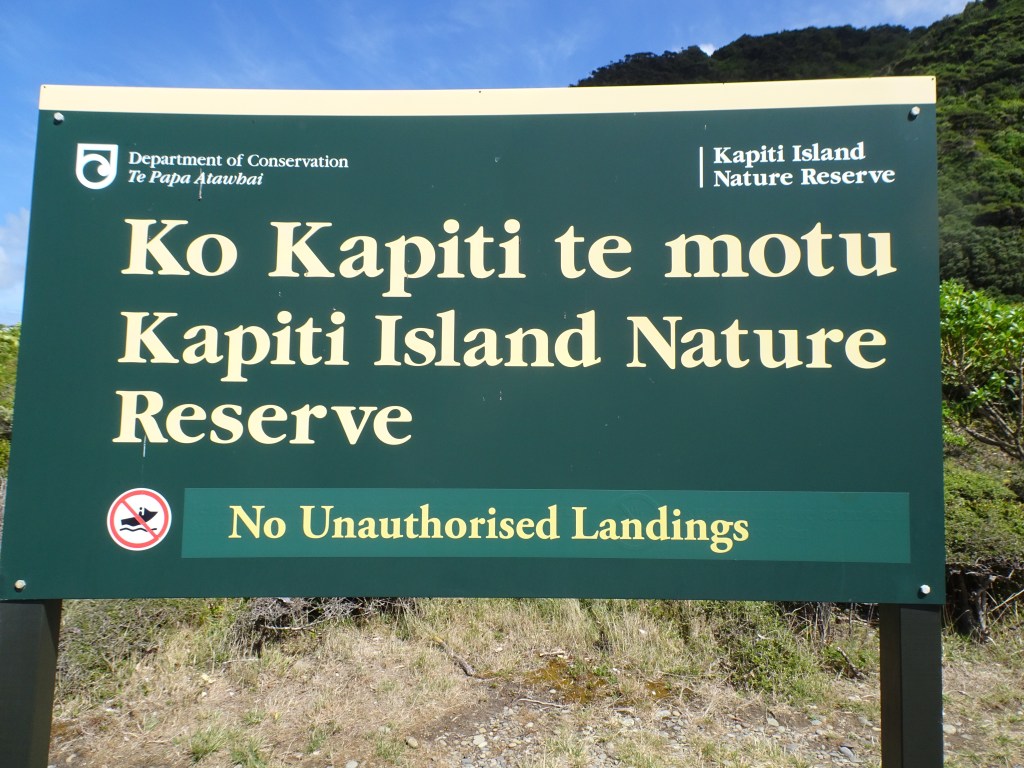
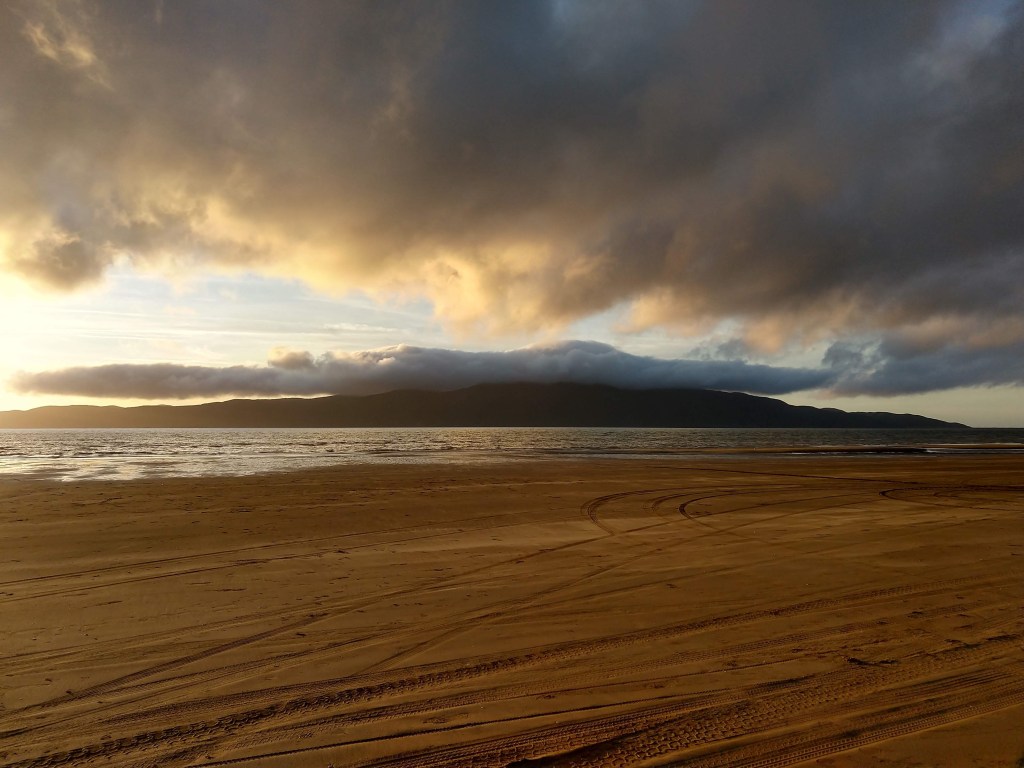
First of all, it is pronounced like yappity, or yoppity. And second of all, it is one of New Zealand’s sanctuary islands, a world with its own history, separated from the mainland, and an inspiration and hope for that separate world.
New Zealand has long been one of the world’s pioneers and leading thinkers in the conservation movement, and Kapiti Island was one of the first places in the world to prioritize preservation of nature over progress. It was declared a bird sanctuary in 1897. At the time, it had already been overrun and brutalized by an intense century of human activity. It was a whaling center for twenty years, from 1830-1850, until all the right whales were exterminated. Then its forests were burned for the benefit of farming and sheep. In 1897, the New Zealand government formally bought the island and began the process of ridding the island of all mammals (sheep, goats, cats, dogs, horses) and reintroducing native birds.
Trees were not planted, but everything was allowed to grow. During most of the twentieth century, the forests regrew and the birds barely survived. The problem was possums and rats. In the 1980’s, the government got serious about the predator problem. They started with the possums. 20,000 possums were trapped and killed between 1980 and 1986. There were only a few left. But the thing about making a sanctuary island safe is that you have to be ruthless and relentless and brutal. Every single predator must be eliminated. If you leave one pregnant female, they will repopulate. One single pregnant rat can theoretically produce over 10,000 rats in three years. It took the government two more years, of tracking and hunting with dogs, to eliminate 32 more possums. Rebekah White writes in the January 2020 issue of New Zealand Geographic,
“Something is going to die. It will either be possums, mustelids (weasels and ferrets) and three species of rat, or it will be most of New Zealand’s native birds and an unknown number of plants and invertebrates. You have to choose. Inaction is a choice.”
New Zealanders have chosen. There is a strong national will to bring back the birds.
A word about possums. New Zealand possums are not the same as North American possums. The ones in North America are actually “opossums,” and in Australia and New Zealand they are “possums.” Very different creatures. The ones in Australia and New Zealand are predators. They eat birds and their eggs. They can destroy forests. They are also cuter than the North American ones, and you can make lovely sweaters from their fur.
Rats are different that possums. You can’t trap them to extinction. The government took a more radical step. In 1996, after five years of study and trials, they used helicopters equipped with GPS to dose the entire island with poison, and then two weeks later, they did it again. The trials were to see whether birds would be tempted by the bait. Some were, and they were removed before the real thing. They meticulously monitored the island for two years. At the end of two years, in 1999, Kapiti Island was declared finally and totally predator free. The results have been amazing.
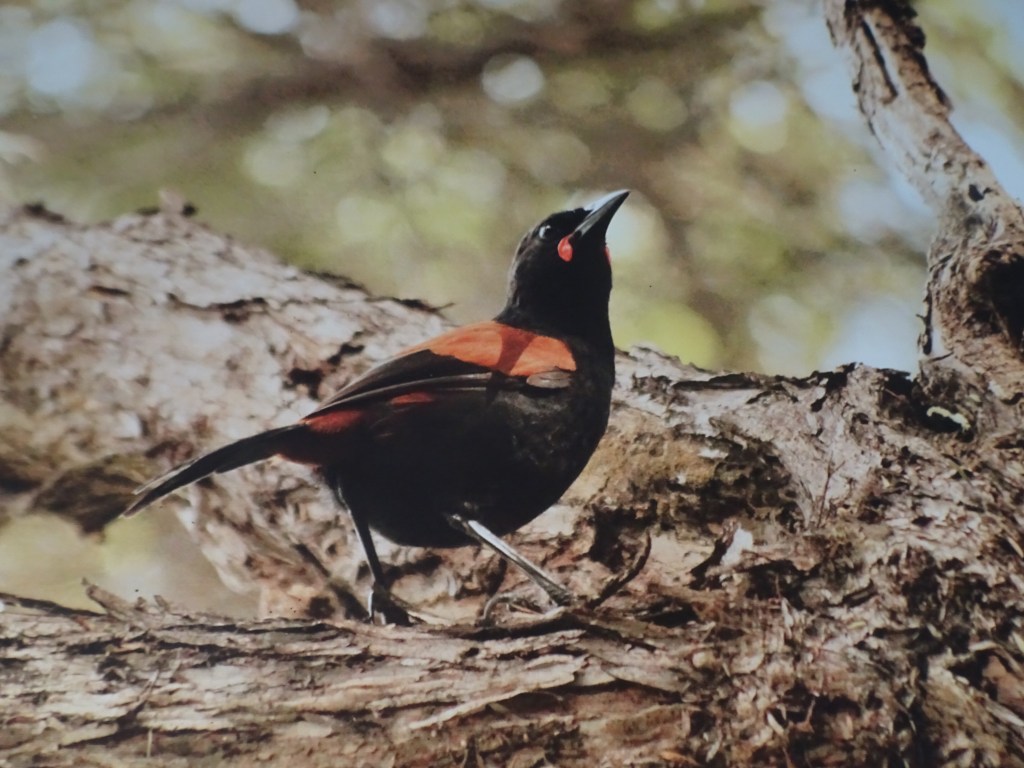
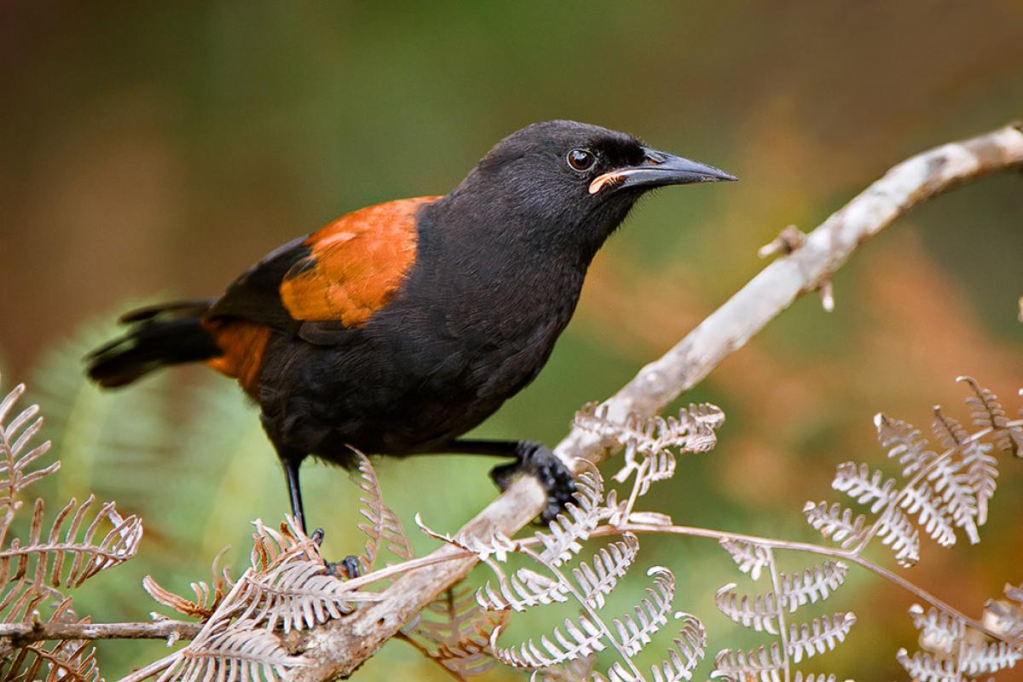
The North Island Saddleback was actually declared extinct in the 1920’s. New Zealand is the only place in the world it lives, and it was decimated by rats. It is mainly a ground-dweller, and it is a very weak flyer. It lives on the ground and hops around in the bushes. It had evolved for millions of years and was very successful, but it was no match for the rats who arrived in the 1800’s. Now there are hundreds on Kapiti, and they are being translocated (moved) to other sanctuary islands.
It’s not just the saddlebacks, although it was thrilling to see them while we were there. We probably saw twenty of them in our limited time.
Being on the Island
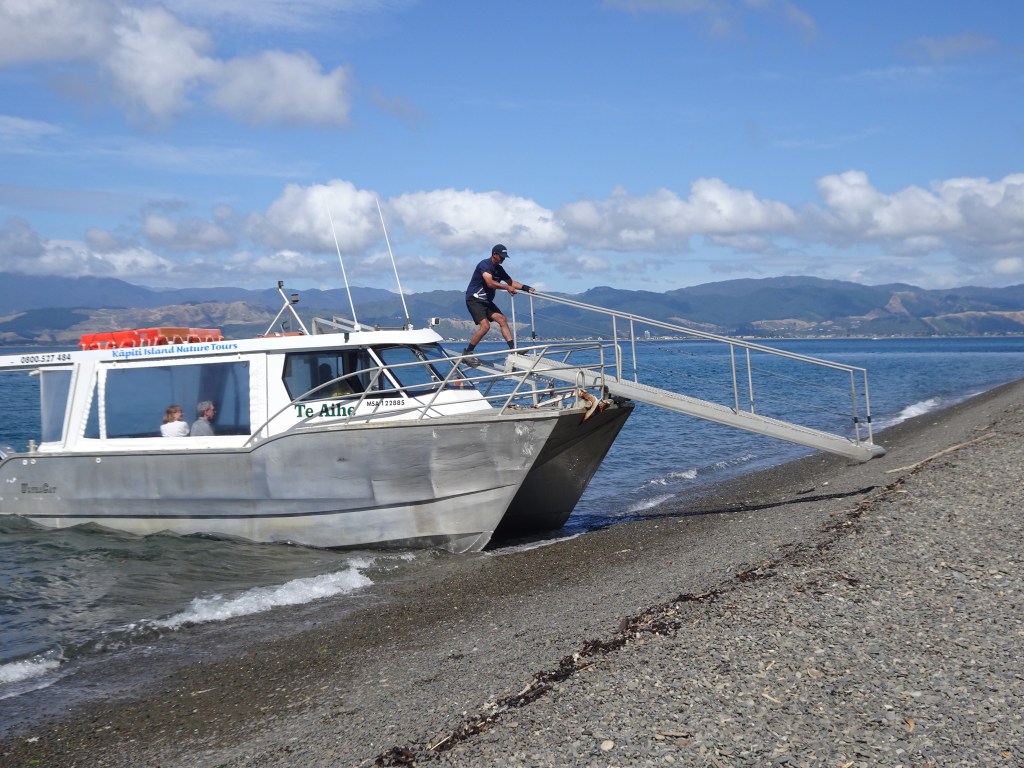
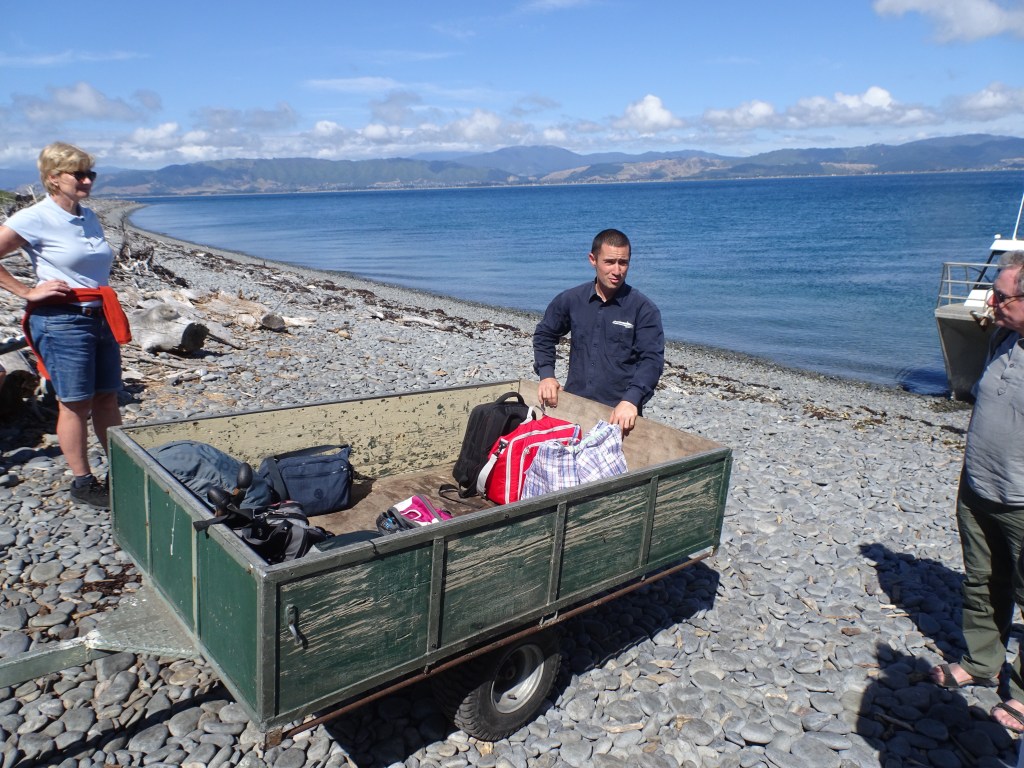
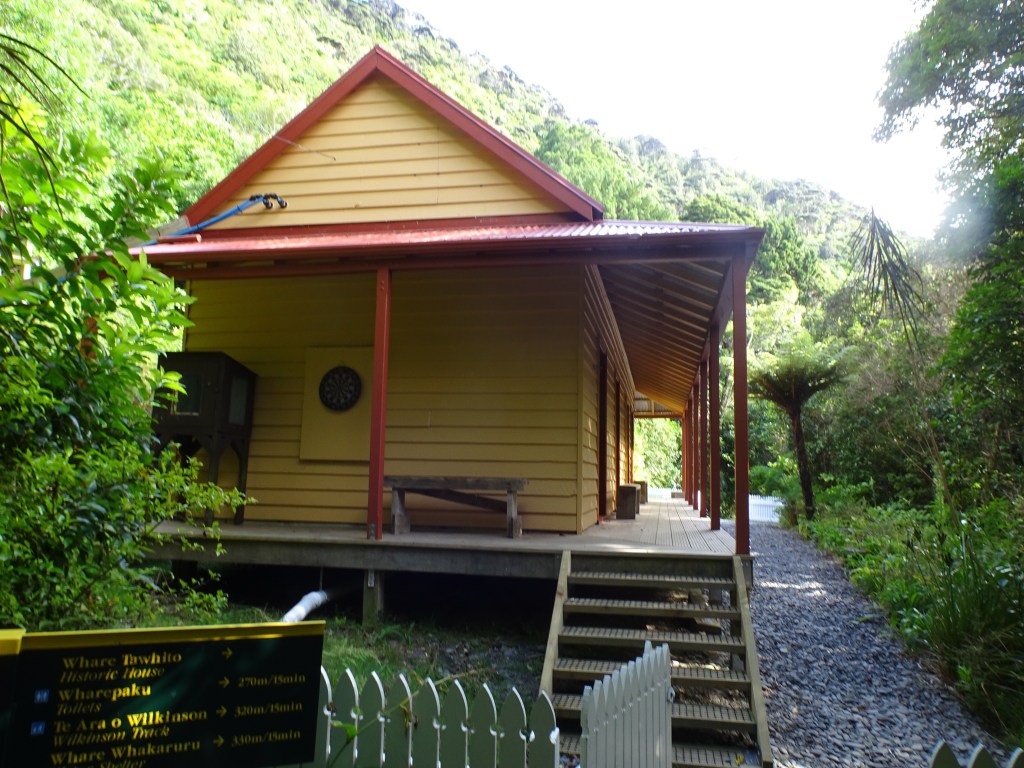
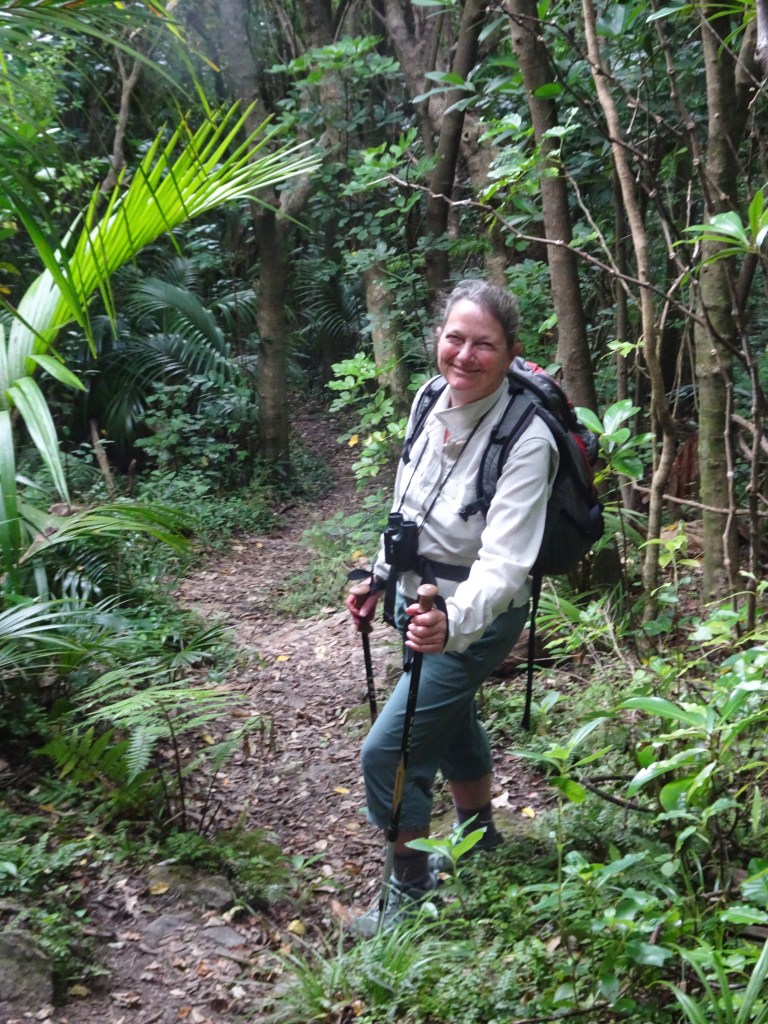
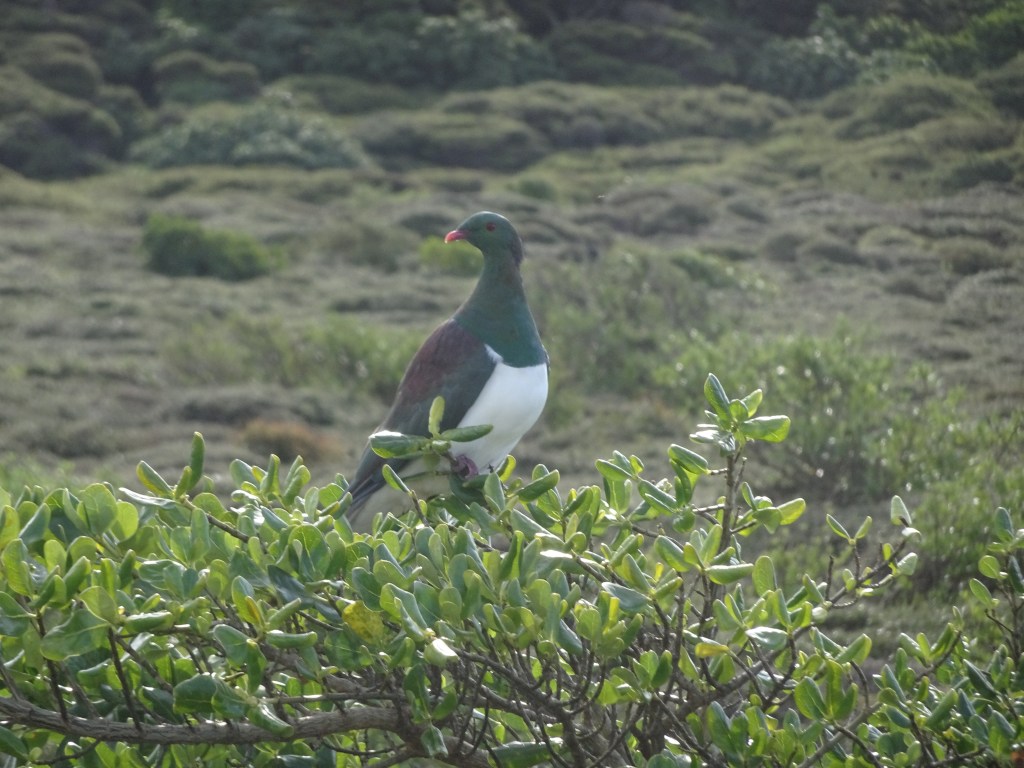
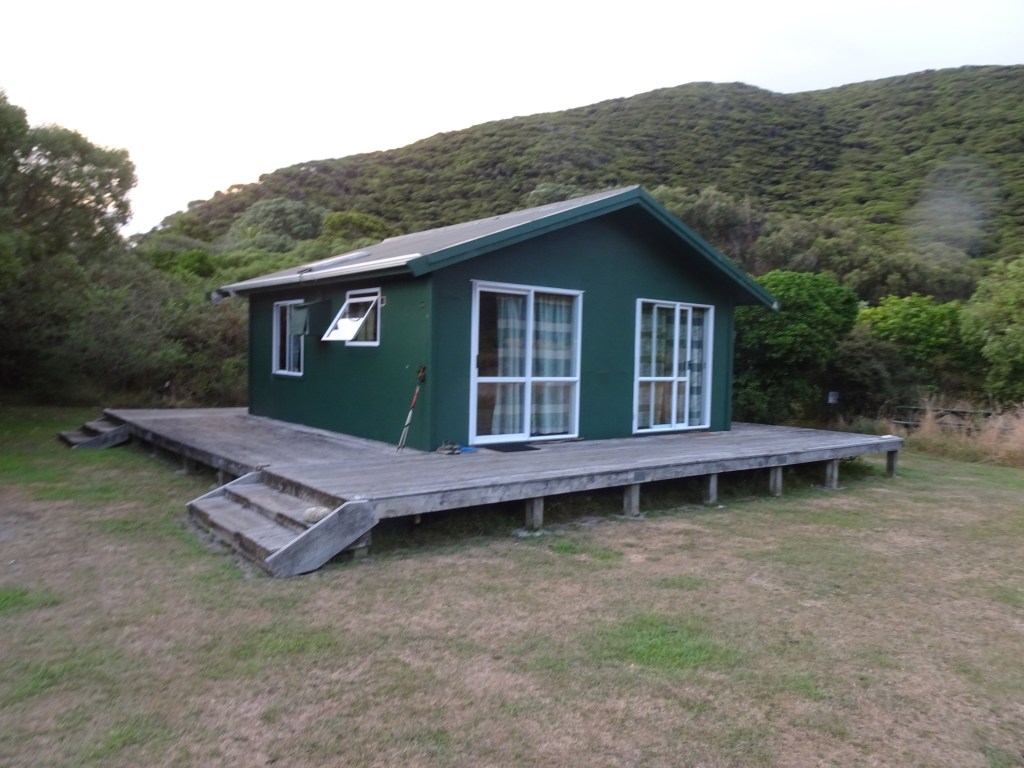
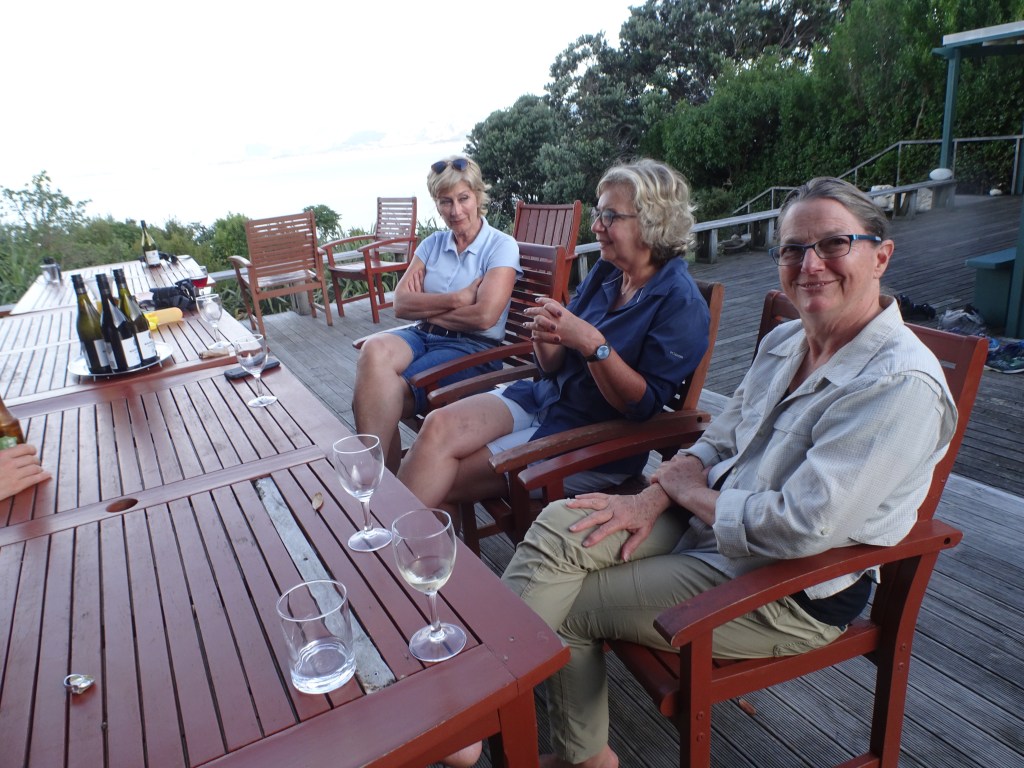
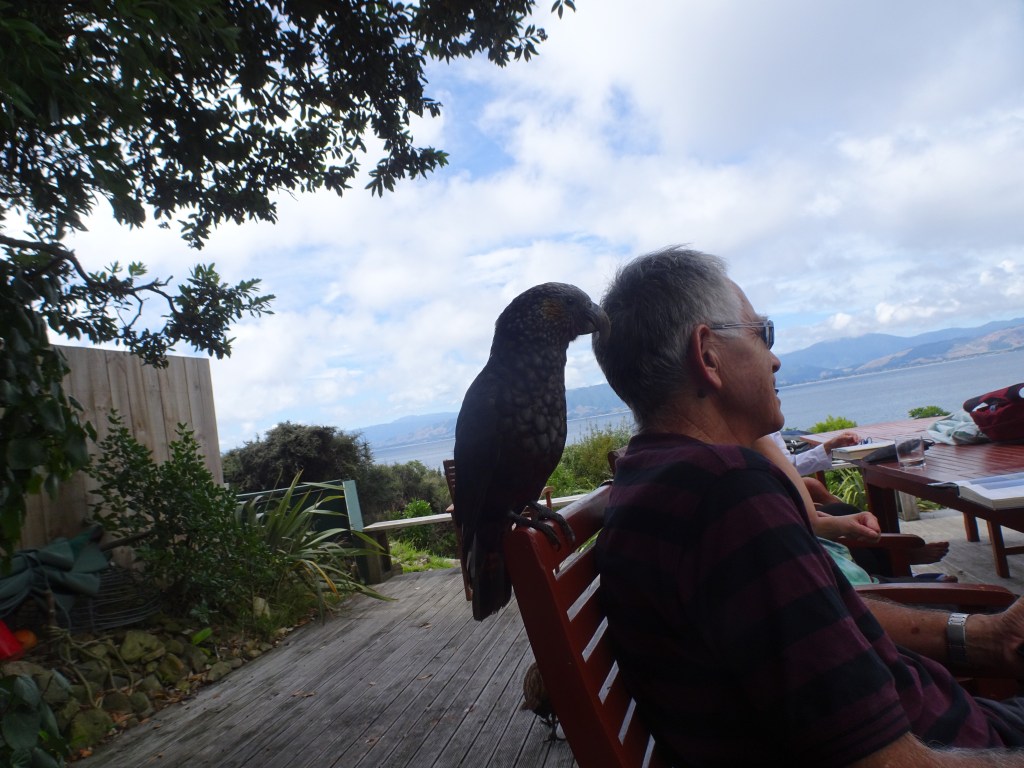
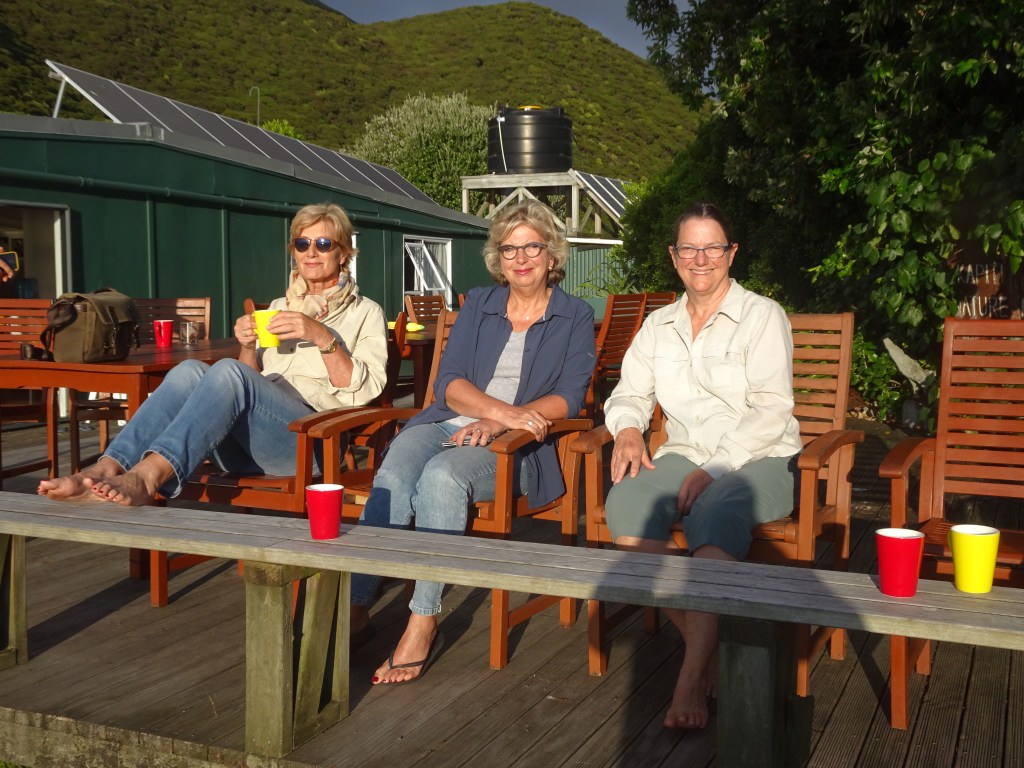
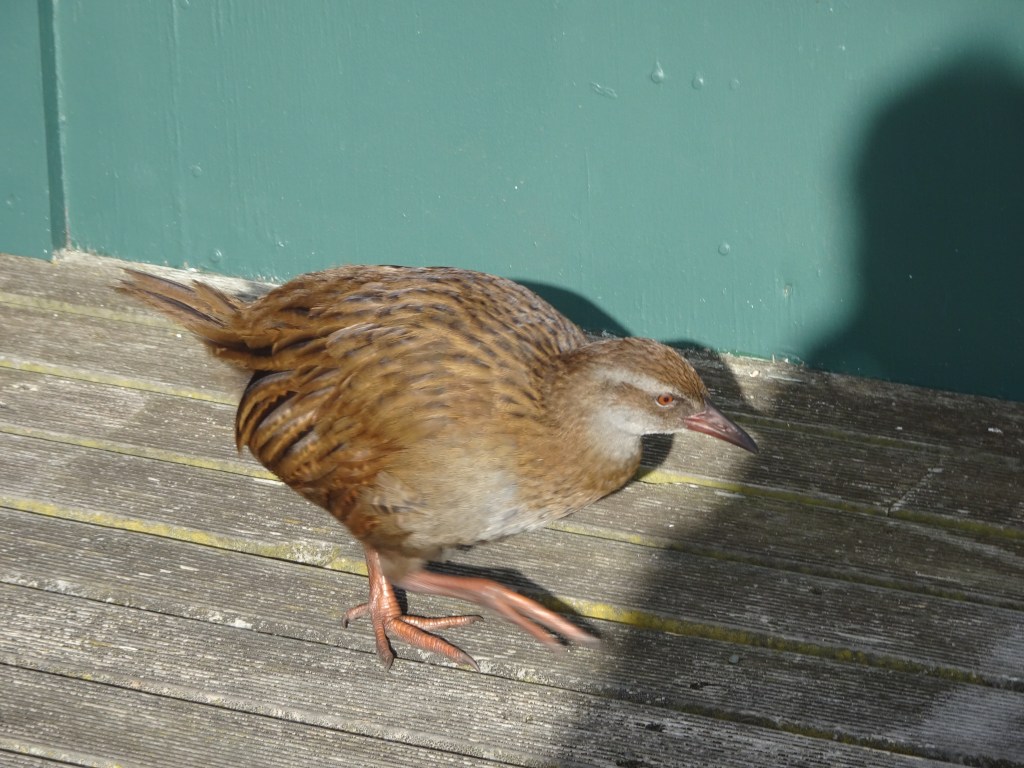
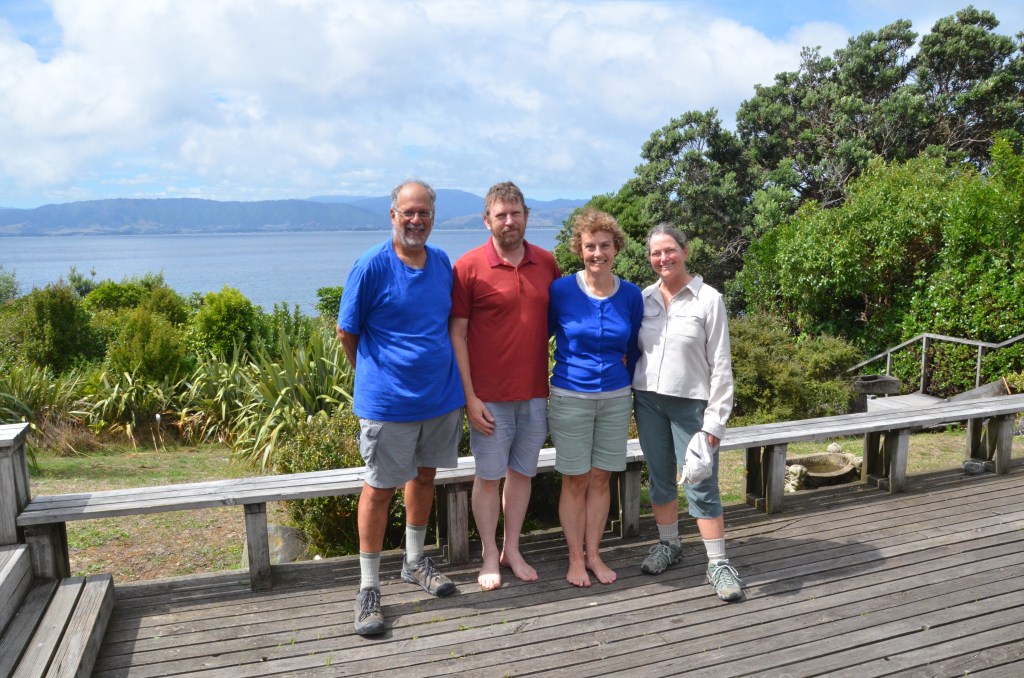
The island is ten kilometers long and two kilometers wide. Most of it is owned by the New Zealand Government (Department of Conservation, DOC) but the northernmost corner is owned by the Family Trust, of which Menaaki is one member. Every member is a descendent of his great great grandmother. We arrived at 9:00 in the morning and stayed overnight. We left at 3:00 in the afternoon the next day. There were 18 of us who spent the night. Six people from Holland, six people from USA, four people from New Zealand, and two from Isle of Man. All of us there for the birds. It was fun spending time with all these bird nerds and nature nuts, getting excited about saddlebacks and spoonbills. The first day, after receiving an orientation, we hiked up a couple of trails into the forest, and were serenaded by the birdsong. When we first arrived and went into the visitor shelter for the orientation, Monica and I both thought separately that they were playing a tape of birdsongs. It was loud and melodious. Chirping and singing. But it was no tape. The island is just full of birds. Even so, it is nothing like it was. Captain Cook wrote in his journal that his men could not sleep on the island because the bellbirds and tui were so numerous and so loud. They rowed back to the main ship to escape the noise.
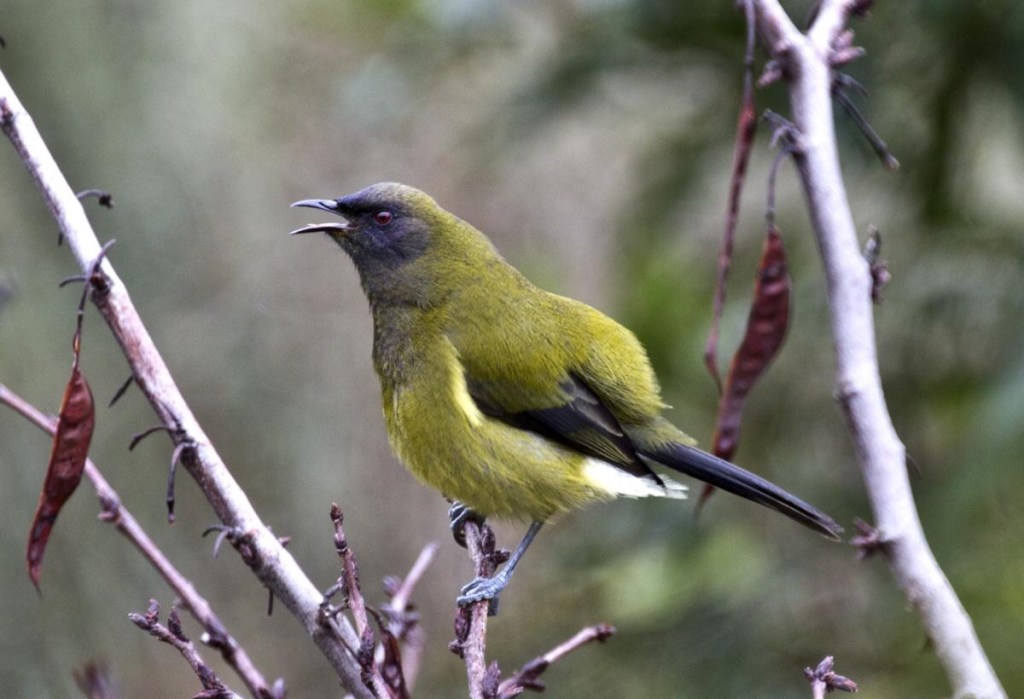
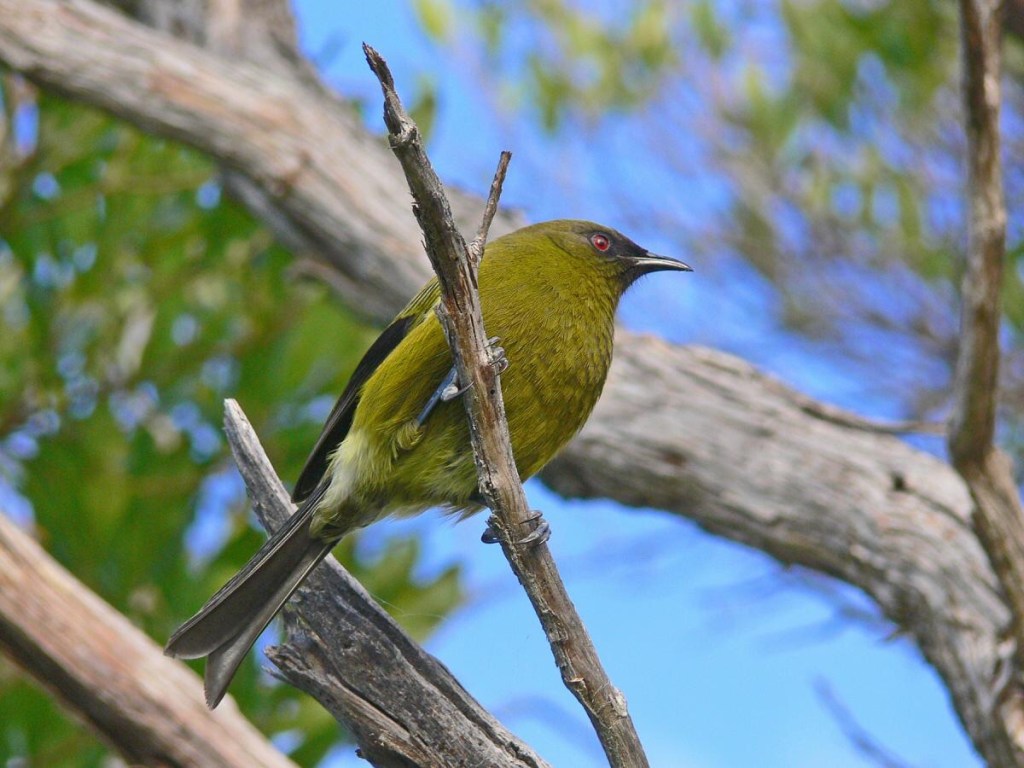
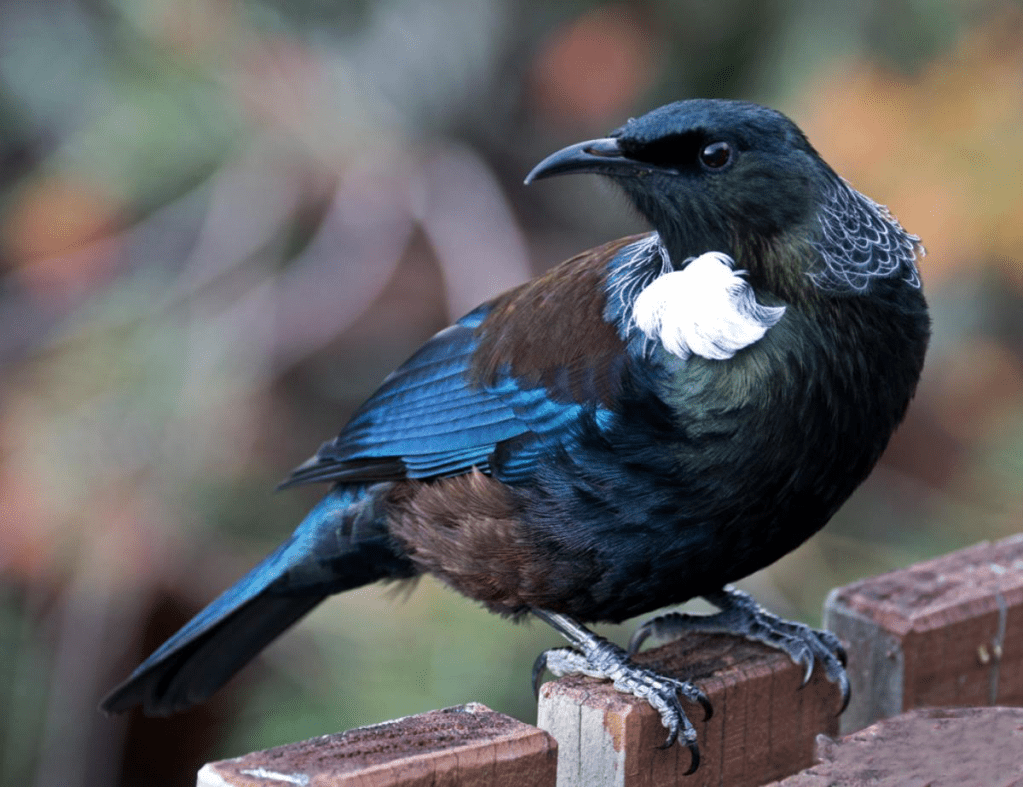
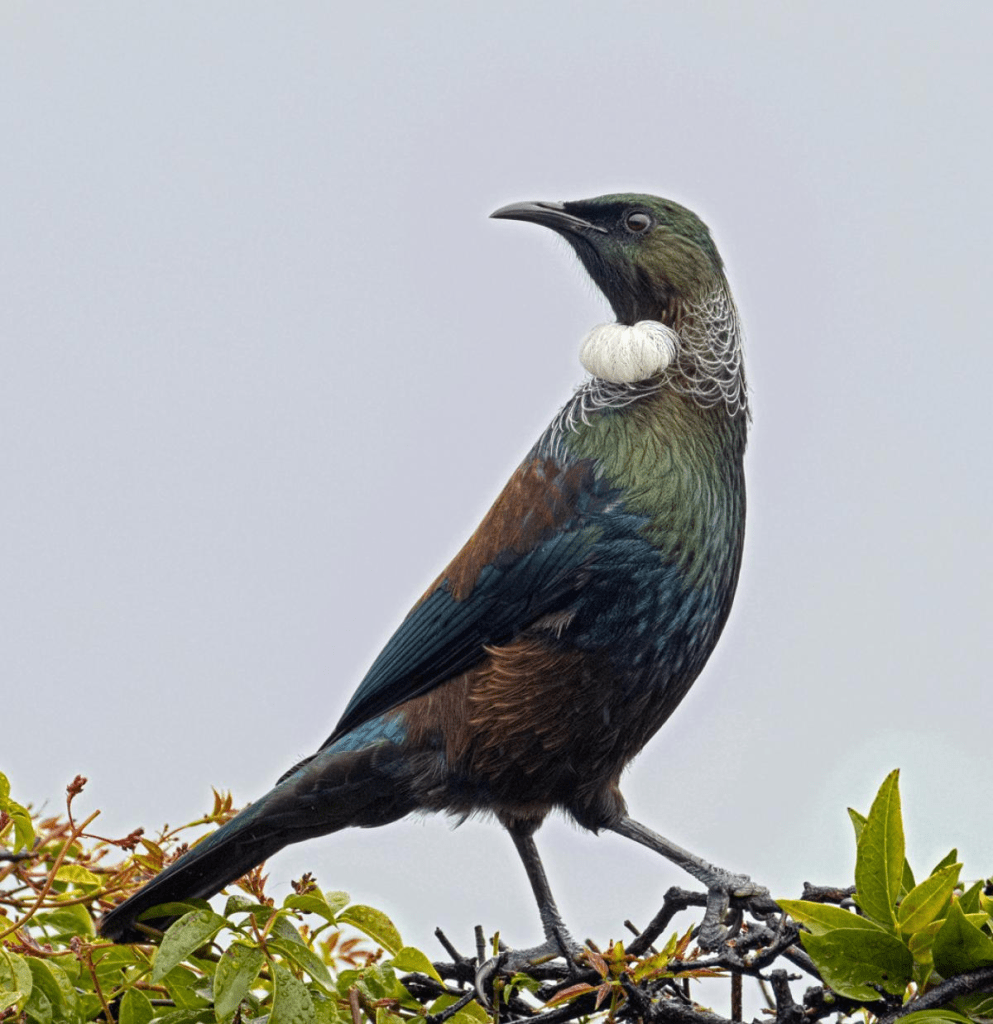
It’s almost impossible to differentiate the songs of the bellbirds and the tuis. The tuis are mimics, and they love mimicking the bellbirds. We have seen tuis everywhere in New Zealand. They are big and bold and very territorial. They fly noisily right over your heads. Usually they appear solid black, but when the light hits them just right, they explode into brilliant blues and greens and browns. The bellbirds, tuis, and fantails are all endemic here. Our three favorite birds.
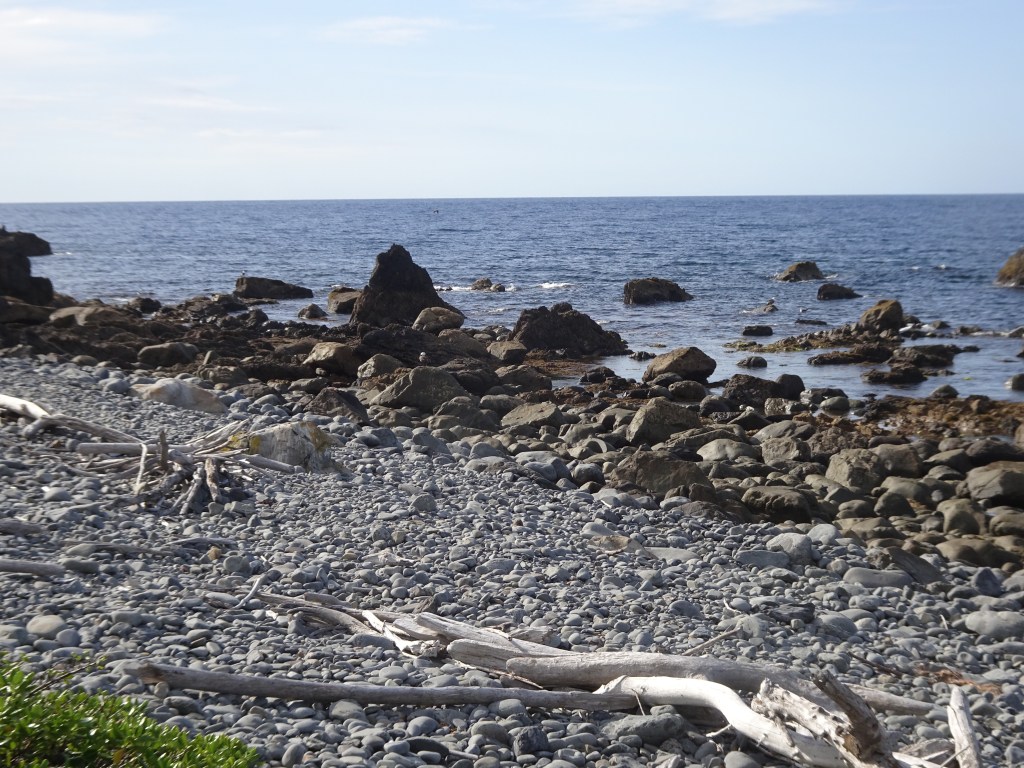
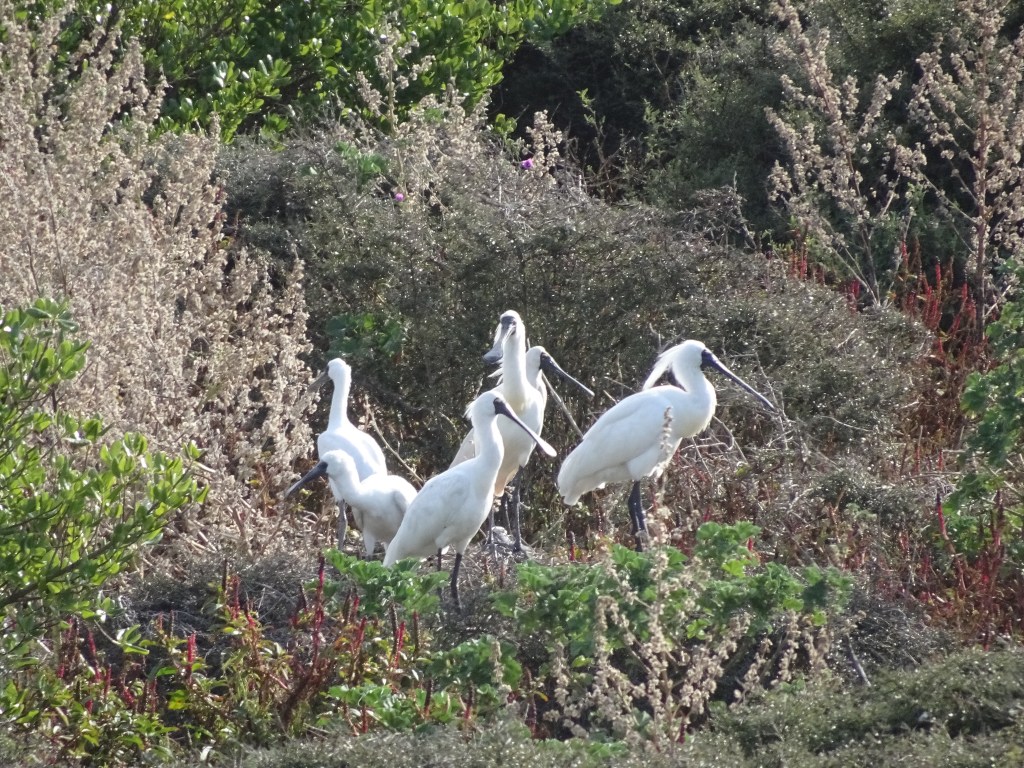
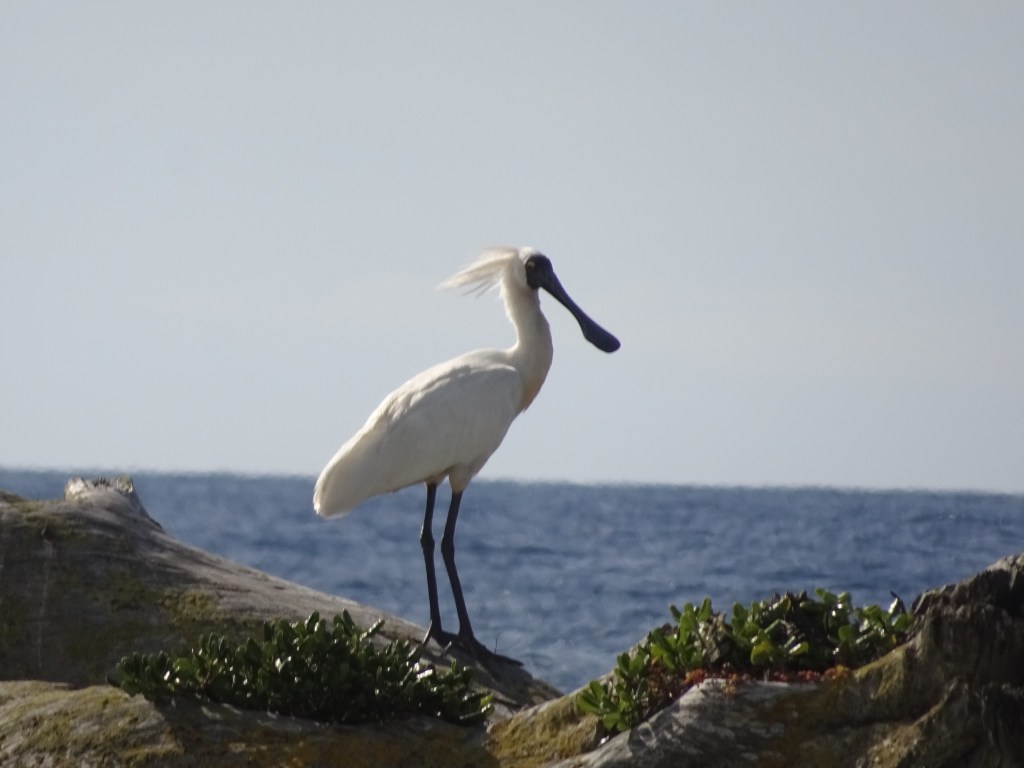
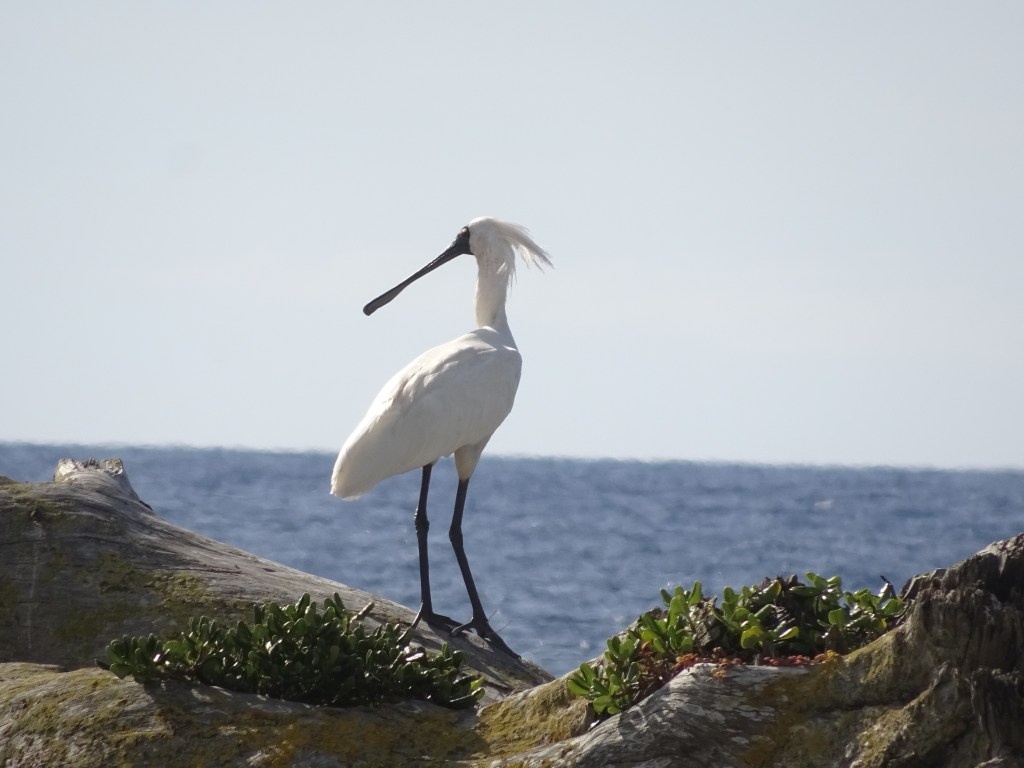
We also hiked around the northern coast of the island on a trail that leaves from the lodge, where we gathered for meals. The coast gets remote pretty quickly, and there is a colony of Royal Spoonbills living out there.
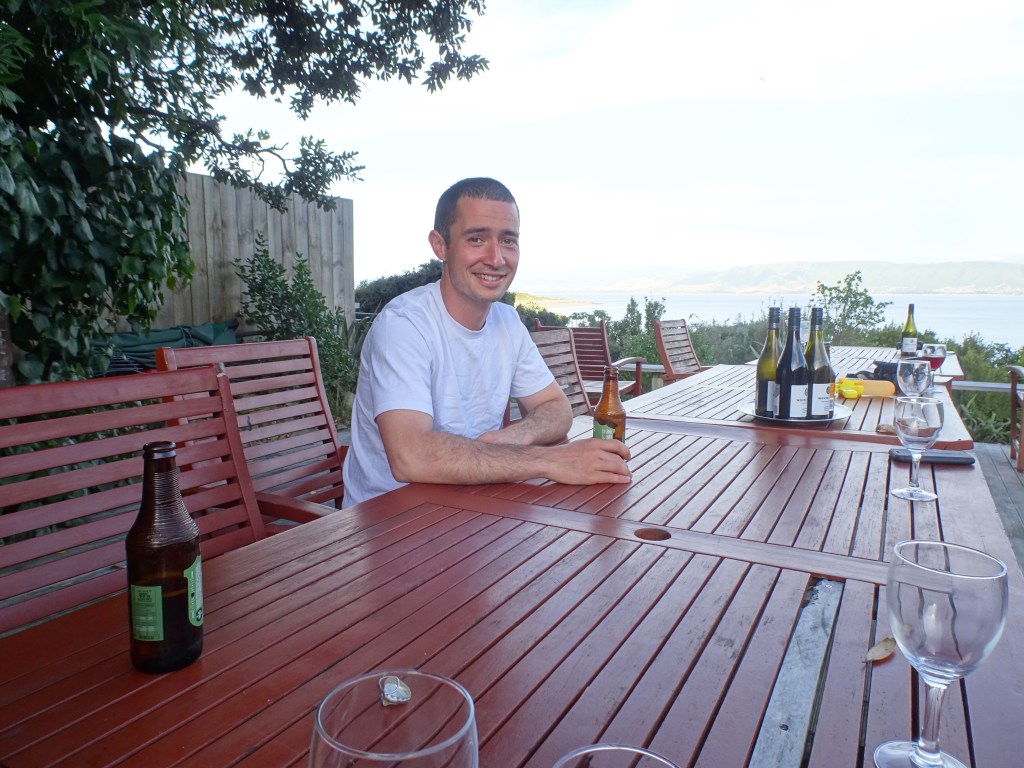
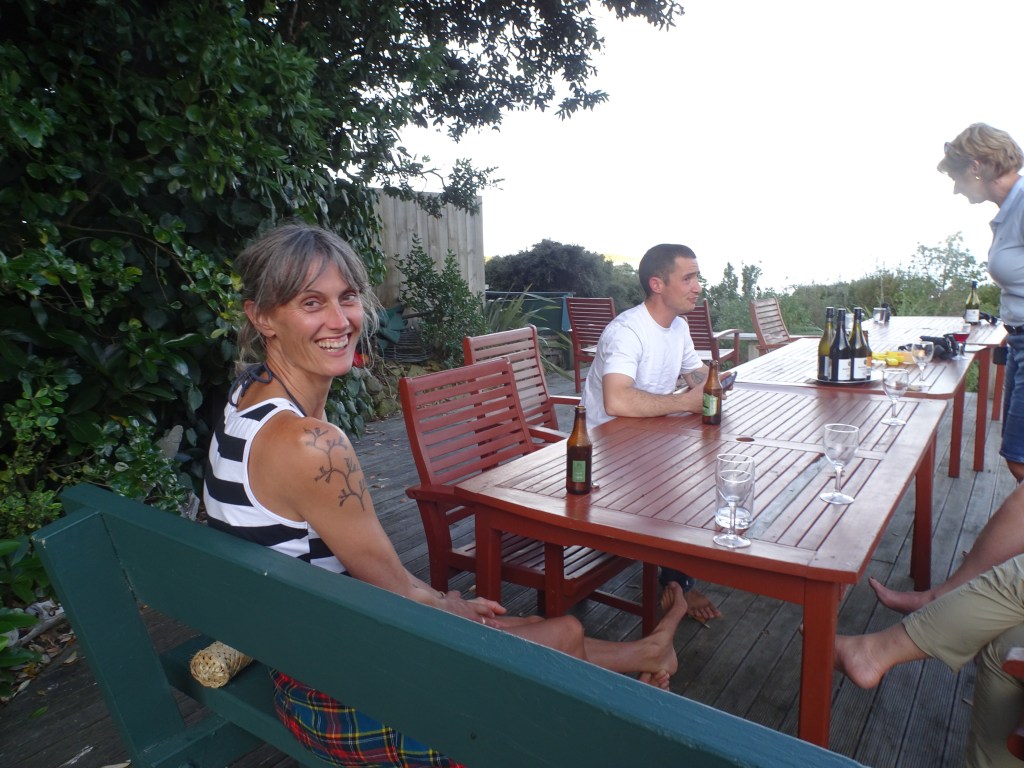
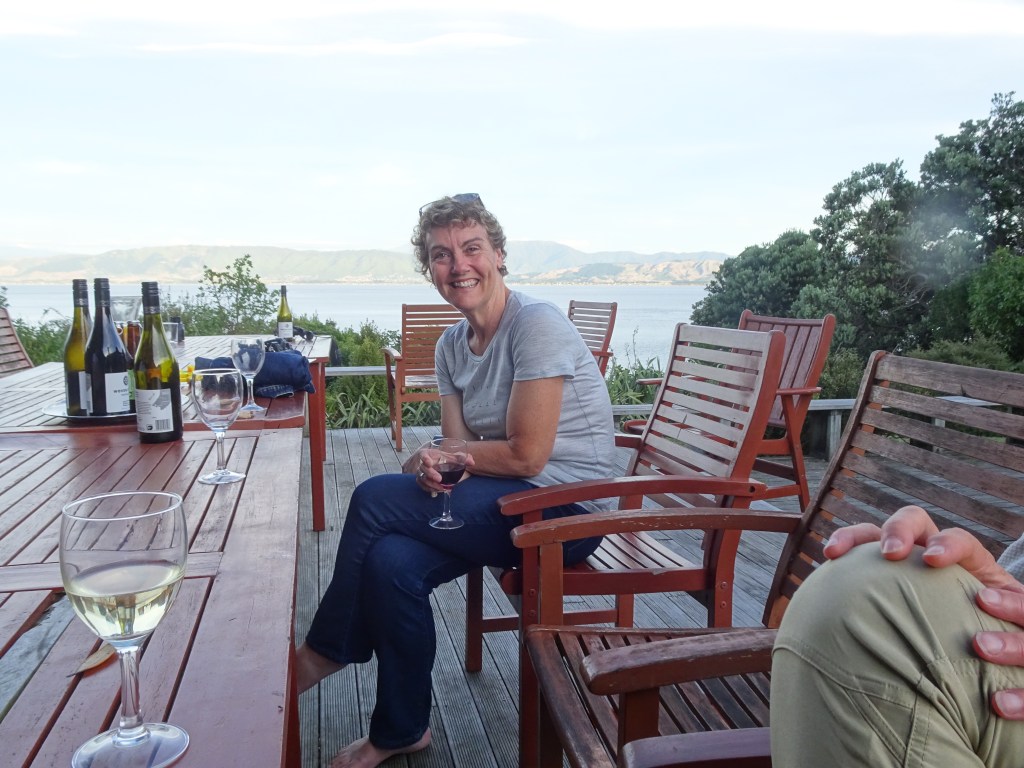
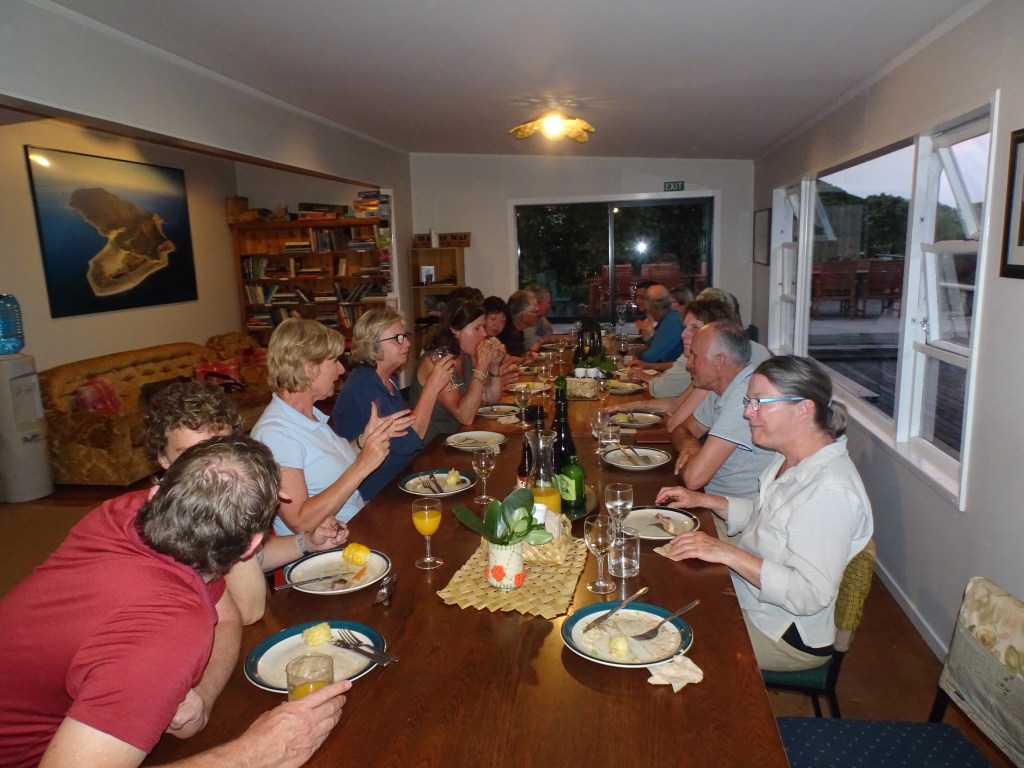
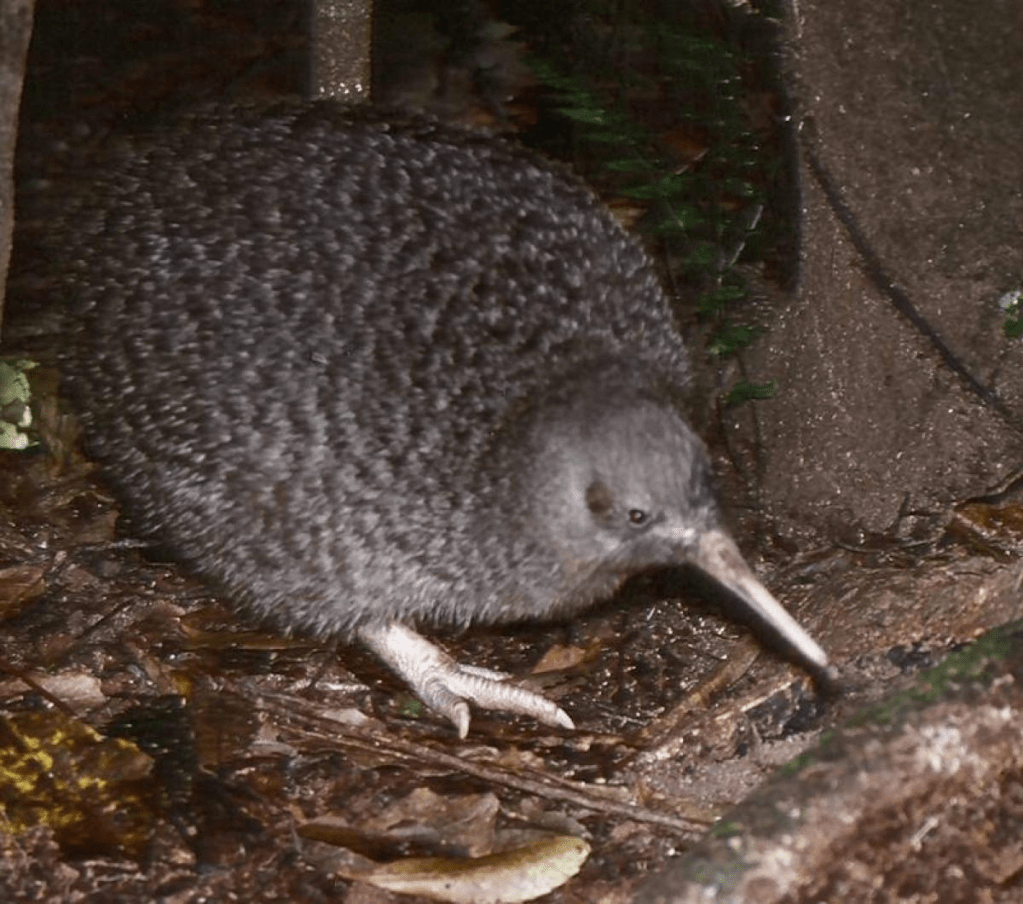
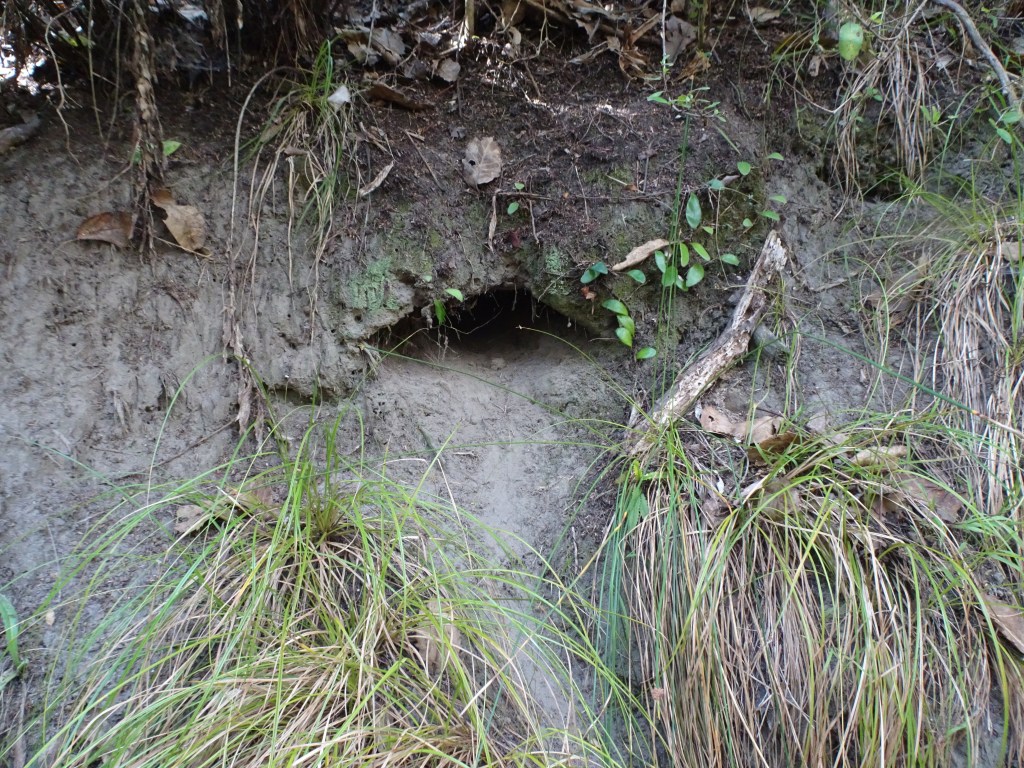
After dinner, Menaaki talked with us about the kiwi bird’s history and life, and then we gathered to go look for them. The birds are totally nocturnal, and they stay to the darkest spaces, poking their beak into the ground, feeling for and smelling for little bugs. During the day, they live in burrows that they dig out, under bushes or into the hillside. The way that you find kiwis is to go out into the dark of night, and be quiet and wait. We went into stealth mode, then followed Menaaki and his red light. After an hour, we saw one, snuffling around in the brush. We watched it for about a minute and then it disappeared. There are five distinct species of kiwi in New Zealand. The one who lives here is the Little Spotted Kiwi. There are about 1200 to 1400 of them on Kapiti, and that’s the limit, given their territory behavior. There used to be millions on the mainland, but they are extinct now. The government is trying to re-establish colonies elsewhere, because if something happened to this population, it would be disastrous.
We left Kapiti Island with a deeper understanding of the challenges and promises of making choices and commitment. The island is a treasure, but sanctuary islands are not enough. They are kind of like museums where we can go to see what life used to be like. The real challenge and promise lies ahead.
 Rolling Through Kiwiland
So cool !!! You guys are really bird nerds !!! hahahaha ! so interesting about the nz birds ! mahalo for the post, Mike! Love to see all the pics of the birds and you guys with your big smiles and fun adventures ! xxo
o
LikeLike
This is so much fun. What you said about going out at night and creeping around reminded me of “snipe hunting” — when you get back we should all go out! 🙂
You make sitting at home a great adventure — Thanks. By the way I missed Monica’s BD — Happy BD Moni.
LikeLike