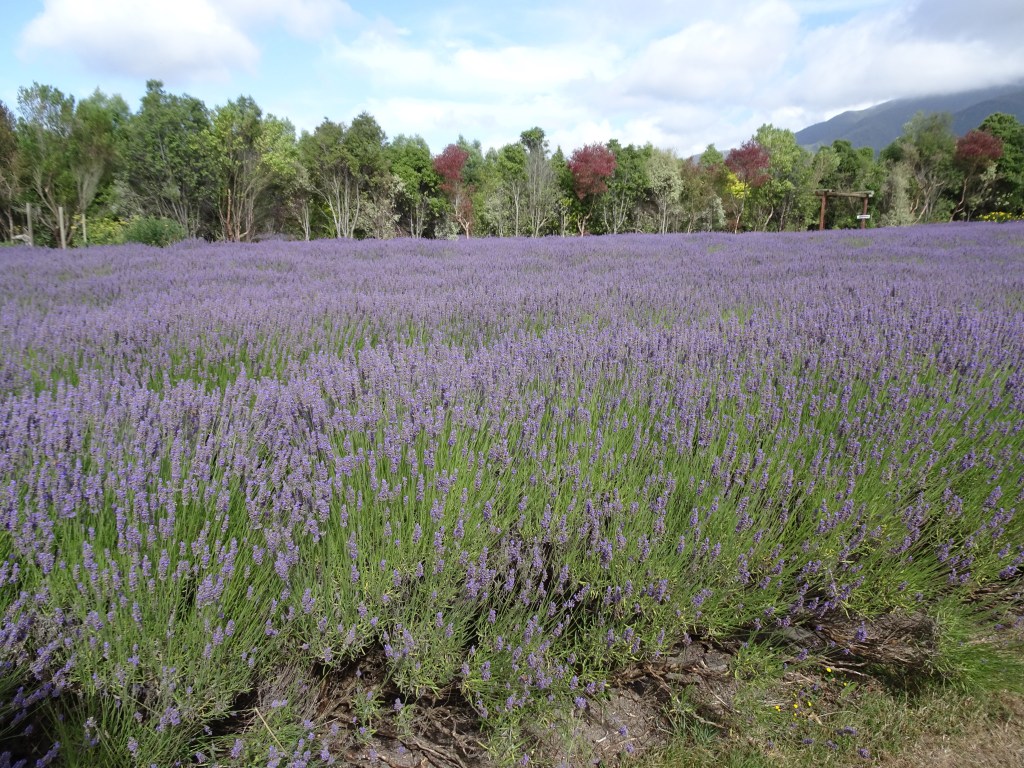
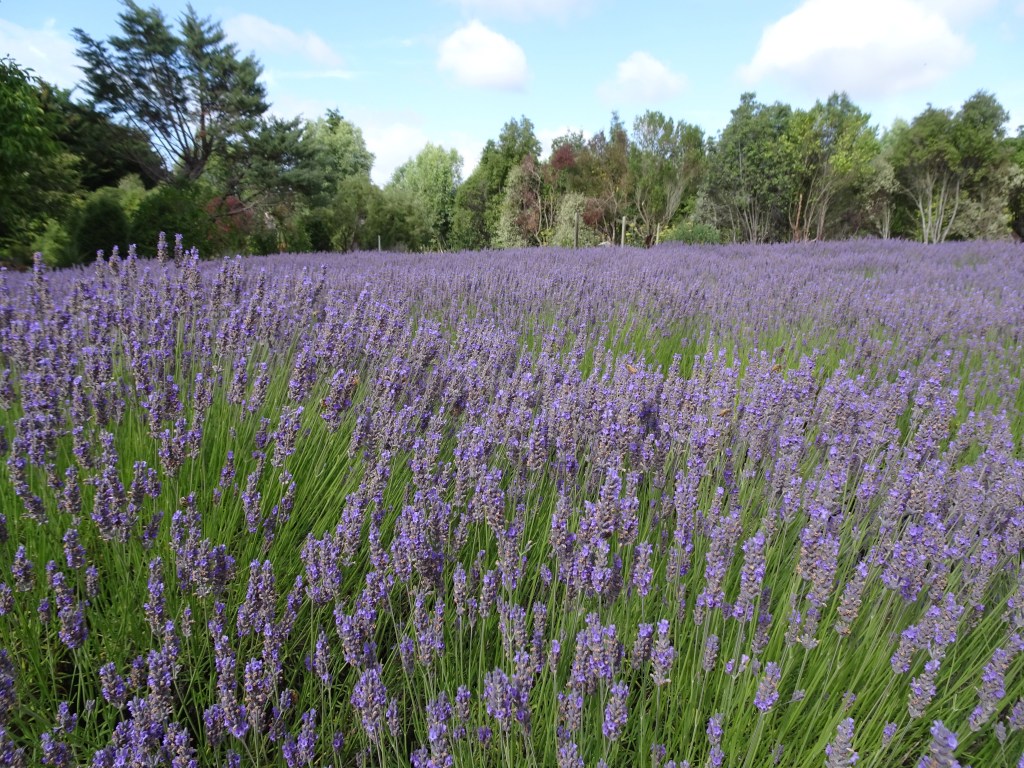
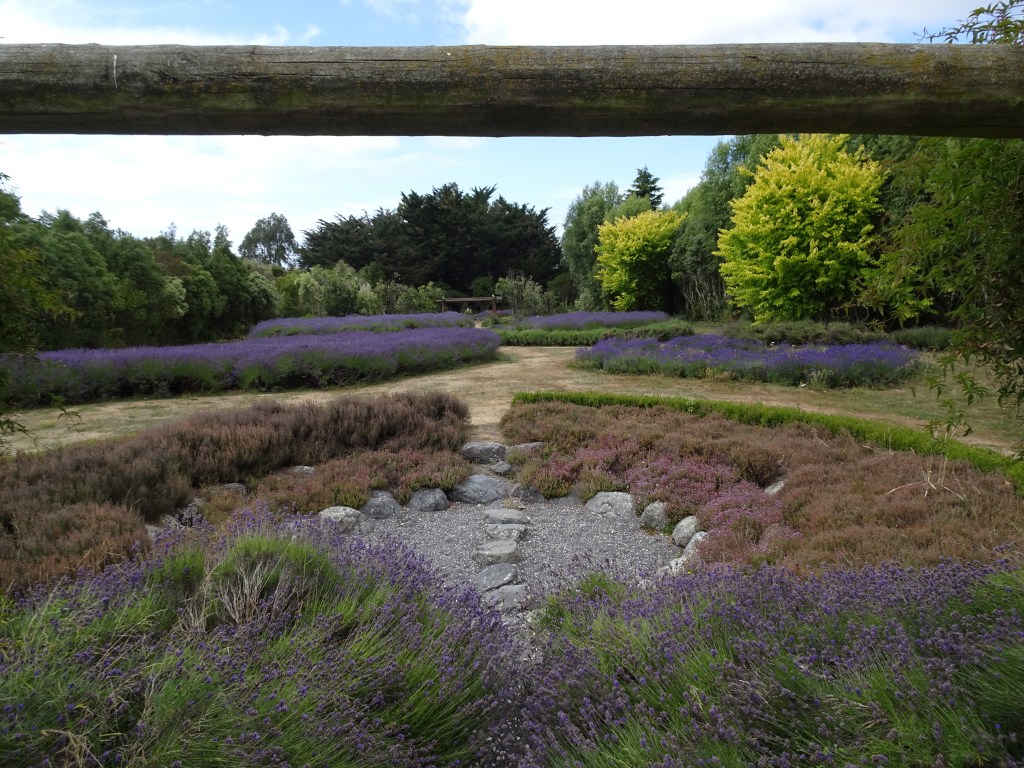
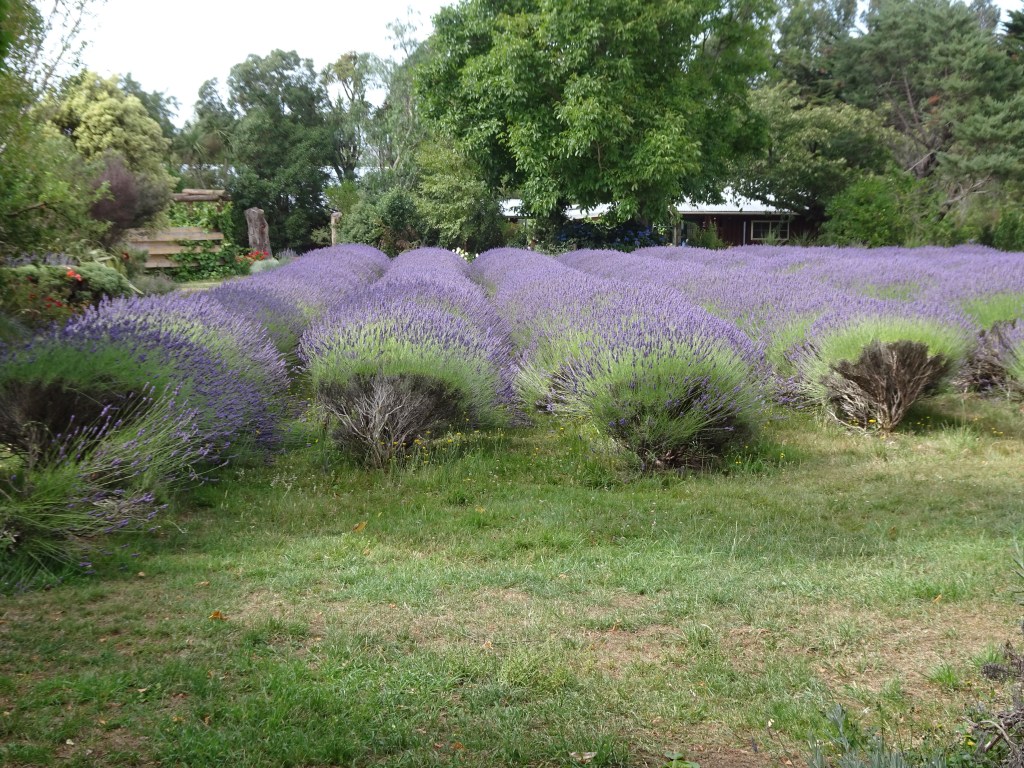
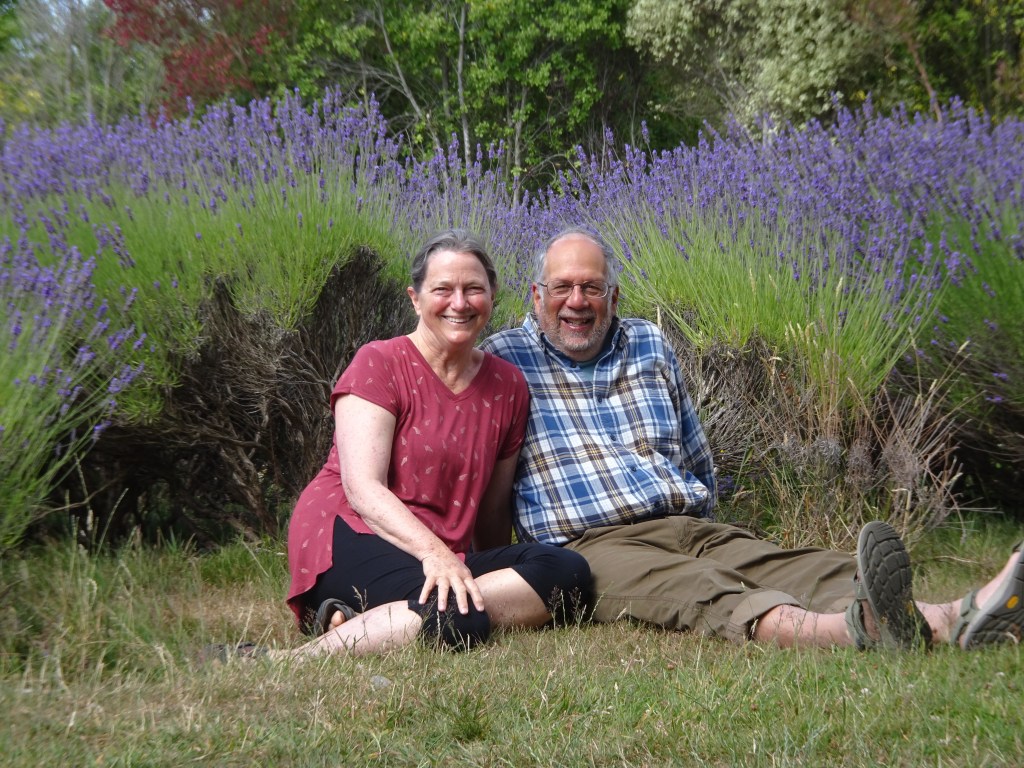
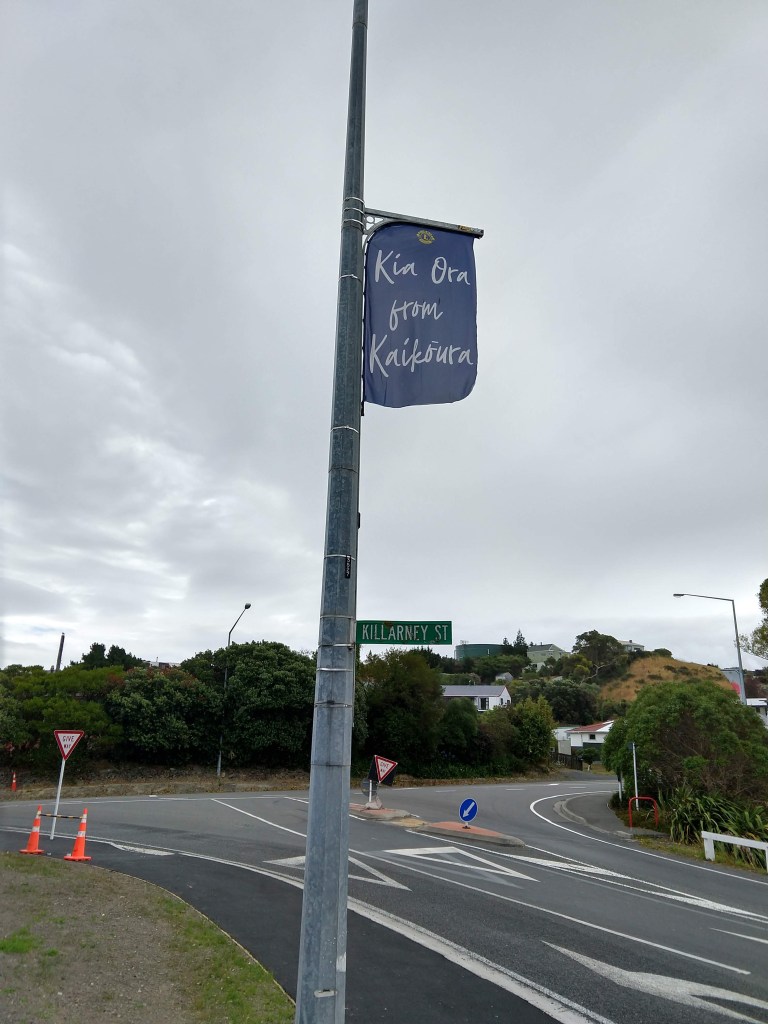
After we left the town of Kaikoura, we went on a two-day hike along the coast and up into the mountains. Before we drove off for the hike, though, we stopped at Lavendyl Lavender Farm. The lavender here is in full bloom. It is full summer now. The lavender was alive with color and with bees. It was impossible not to be happy there.
Enlarge this one and you’ll see all the bees!
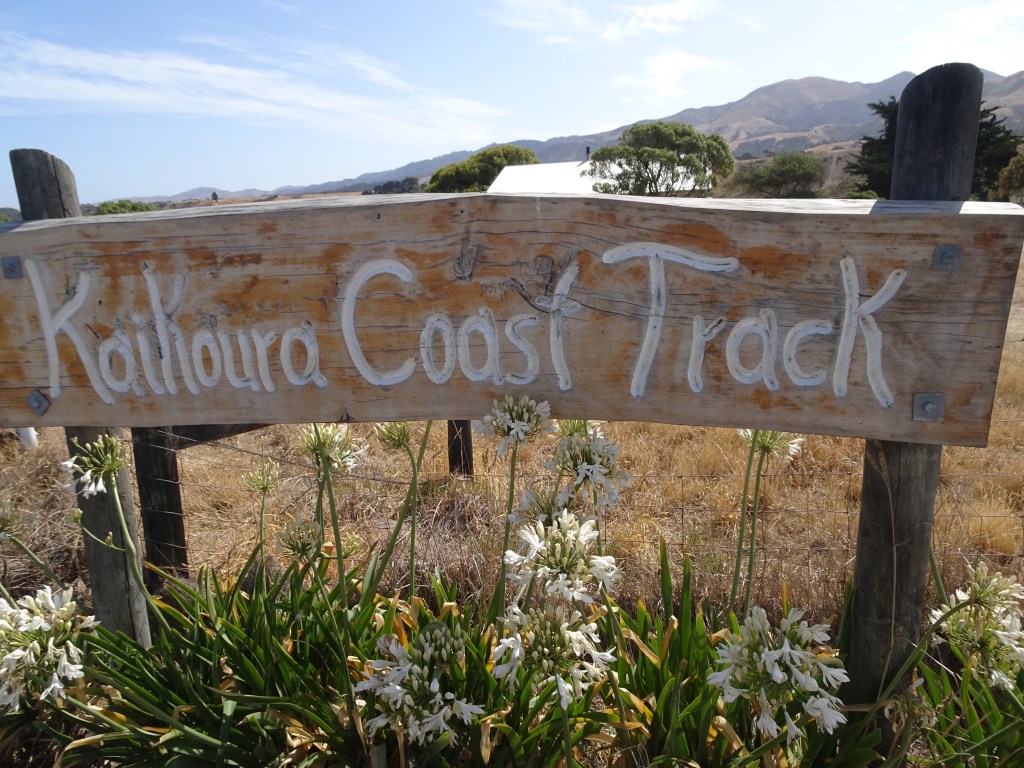
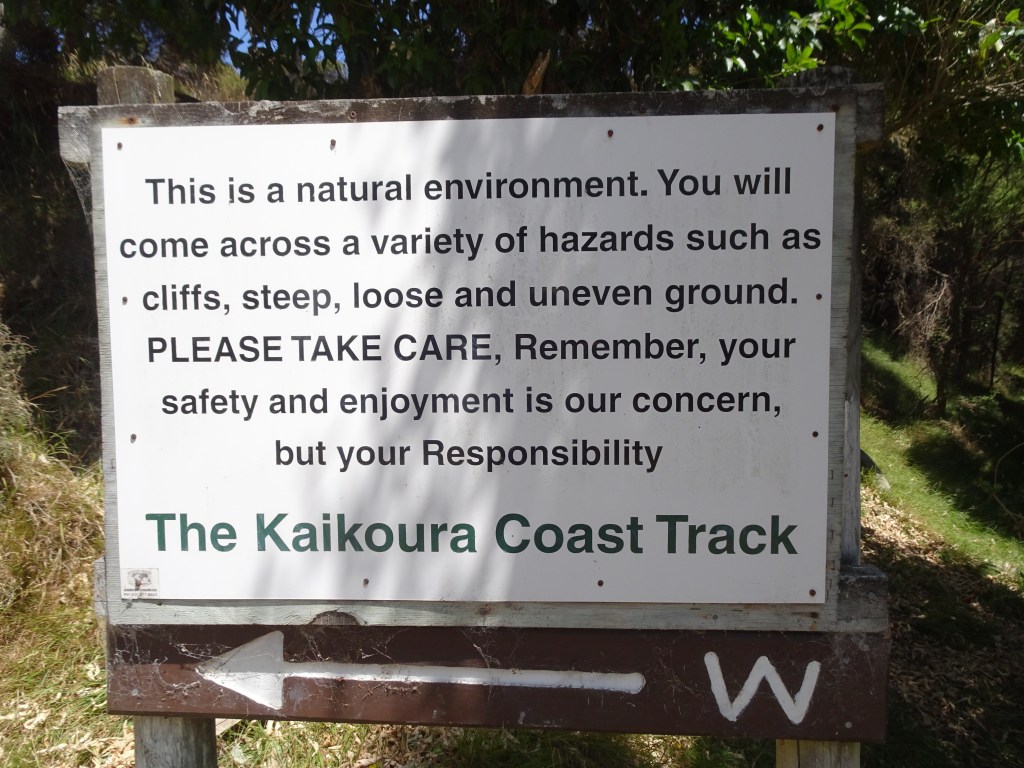
The Kaikoura Coast Track
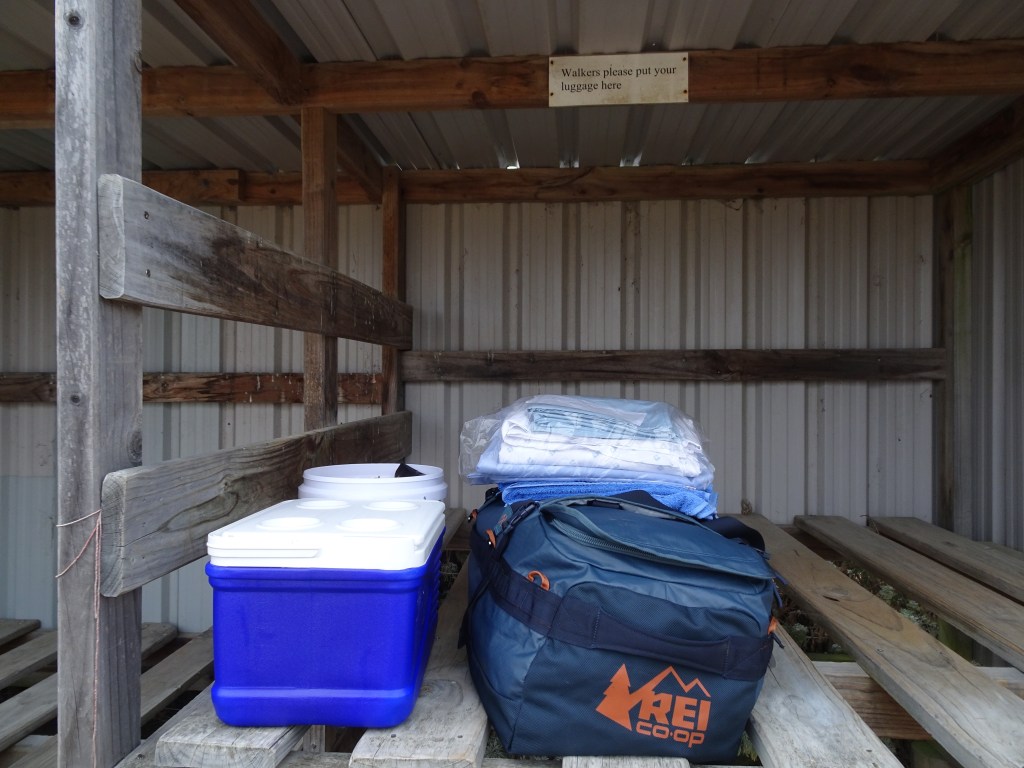
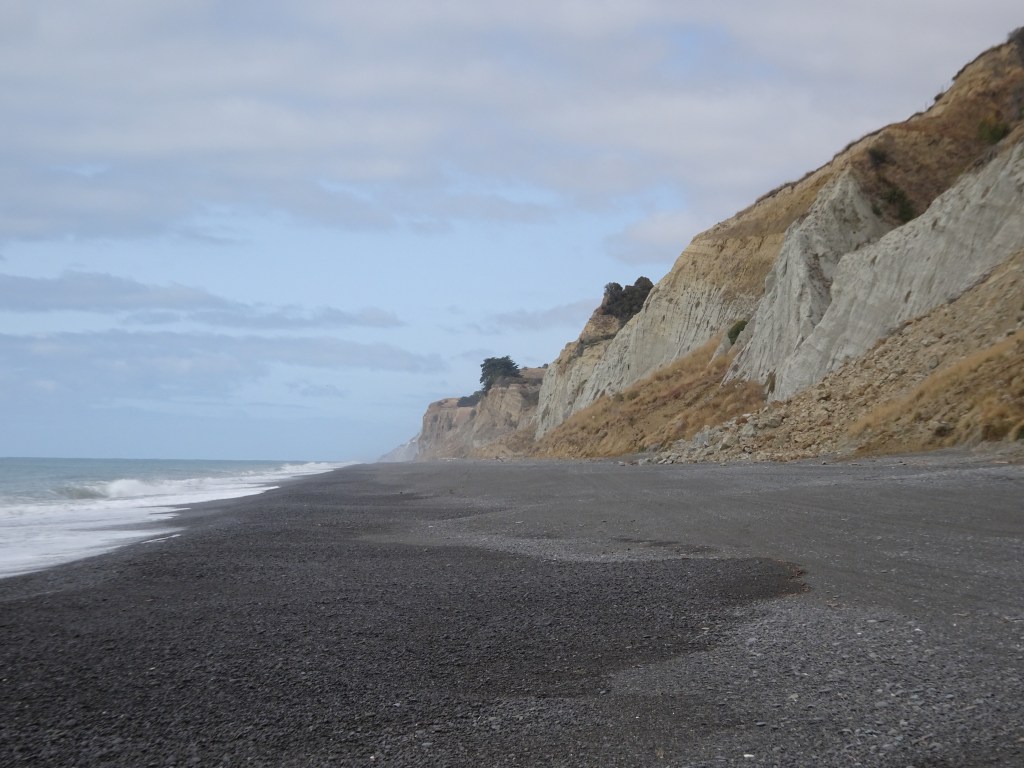
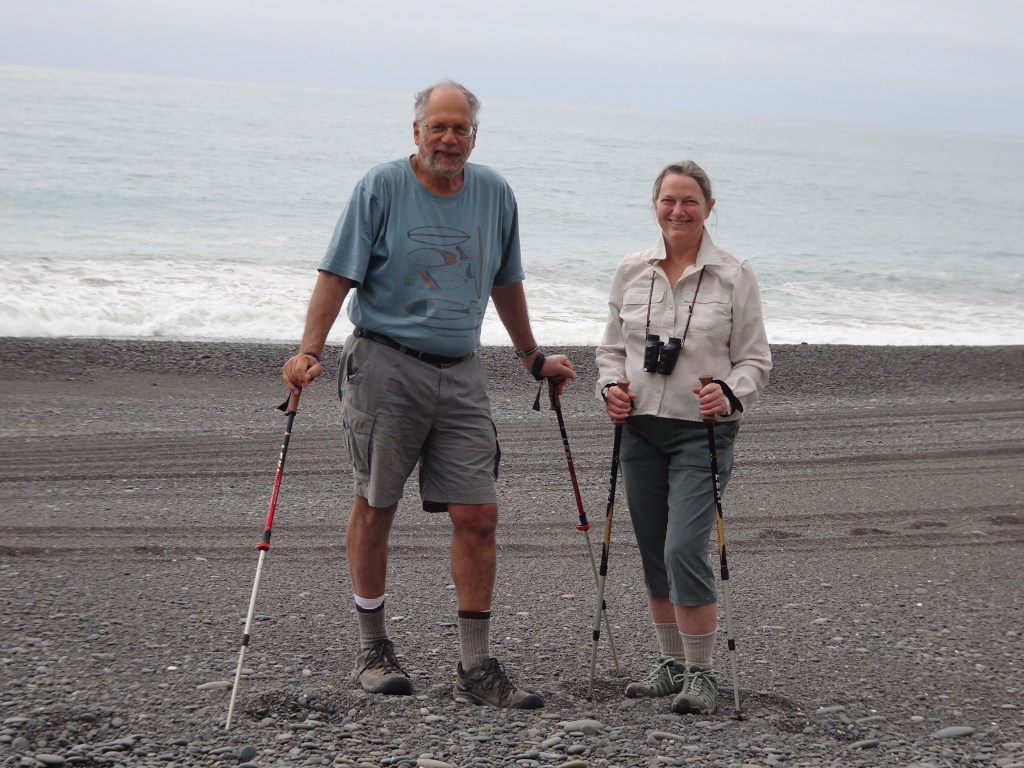
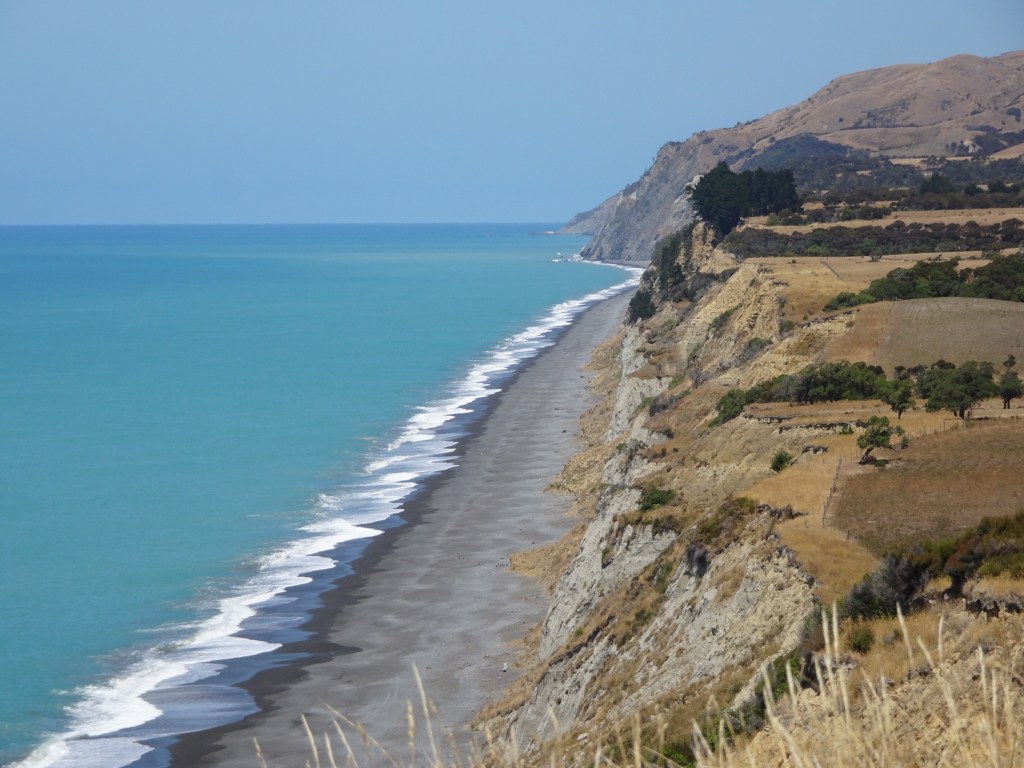
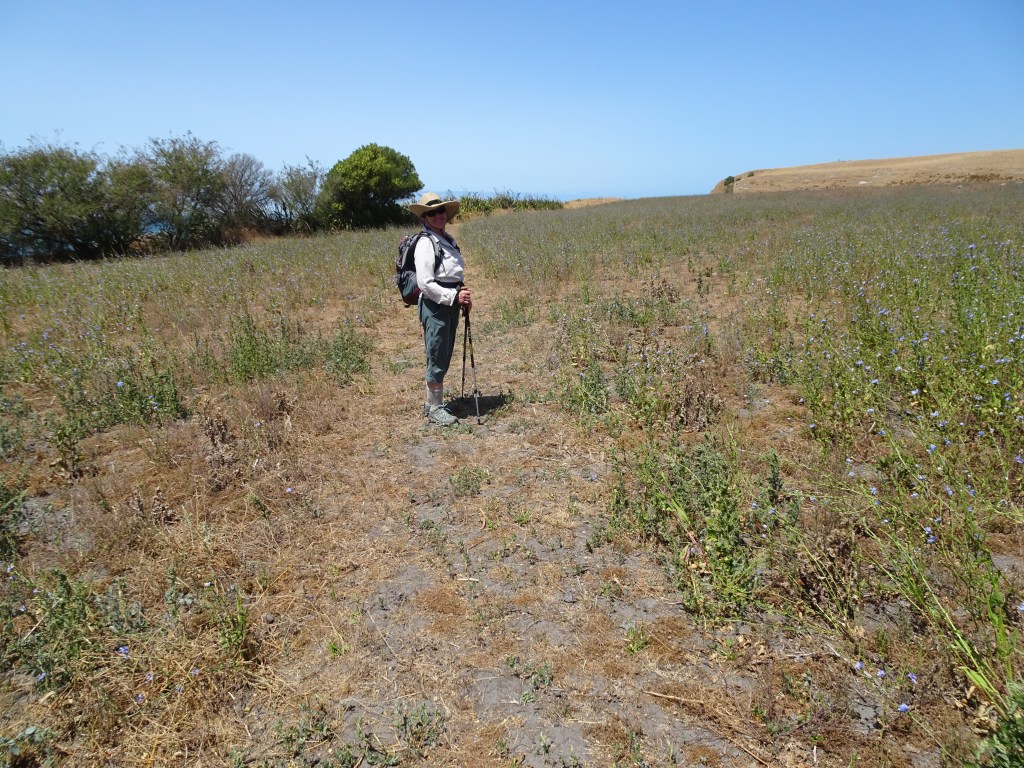
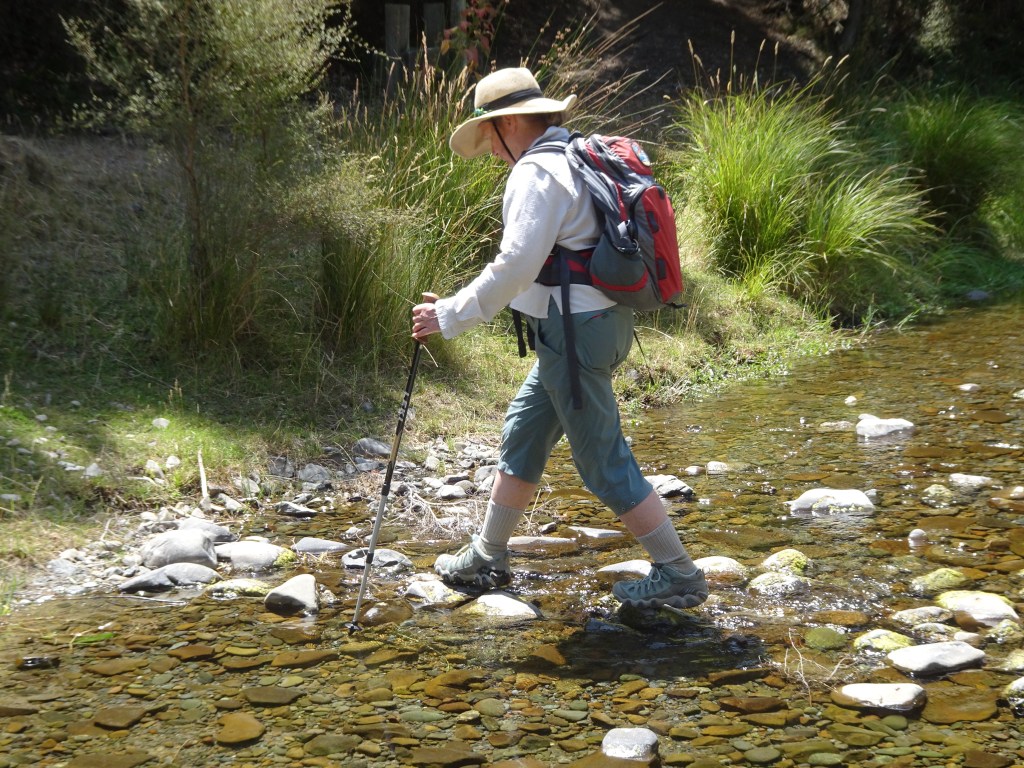
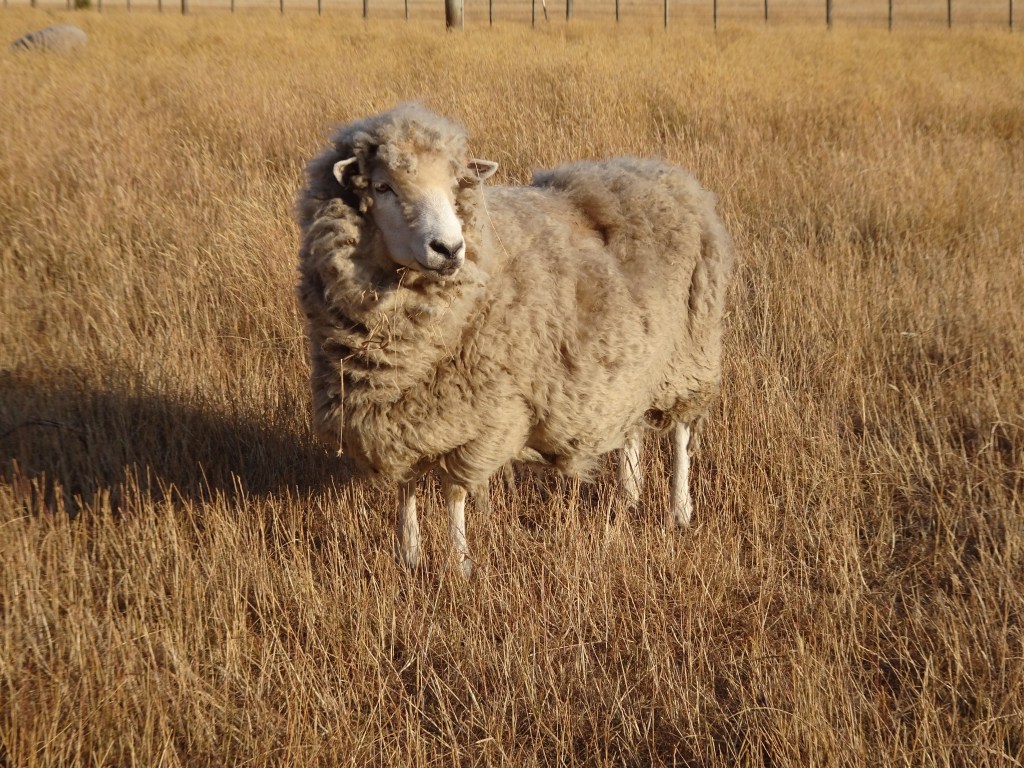
The Kaikoura Coast Track is a two-day hike which goes along a section of deserted beach, then up through private farm land to the mountains and forest. The people who own the land, and manage the hike, are fourth-generation sheep farmers who are conservationists and ambassadors. They have been managing the walkers on this hike for twenty two years now. We stayed in a beach house the night before the hike, and Bruce drove all of our gear except our day-packs up to another cottage. That was our destination for the day, a 13-kilometer hike.
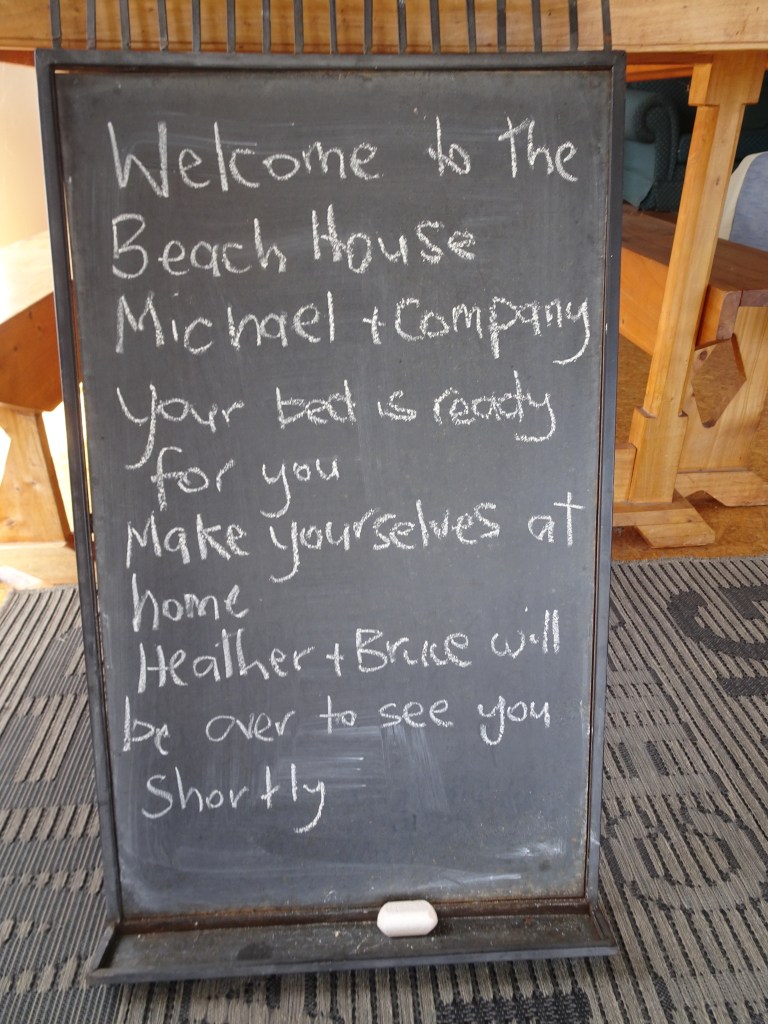
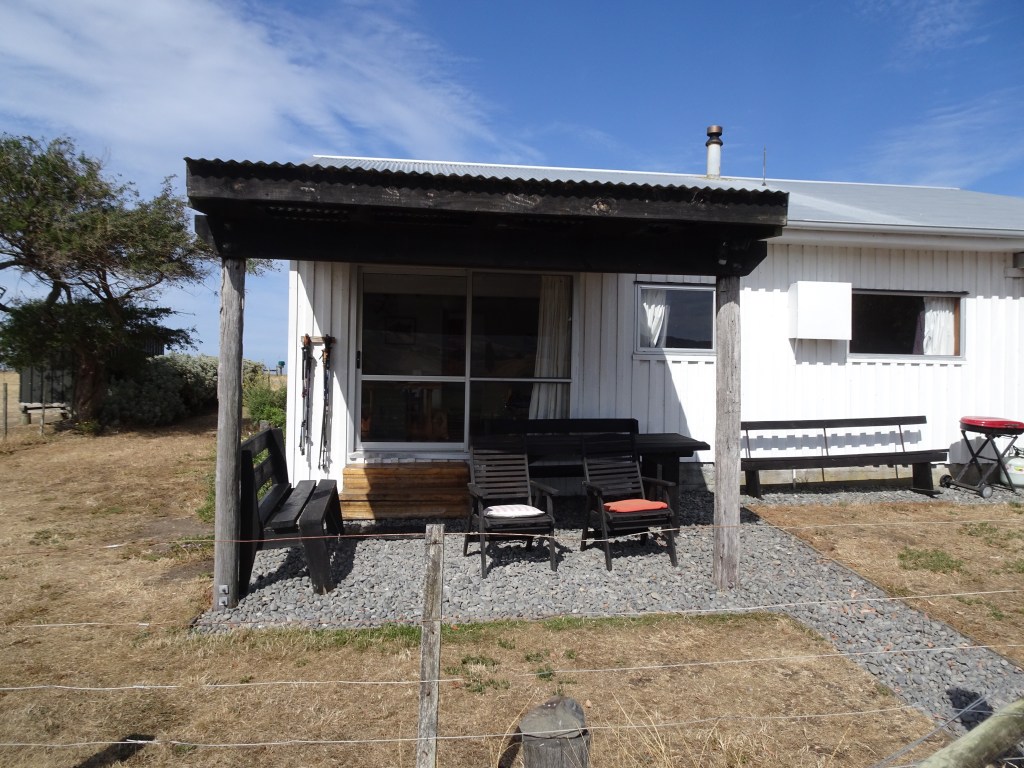
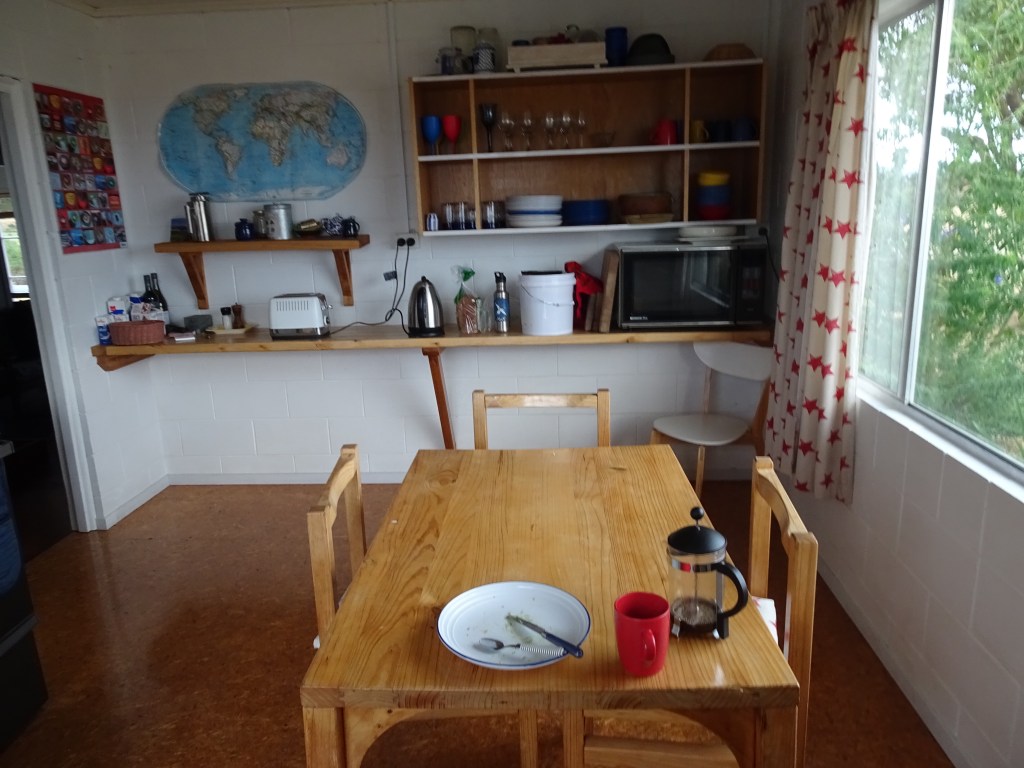
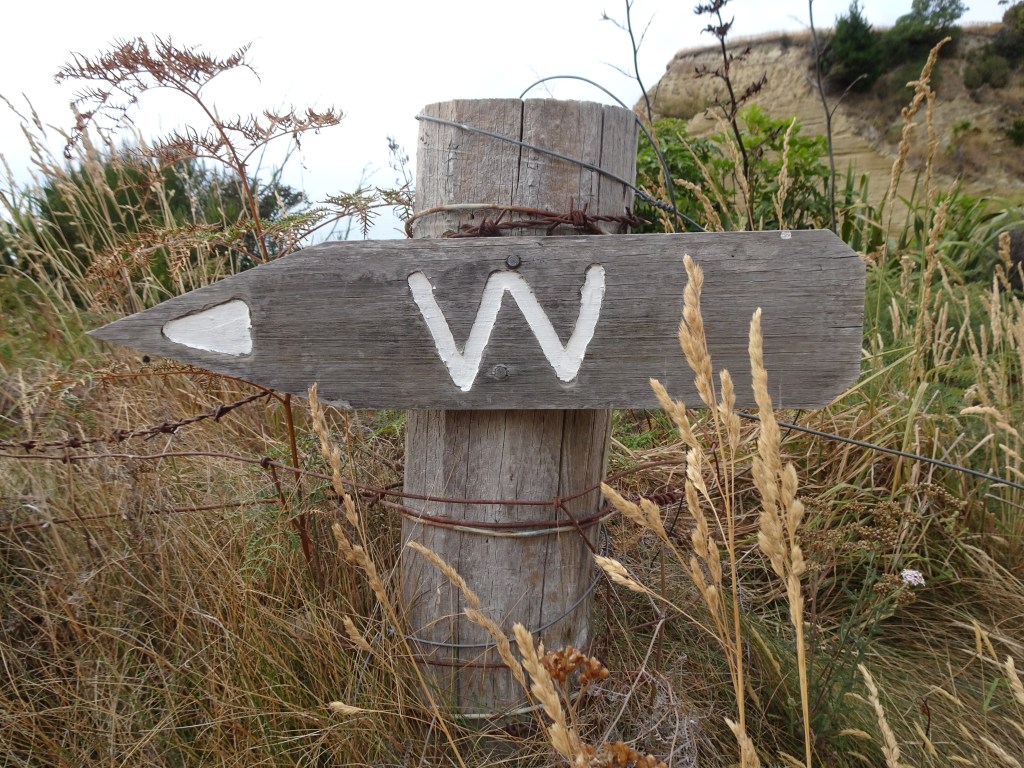
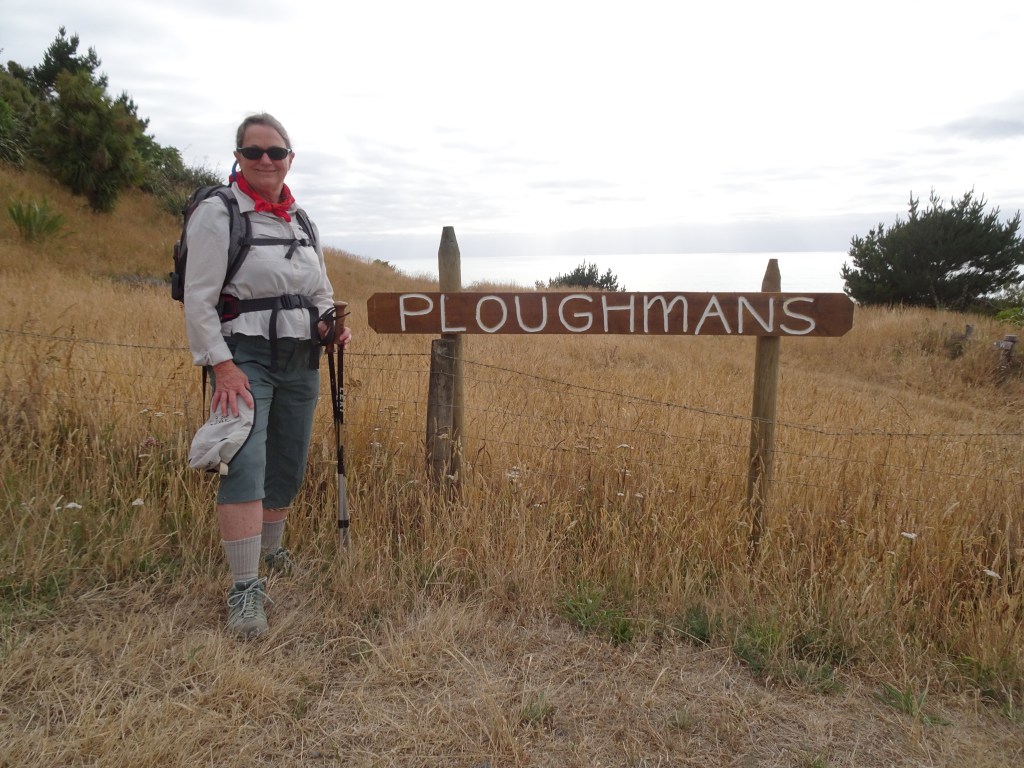
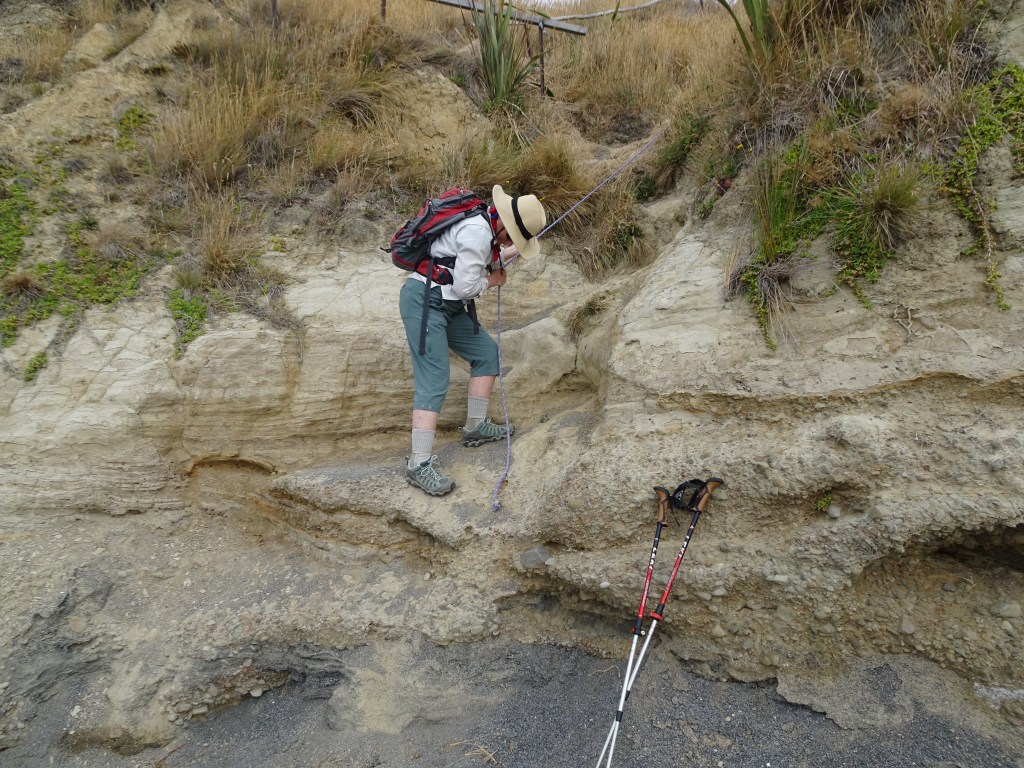
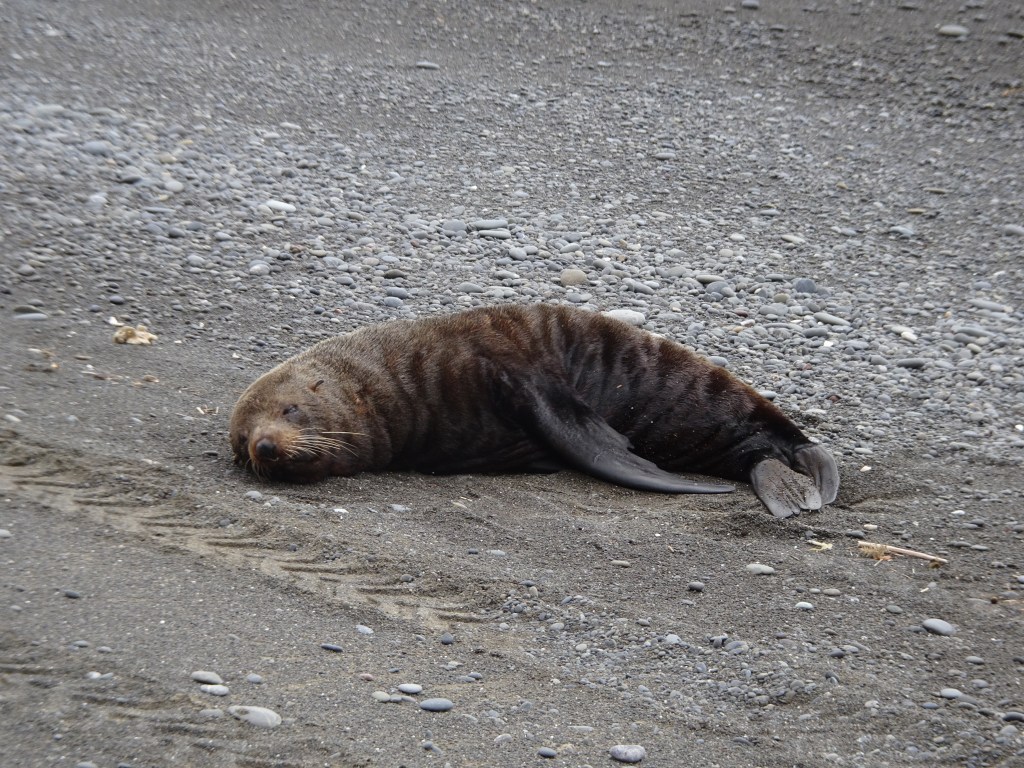
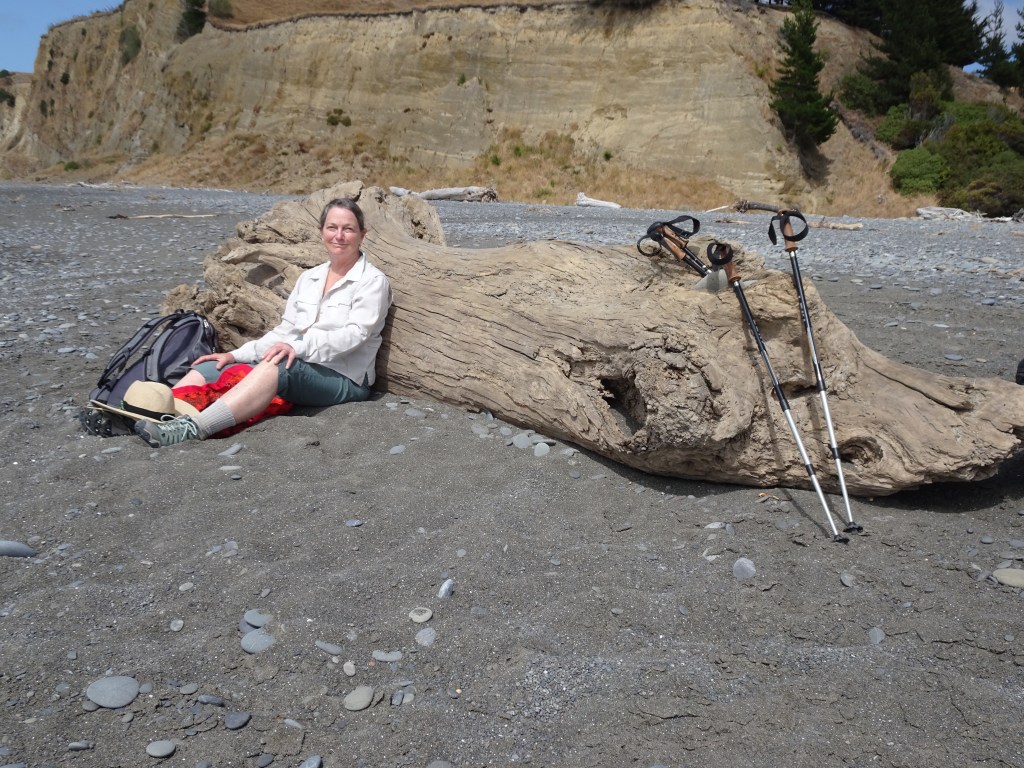
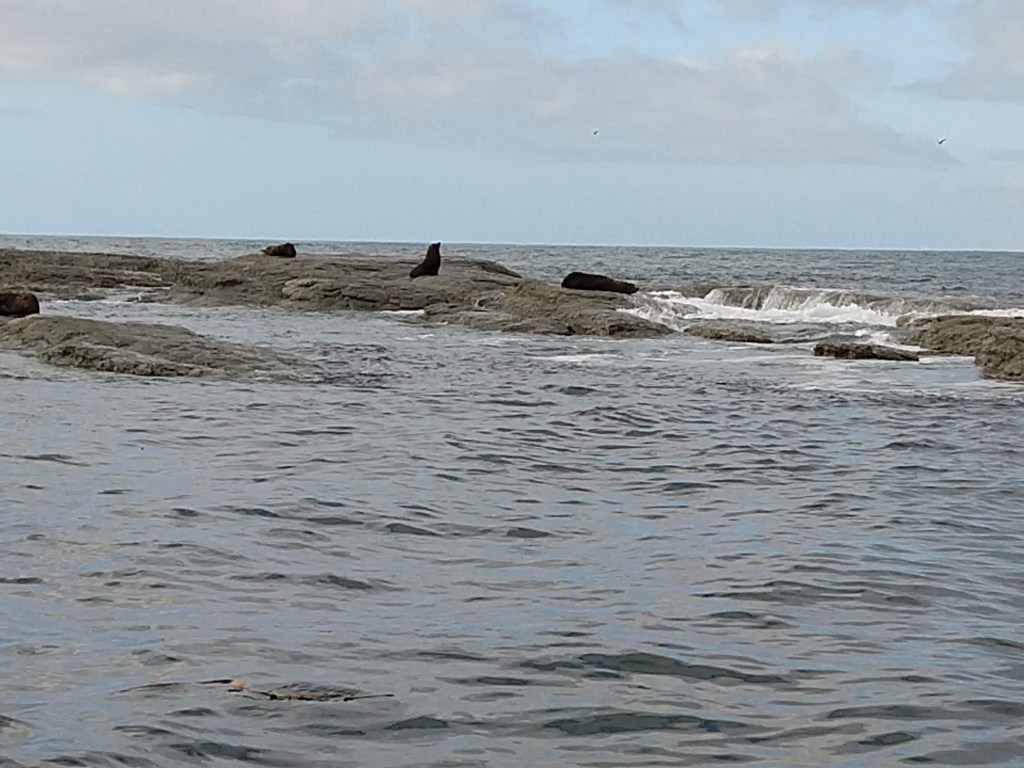
We arrived late in the afternoon, and we had the house to ourselves. There is room enough for ten people on the hike, but on this day, we were the only ones. The Beach HouseTaking advantage of the late-afternoon lightWe put our gear here in the morning, then started hiking. It was waiting for us at the end of the day. Look for the Ws. We guessed it stood for Walkers.The beginning of the hike, down to the beach.A bit of a scramble.Heading southA New Zealand fur seal taking a break.We saw Hector’s Dolphins swimming and leaping. New Zealand is the only place that they live.
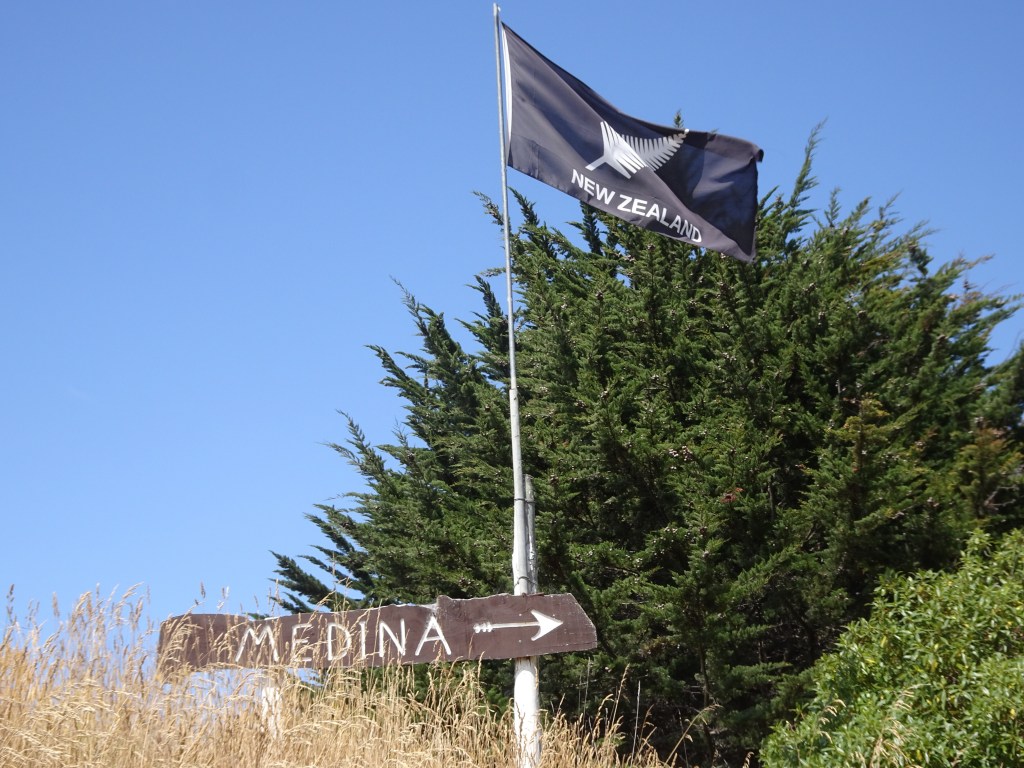
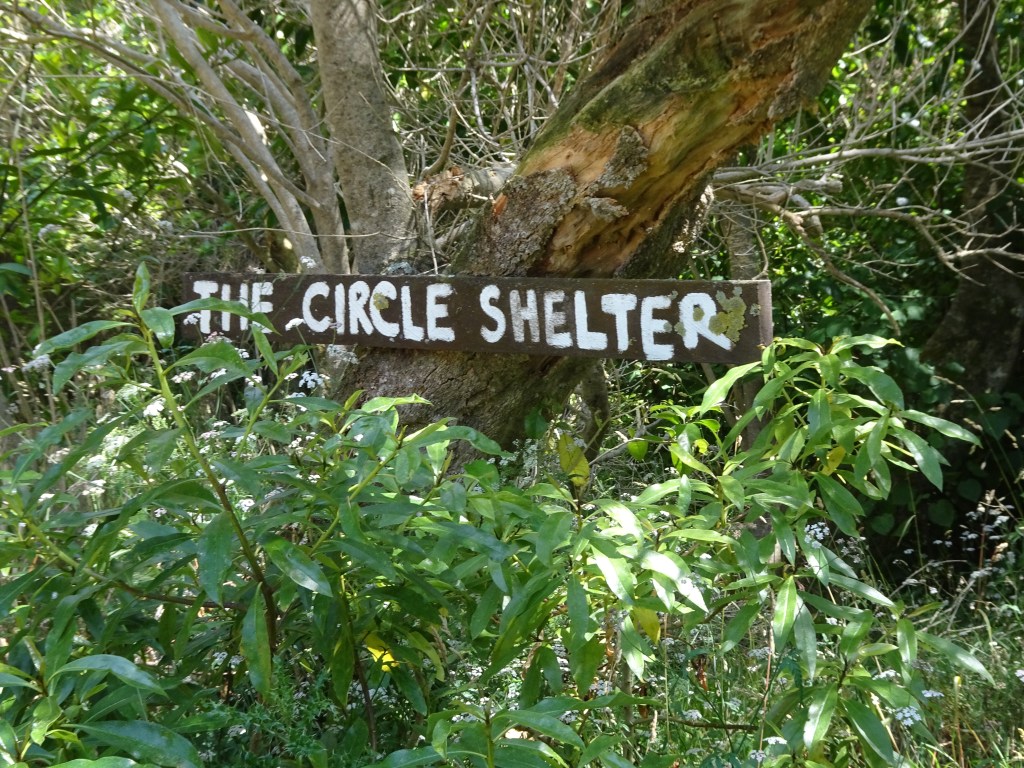
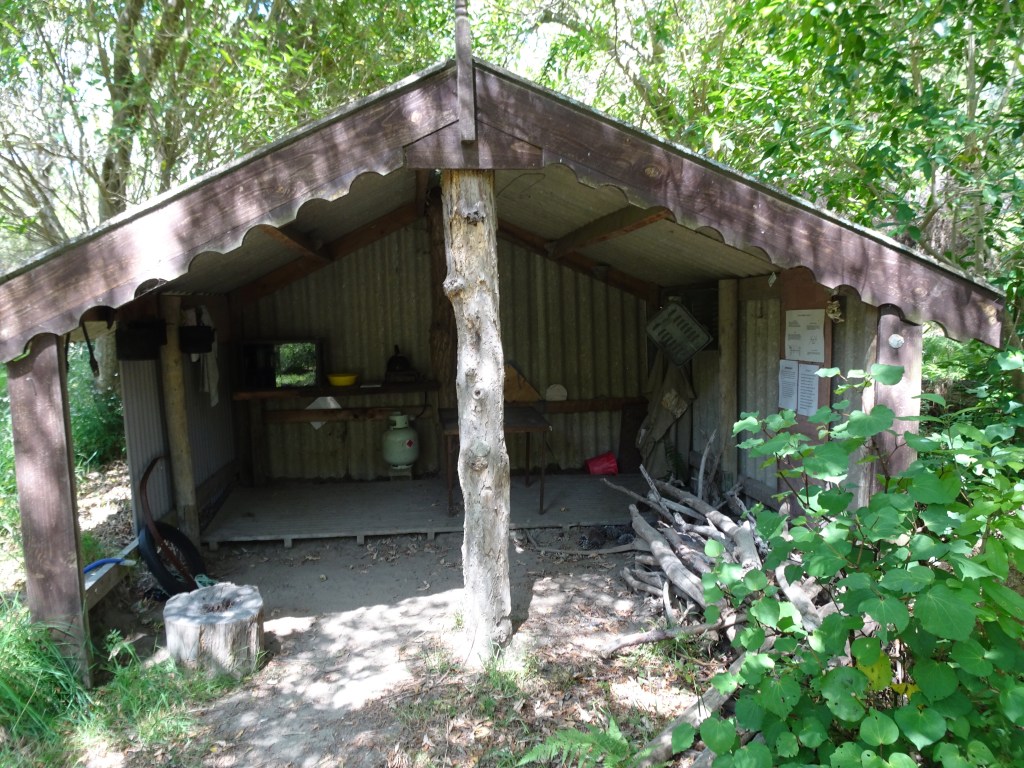
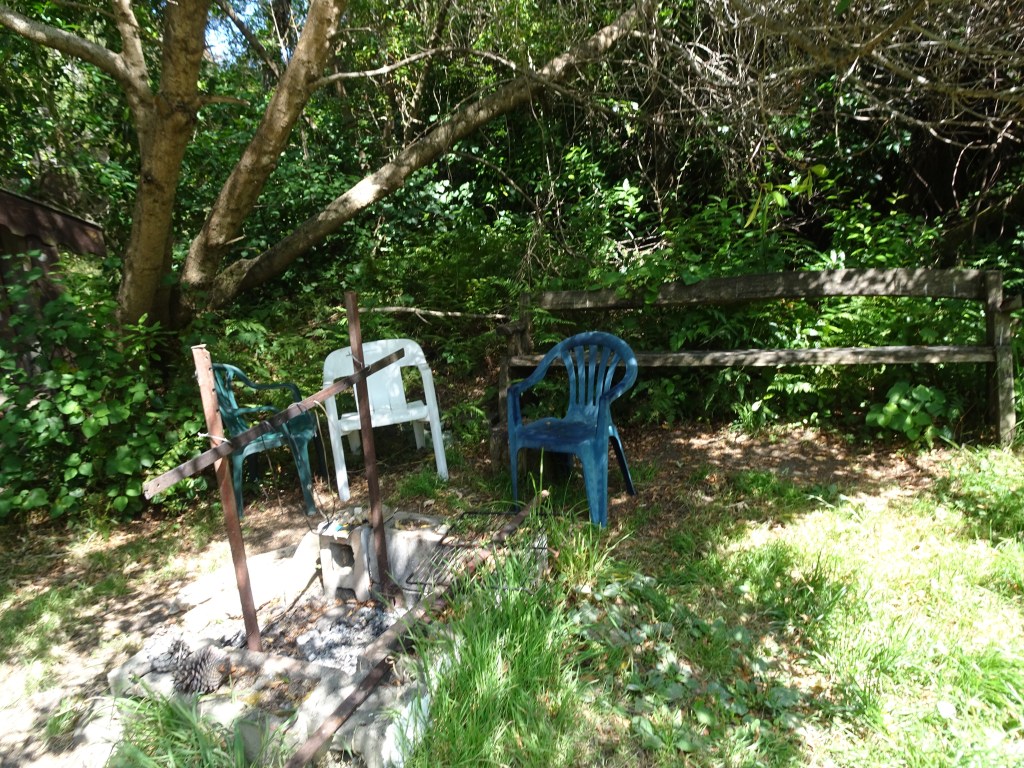
We hiked down the beach for about five or six kilometers, then turned off to start inland. The turnoff was marked with a Fern Flag, and there was a shelter there, ideal for lunch. There was coffee and tea bags, and running water, and if you were so inclined, you could build a fire and boil water in one of the pots. If we had been in Argentina with Argentinians, we could have had mate, their national drink.
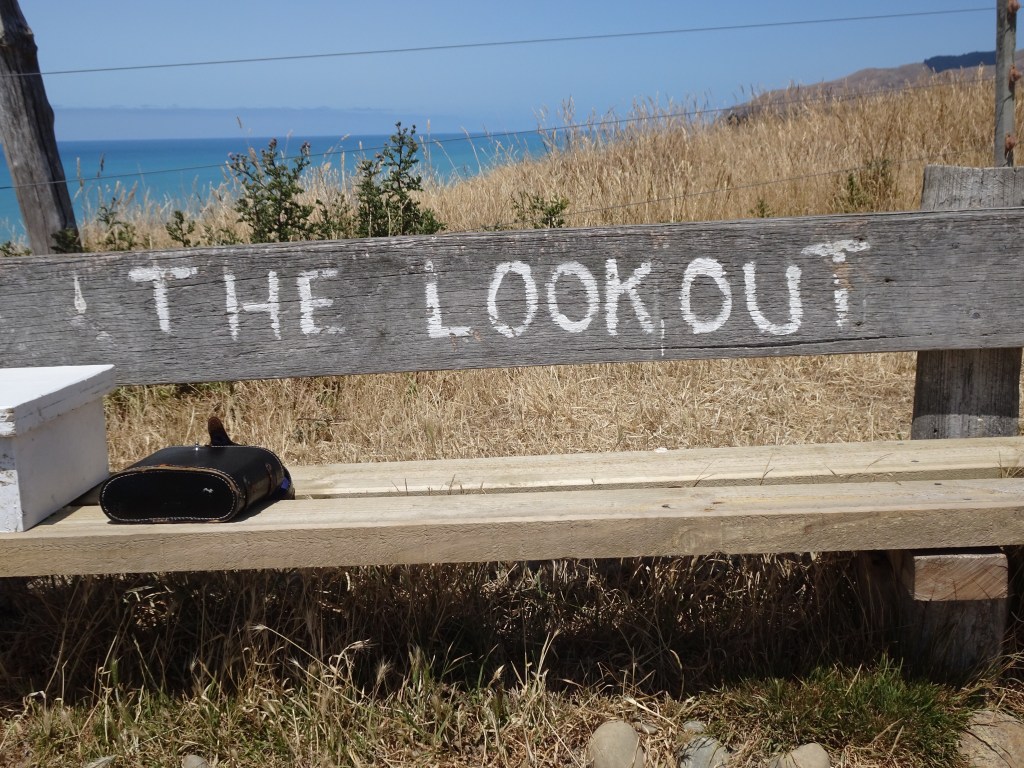
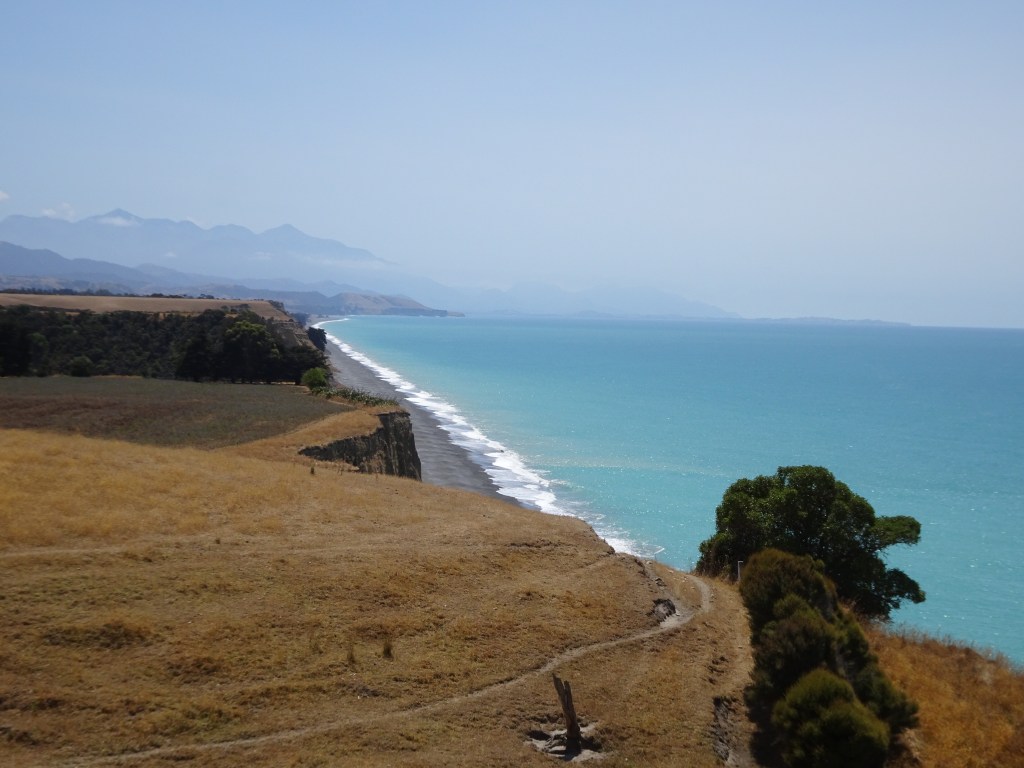
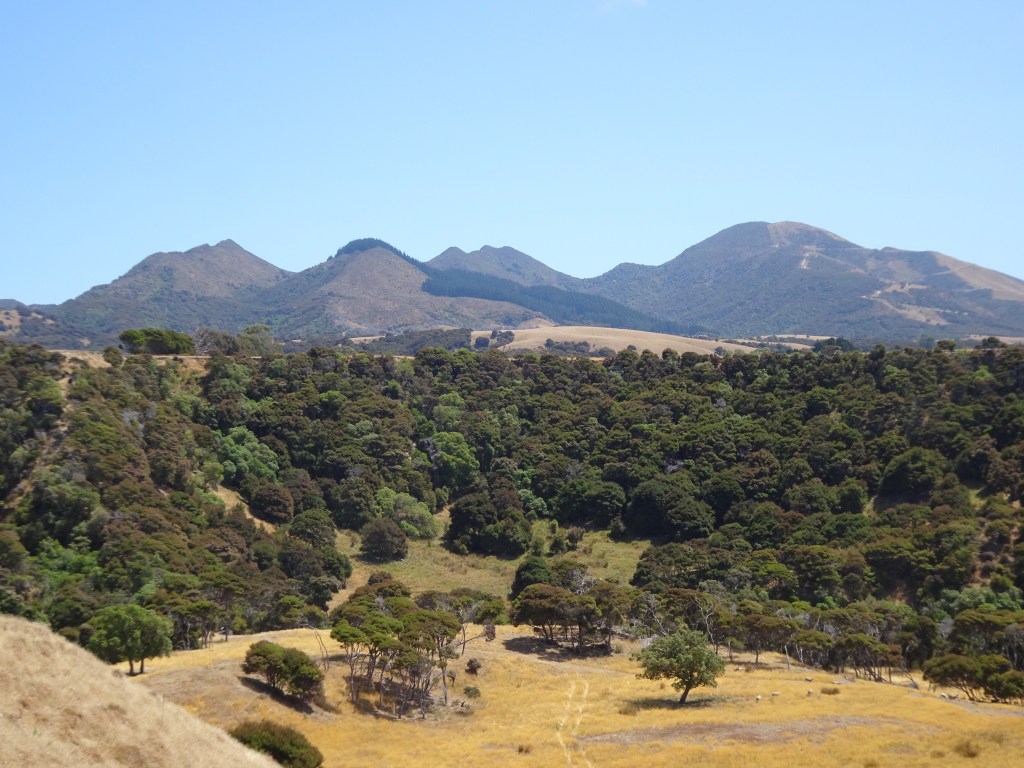
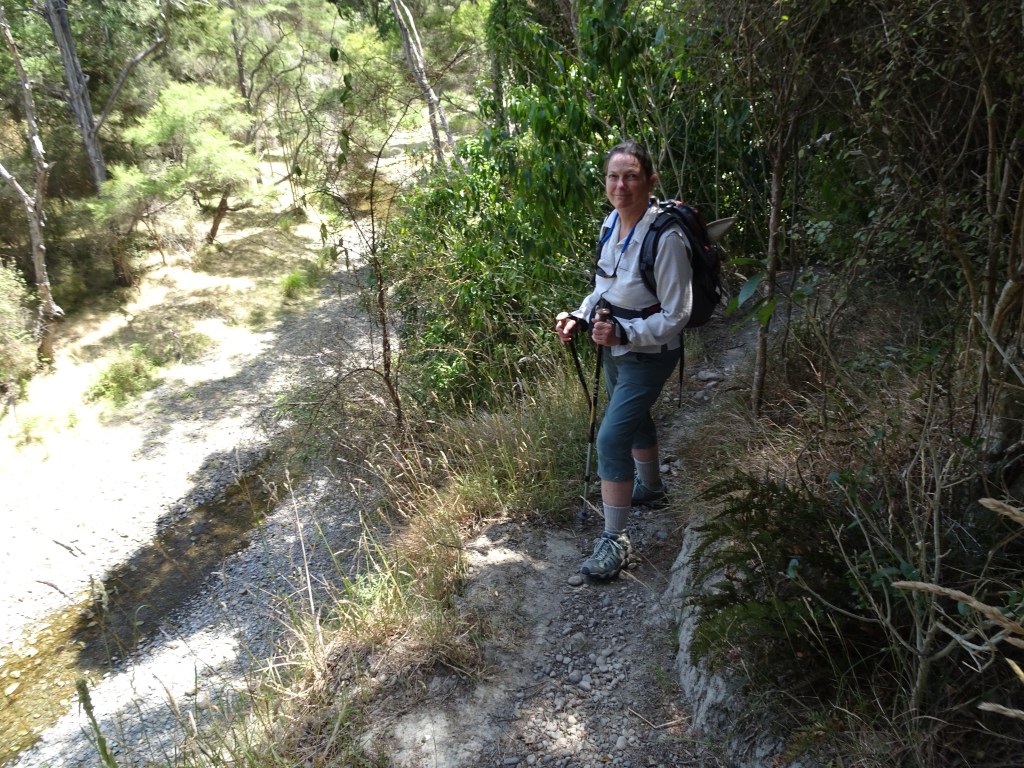
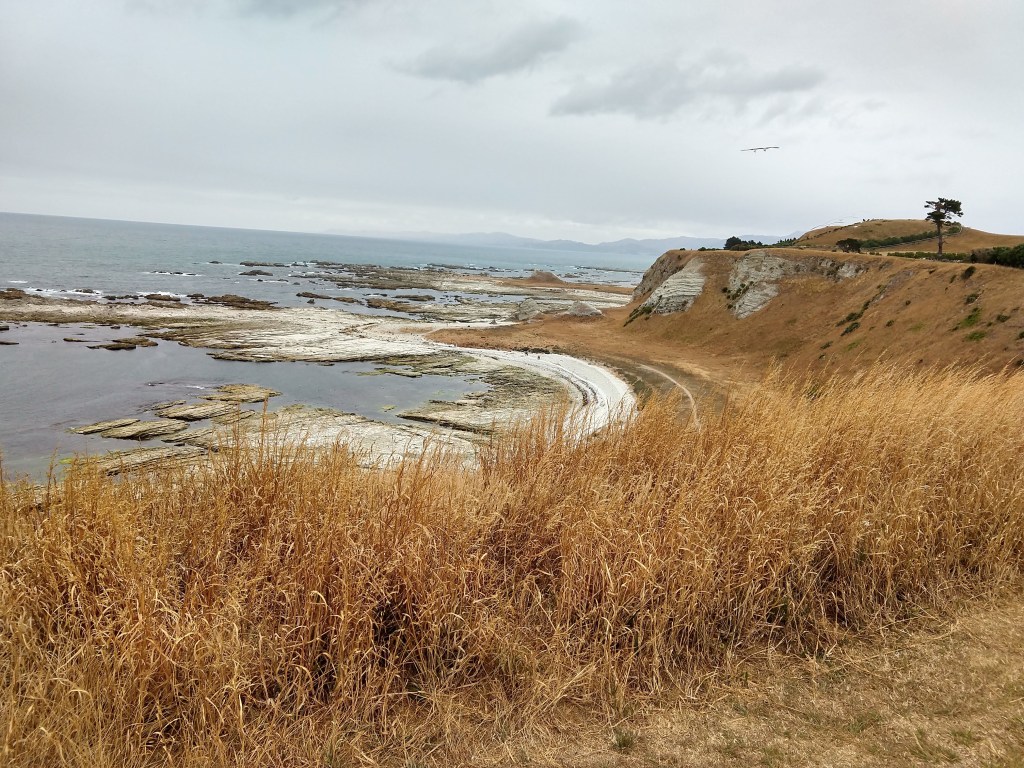
The trail climbed up to a lookout point, from which you could see north and south along the coast. We then entered forest land, and continued up mostly, with a lot of twists and turns through the trees and along the stream.
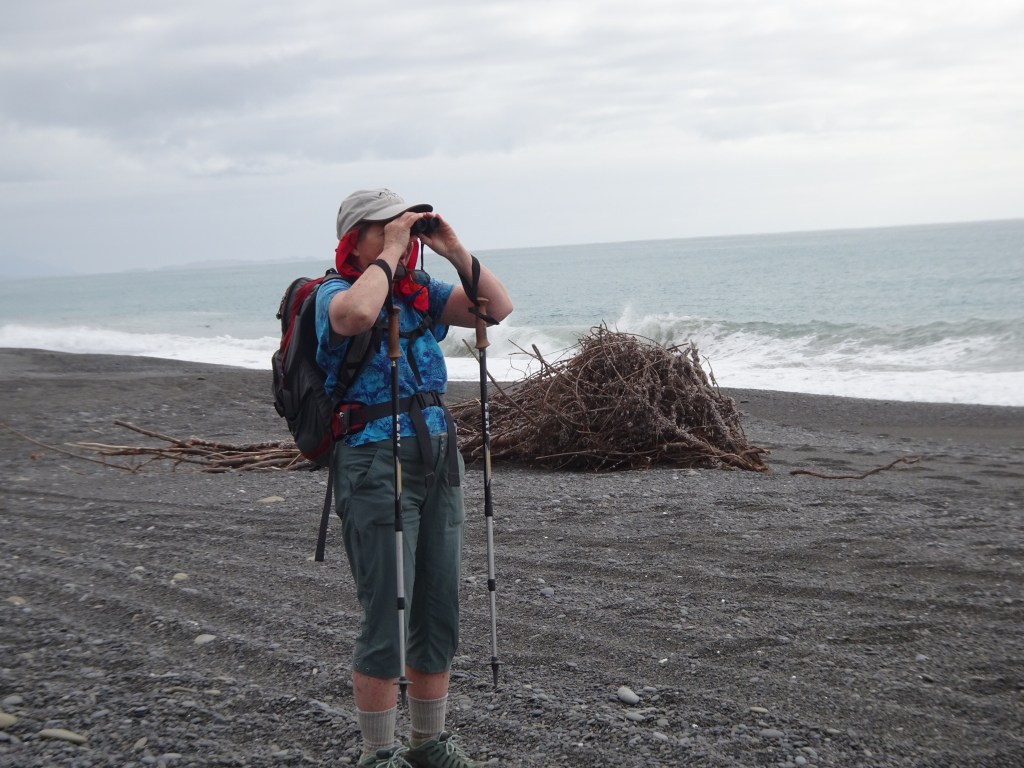
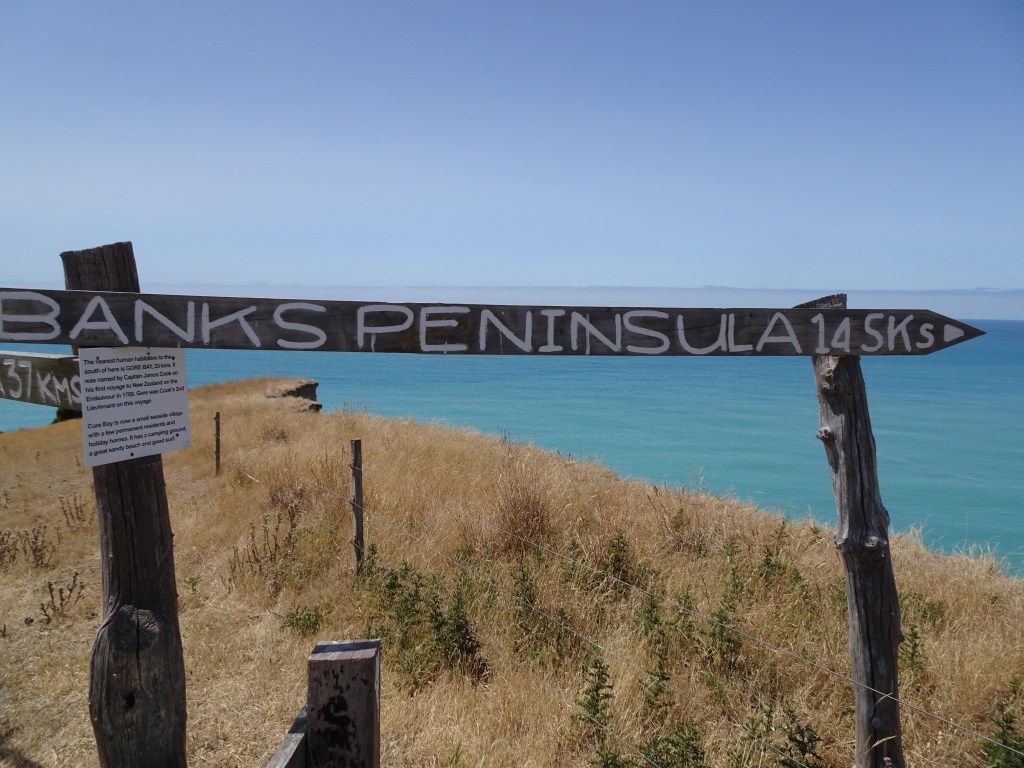
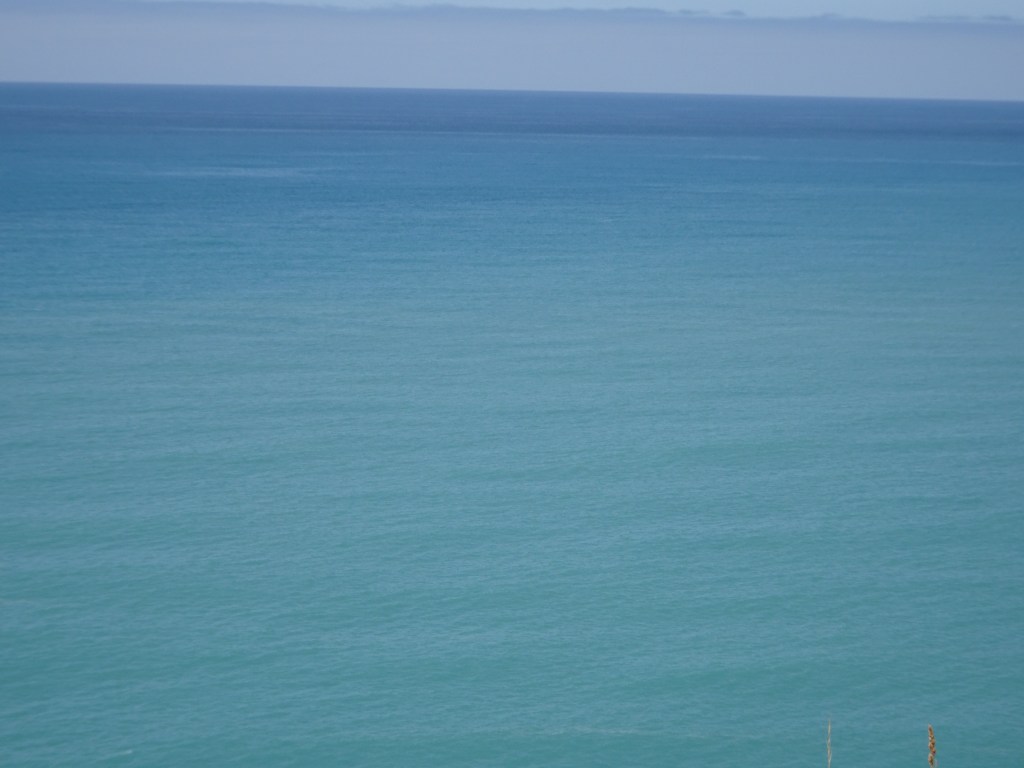
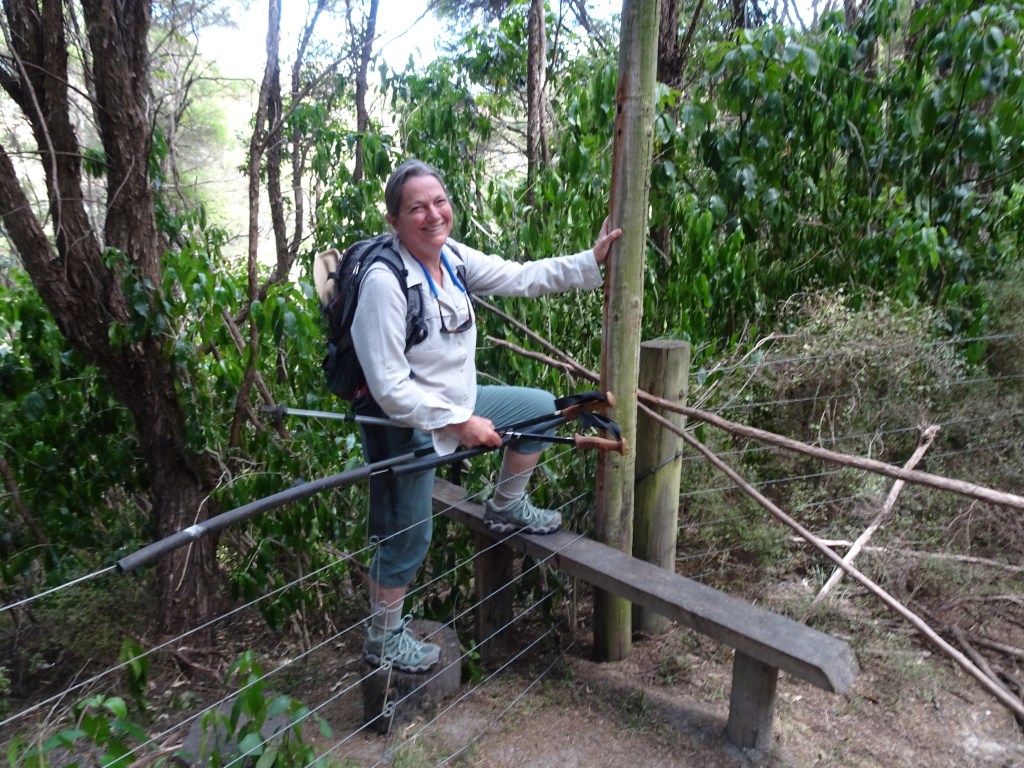
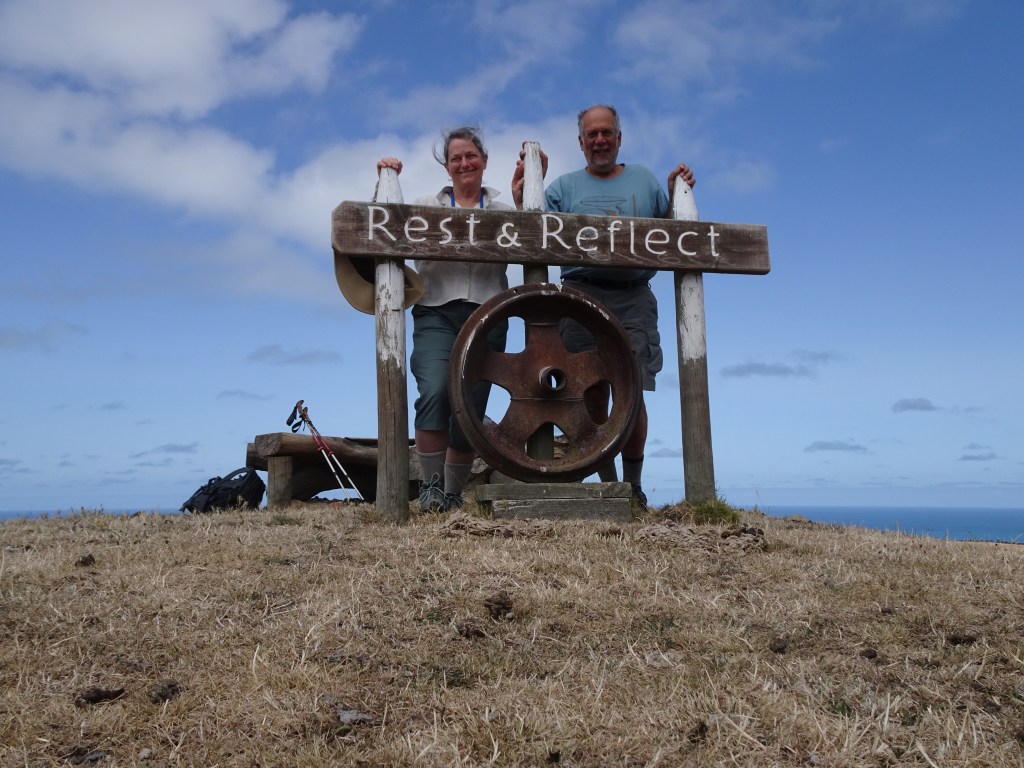
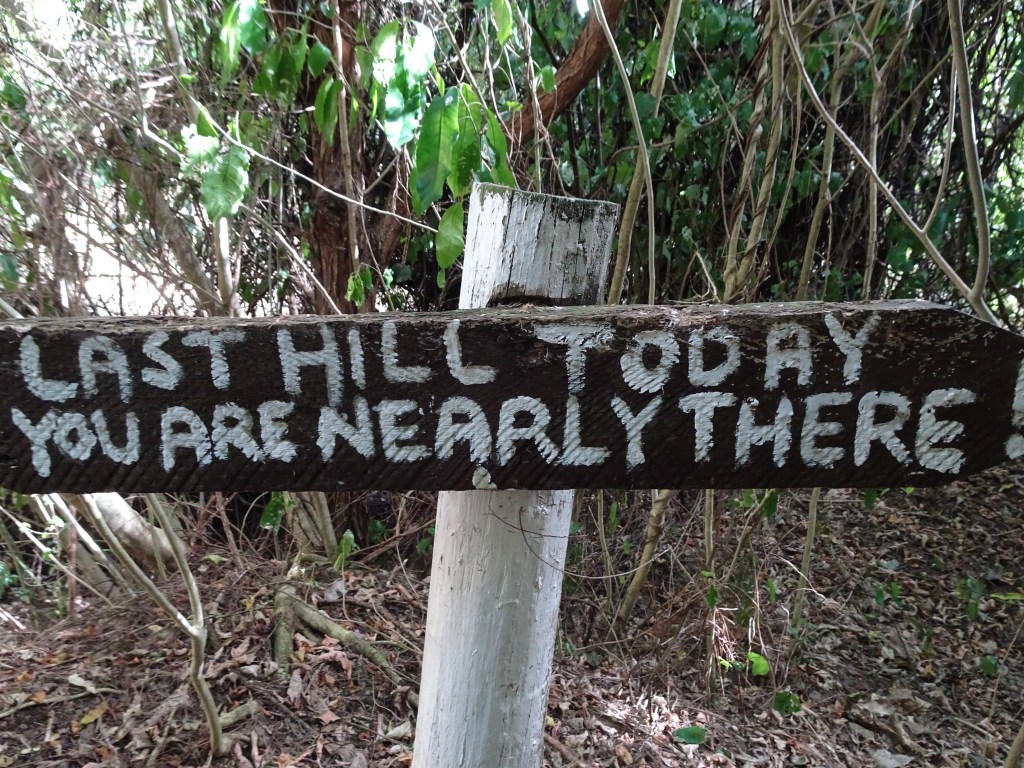
The binoculars were a surprise treat.Looking southThe Banks Peninsula is off the coast from Christchurch.Looking north. The Kaikoura Peninsula is in the haze.Looking east. Chile is the closest land, almost 6000 miles away. The albatrosses from the other day came over from there. After The Lookout—Inland and UpwardFenced off from grazing stock since 2002, a long gully/watershed on the ranch has been allowed to remain and regrow in native flora. And it is so dedicated in perpetuity through the QEII National Trust. The Trust partners with private landowners to protect natural and cultural sites. Bruce told us that across the country the combined area of QEII lands is larger than Abel Tasman Nat’l Park. Another of the amazing efforts New Zealand is making towards conservation!The fence was there for any stray sheep. We had to climb over it a few times. After we emerged from the woods, we were almost home. This was at the top of the hill. All down from here. Our cottage was on a sheep farm.
We chose Option B for the second day of the hike, which took us on the road back to the beach, rather than on a trail through the mountains, to return to the beach house. This shortened the hike by a few kilometers, and eliminated more of the steep ups and downs. Bruce again ferried all of our stuff back to the starting and ending point. It is a pleasure to hike with just a day pack, and end your day with a hot shower and a soft bed, plus have all of your stuff, including a bottle of wine and dinner, waiting for you.
Hanmer Springs
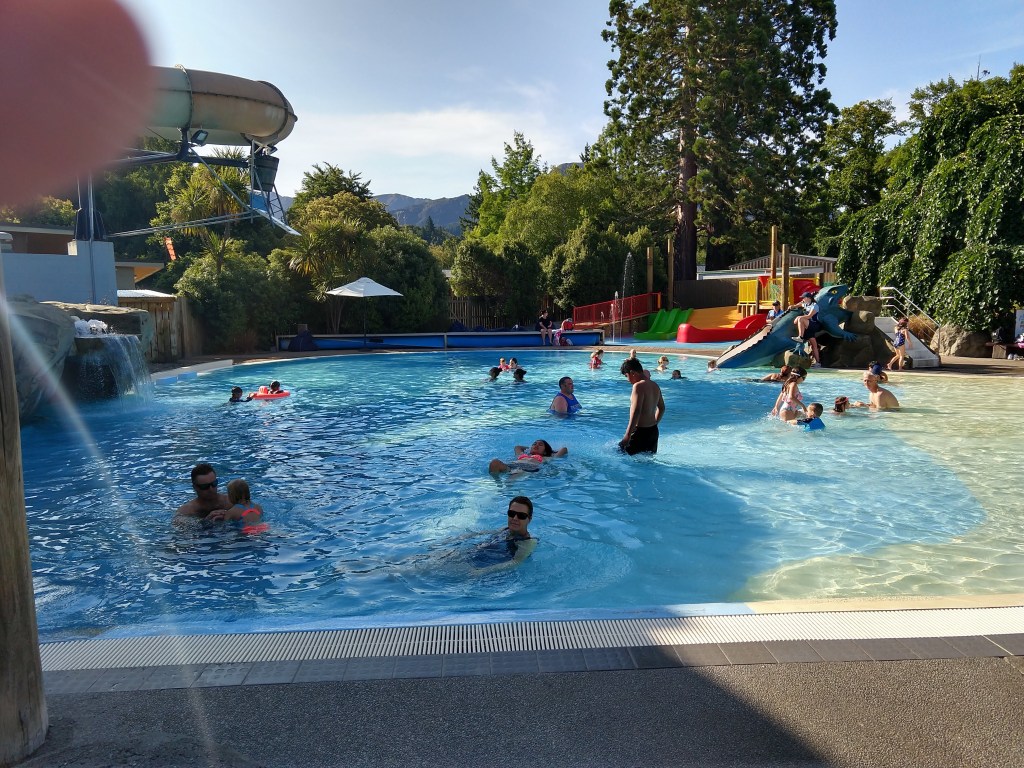
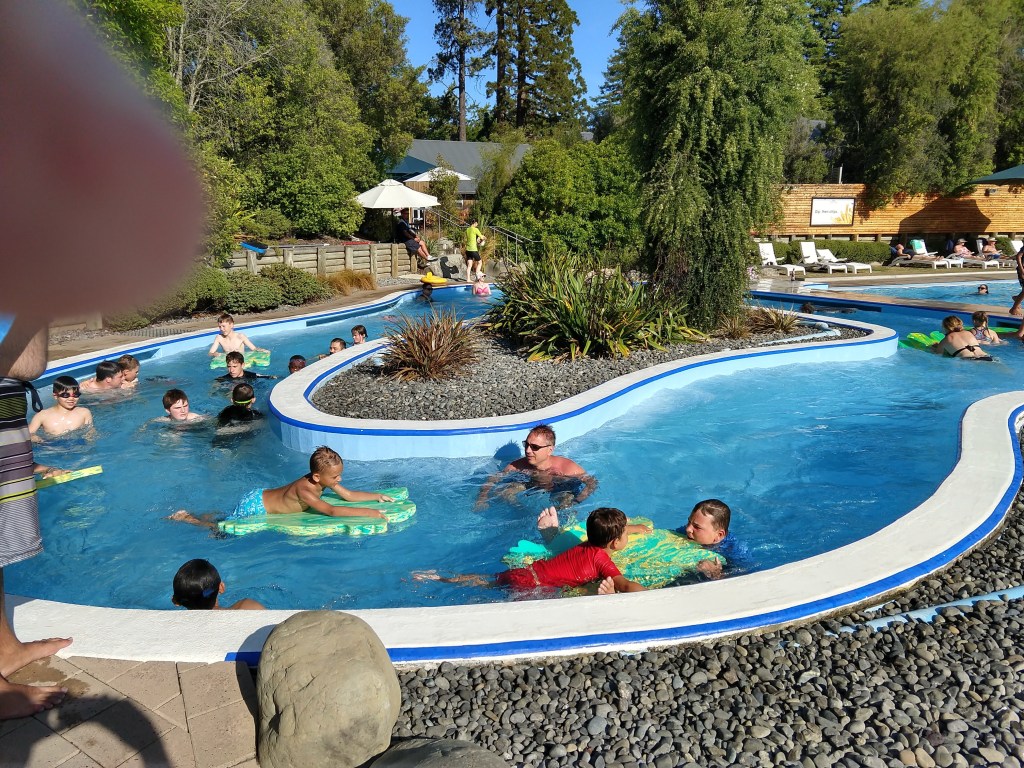
Having planned ahead for after the hike, our next destination was the alpine village of Hanmer Springs. It is a holiday town centered around the thermal springs right in the middle of the town. The town itself is in the mountains, and it often resembled a town in the Colorado Rockies. There are 22 different pools in the springs complex, all of them geo-thermal. It is a classic Kiwi holiday place. We soaked in the hot water and had fun watching all the New Zealand families reveling in the water wonderland.
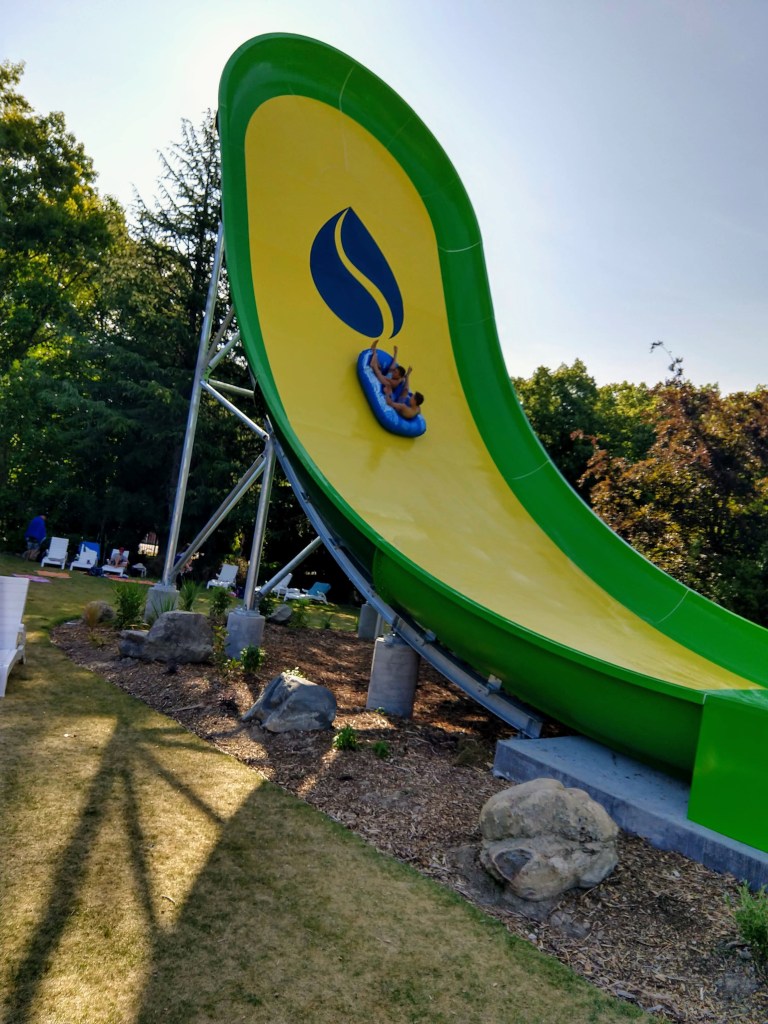
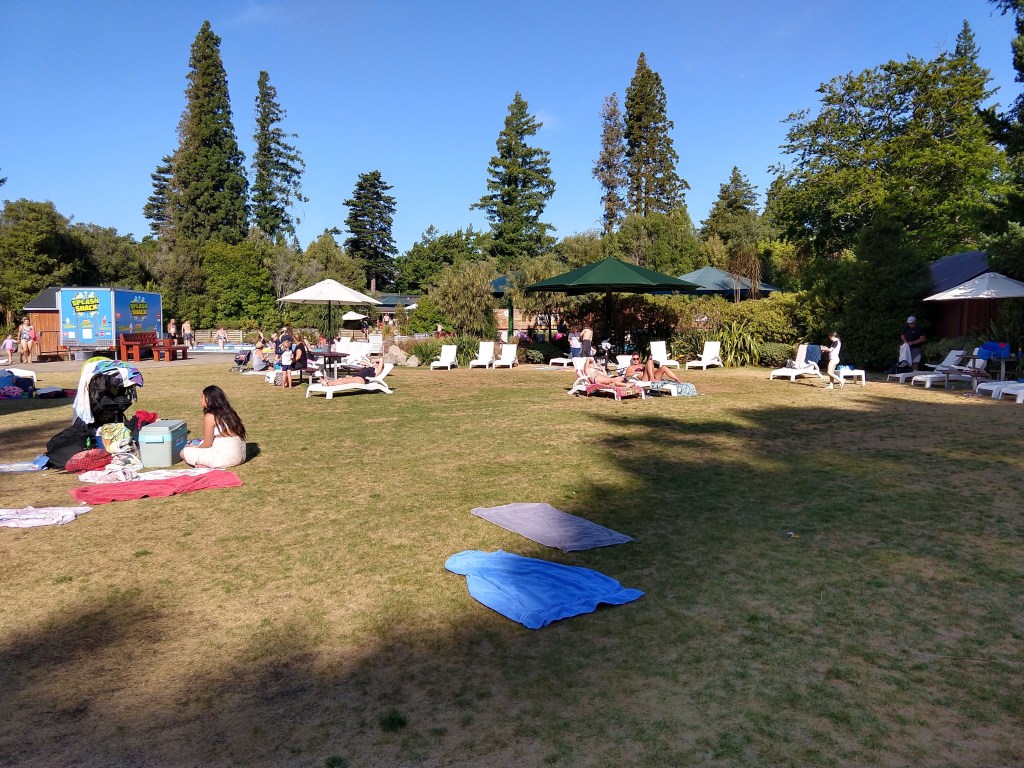
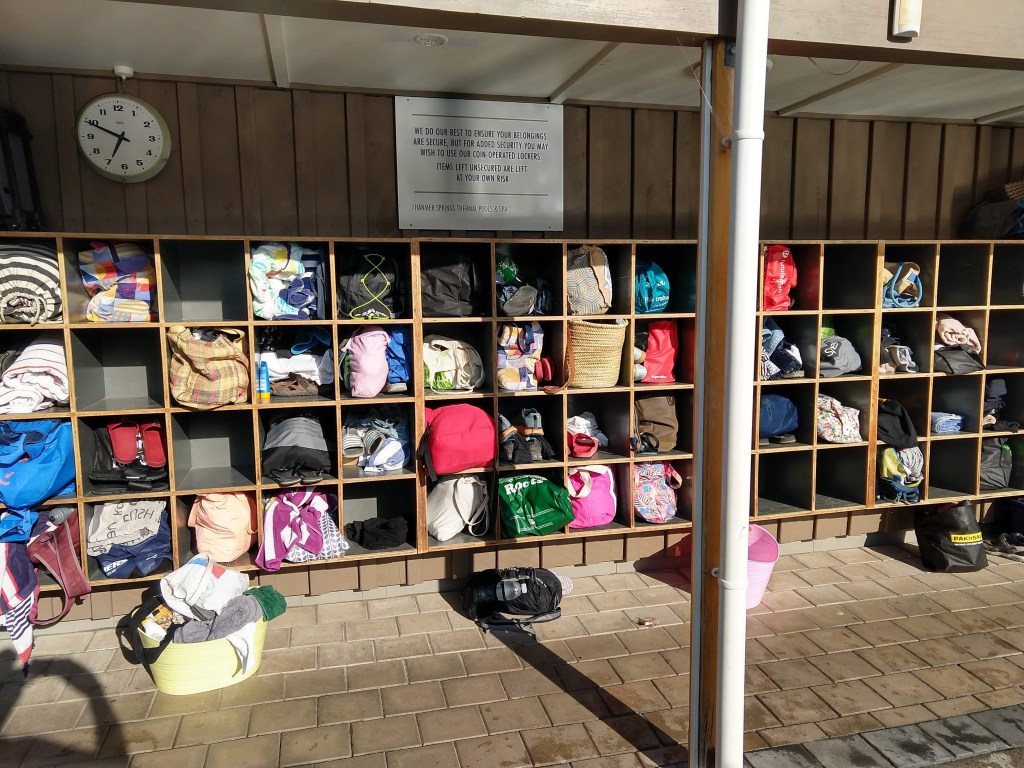
This is where the big water slide ends. You careen down and around, then up into the fern. Lots of squeals and laughter. The whirlpool takes you round and round. Kind of like a water bumper car ride. Some families came in the morning and stayed all day. Most people just left their stuff in a cubby. You could rent a locker, three dollars for two hours. At the end of two hours, you got a 15-minute grace period, then the locker wouldn’t open for you. We asked about it, and asked how much does it cost if you exceed the grace period. “Oh, nothing, we just come out and open it for you. It’s all good.” Very kiwi. After a hike, after a soak, a little downtime. Now it’s further down the South Island, toward Christchurch. Hasta luego.
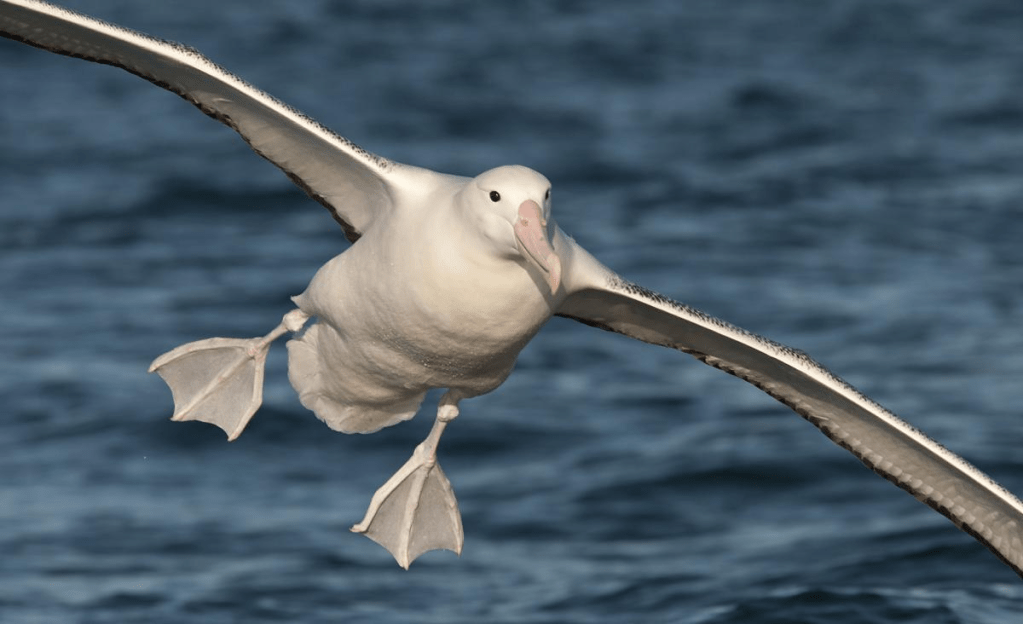
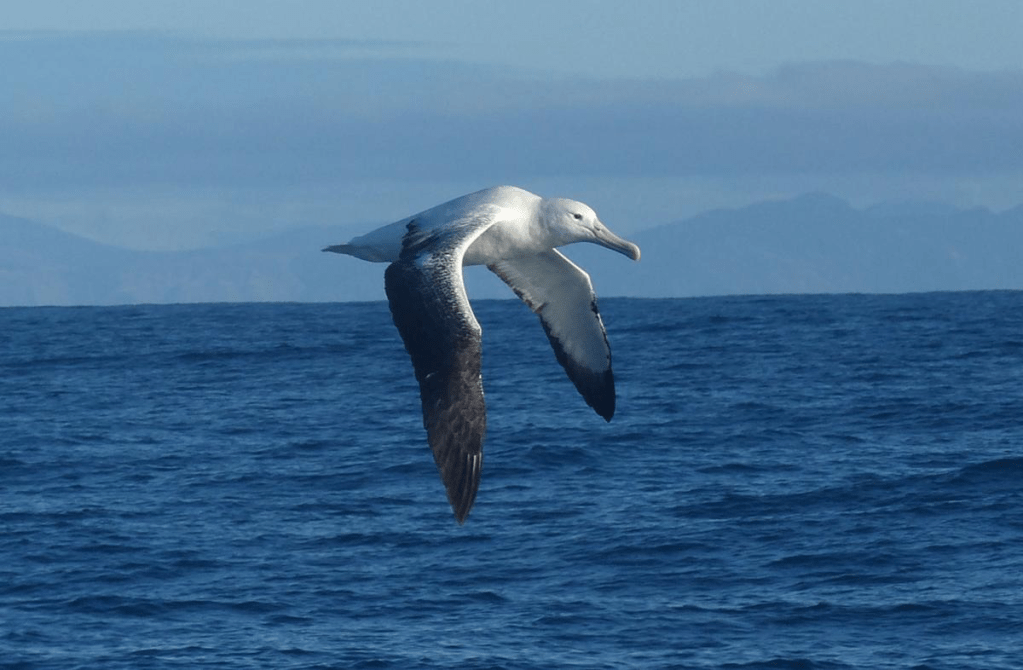
Kaikoura is a small town on the northeast side of the South Island, and it is famous for offering the best and easiest pelagic bird watching in the world. Kaikoura is all about the ocean. There is a trench, or canyon, just offshore that is a kilometer deep. If you are a sea creature, this is where you go. Whales, dolphins, and seals all come here as if they’re going to the mall. There are nutrient-rich currents and upwellings that support an incredible diversity of sea-life. And the albatrosses fly here from around the world to feed. They circumnavigate the world in the Southern Ocean, flying to South America and back.
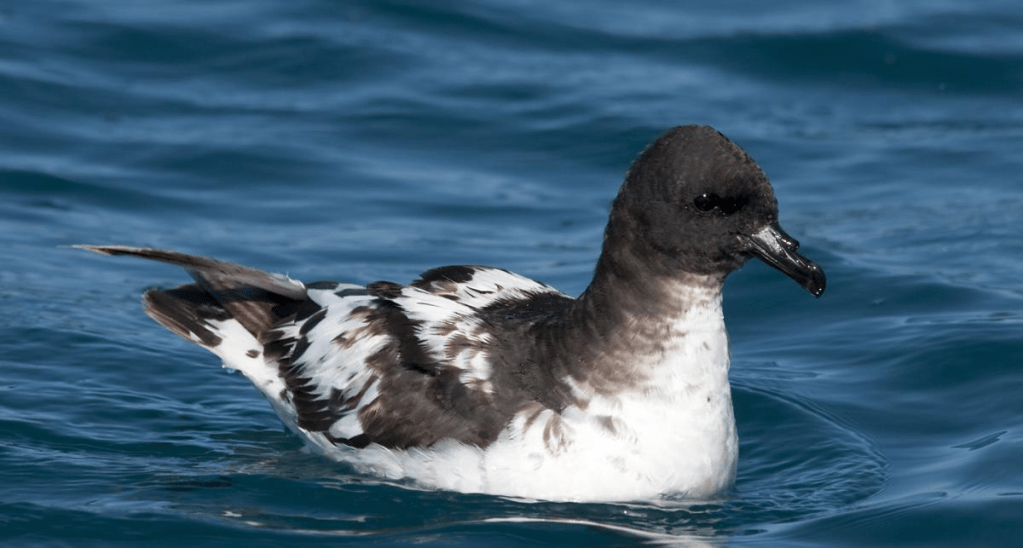
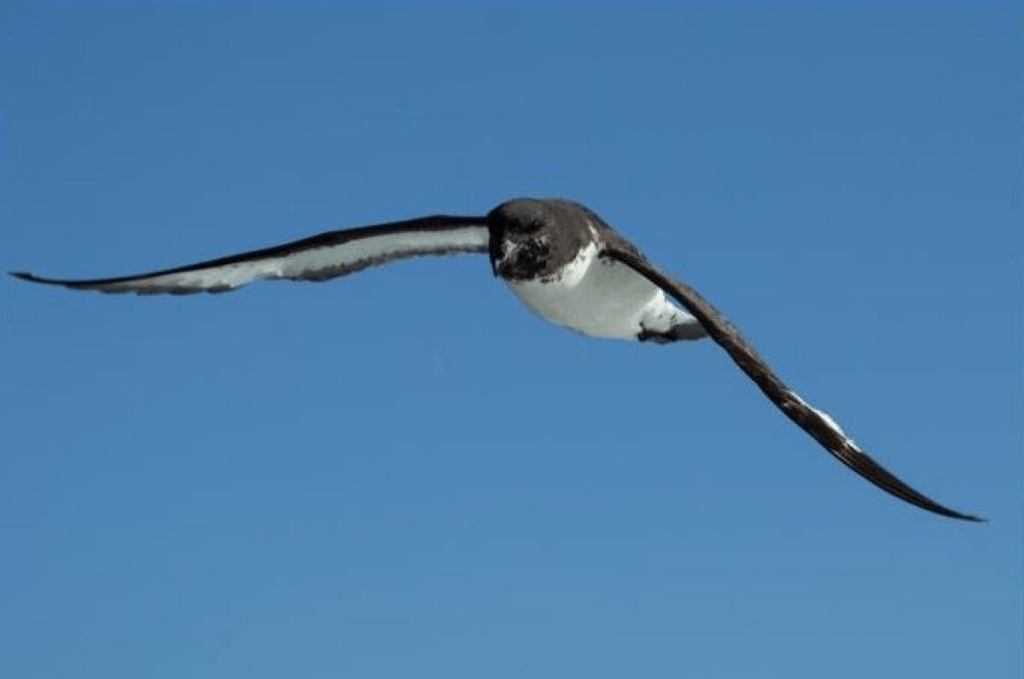
It is really easy to see them here. Just get on a little boat and head out for fifteen minutes. They don’t really live here, but there is a continuous coming and going. This is a stop on their route. I got on a boat at 6:00 a.m. and headed out with eight other passengers and the skipper. Monica stayed home because she was afraid she’d get seasick, but the ocean was actually very calm. We saw five species of albatross, (there are 22 species in all), in addition to giant petrels, cape petrels, and terns. We also saw dolphins surfing in the wake of the boat.
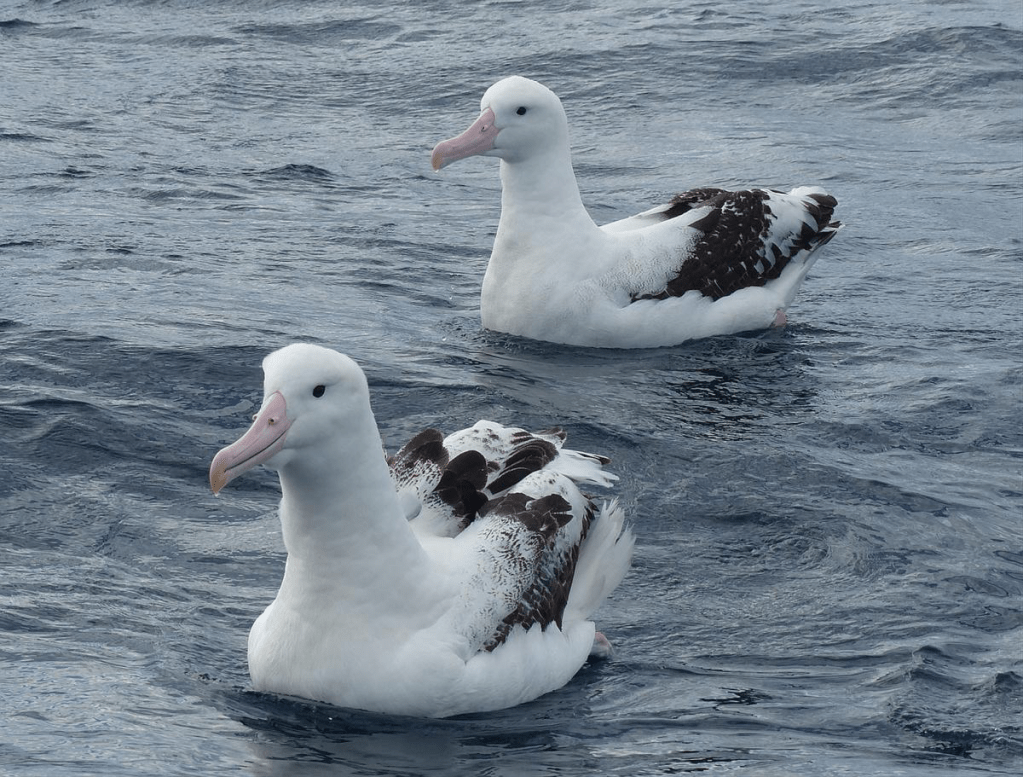
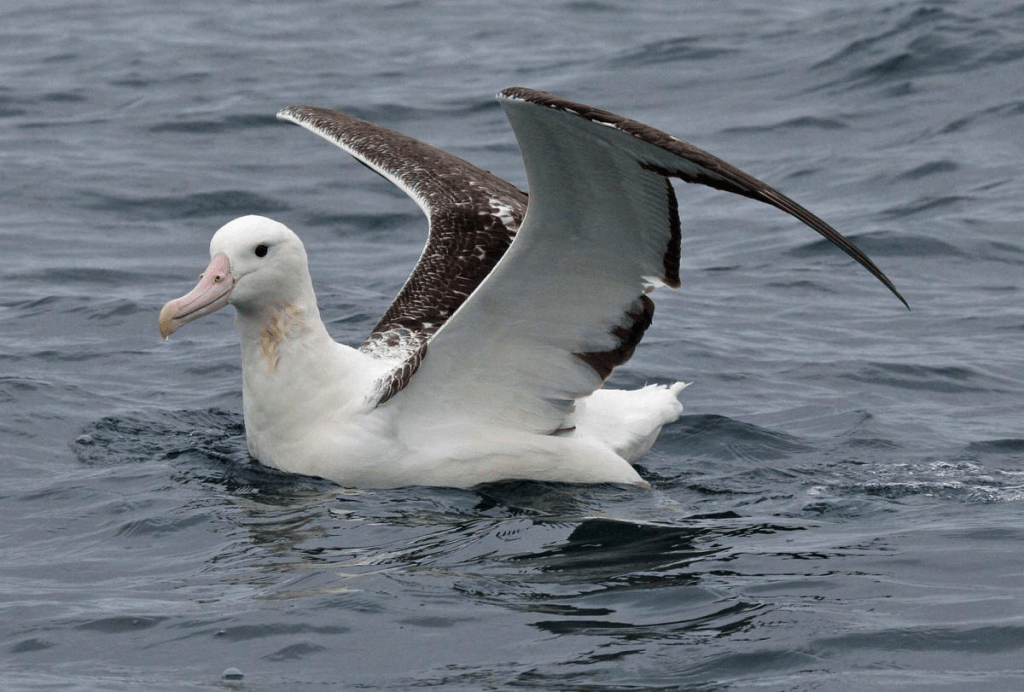
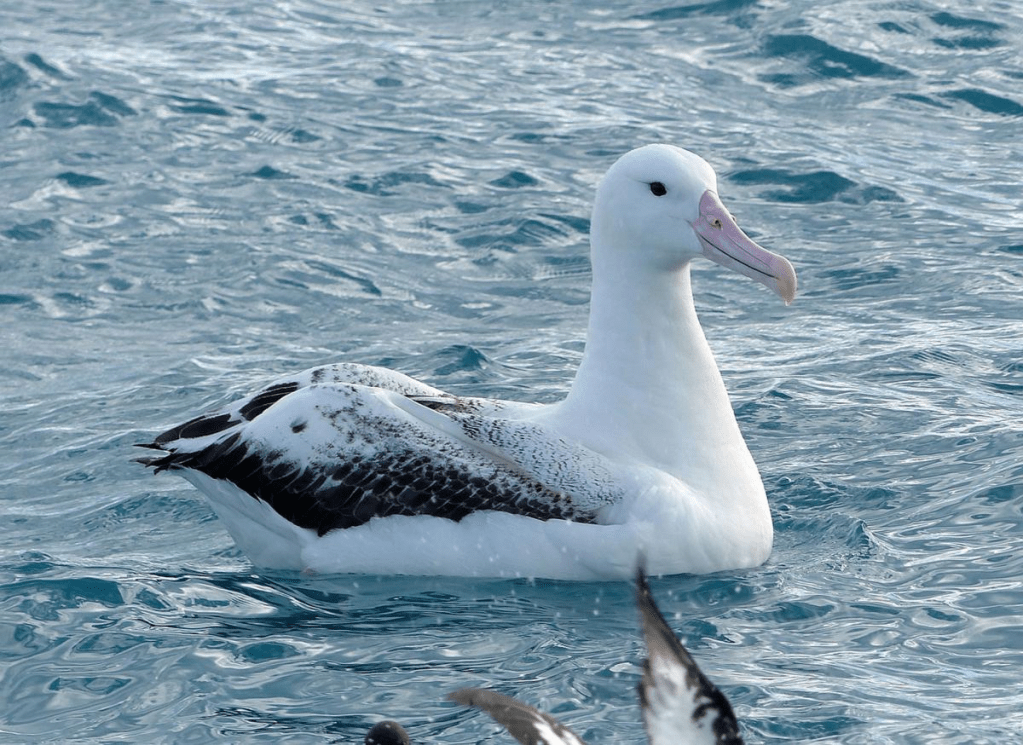
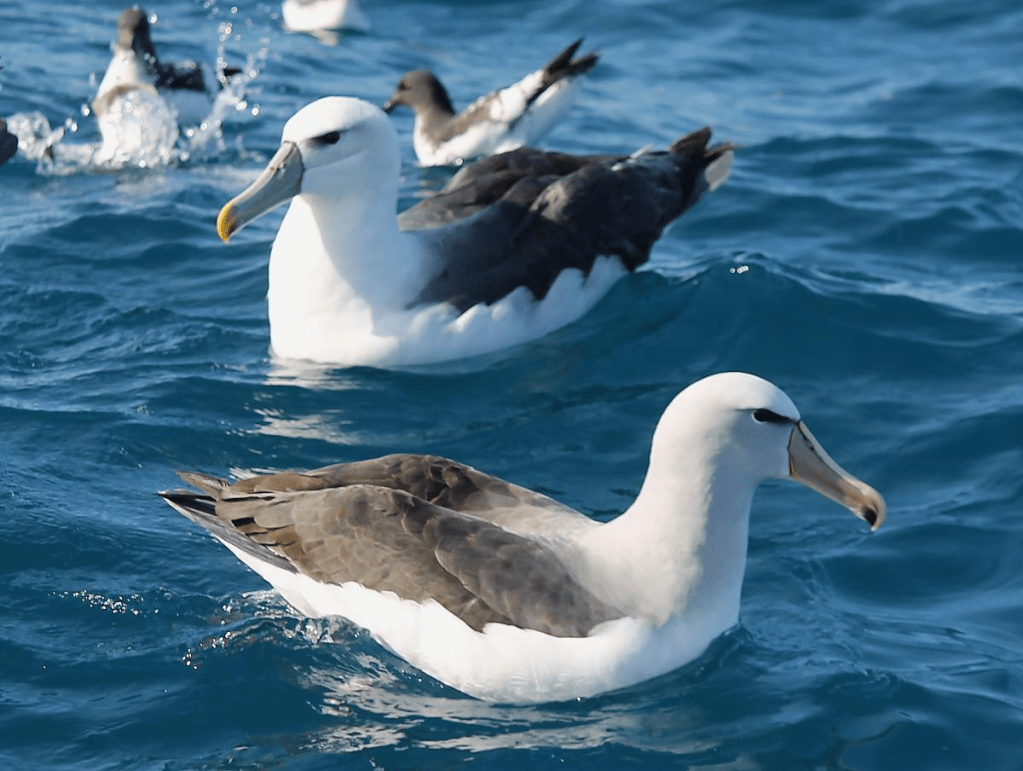
Royal Southern Albatrosses are the largest albatrosses. Wingspan of about twelve feet. When they land on the water, they fold their wings. White on the top of the wings and the black line along their beak show that they are the Southern Royals.
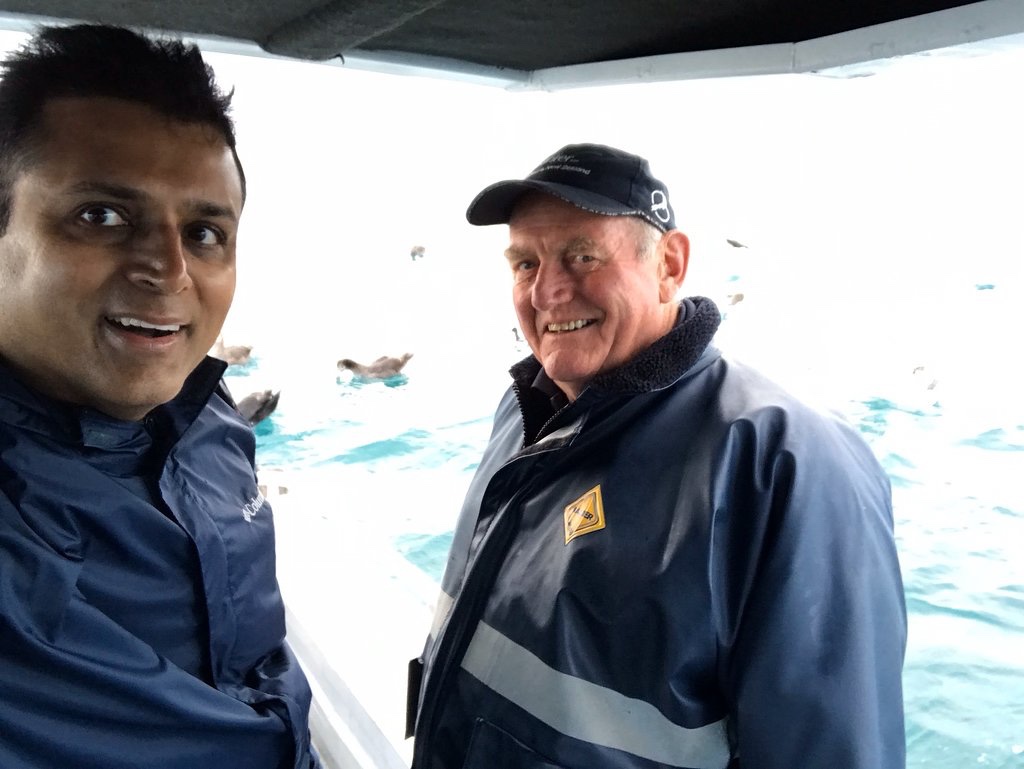
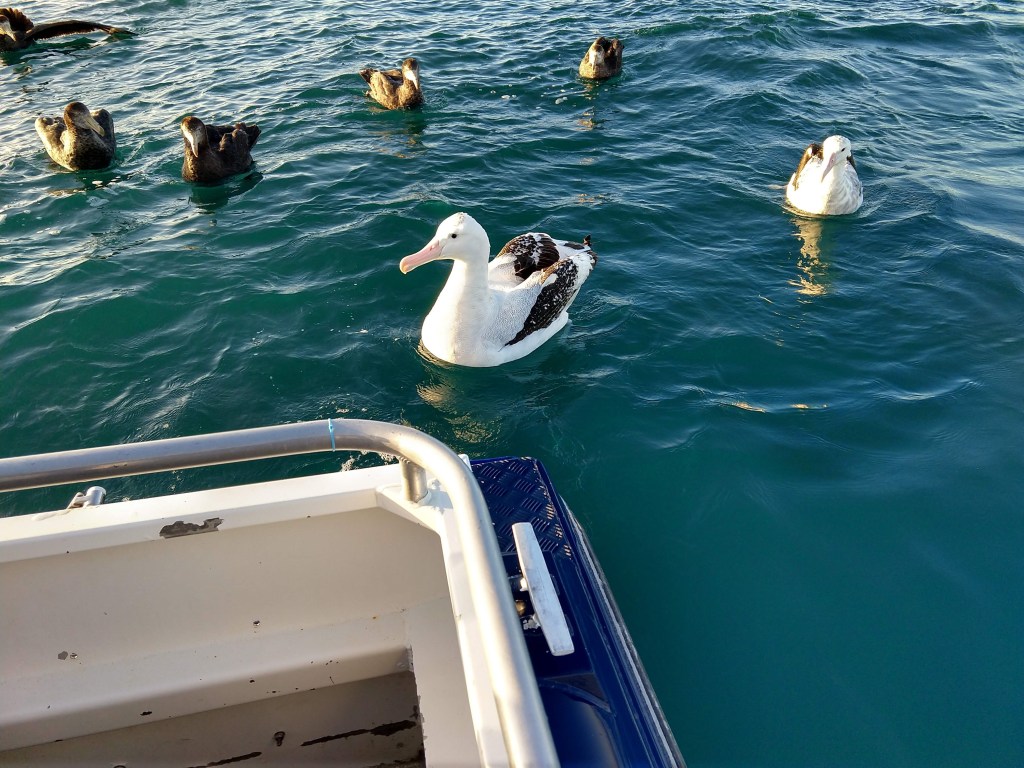
The skipper, Gary, dropped a cage-full of chum into the water so the birds would come up to the boat. There also was a fishing boat in the water, which attracted the birds. They know that where boats are, fish are. At first I thought that this was somehow unethical, but these birds are not dependent on the boats. This is just one little treat for them before they fly off for thousands of miles. With the engine off, we bobbed in the gentle swells, and Gary served ginger tea and ginger cookies. He answered questions and we talked about birds and enjoyed the early morning sunshine.
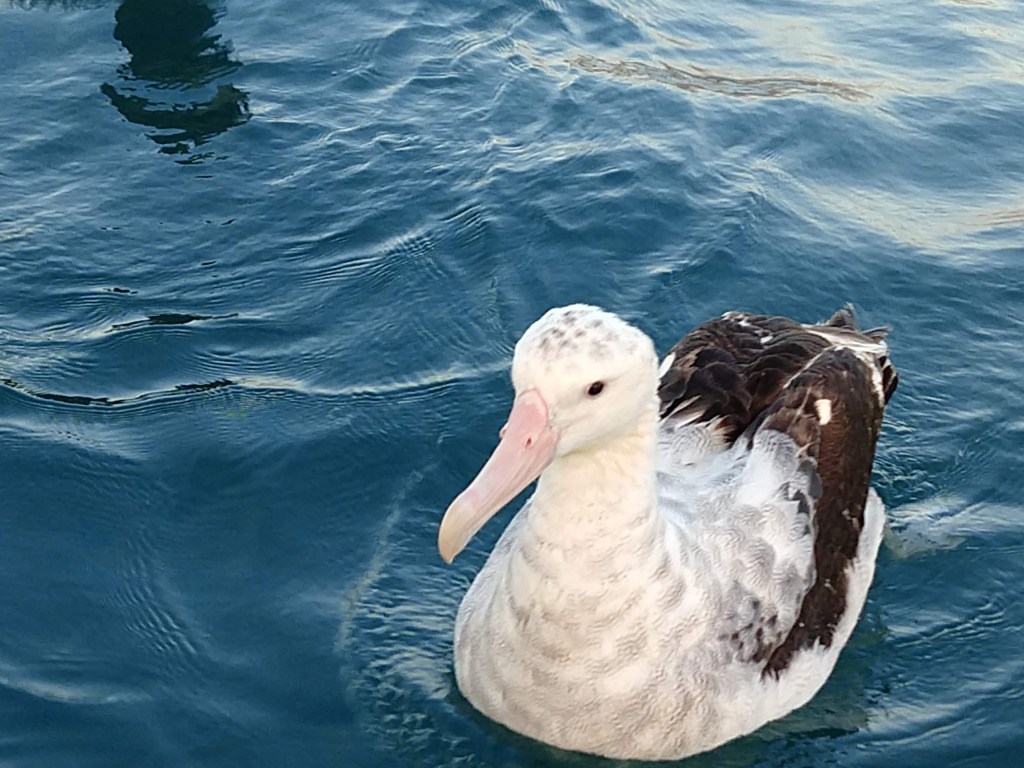
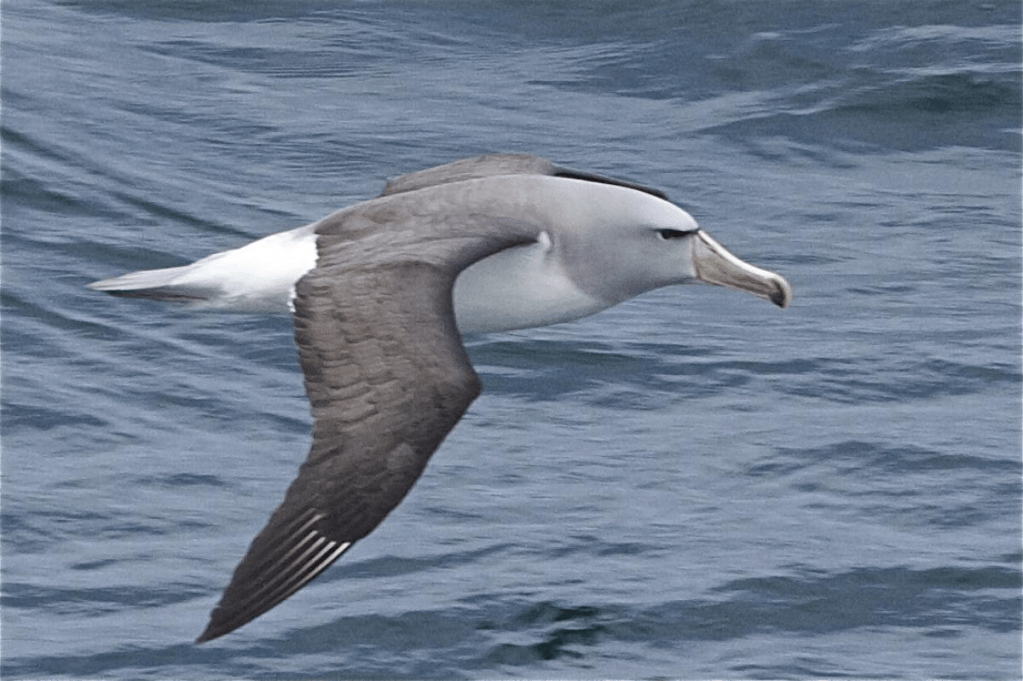
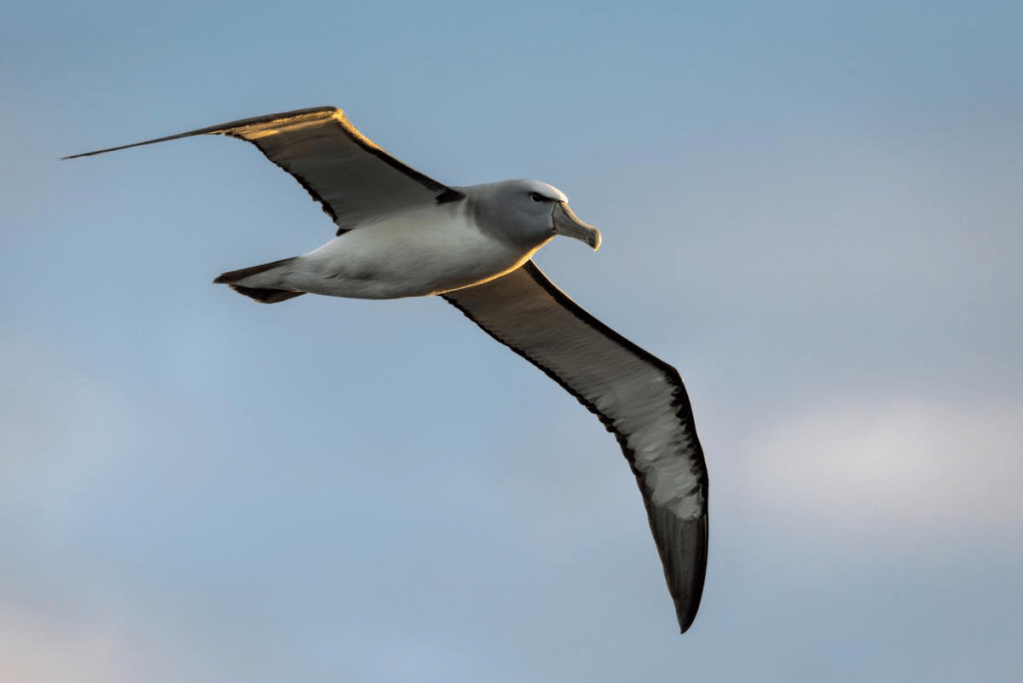
Our skipperWandering Gibson’s Albatross alongside Giant Petrels and Cape Petrels A wandering albatross. We probably could have reached over and touched themSalvin’s Mollyhawk AlbatrossesCape Petrel. These seabirds breed in New Zealand, and are fairly common here.
All in all, a spectacular morning of birding. People also go out on whale-watching boats, and dolphin-watching boats. The people who choose to go dolphin watching can also choose to put on wetsuits and get in the water with them. The dolphins don’t mind. They could simply swim away if the wanted, but they are curious, and they swim up to the humans and want to interact. They are not in a pen; they are out over the trench.
Albatrosses can fly 10,000 miles in a single journey. They spend their whole lives on the ocean, except for breeding. They can circumnavigate the globe in a month and a half. It is rare for any of us to see albatrosses, because they usually are in a remote area over the Southern Pacific. To be able to just walk into town, get on a little boat, and see them so close is almost unheard of. Thank you Kaikoura.
Around the Peninsula
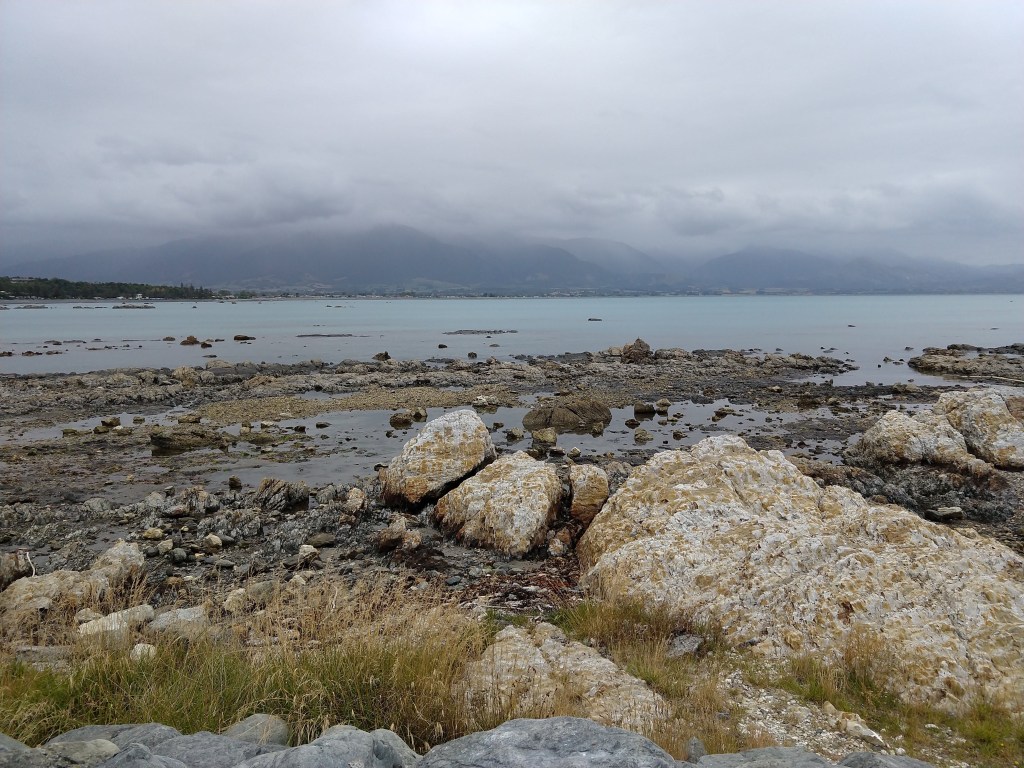
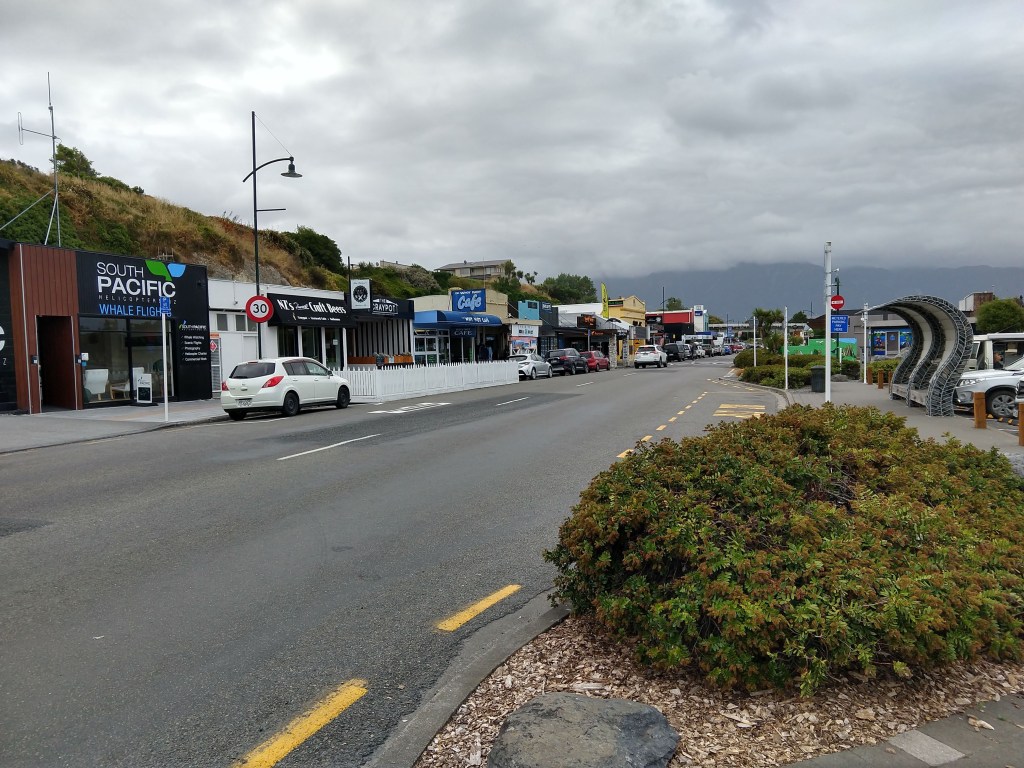
The town of Kaikoura sits at the base of a peninsula that juts way out into the water. There is a ten-kilometer trail that works its way around the peninsula and it is a very popular walk for tourists and locals. We walked it on a cloudy cool day.
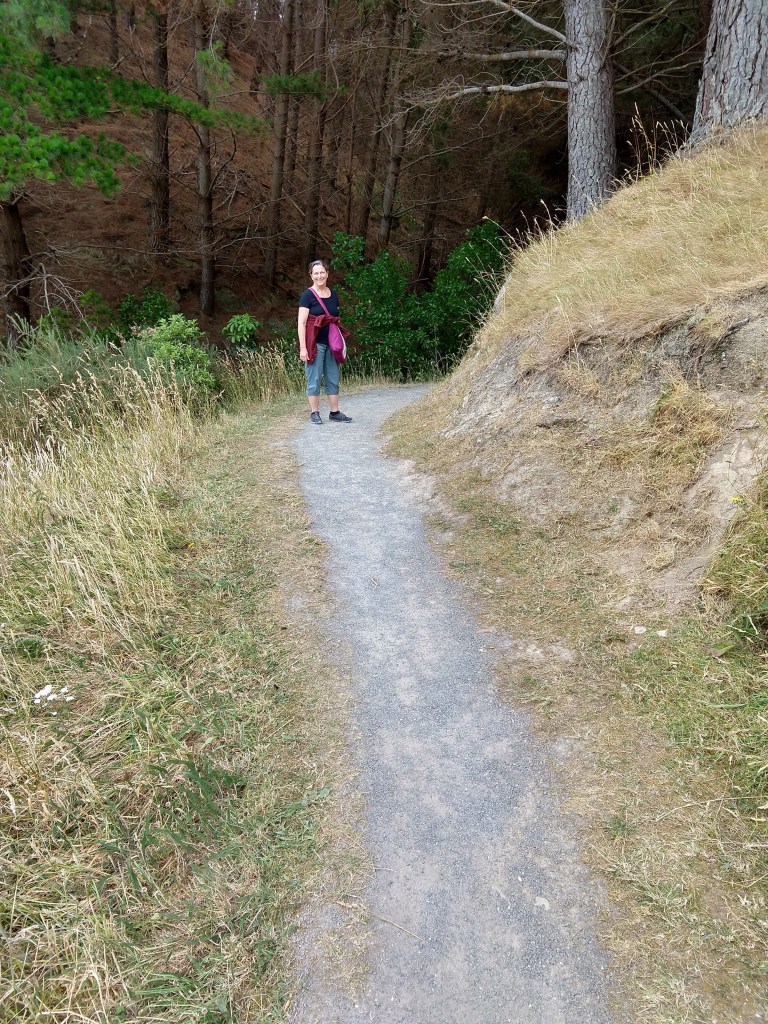
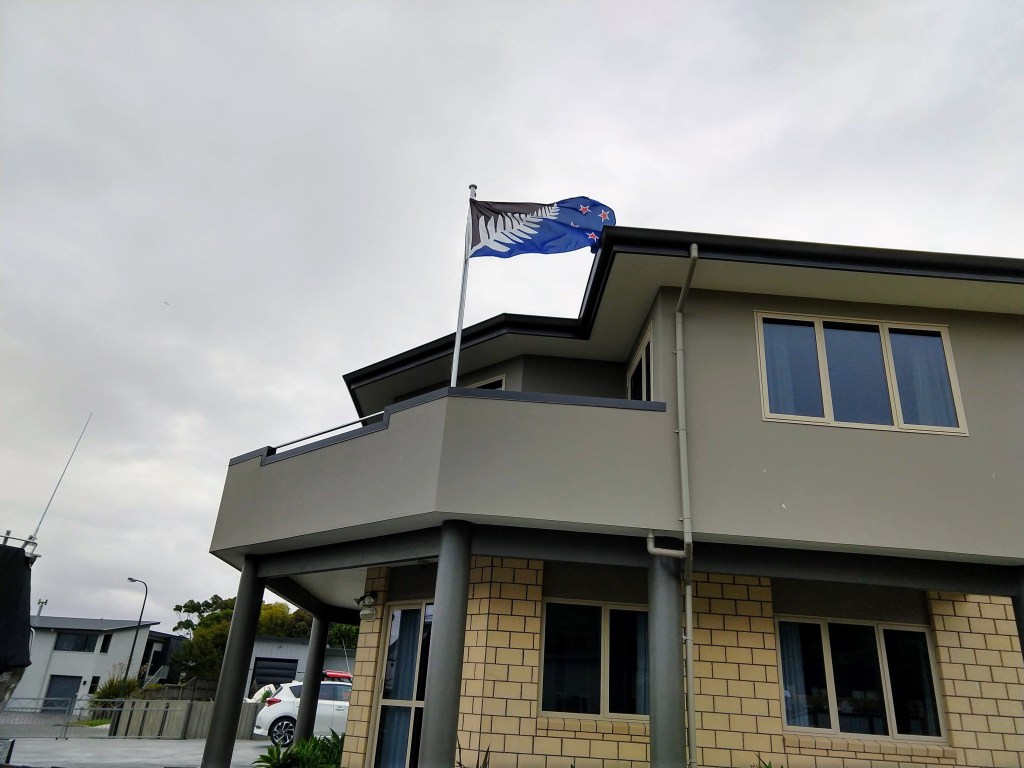
It skirts along the rocks on the beach where fur seals gather . . .And climbs the bluffs for some great views . . .Then meanders through a pine forest and through a residential neighborhood.Silver fern and Southern Cross—Symbols of New Zealand
Hutton’s Shearwater
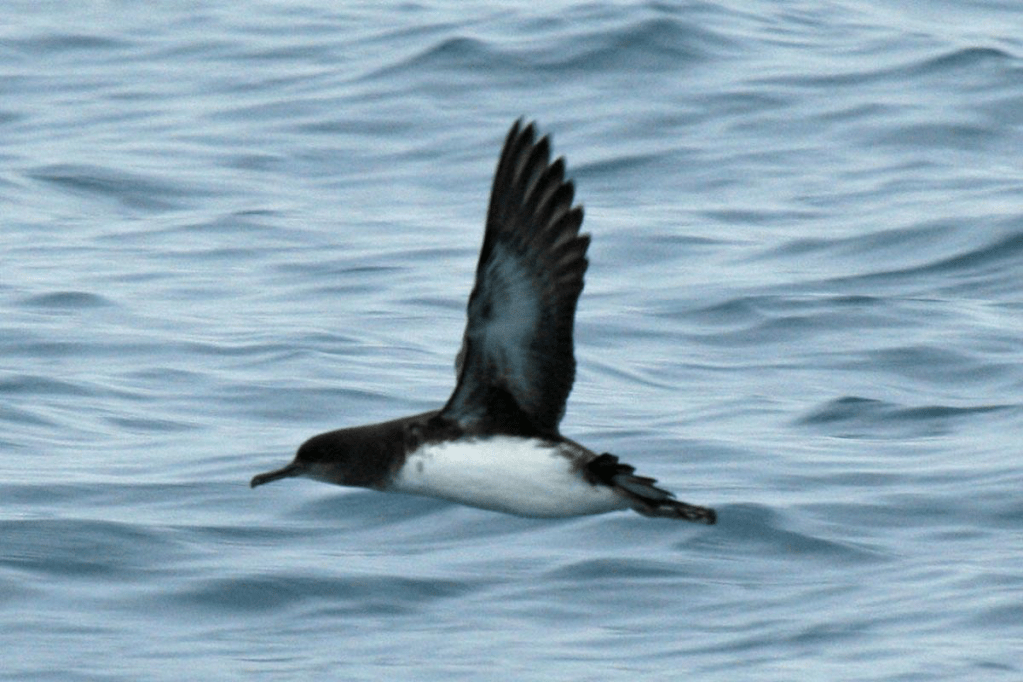
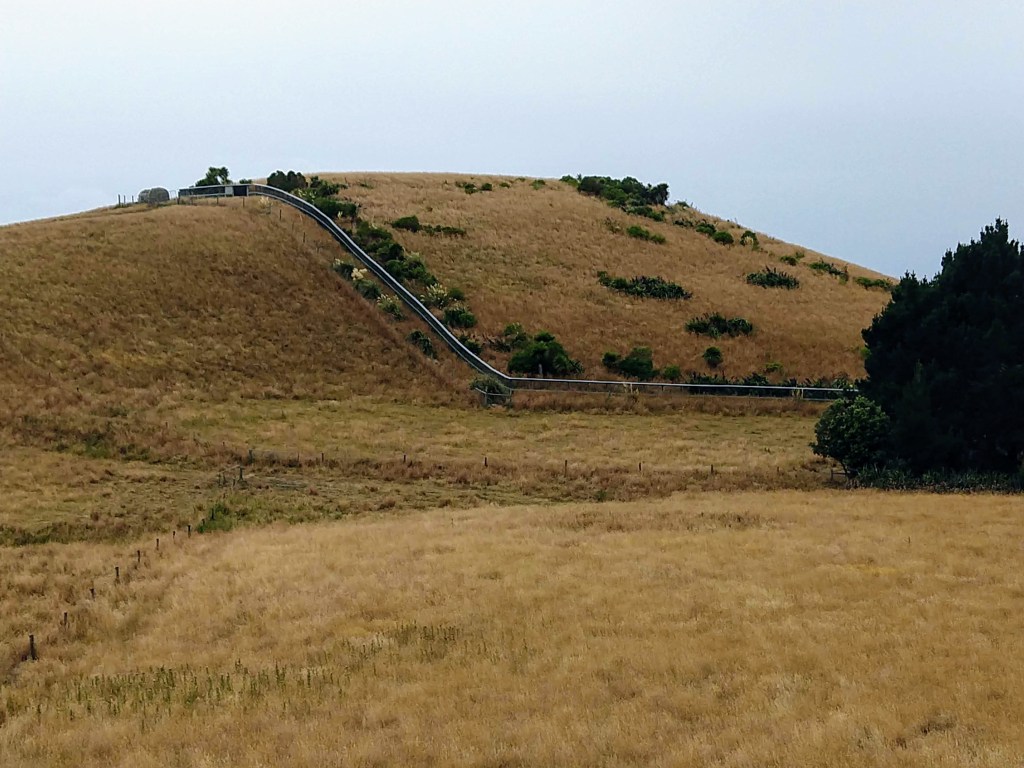
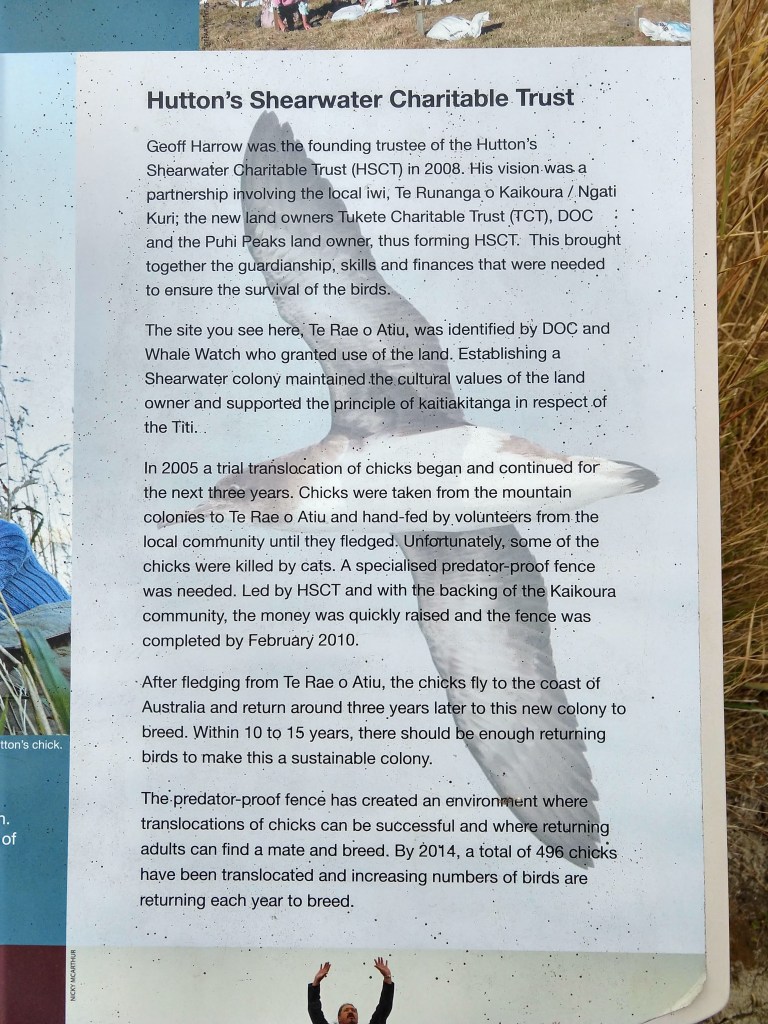
At the top of the bluff, we came across a breeding ground for a bird called the Hutton’s Shearwater, a bird that is endemic to New Zealand. It’s a remarkable story. These shearwaters are the world’s only seabirds to breed in alpine areas. There used to be tens of millions of them, and they would fly up from the ocean and dig burrows high up in the mountain ranges by Kaikoura. Well, their population declined with the predators, and in the 1960’s, there were eight colonies documented. Soon, there were two colonies. That means two breeding colonies in the world. The Hutton’s Shearwater Charitable Trust was founded, and it was decided that another colony was needed to ensure the survival of the species.
Hutton’s shearwater. They can dive down to sixty feet to catch fish.
Starting in 2005, hundreds of volunteers dug burrows in the hillside bluff, and then transferred chicks there, before they could fly. The volunteers hand-fed the chicks and hoped they would imprint on the hillside. The chicks fledged and flew off, and the volunteers did the same thing for six more years. Some of the chicks were killed by feral cats and stoats, so they built a predator-proof fence and eliminated predators inside. The chicks grew up, and they returned to the hillside, found mates, and raised new chicks. Now the colony is thriving, and the population is stronger.
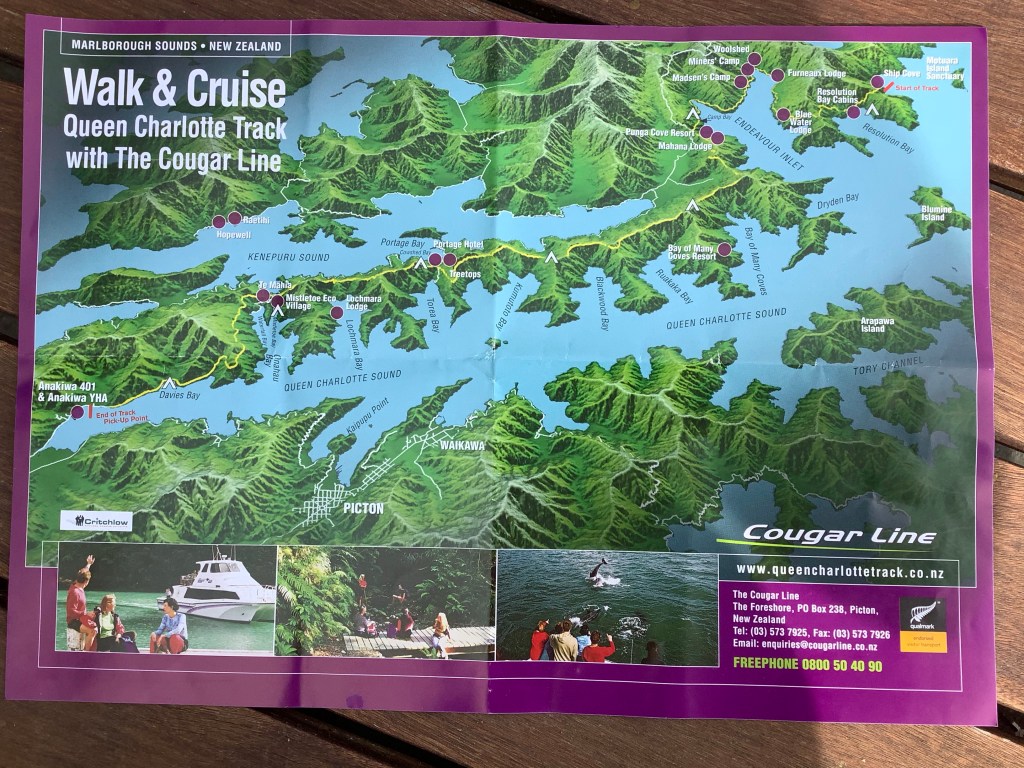
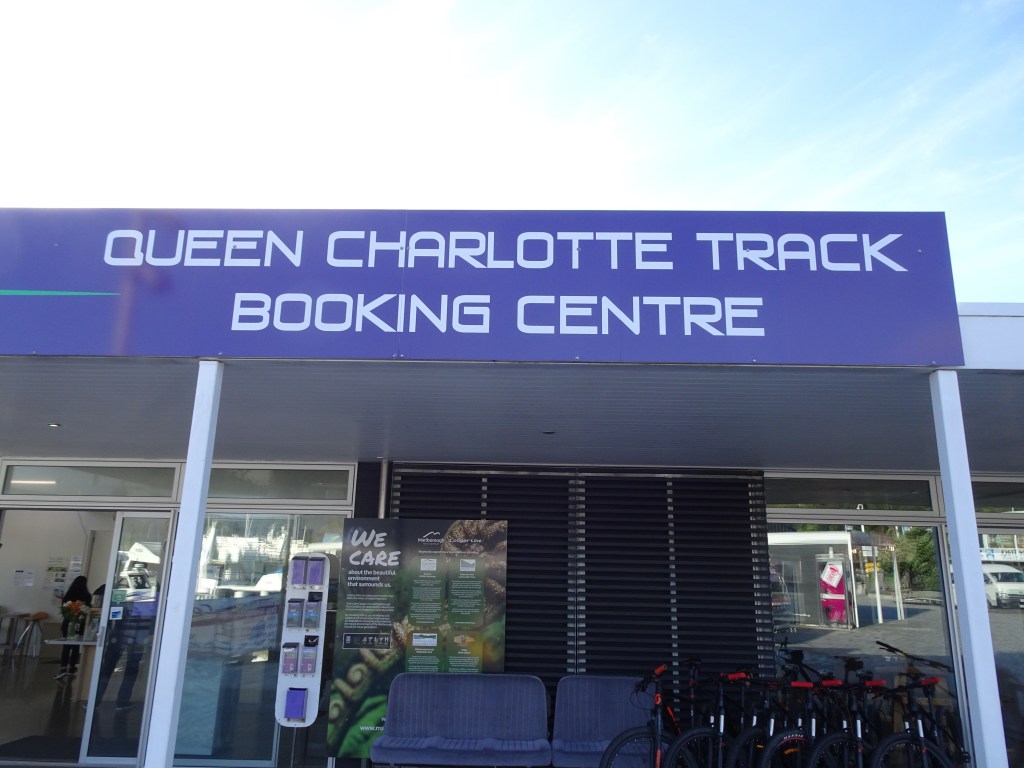
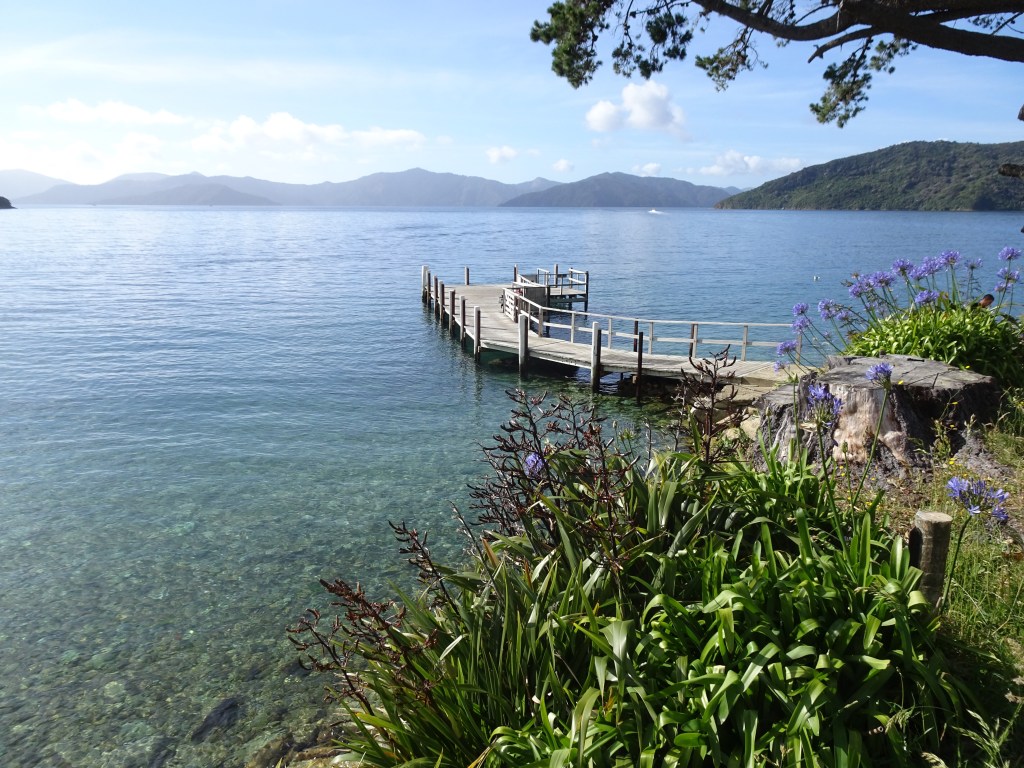
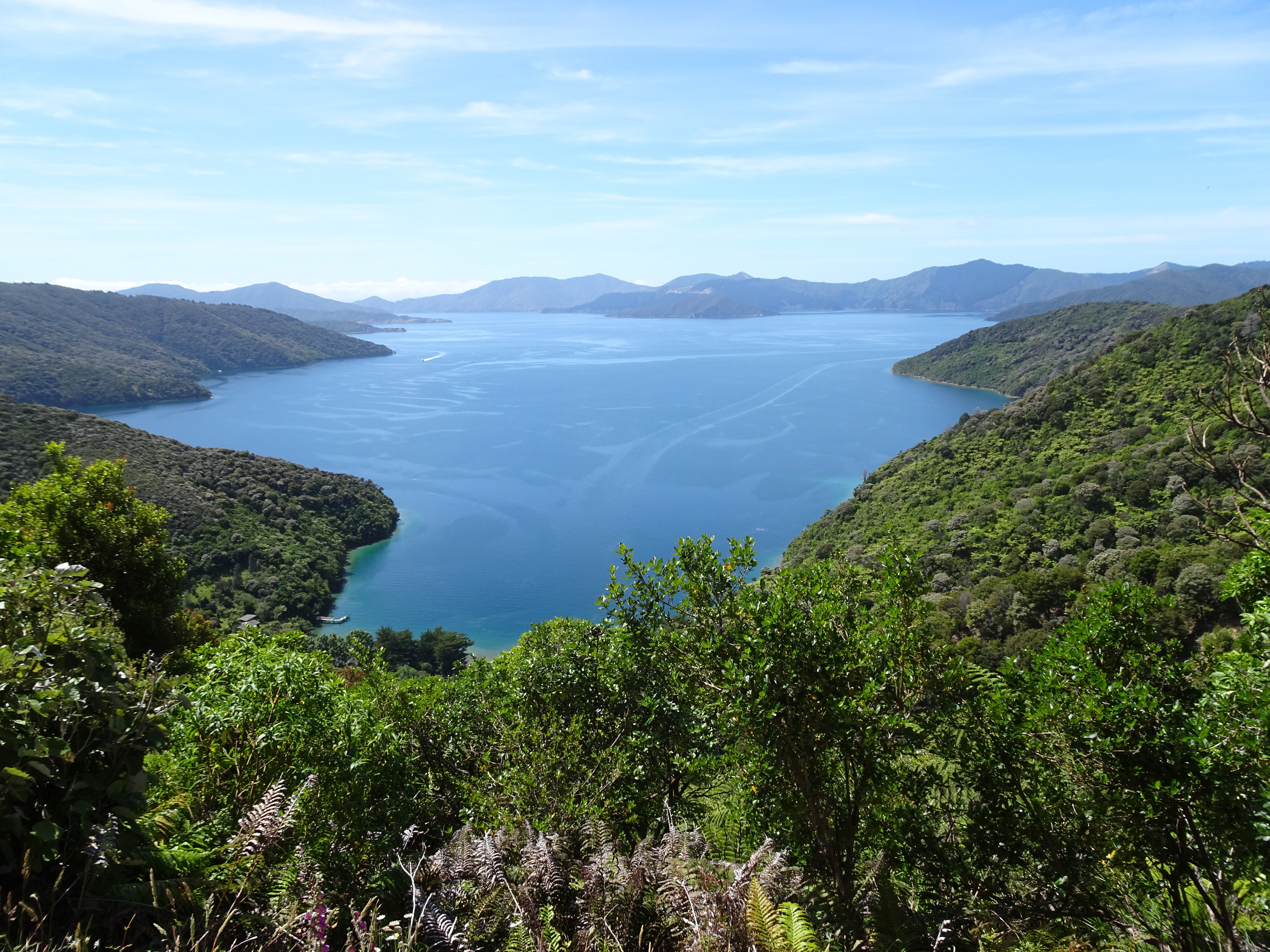
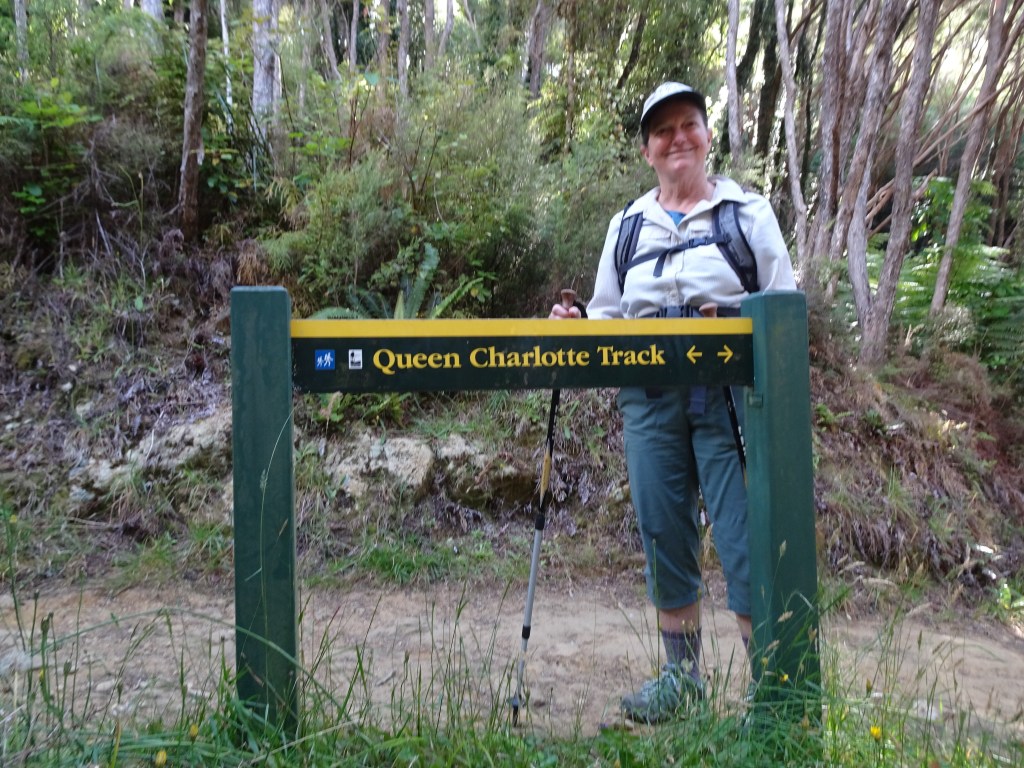
The Queen Charlotte Track is a seventy two kilometer hiking trail that runs along the Queen Charlotte Sound. The sound is an inlet from the Cook Strait, and the town of Picton is at the end of it. That’s where the ferry connects to the North Island. This whole area is in the Marlborough Region. Marlborough is famous wine country, but these inlets and bays of the Marlborough Sound are spectacular. Straightened out, this little area has 25% of New Zealand’s total coastline.
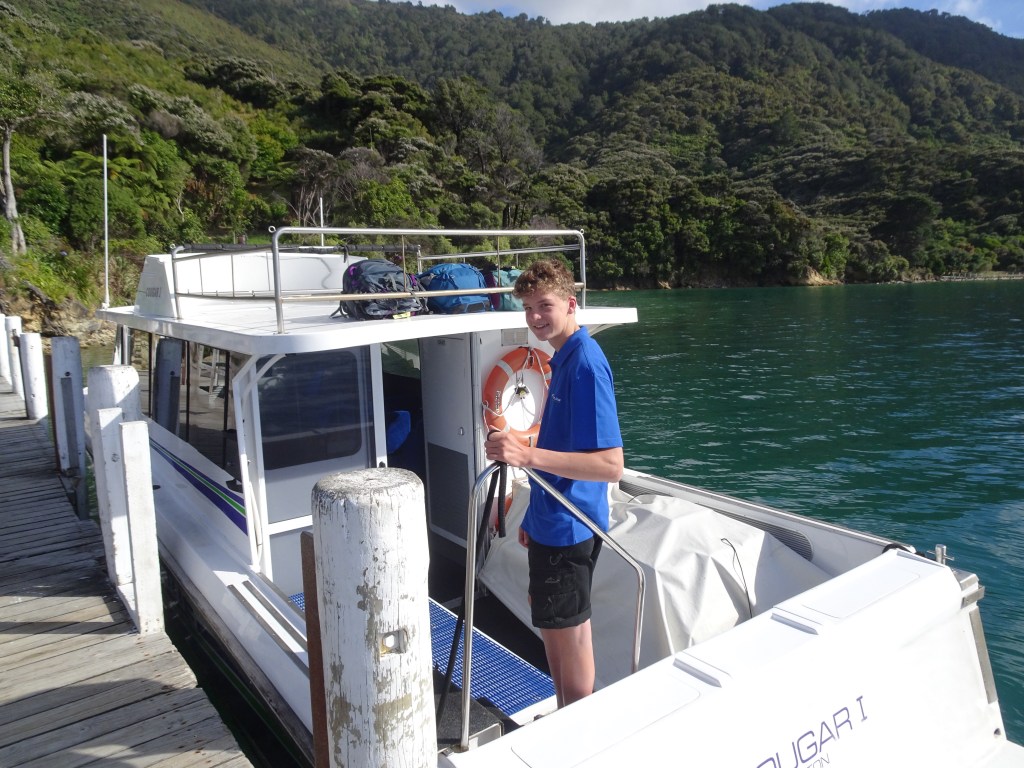
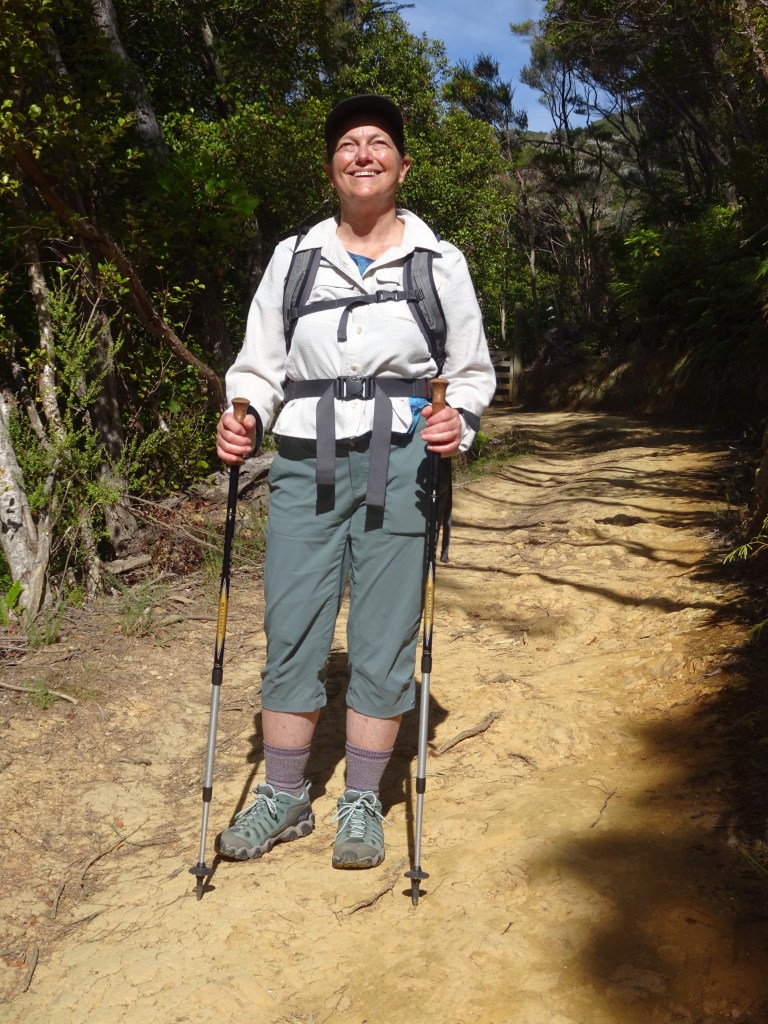
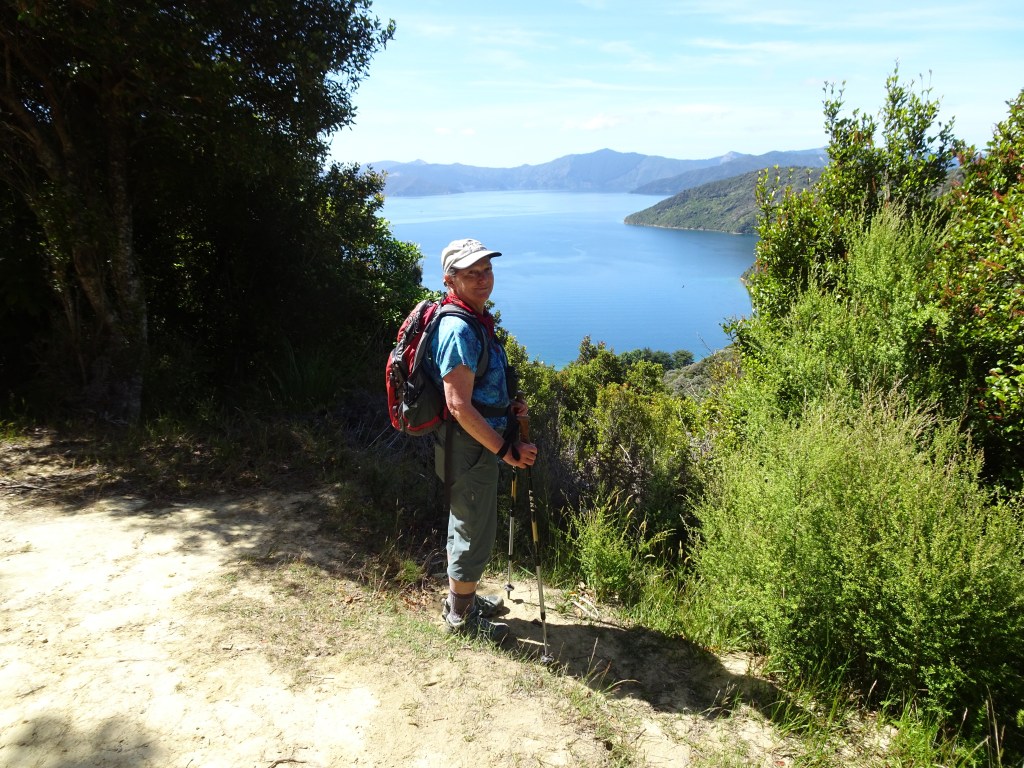
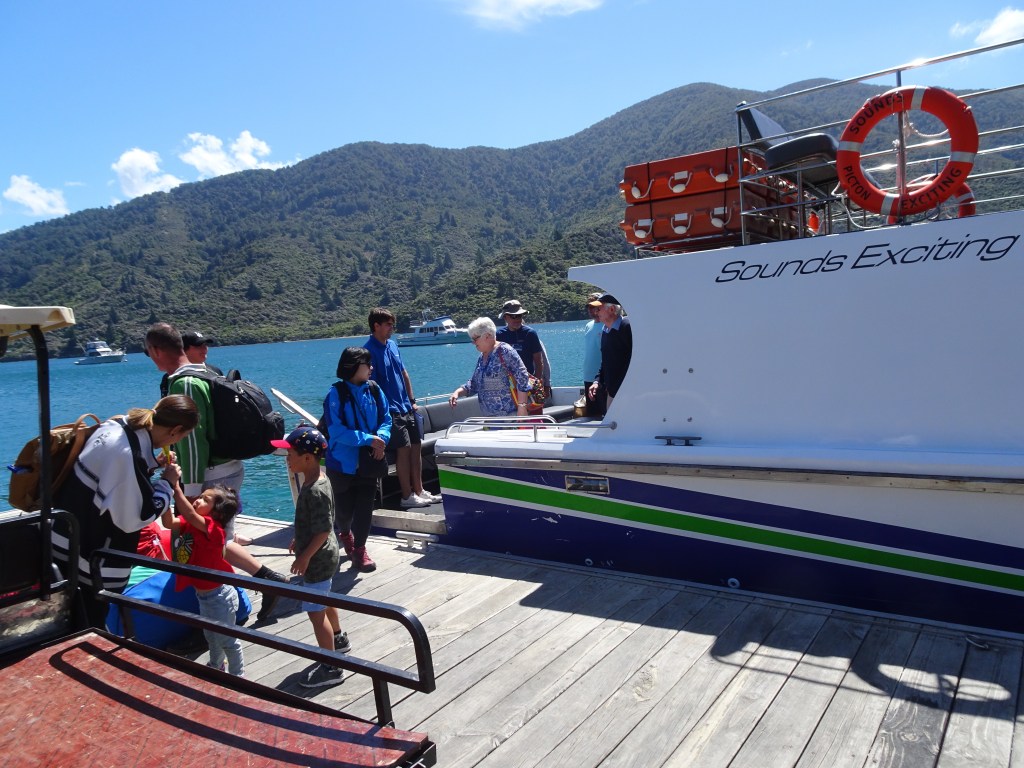
New Zealand has nine “great walks.” The Queen Charlotte is one of them. You can walk the whole trail in five days, using the water taxis to transfer your pack for you, staying in lodges with hot showers and meals and beds every night. The water taxis are a fantastic system which you can use to hike any part of the trail that you’d like to. We chose to hike from Resolution Bay to Furneaux Lodge, a total of ten kilometers, a pleasant day hike. We got on the boat at 8:00 in the morning, and started hiking at 9:15. The Sound is calm protected water, the boat ride was smooth, and the weather was delightful.
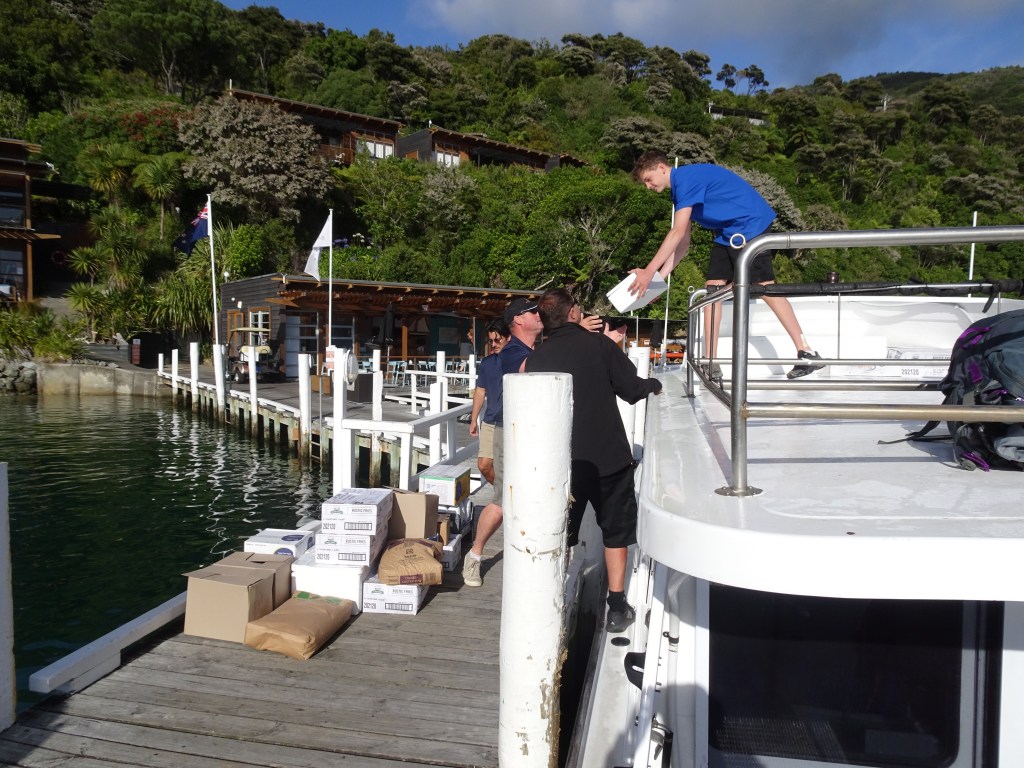
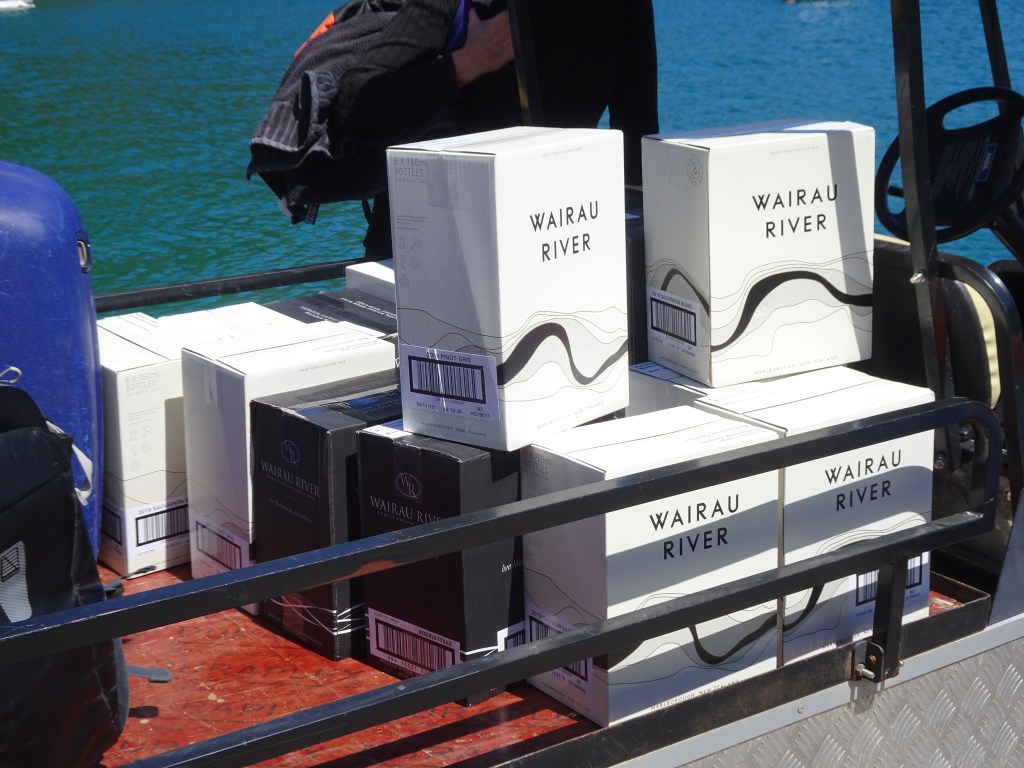
It’s really easy to arrange drop offs and pick ups. People who walk multiple days can have their packs waiting for them in the afternoons.The water taxis are a lifeline to the lodges, and to the people who live in the inlets and bays. These white boxes are filled with frozen French fries. Here are a few cases of Sauvignon Blanc.The dock at the end of Resolution Bay. The boat dropped us off here, then took off. (You can see it in the distance.) We had six hours to make it to our pick-up spot. Views of the Sound came and went as we hiked. The blues and greens were stunning.
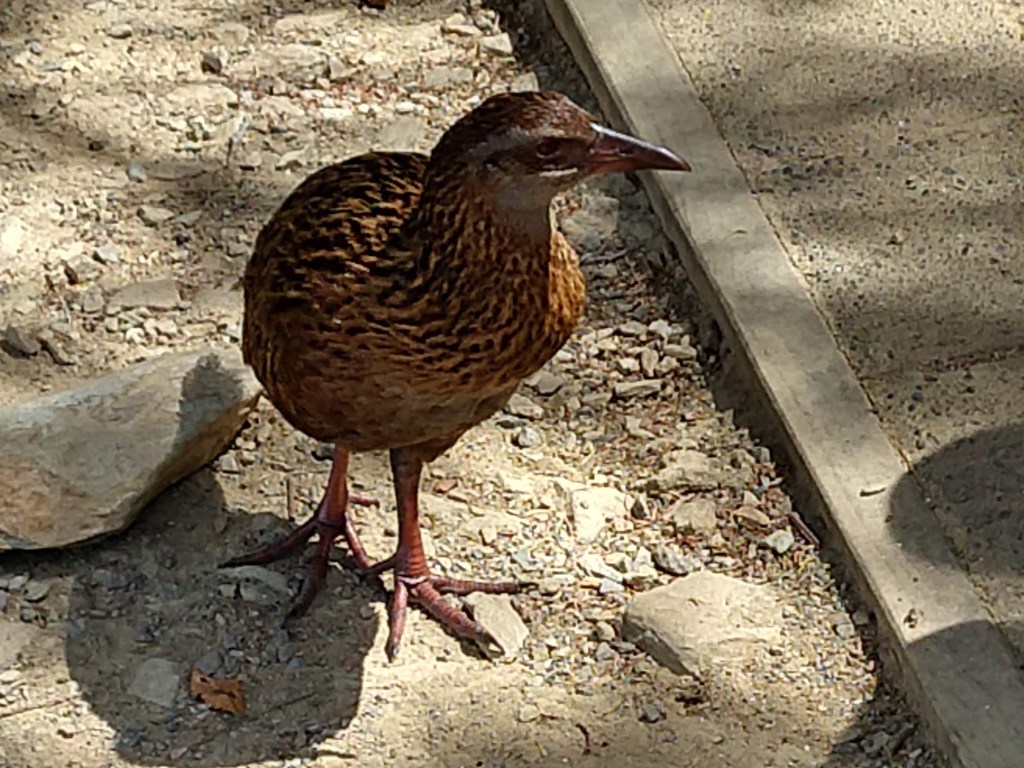
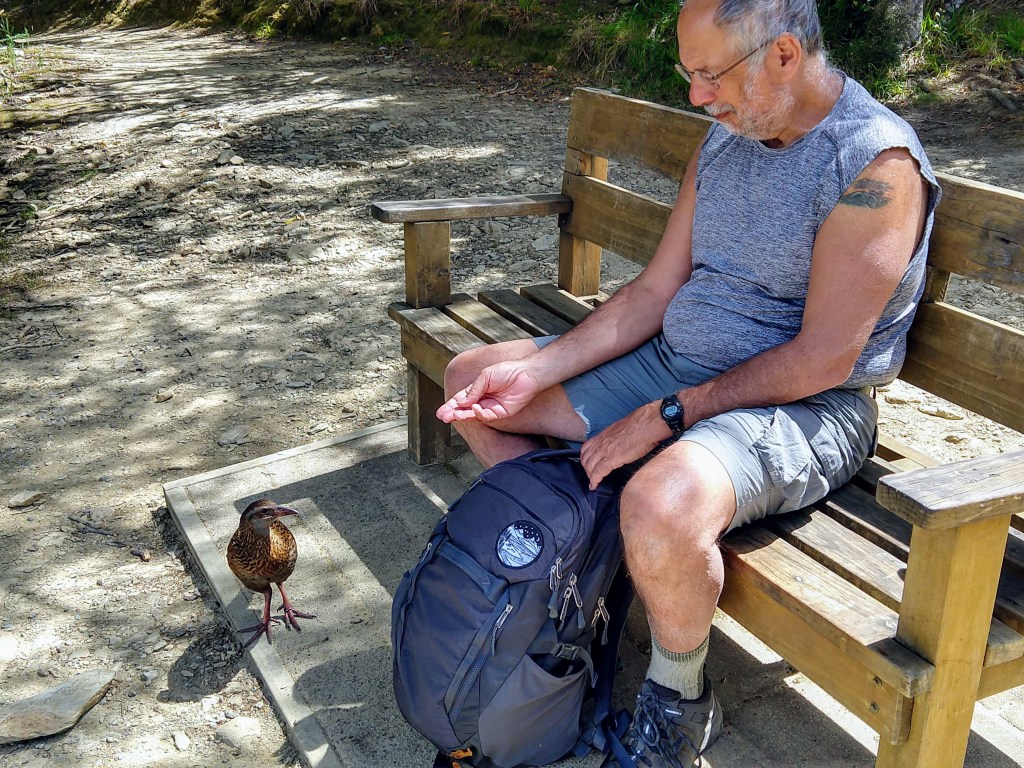
There were a few other people on the trail, but we were mostly alone. We stopped for a break up at a viewpoint, and were soon joined by a couple of Wekas. These are New Zealand flightless birds who like to hang around humans. They are known for stealing things and going where they shouldn’t. This one tried to steal Monica’s hat. The wekas are declining in population, and people do tend to have a soft spot for them.
Nothing actually in Mike’s hand, but the weka recognizes the gesture!
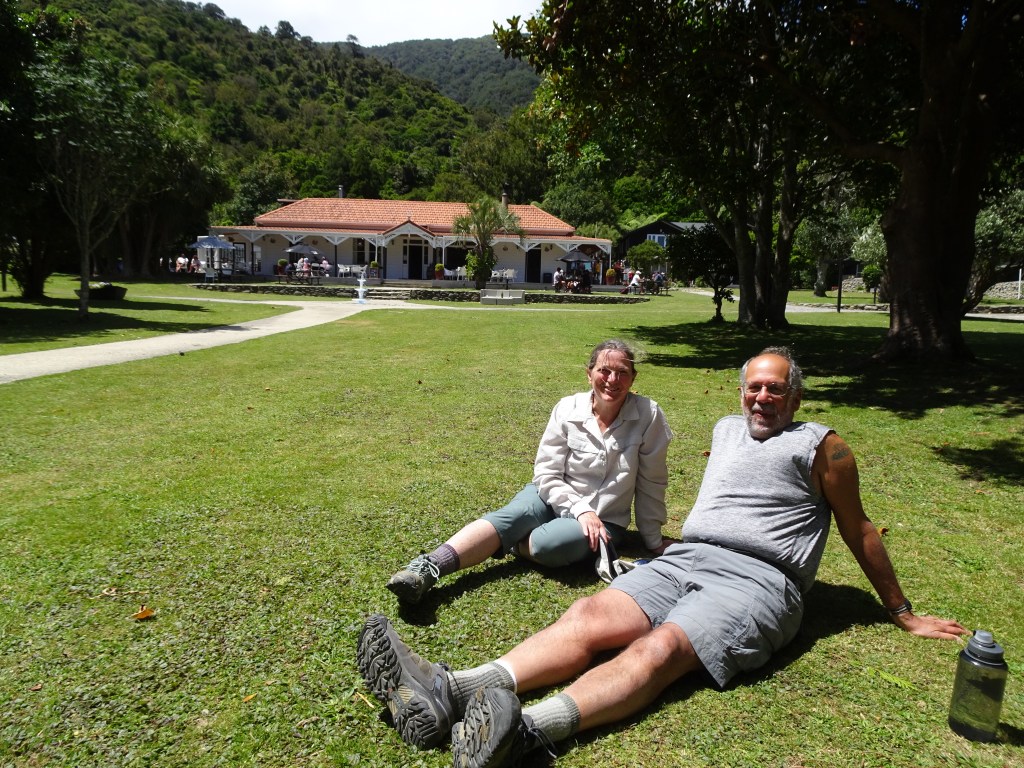
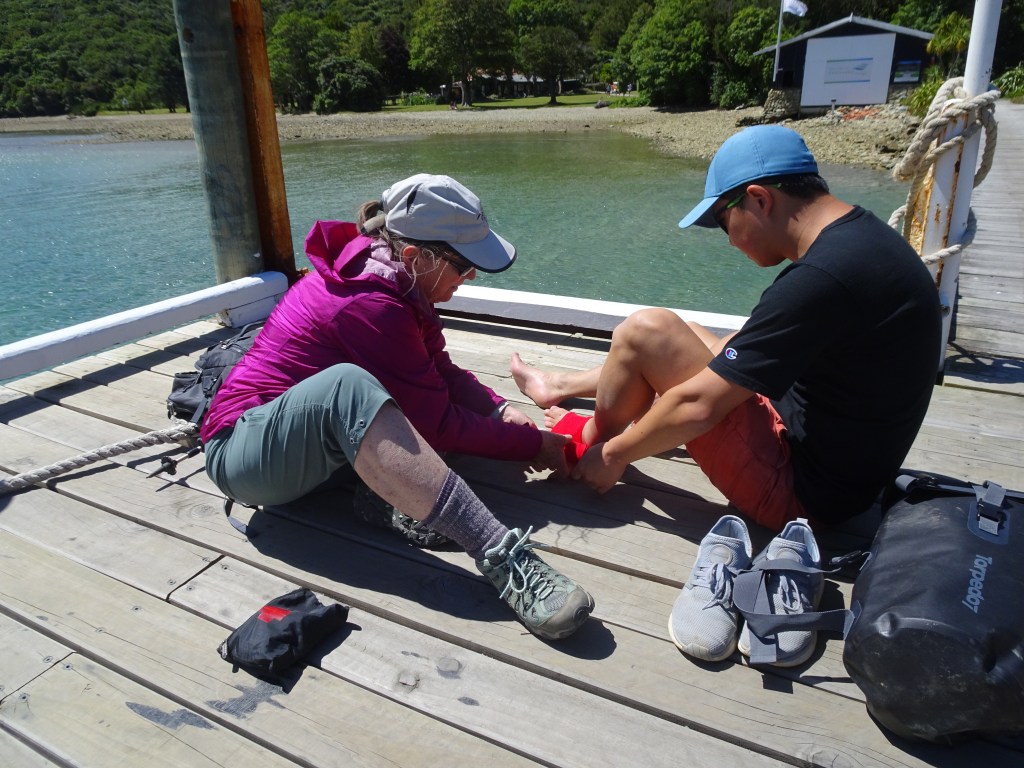
We reached our destination with an hour to spare. It was great to lounge a bit after the hike. We had met a family from Auckland in the morning, and we saw them again at the end. The dad (Ethan) had sprained his ankle on the walk, and Monica finally got to use some first aid to help him out.
Summer afternoon. Summer afternoon. Furneaux Lodge. Furneaux Lodge.Ace bandages are very welcome sometimes.This was our ride home.
Havelock
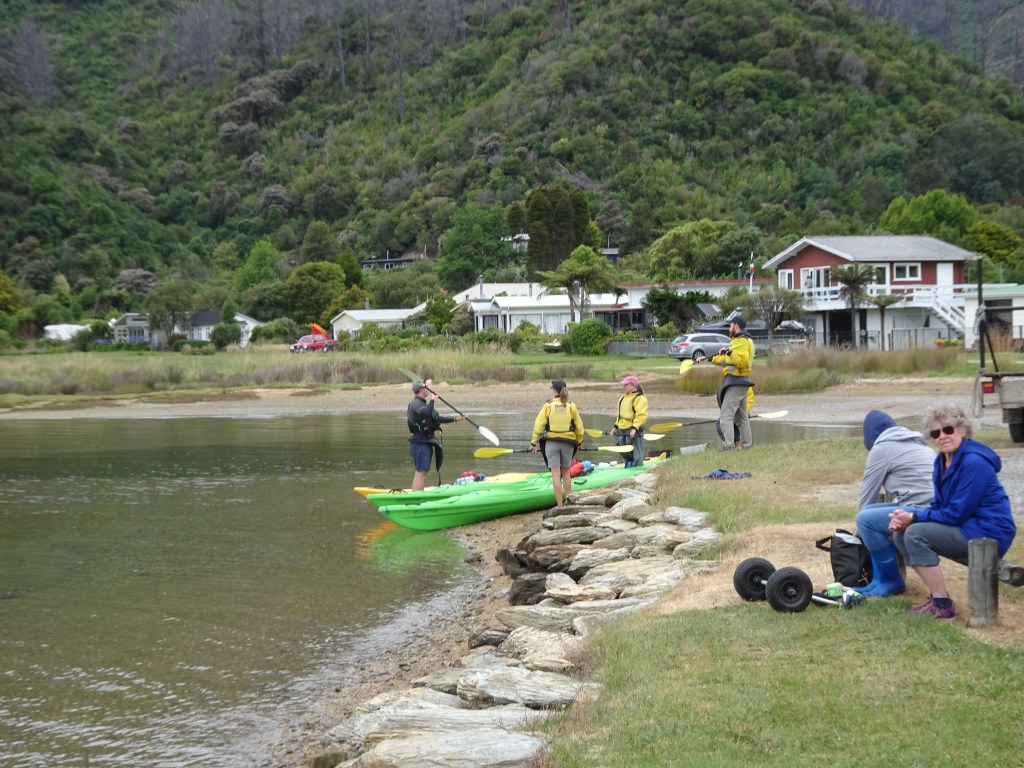
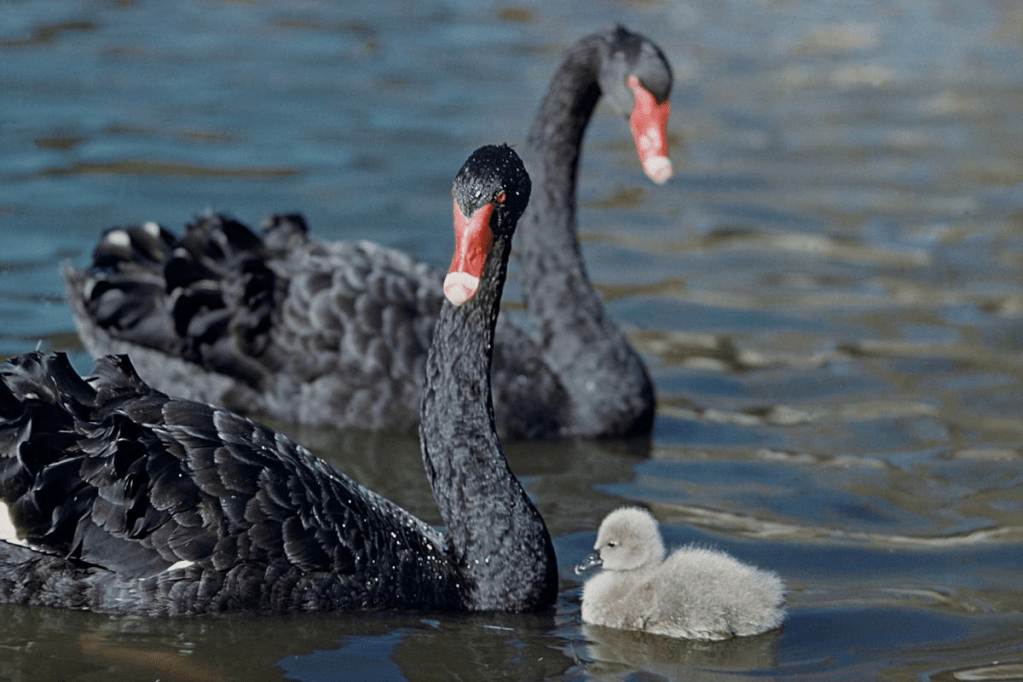
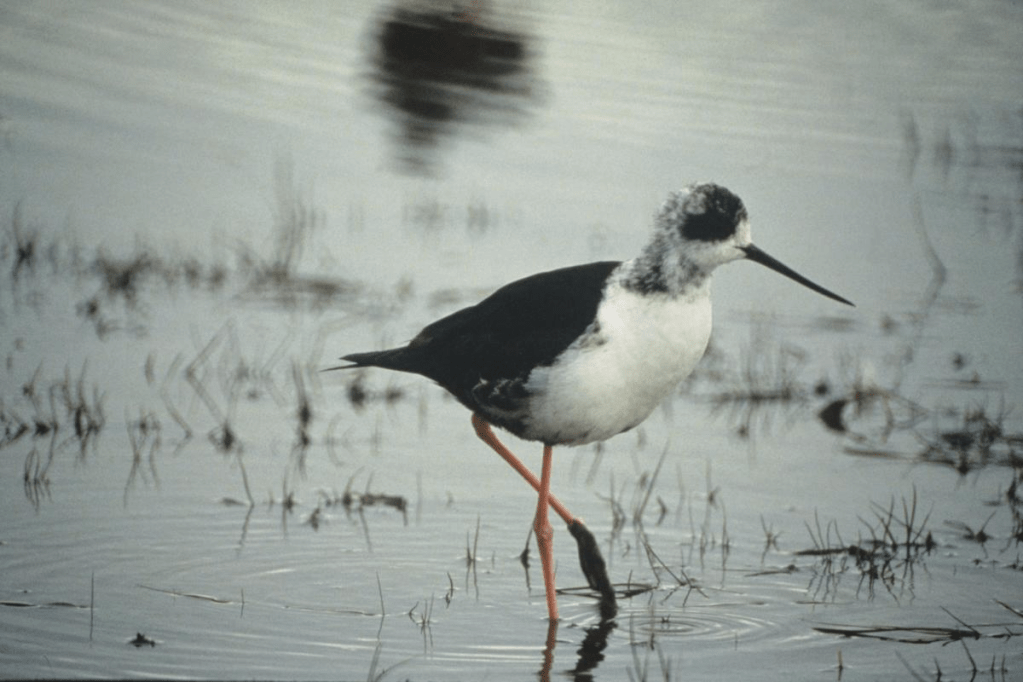
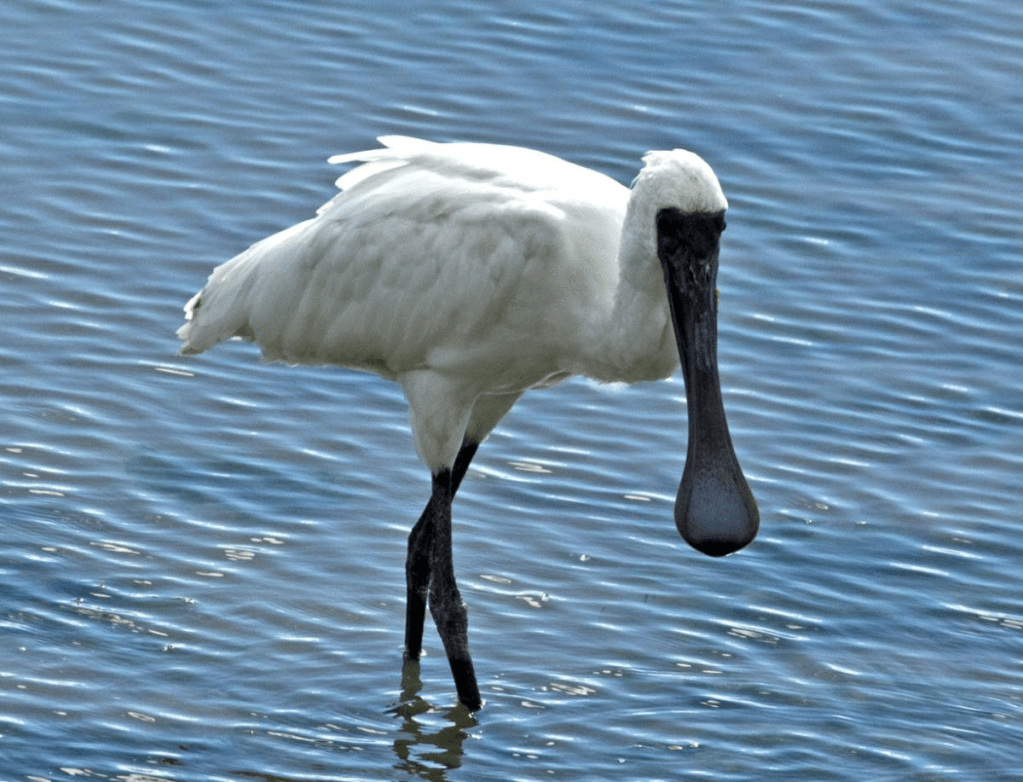
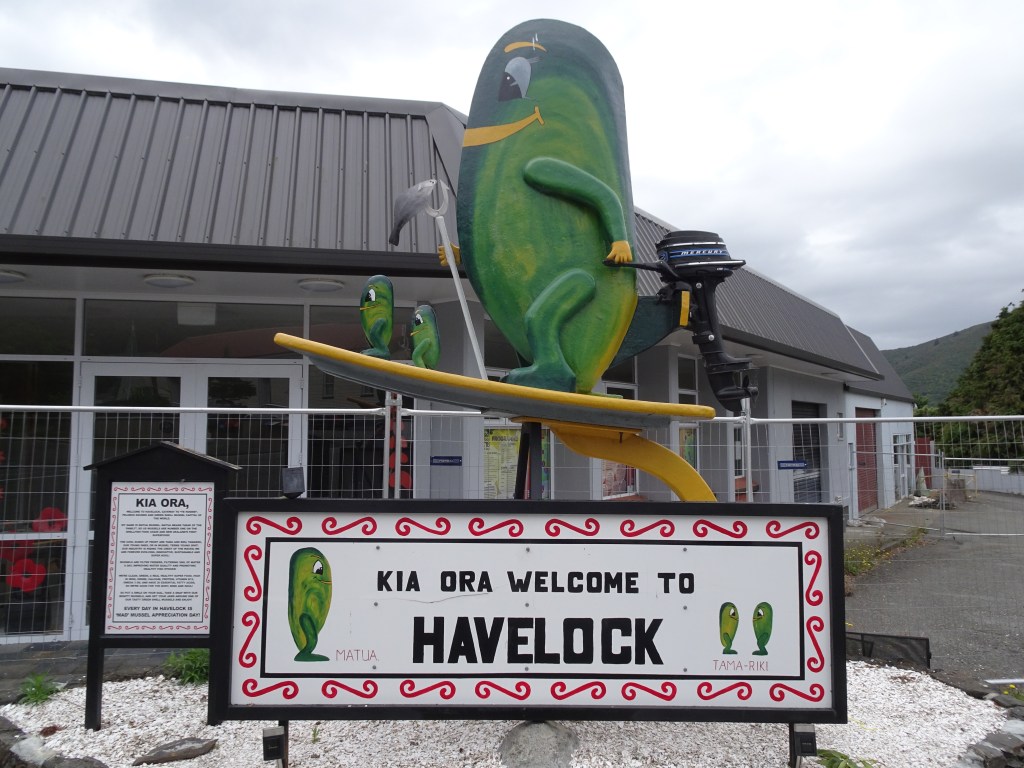
One day, we drove from Picton to Havelock, which is a small town on the Sound, about twenty five miles from Picton. There are bays along the way which are great for kayaking, because they are so beautiful and so calm. We hiked along an estuary trail near Havelock, and we saw white-faced herons, black swans, black stilts, pied oystercatchers, shags (those are cormorants) and best of all, royal Australasian spoonbills. Havelock is the world’s capital of green-shelled mussels. We had some for lunch after the hike.
New Zealand Black SwansBlack StiltRoyal SpoonbillGreen-shelled mussel
Marlborough and The Savvy Blancs
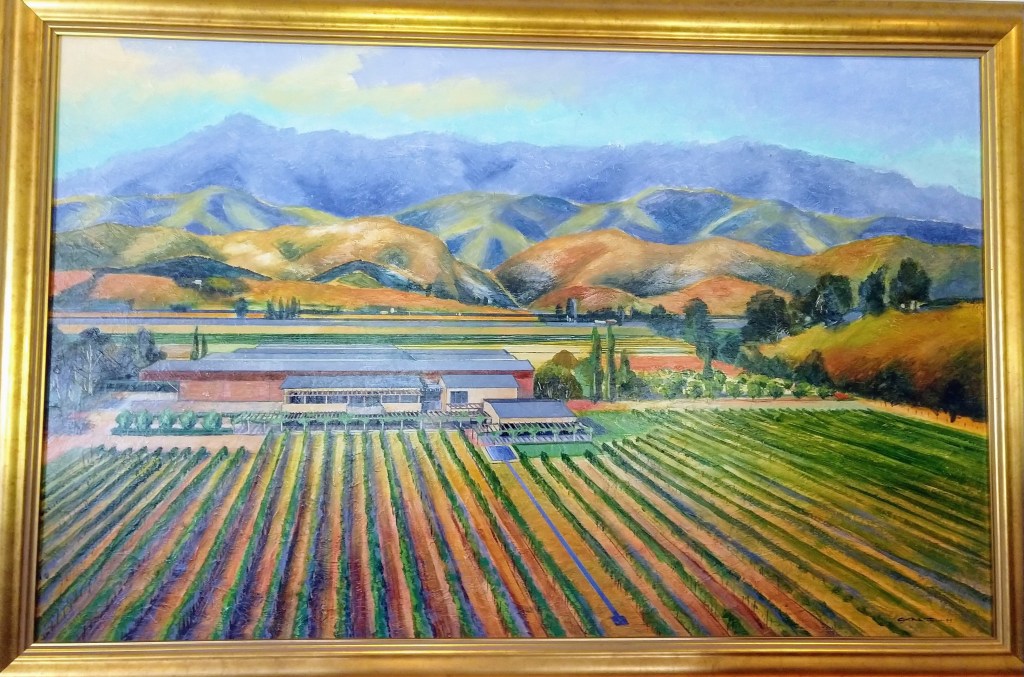
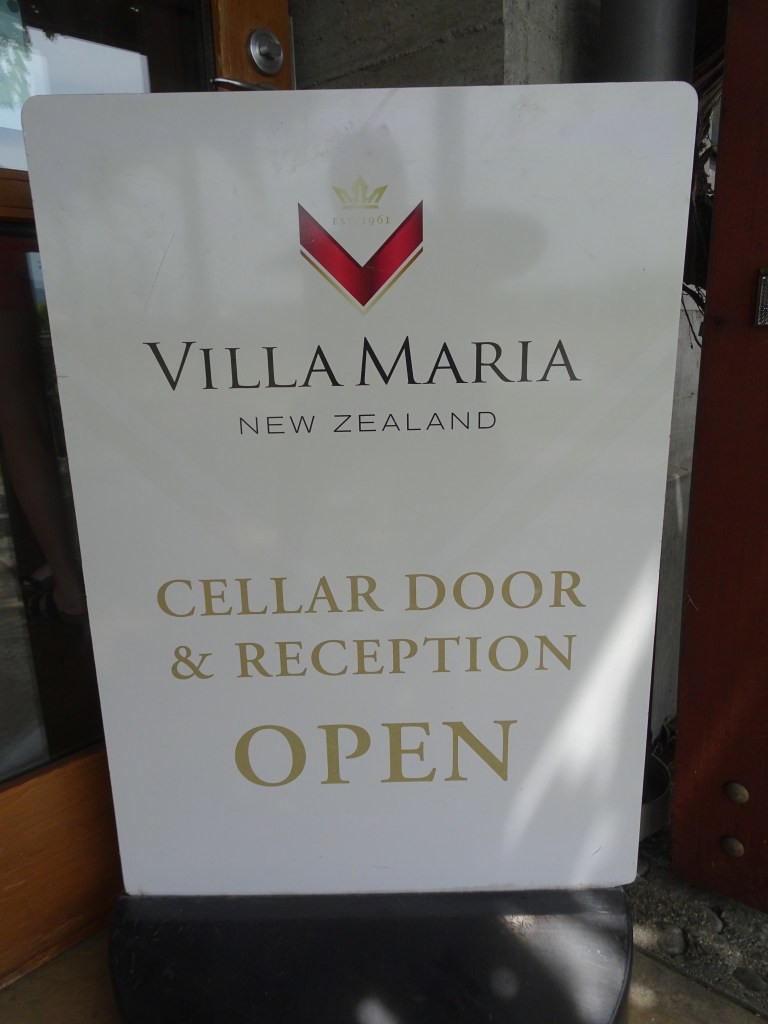
Villa Maria wineryVilla Maria is a well-known winery. It produces Syrah and Pinot Noir in addition to the white wines. It’s founder, George Fistonich, was a wine pioneer in New Zealand, and was actually knighted for his work.
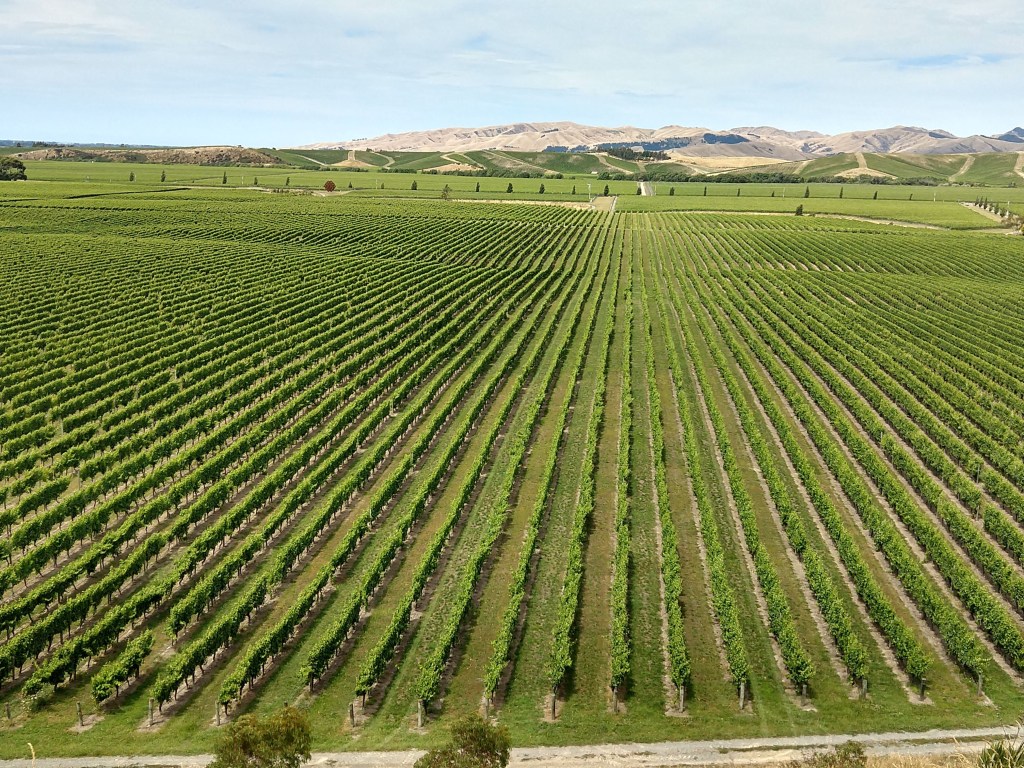
Ahhhhh, Marlborough Sauvignon Blanc. You can drive for miles and miles and see vineyard after vineyard, rows upon rows of grapevines, most of them growing the famous savvy blancs. Crisp and fruity, dry and minerally, depending on the soil and microclimate, they just keep on coming. Eighty percent of the wine here is Sauvignon Blanc. Marlborough is one of the great wine regions of the world, though the wine industry started here only in the 1980’s. Where France prides itself on tradition, New Zealand prides itself on innovation. The winegrowers here have learned the old ways; a lot of the growers come from Europe. But they do not feel constrained by tradition, because here, really, there is no tradition. They experiment. They look for new ways. They are proud of that.
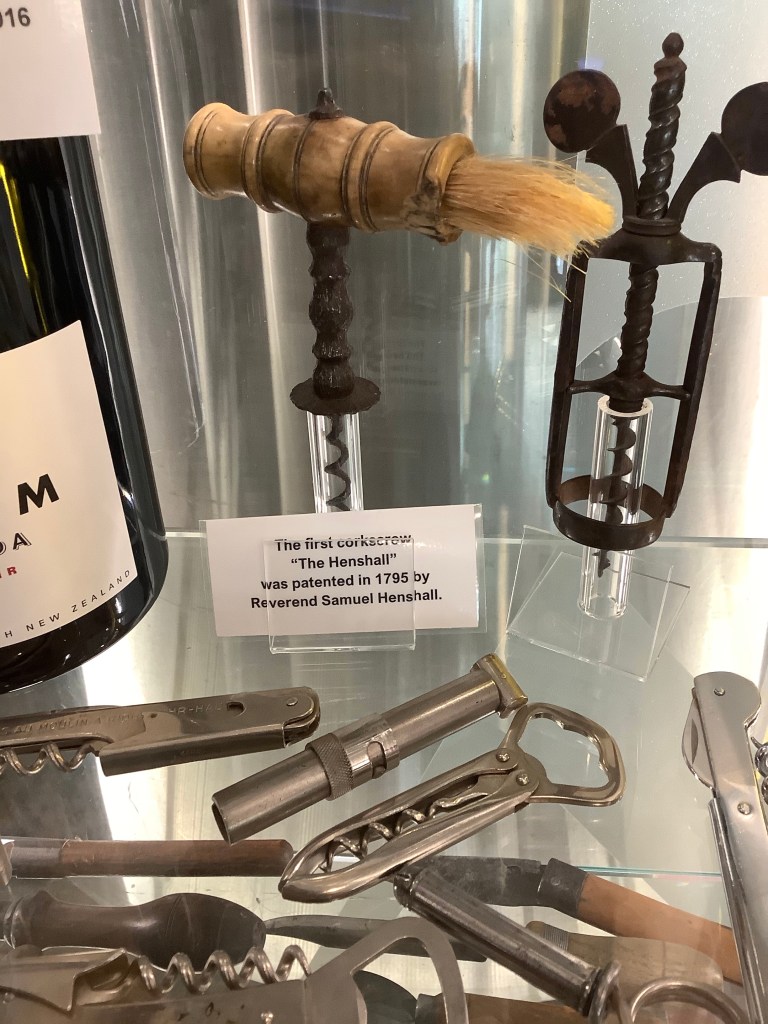
One of the innovations are screw caps. Screw caps??!! For wine??!! Get over it. Every single bottle of Marlborough wine (except bubbly) is topped with a screw cap. Every one. They have improved on the cork. The first screw cap here was in 2000. The industry had been importing cork from Portugal (like everywhere else) but a certain percentage of the wine was going bad. They started experimenting, and now cork is on the way to becoming obsolete. The image of an elegant sommelier deftly uncorking a bottle, as opposed to unscrewing it, might become a thing of the past. Capped bottles are easier to store, (they don’t have to be on their side) 100% safe in storage, (no more offering the gent a taste and getting his okay before pouring the bottle. I hate it how they always make the guy taste it first) and they are cheaper. (Hard to argue that one)
Are all corkscrews destined to be museum relics?
The Sauvignon blancs here are delicious. We went on a wine tour with a guide, and we talked and tasted wine all day. We went to five different wineries with him, then visited a few others on another day. At the tastings, the wineries tend to offer the best that they have. Some of their wines are exported, some are not. All are delicious. It’s amazing. Just grapes and a little yeast can taste like peaches, passion fruit, mango, grapefruit, and sometimes like grass and rocks. The grass and rocks are tremendous.
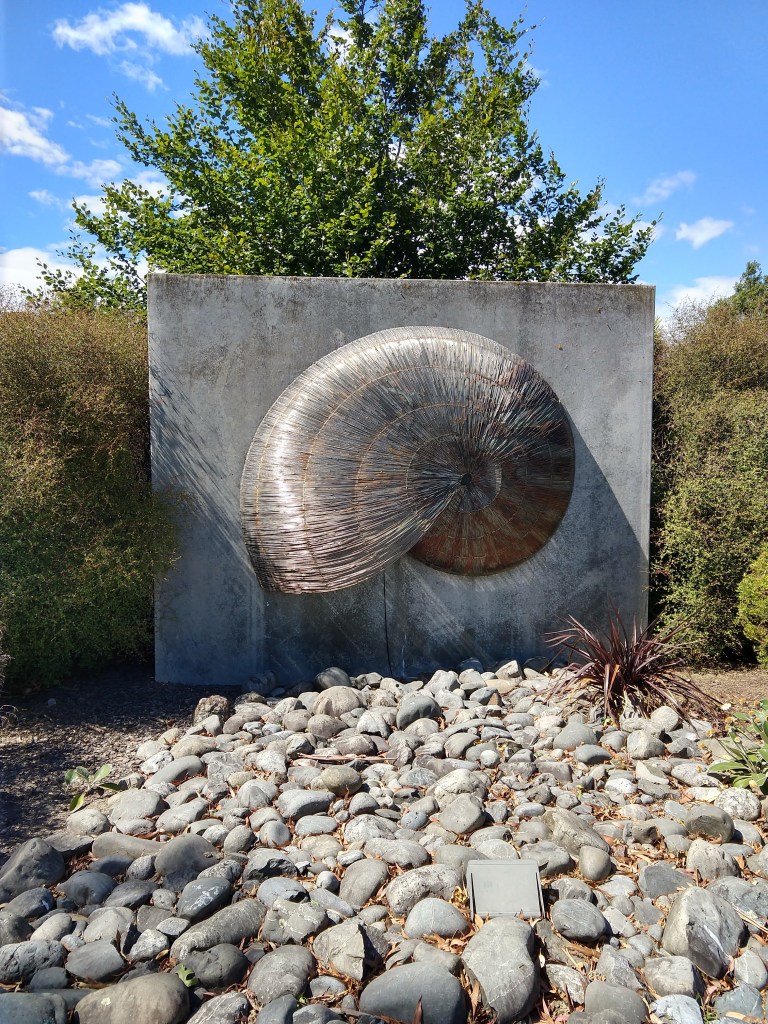
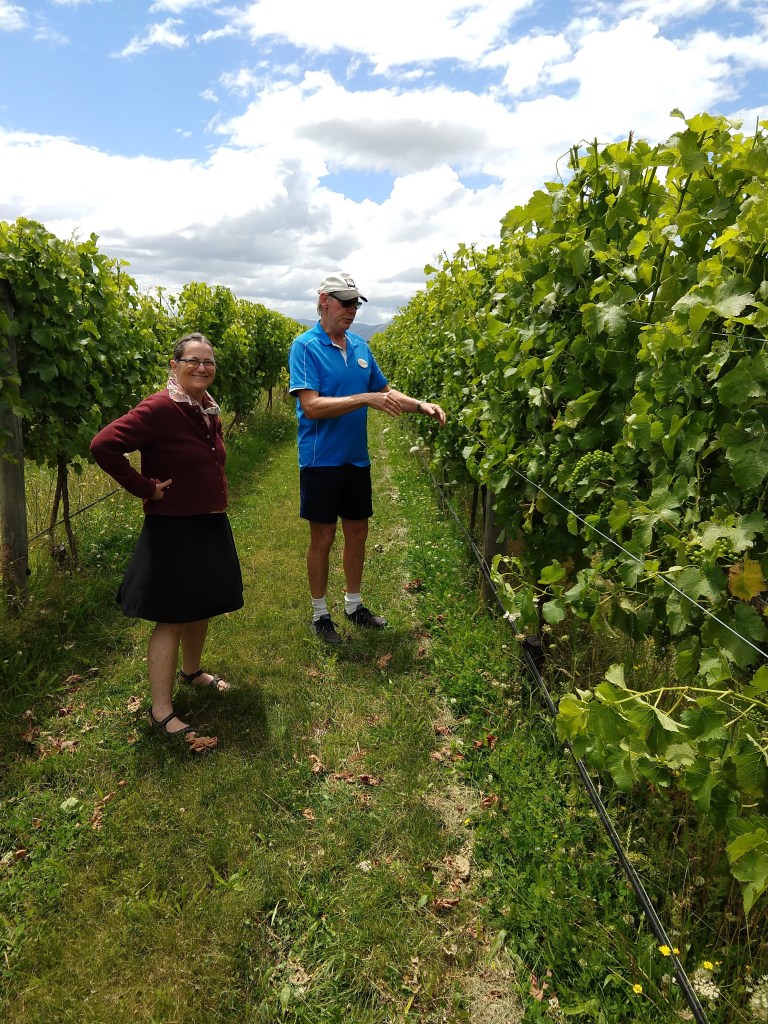
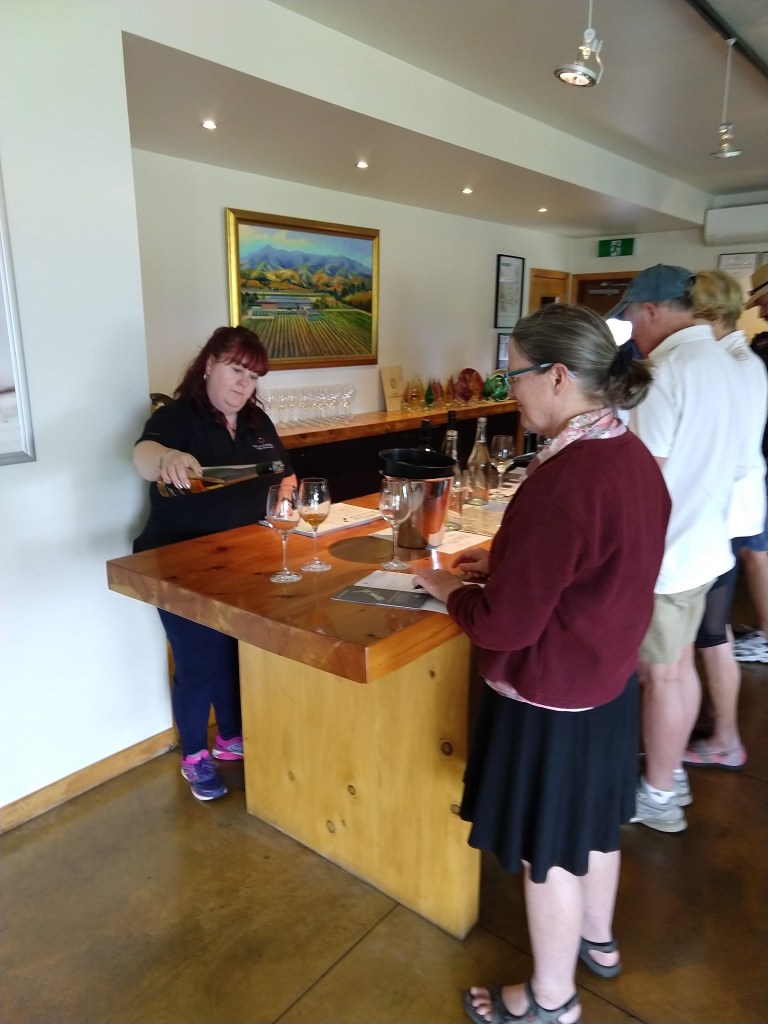
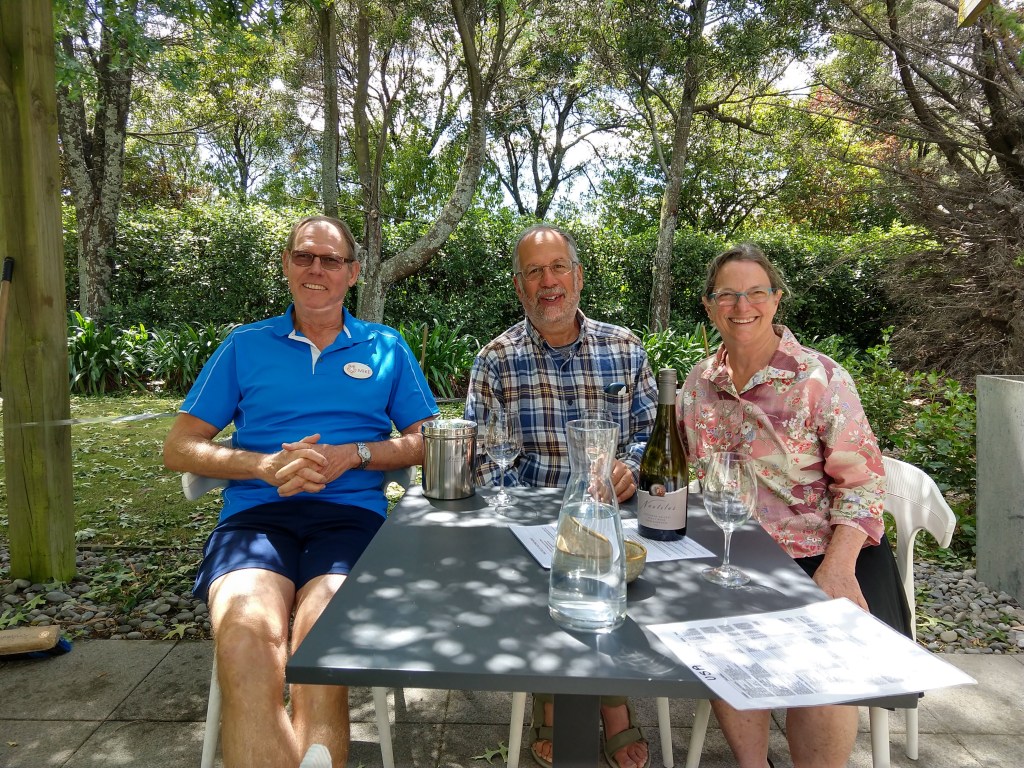
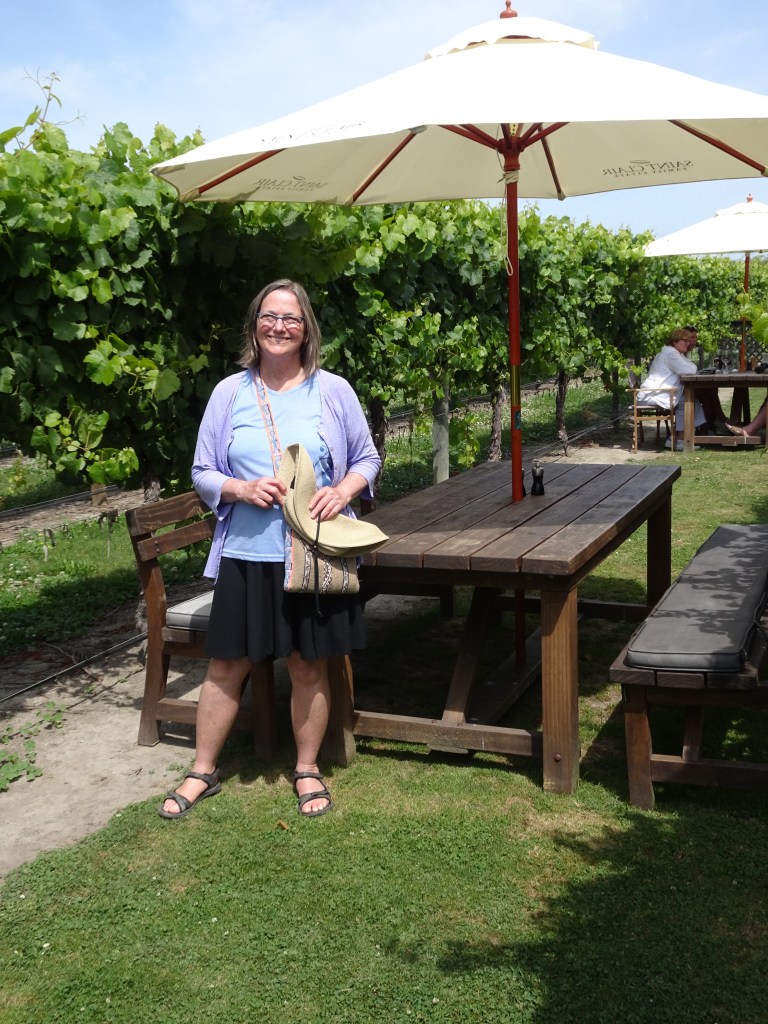
Nautilus Winery. The perfection of the grape reflected in the perfection of the Nautilus.Vineyards literally as far as the eye can see.Getting down to the nitty gritty. Talking about selecting and pruning, soil types and irrigation, ripeness and sunshine.Different tasting rooms (cellar doors) offer different wines.Our guide Mike. We really appreciated his knowledge and introduction to the area. Saint Clair Winery
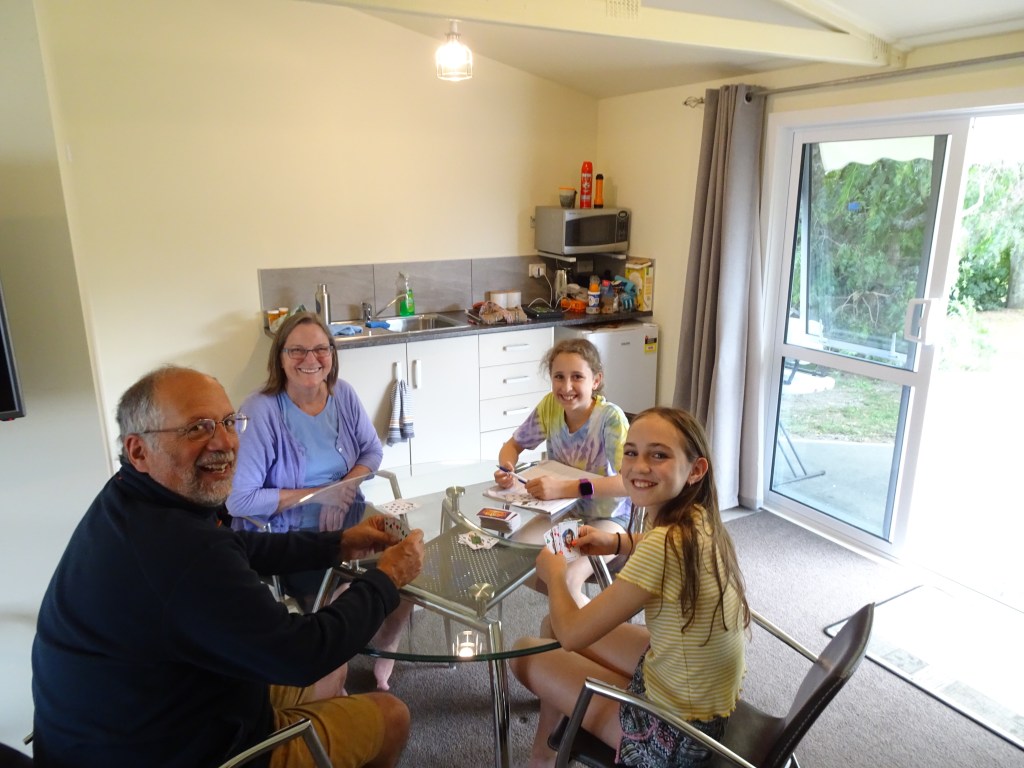
As a bonus to our stay in Marlborough, we learned how to play a card game called “Five Crowns.” Rhianna and Maya are the grand-daughters of our Airbnb host, and we spent a few hours with them playing, talking, and laughing. From here, it’s south down the coast, to Kaikoura.
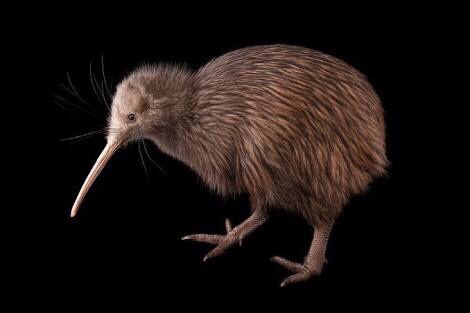
The kiwi is a funny animal to pick for your national symbol. Really, it is quite unimpressive. It cannot fly, it is defenseless, it hides during the day, and practically nobody ever sees one. It doesn’t inspire people to swagger. When you compare it to other national symbols, like the bald eagle, which is a highly visible, intimidating predator, it just doesn’t hold up. Afghanistan has the snow leopard. Colombia has the condor. Finland has the brown bear. Iceland the gyrfalcon, which is perhaps the world’s fiercest falcon.
What the kiwi represents, though, is the uniqueness of New Zealand’s wildlife and the treasure of its culture. It also perhaps is a symbol of the quirkiness of New Zealand. It is not found anywhere else in the world, and it has evolved in its own unique way. It is more like a mammal than a bird, in that it has a strong sense of smell, touch, (it can detect vibrations that bugs make), and hearing. Its nostrils are at the very end of its beak, so it can sniff out the tasty bugs. It doesn’t have a tail, and does not have wings. It has heavy bones and strong legs, and it digs its own burrows. It has evolved for millions of years in a place with no predators, and there were more than ten million of them when the Maori first arrived, about 800 years ago. Even though the Maori hunted them, they also revered them.
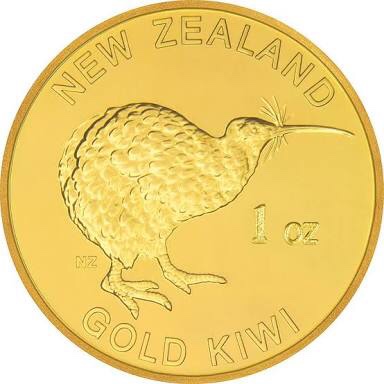
A New Zealand dollarThe New Zealand Air Force uses the flightless bird in its emblem. Pride and identity.
Today there are about 60,000 kiwis alive. There are breeding programs and sanctuaries, mostly on pest-free islands, and they are sacred here. We saw a kiwi at the Auckland Zoo, in a dark and silent wooded enclosure. They turn the lights on at night to simulate sunshine and the birds hide, then when visitors are there, they simulate night-time. If you’re lucky, you can see the birds skittering along in the bushes, trying to find worms and insects. Almost nobody ever sees one in the wild anymore.
An Eco-Sanctuary in Wellington
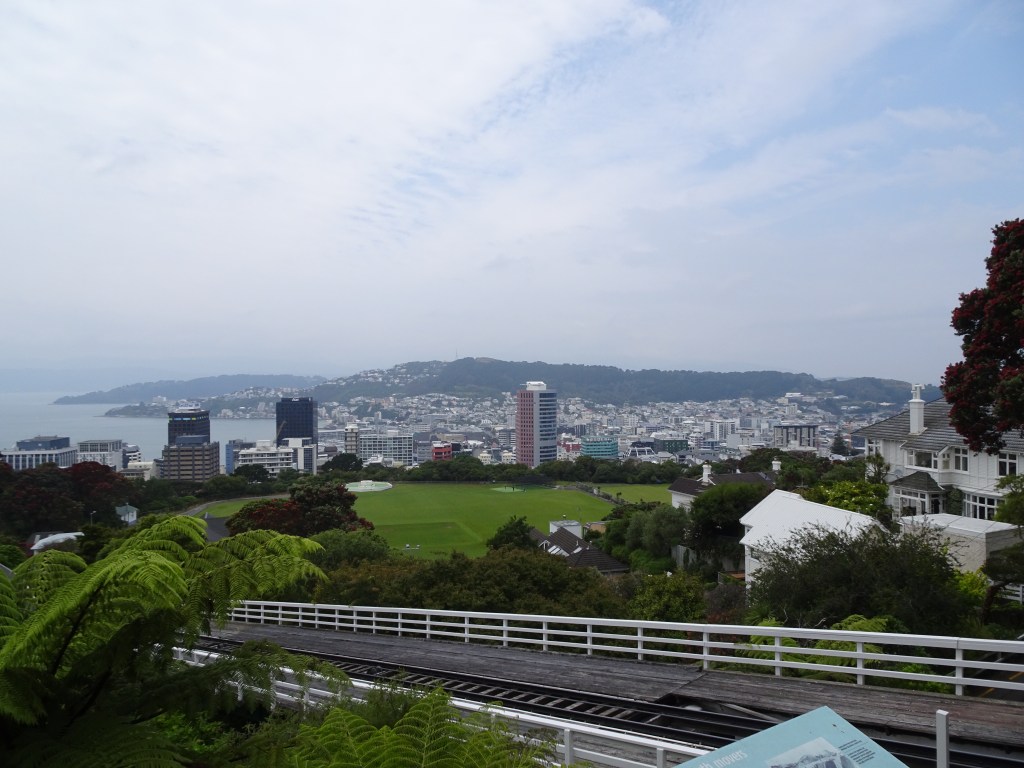
Wellington is a compact little city, hemmed in by the ocean and mountains
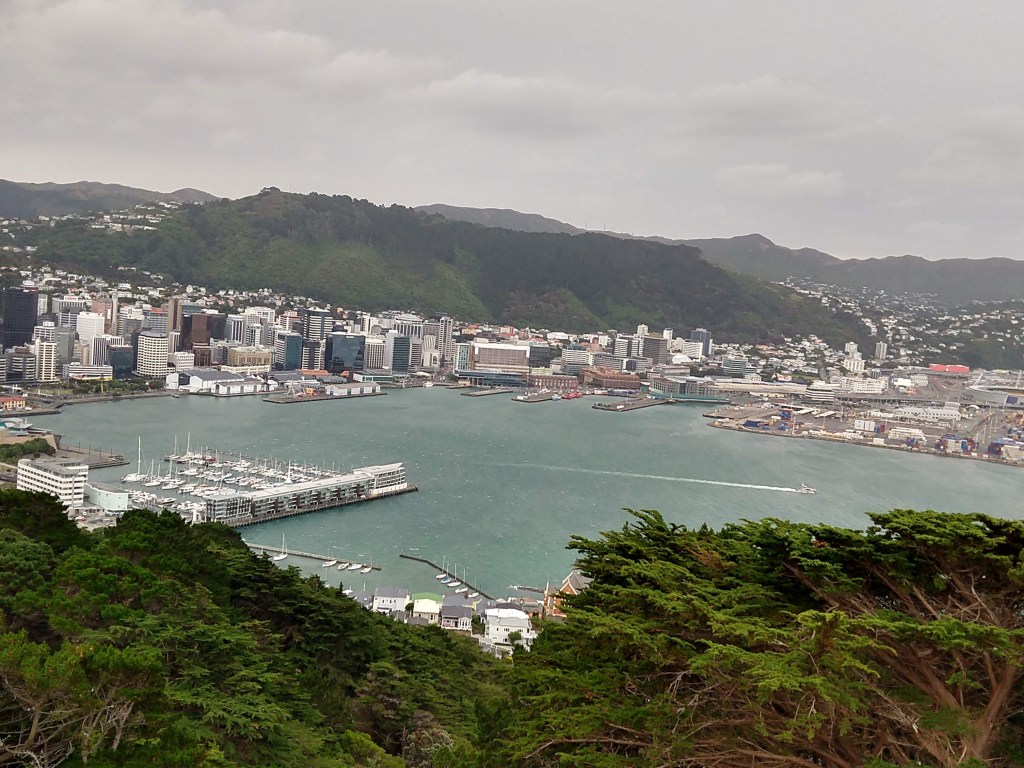
Wellington is the capital of New Zealand even though it is not the biggest city. It is the southernmost capital city in the world. The population is around 250,000 people. It has a huge harbor, and it is halfway up, or down, the country, so it made sense in the 1860’s to locate it where the islands are closest together.
Most people come to New Zealand for the nature. Everywhere you go, there is stunning scenery and outdoor marvels. One thing that Wellington has is a world-class urban eco-sanctuary. We went to Zealandia one day while we were here, and it left us impressed, inspired, and humbled.
This place was started twenty five years ago, with a 500-year vision. The vision is to restore the Karori Valley to how it was before the arrival of humans. Extremely ambitious. This is a non-profit, community-directed project. Today, there are about 100 paid staff, and 500 volunteers actively managing it. It is a world-class conservation site which has pioneered techniques in the “eradication of invasive species and the recovery of endangered native wildlife.”
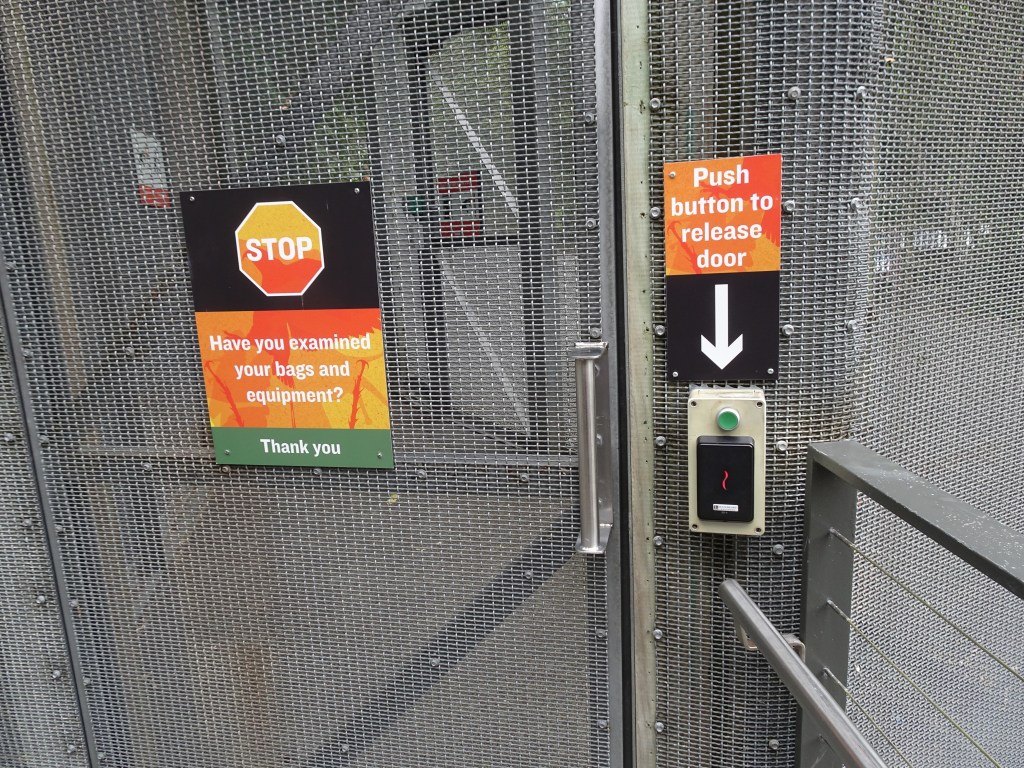
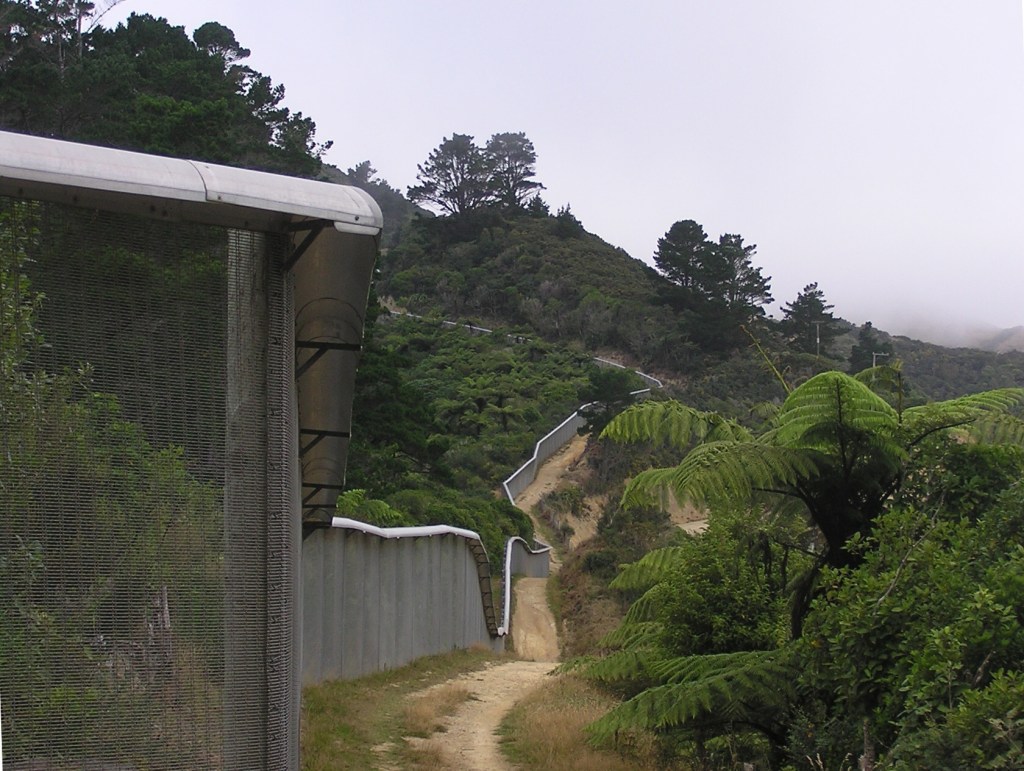
The first thing they did, after founding the steering committees and forming all the legal agreements, was build a predator-proof fence around the perimeter. The valley is approximately one square mile (around 600 acres) and there is about five and a half miles of fencing. The fence is designed to (and it does!) keep out rats, possums, stoats, (weasels) cats, and rabbits. None of these pests were here 1000 years ago, and much of the native bird life was quickly decimated when they arrived.
Just make sure you didn’t forget about that pet mouse.
You have to remember how isolated these islands were until just a blink of an eye yesterday. They were on earth with no humans until 800 years ago. There were no mammals here, except for two species of bats. No deer, no bear, no warm-blooded mammals. The place was full of flightless birds. They evolved and lost their wings because they didn’t have to escape predators. The Maori brought rats with them on purpose, for food. The English brought them unintentionally. The rats have been very successful. The European settlers brought possums over to breed for the fur industry, and rabbits for food, and then they got out of control and the farmers demanded action. So, the government brought over stoats in 1884 (they’re similar to ferrets and weasels) to kill the possums and rabbits. Well, you know how that goes. Now they are all widely dispersed and widely despised. They kill birds. They eat crops. They spread disease.
Inside the fence, the birds are safe.
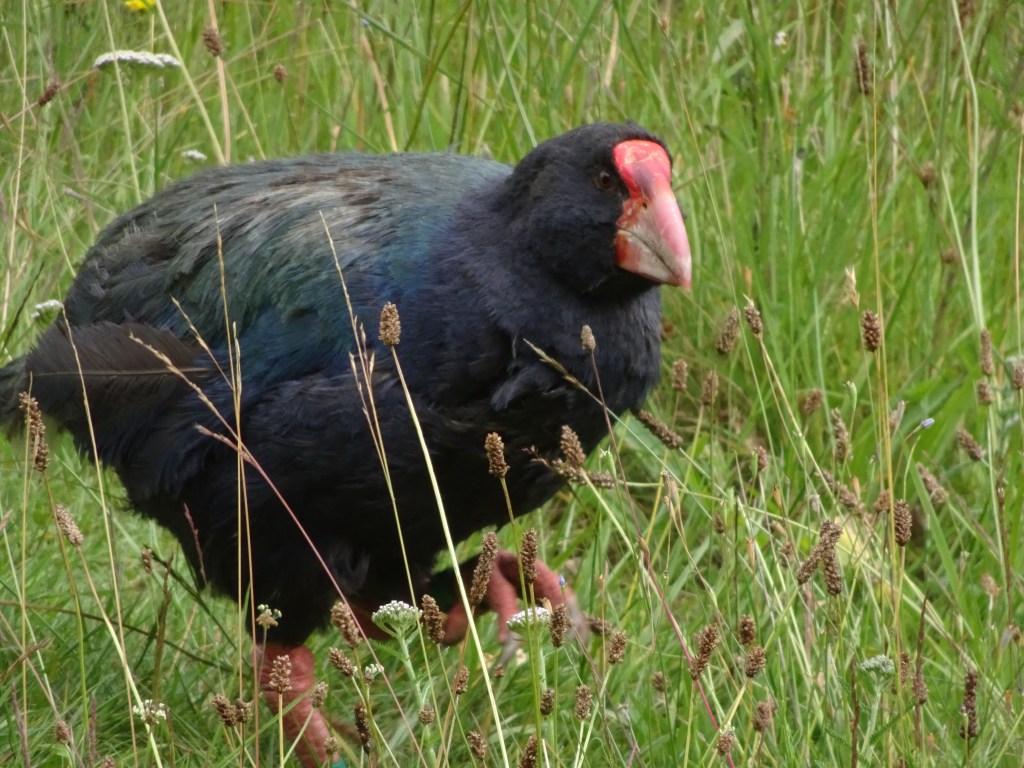
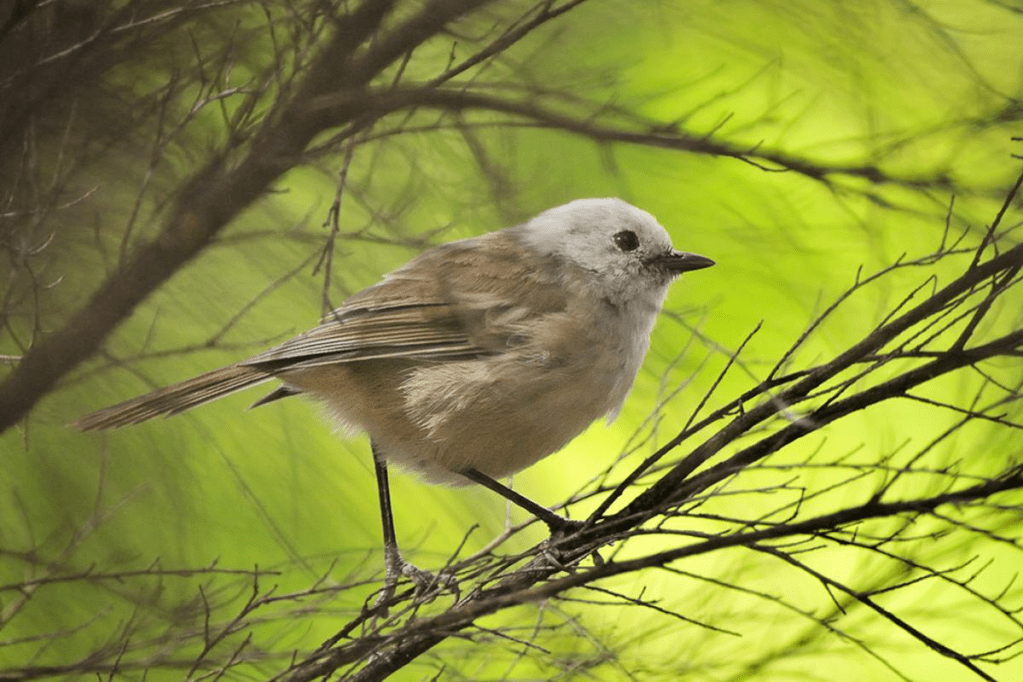
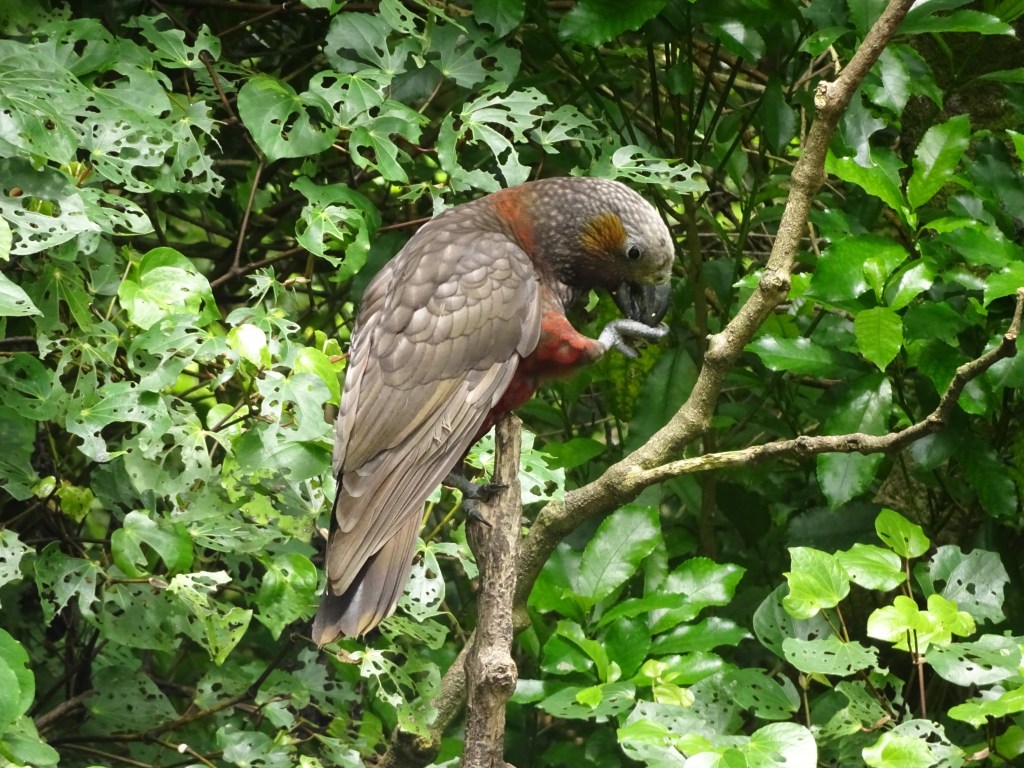
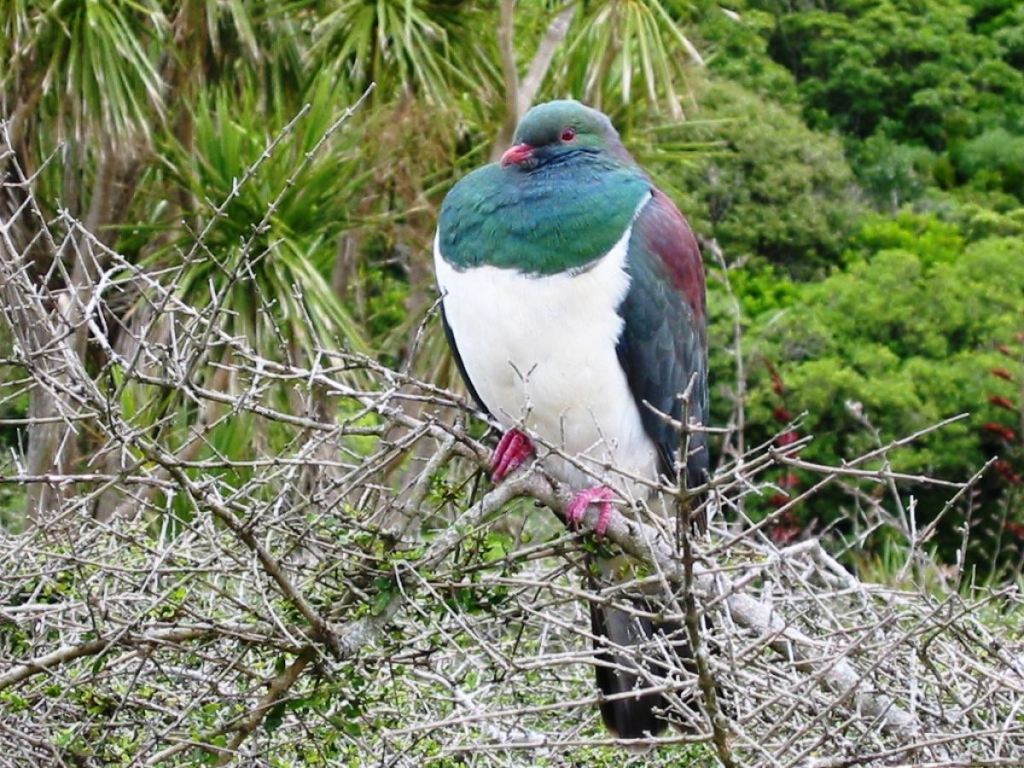
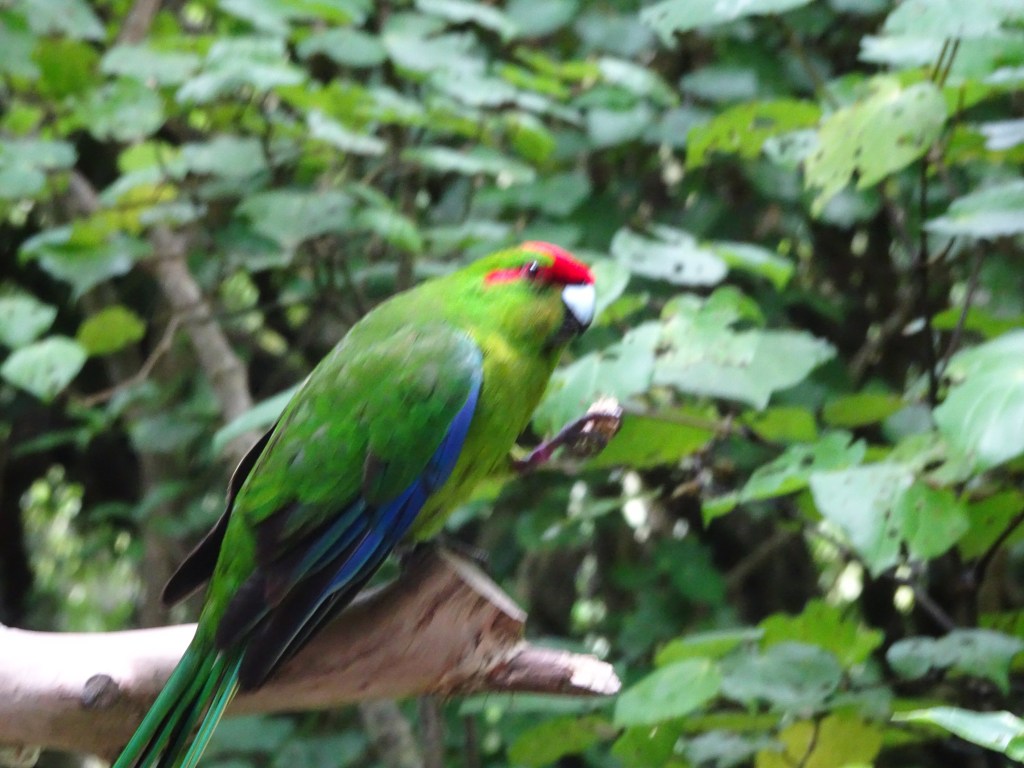
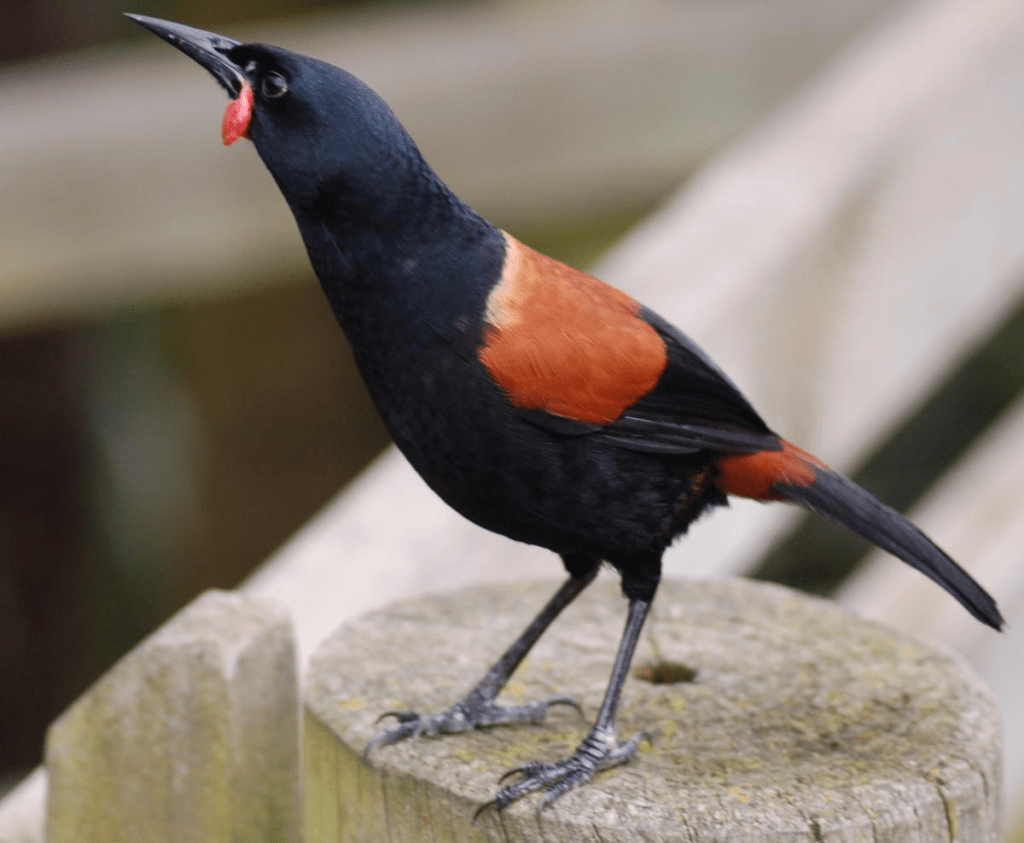
The fence was completed in 1999, and soon after, all the pests inside were eliminated. Monitoring is continuous, but this square mile has been basically pest-free for twenty years now. Next was the introduction of native and endangered wildlife, mostly birds. There is no net over Zealandia, so birds can come and go, and they do, but they are pampered inside the fence, and they seem to know they are safe, and they breed inside. It is not a zoo. The birds just live here. They are also much more visible throughout the Wellington area. Many birds came very close to us. Some we’ve seen in our brief month here, but some were new to us. There are kiwis here, though we didn’t see them. The takahe is a large, flightless, endangered bird. The kaka is a large brown parrot. We also saw the large native pigeon (not like the North American pigeon) and the fantail, the kakariki, which is a red-headed parakeet, the bellbird, the whitehead, and the saddleback.
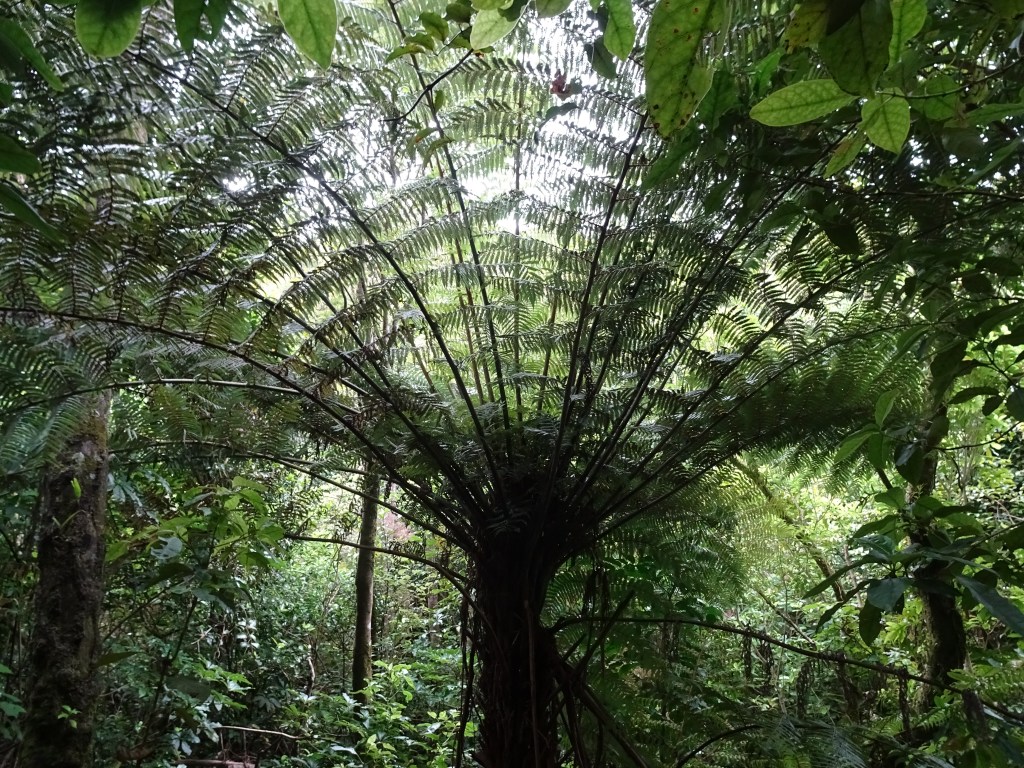
Tree ferns are still thriving. Invasive trees are not removed, but will eventually be replaced by natives. It is a 500-year vision.TakaheWhitehead. The size of a sparrowKakaNew Zealand PigeonKakarikiThe saddleback used to be extinct on the mainland, but it is thriving here.
The entire country is focused on getting rid of the introduced predators and pests. There is a government plan called “Predator Free 2050,” which has a goal of eradicating all mammalian and marsupial introduced predators by 2050. Rats, possums, stoats, feral cats. We have seen predator traps and poison stations on trails. People in the cities are encouraged to put traps around their houses. This is an active movement. Just last year, two twenty-year old Kiwis in Wellington used Kickstarter to start a business where people could donate money for a trap, have an app on their phone and be notified when their trap killed a rat. The traps are called A-24 traps, and now they are all over the country, and people’s phones are squawking with each new kill. Some people think that a predator-free New Zealand is not possible, but everybody agrees that it is a worthy goal, and the country is determined.
Windy Welly
It is difficult to quantify, but Wellington has the reputation of the world’s windiest city. The city sits on the northern border of the Cook Strait, which connects the Tasman Sea to the wide open Pacific, and which separates the North Island from the South Island. It is also ringed by mountains. The westerly “roaring forties” (forty degree latitude) rip across the Pacific and are funneled through the Strait. Wellington catches the brunt. It’s not all bad, though. Wellington’s electricity is all wind-power. Nearby Picton, on the northern edge of the South Island, has dramatically different weather. (Sunnier and warmer.)
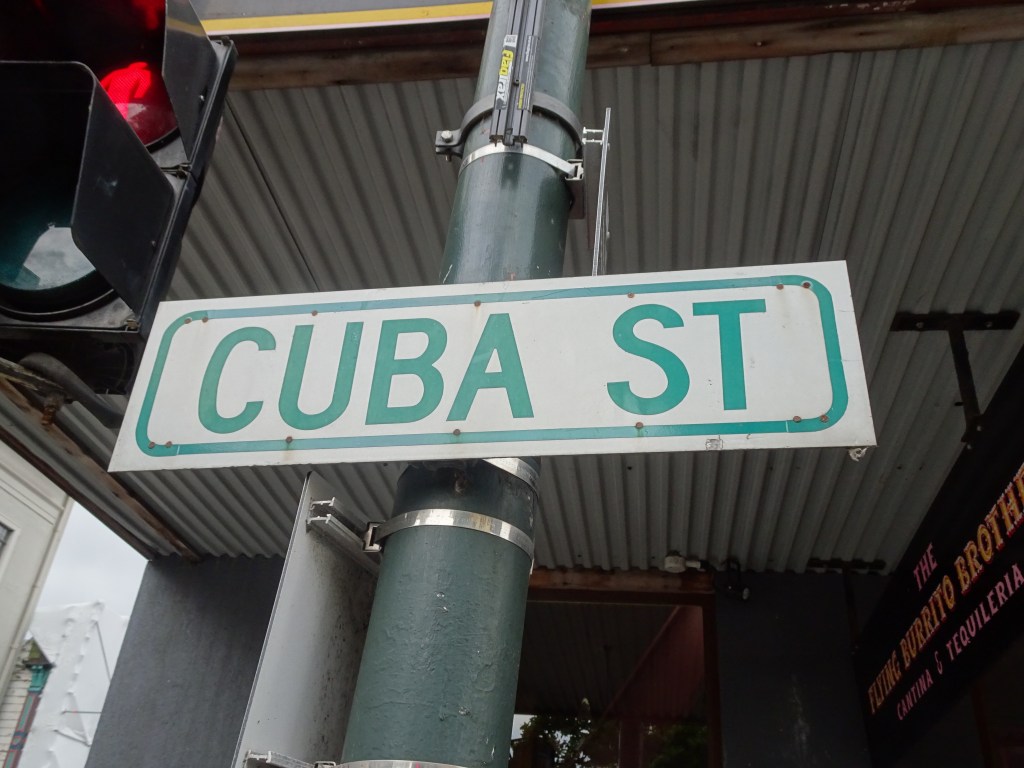
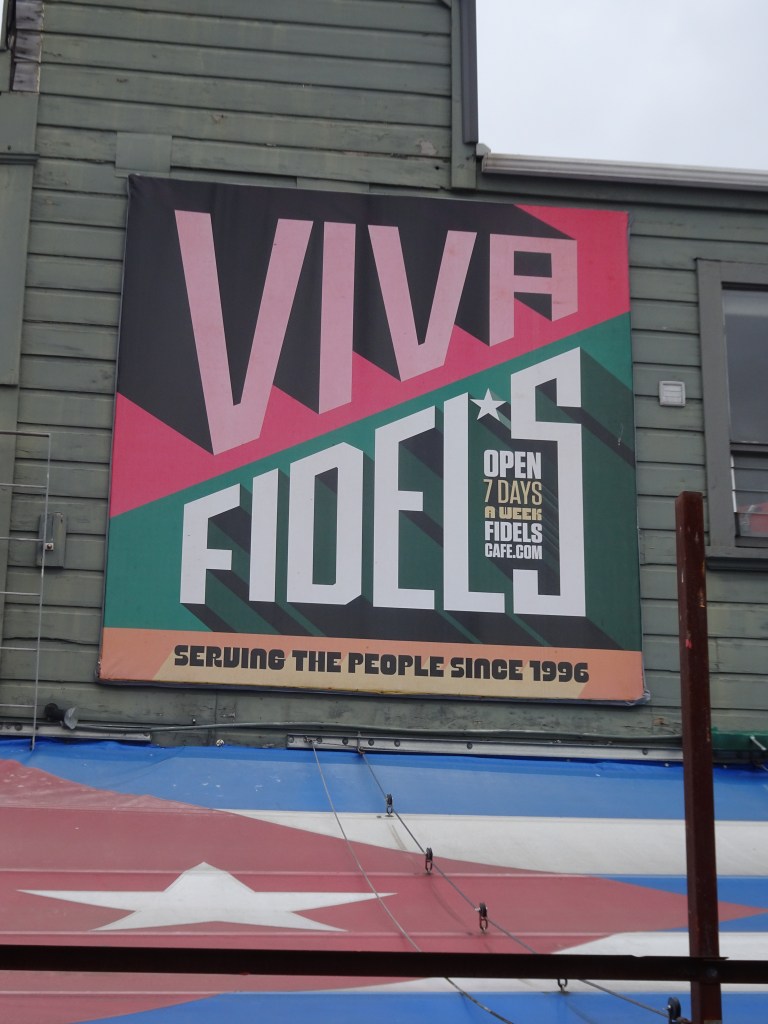
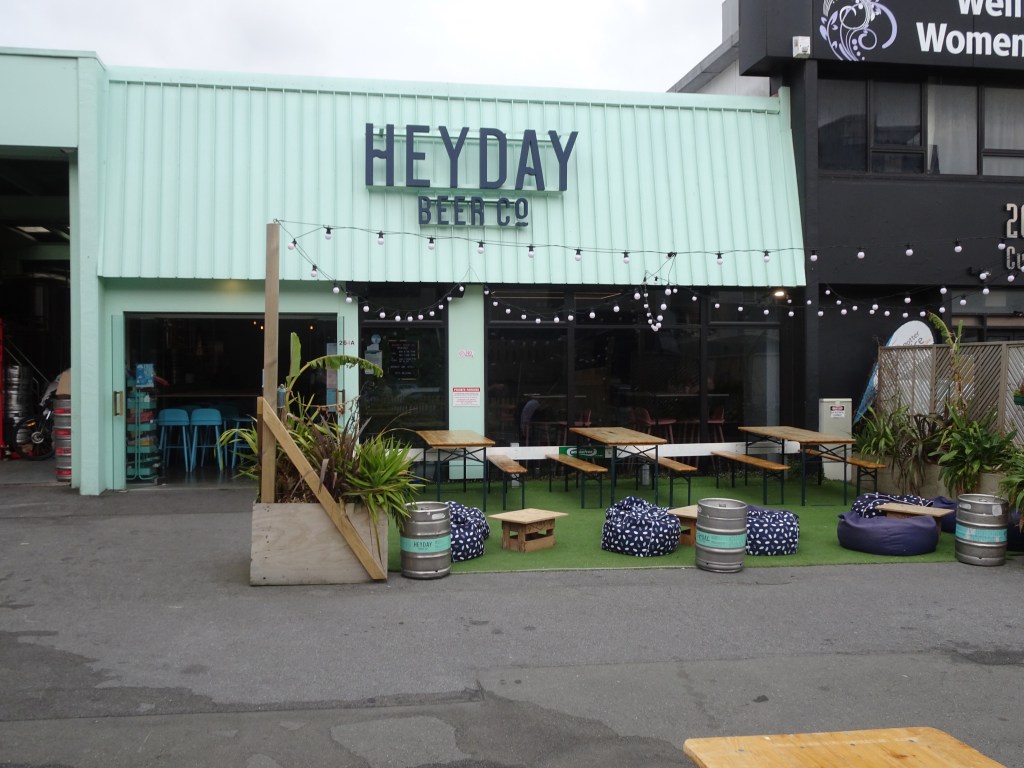
Wellington is compact and walkable. We stayed in a little cottage just off of Cuba Street. The main part of downtown, the waterfront, was a fifteen-minute walk. Cuba Street is filled with restaurants, coffee houses, and brew pubs, and is a lively place for get-togethers. Wellington draws people from all over the world, due to its being the capital, and it is evident, due to its being so small.
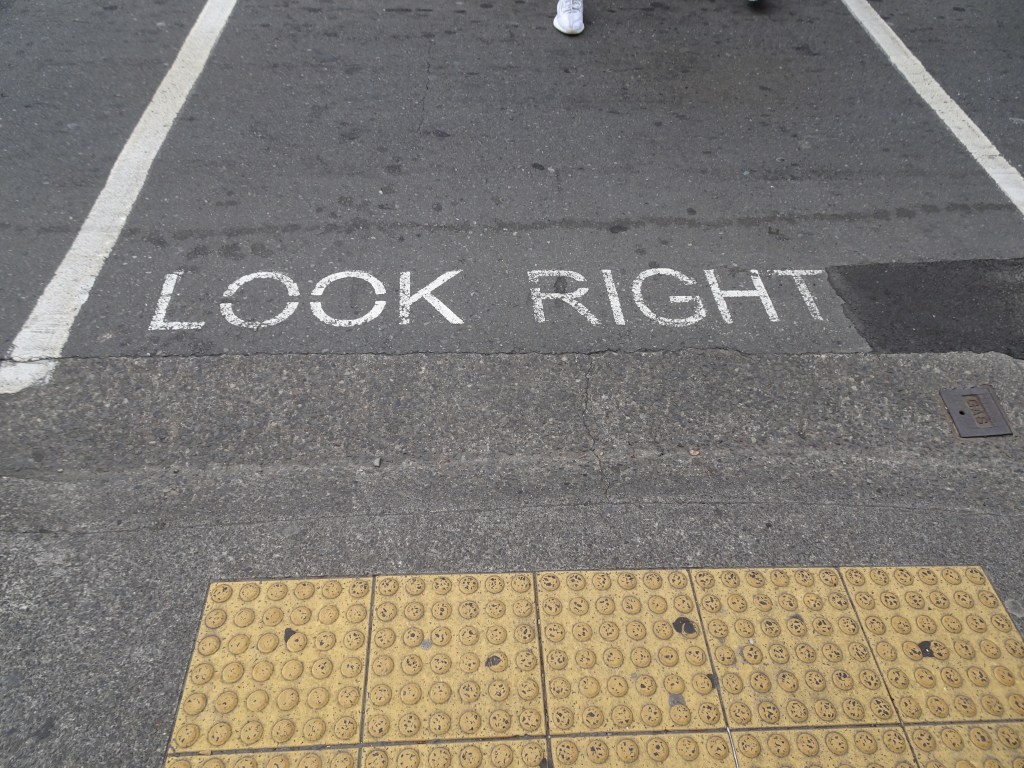
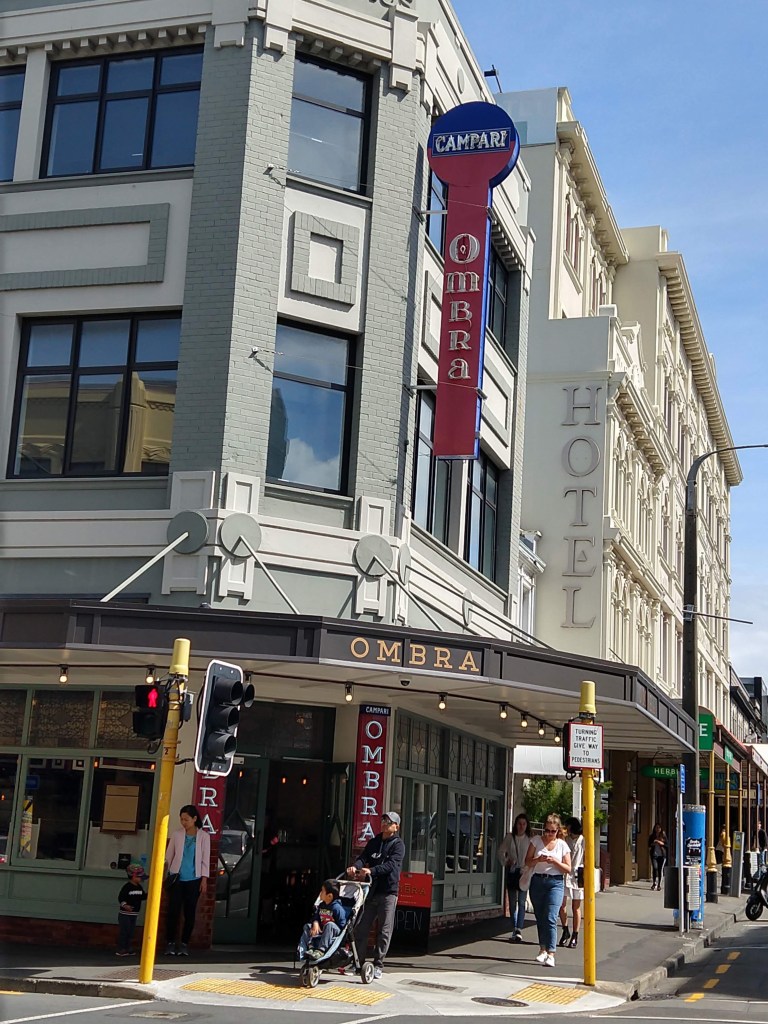
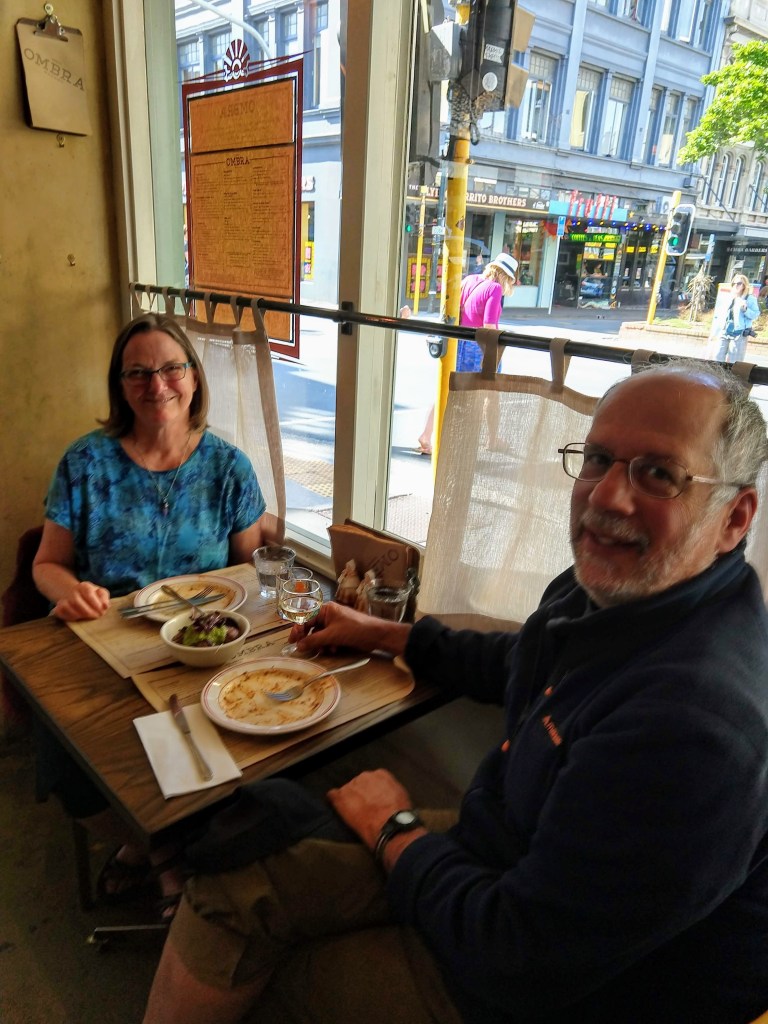
Downtown by the waterfrontServing up great food.Beer and beanbags right around the corner from our apartmentA very welcome reminder as you’re about to cross the street.Can’t get enoughWellington’s first Mexican restaurantOur favorite restaurant. It was the Campari.
NZ Literature
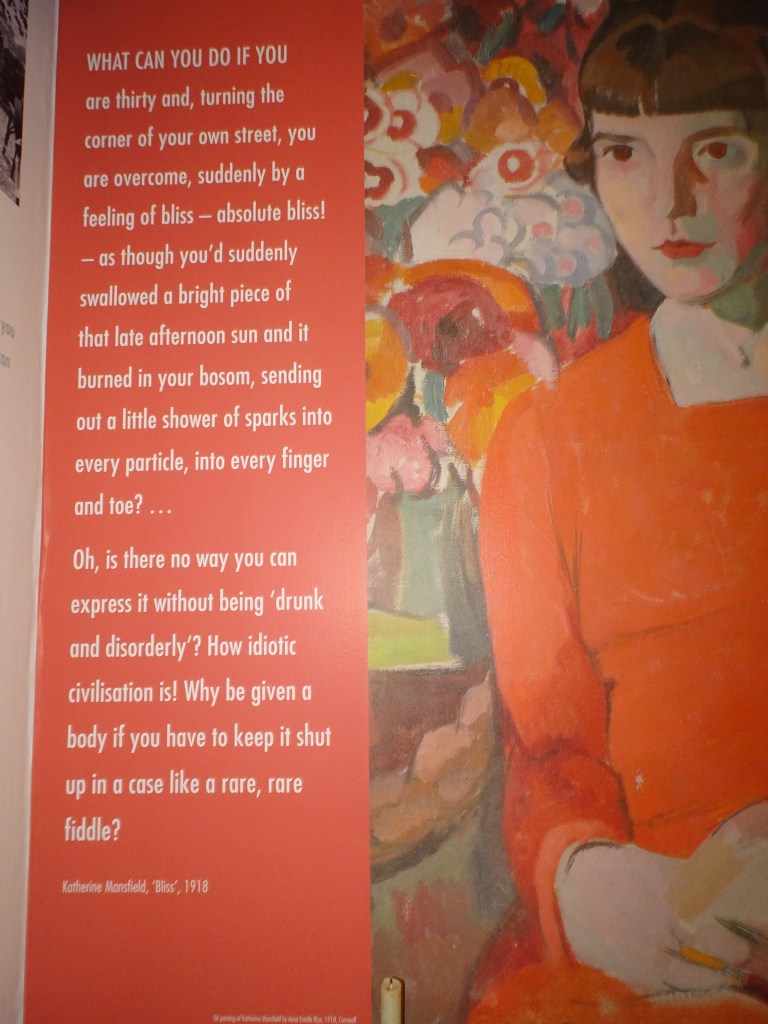
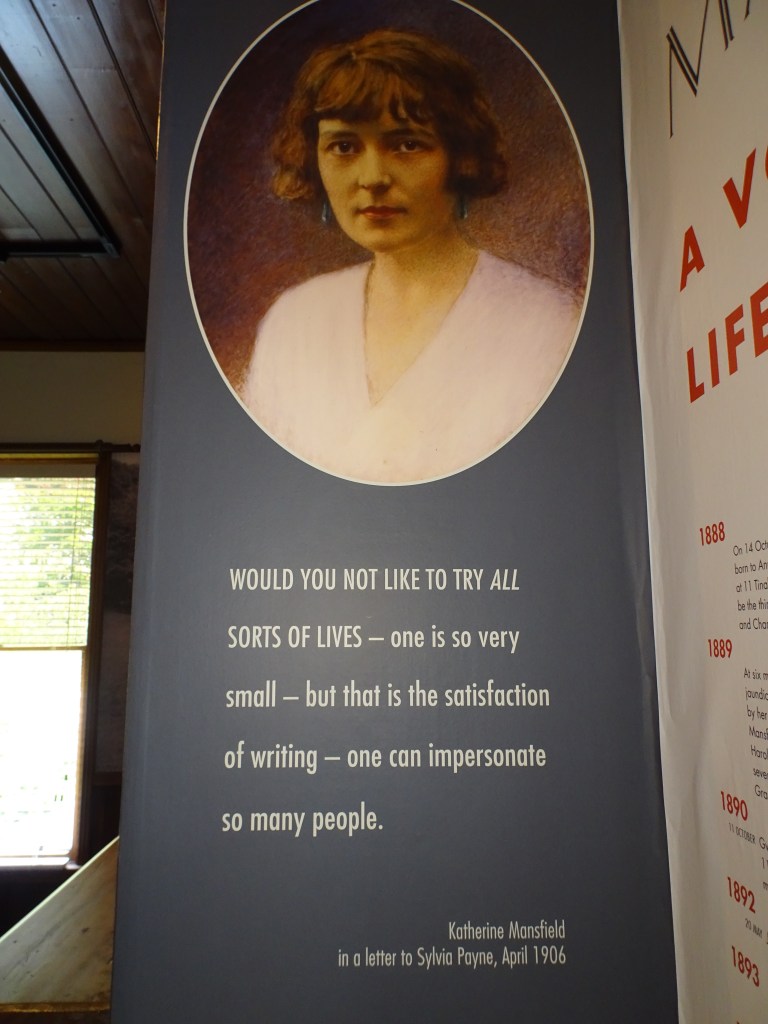
Katherine Mansfield is perhaps New Zealand’s most famous writer. She lived and wrote at the beginning of the 20th century, mostly short stories with a focus on women’s lives at that time. Monica has been reading some of her stories, and we went to visit her birthplace and home where she grew up. She and Virginia Woolf were contemporaries and friends, and Mansfield wrote of women’s struggles for equality in relationships and in the world. She died when she was thirty four years old.
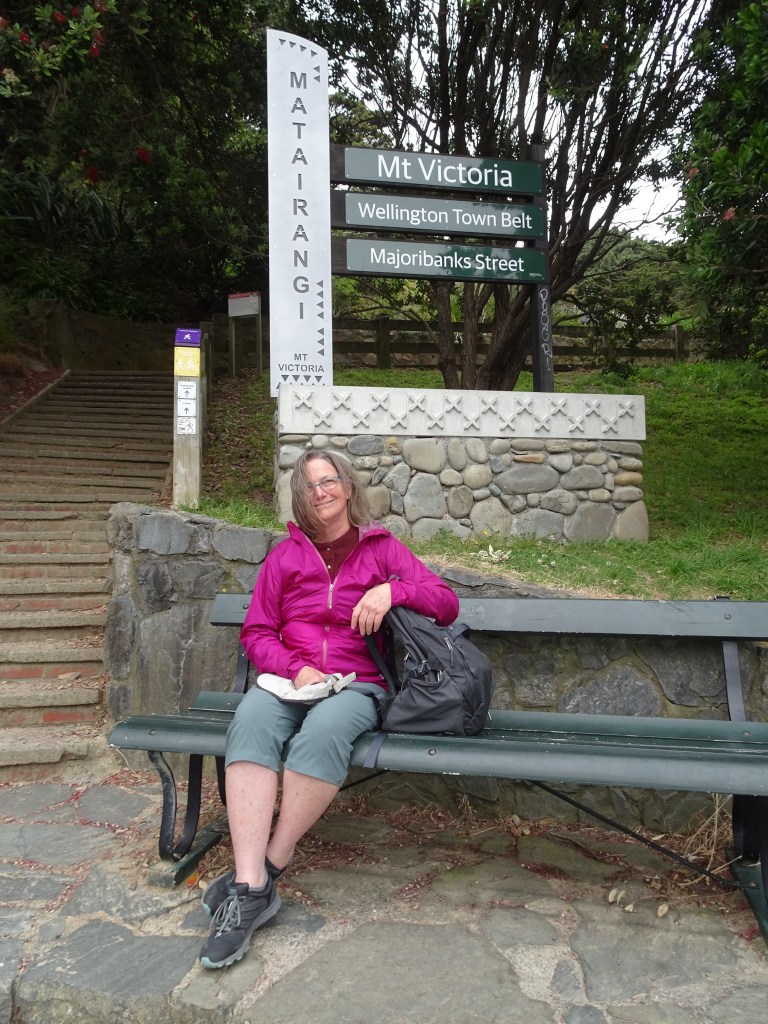
On our final day in Wellington, we hiked up to the top of Mount Victoria. You can get some perspective up there about the harbor and the geography of the city.
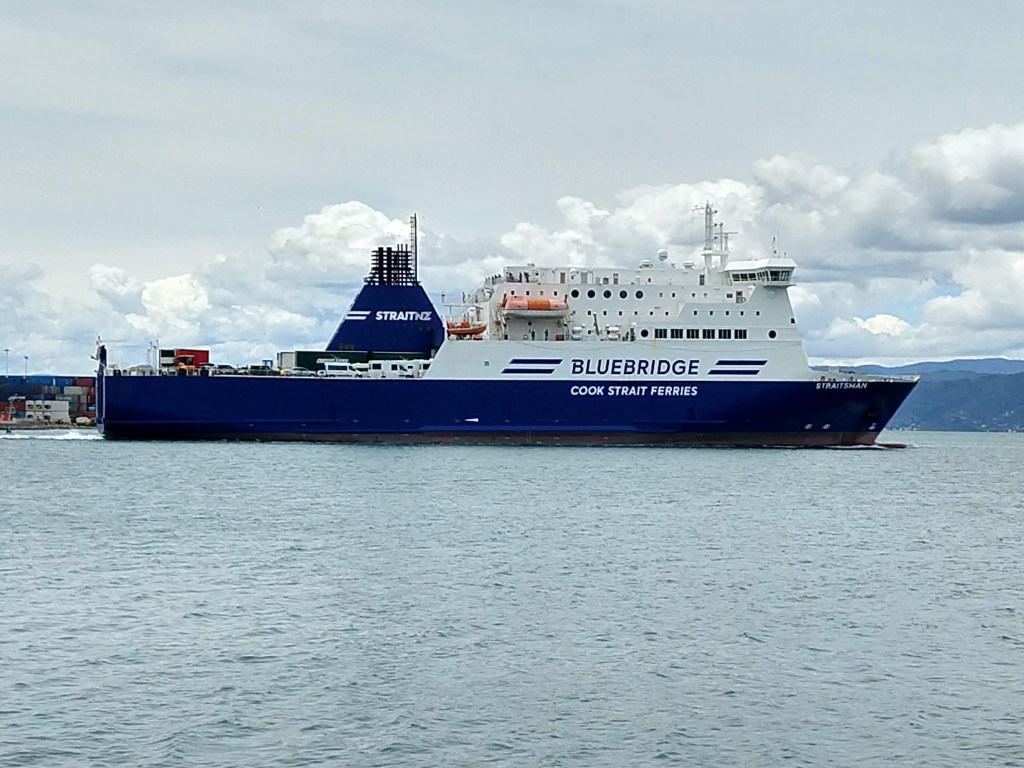
We will be back to the North Island, but now we are heading across the Cook Strait, to the South Island, to see for ourselves what is there.
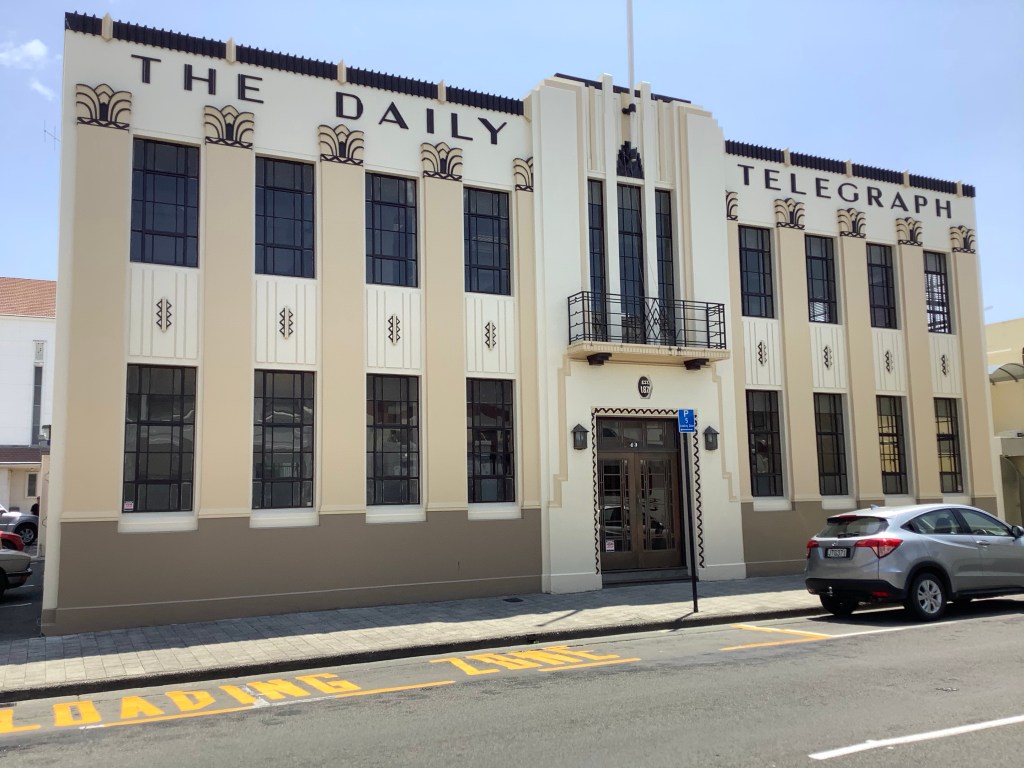
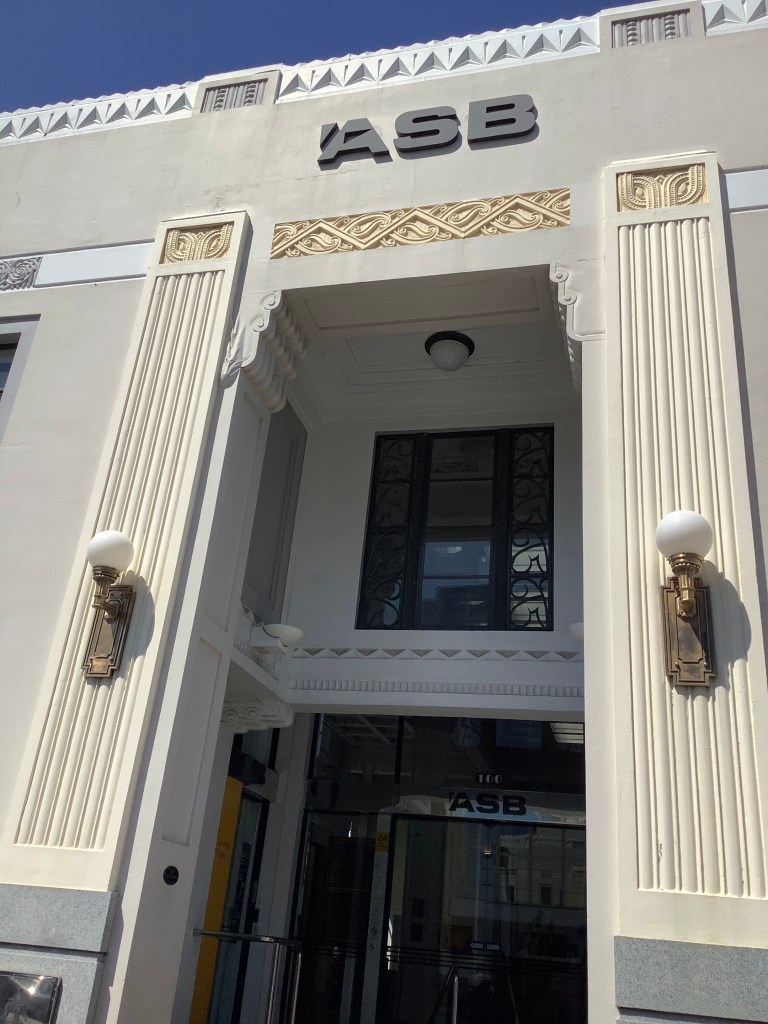
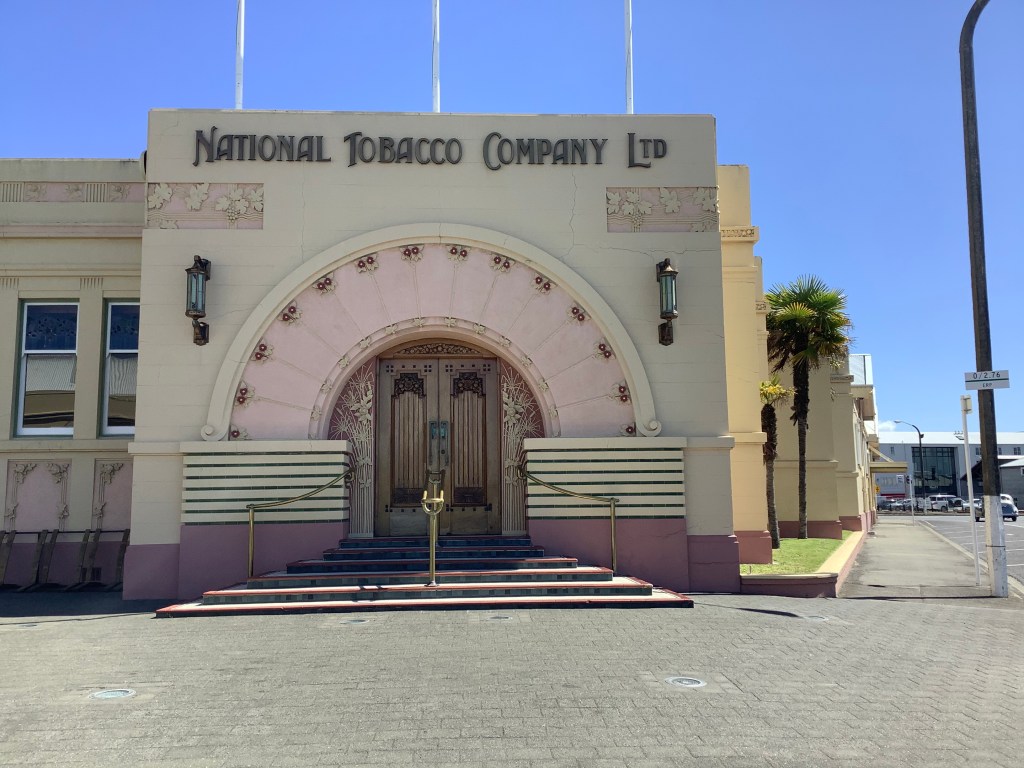
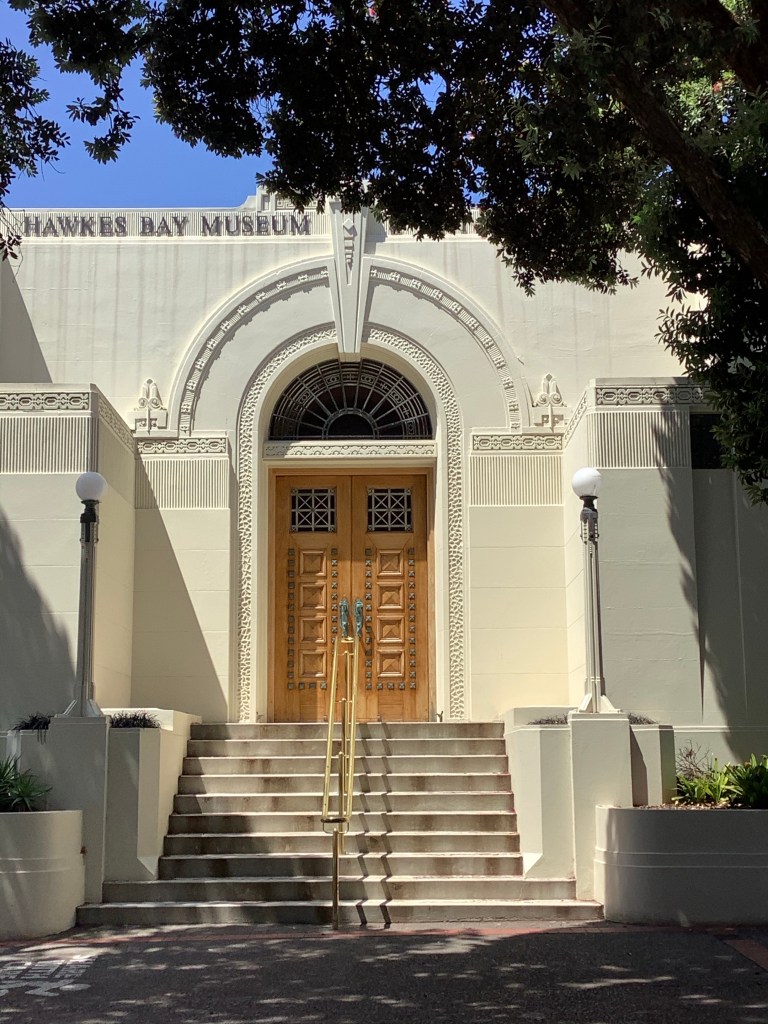
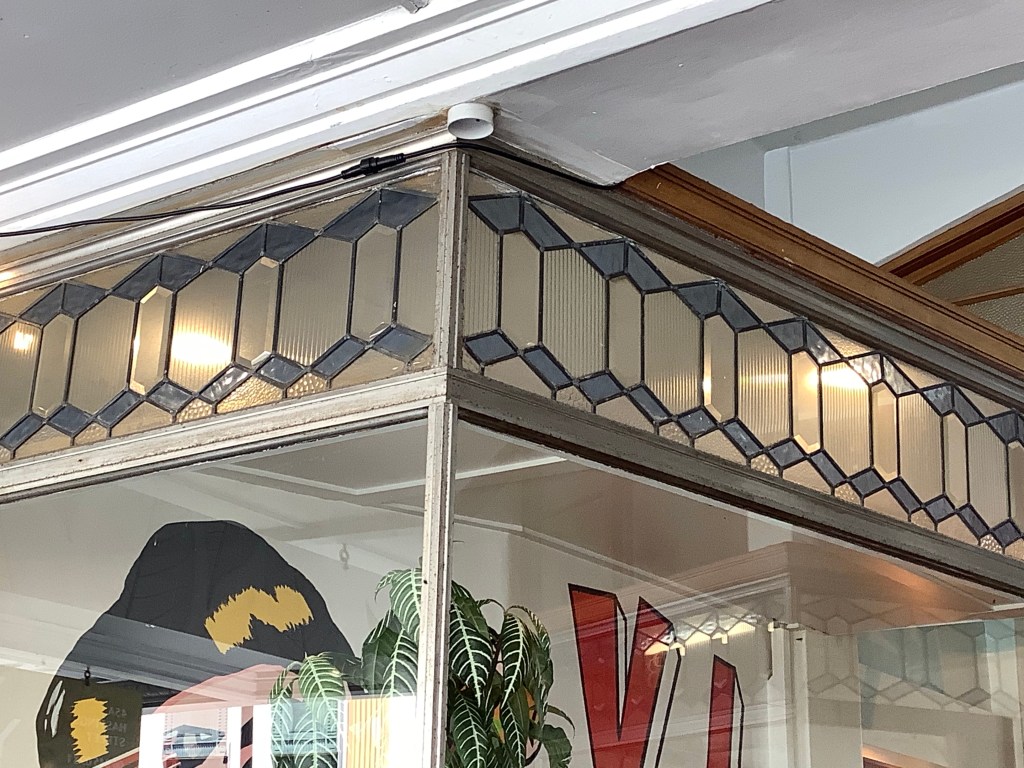
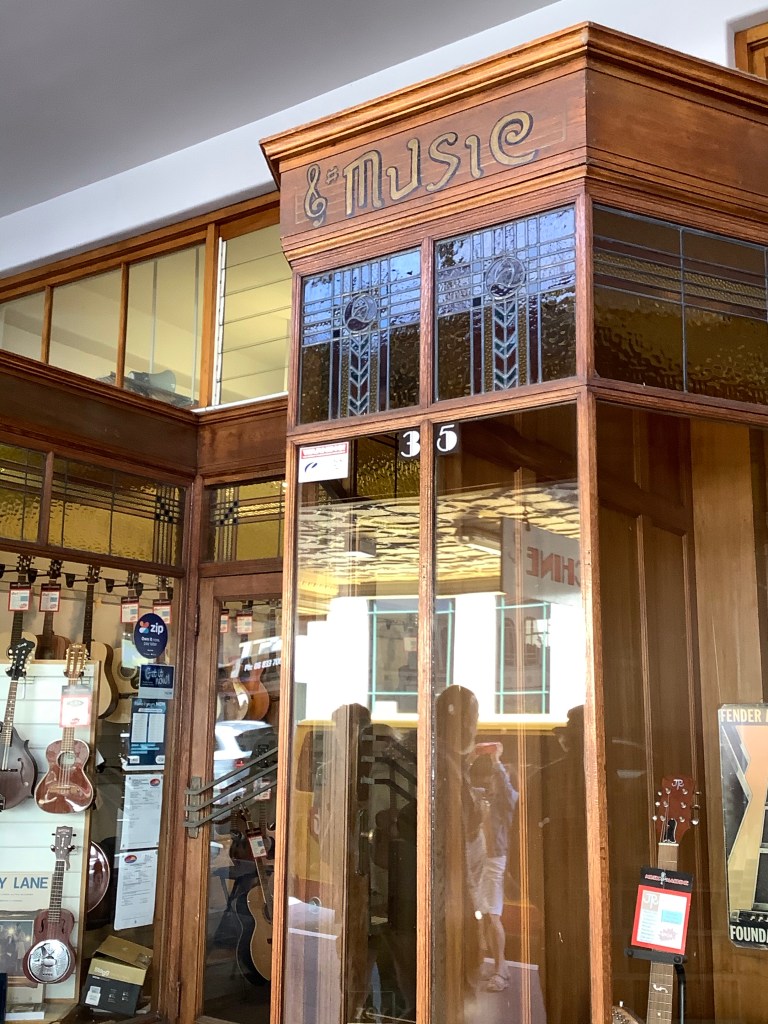
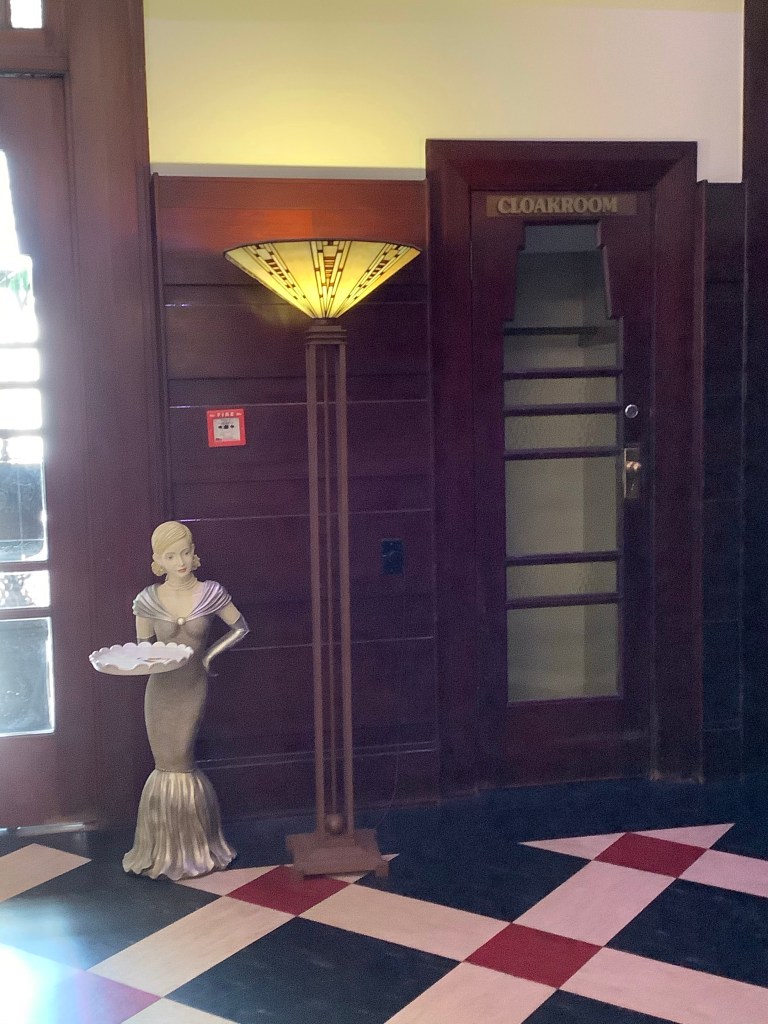
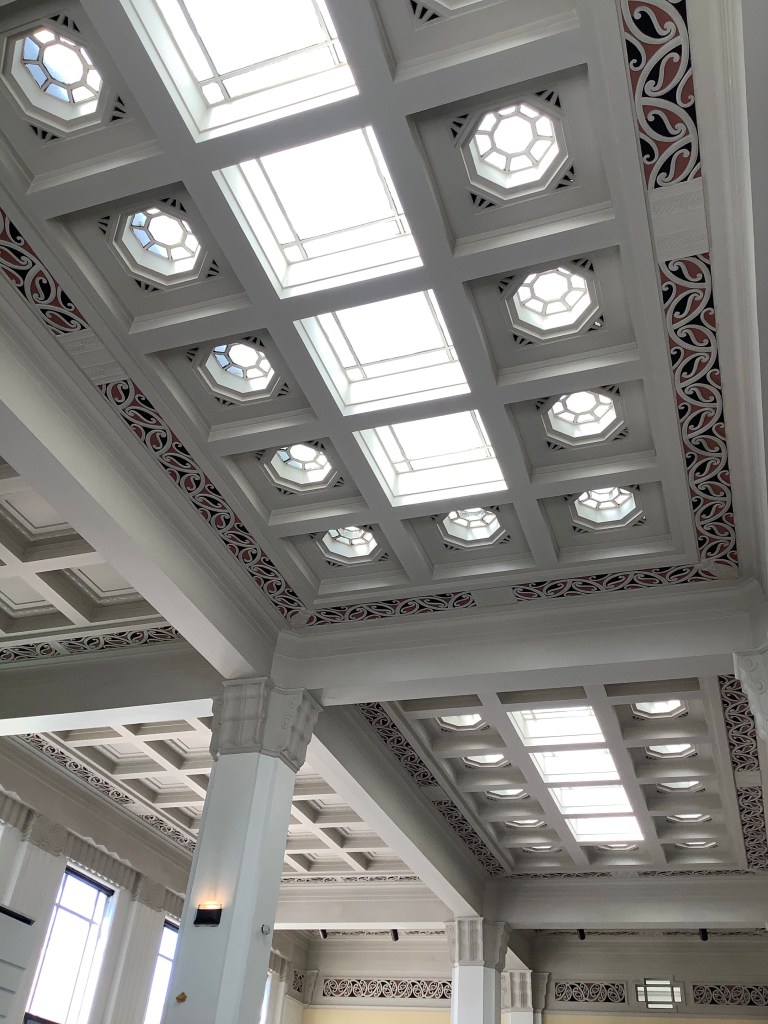
Literally rising from ashes, the city of Napier rebuilt itself in three years. On February 3, 1931, a 7.8 earthquake crumbled the brick and stone downtown and severed gas and water lines. Uncontrolled fire completed the devastation. The community decided to rebuild rather than move the city. From 1931-1934, more construction happened in Napier than in all of New Zealand combined. All new buildings were of reinforced concrete, mostly 1-2 stories, no higher than three. All utilities were buried. The architectural style of the day: Art Deco.
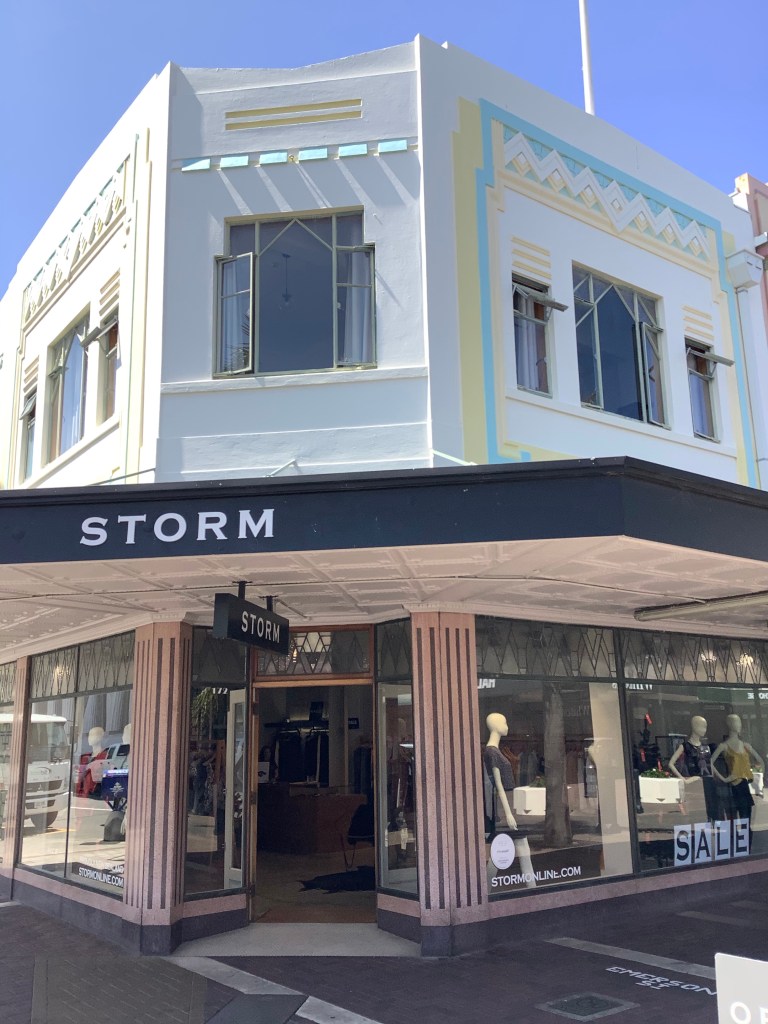
Art Deco is a style of design that flourished in the inter-war years, capturing the spirit of modernism and optimism that followed the First World War. I, Monica, signed up for a city walking tour our second day in Napier and received an art history course as well as a ramble through town. Features of Art Deco are geometric motifs, rich ornamentation and bright colors. Design themes were drawn from European art, new technologies, and new archeological findings such as the then recent opening of Tutankhamen’s tomb.
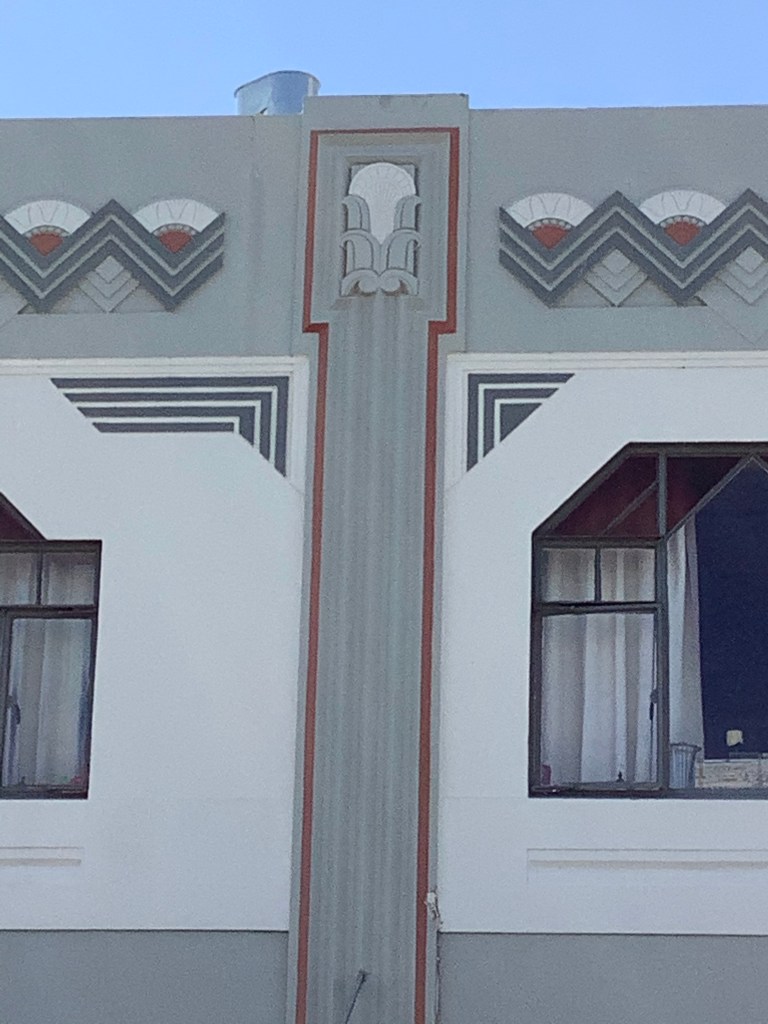
The Daily Telegraph building is a great example of very geometric features: a flat front, strong vertical lines, repetitive ornamentation. The zigzag around the door is a common pattern, as are the fountain shapes, representing renewal, at the tops of the “columns”. Ziggurat is the squared stacking that outlines the door and is echoed above in the center of the roof line. In Manhattan, the Chrysler and Empire State Buildings are classic examples of the ziggurat.
Zigzags and ziggurats ornament this building.
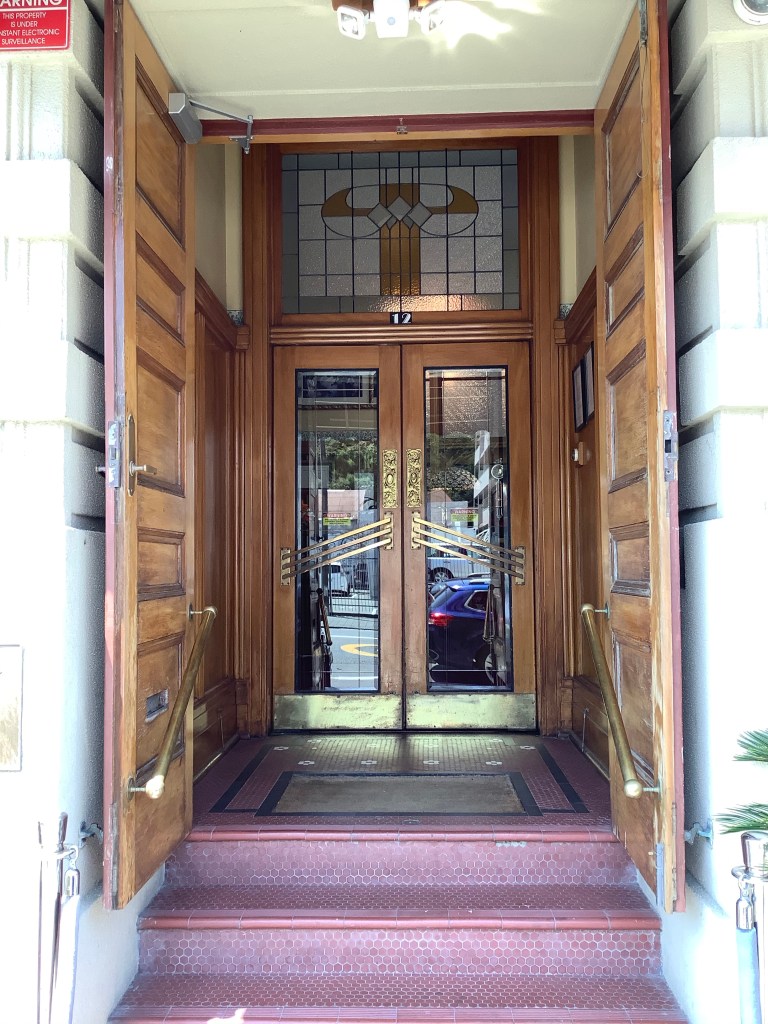
Recessed doors were also popular.
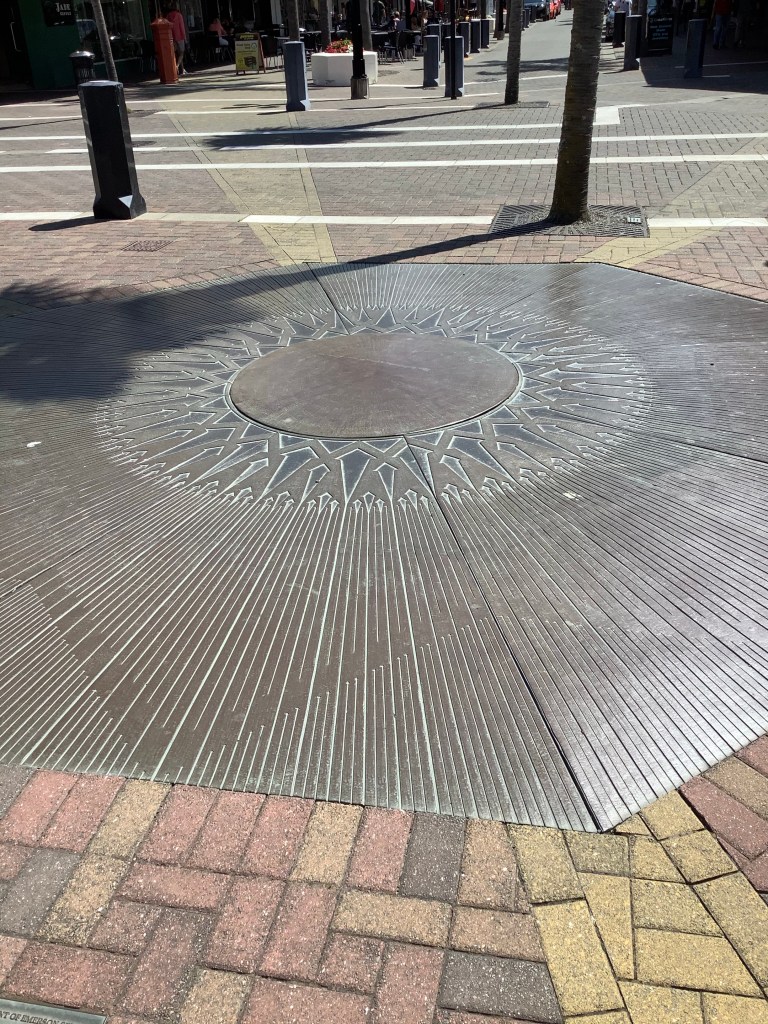
Horizontal “streamlining” recalls the motion of the new diesel locomotives and commercial airplanes. Sunburst designs symbolized optimism.
An entrance hatch to the underground utilities.
With electricity now a common commodity, the use of lighting, both natural and artificial, became an element of design.
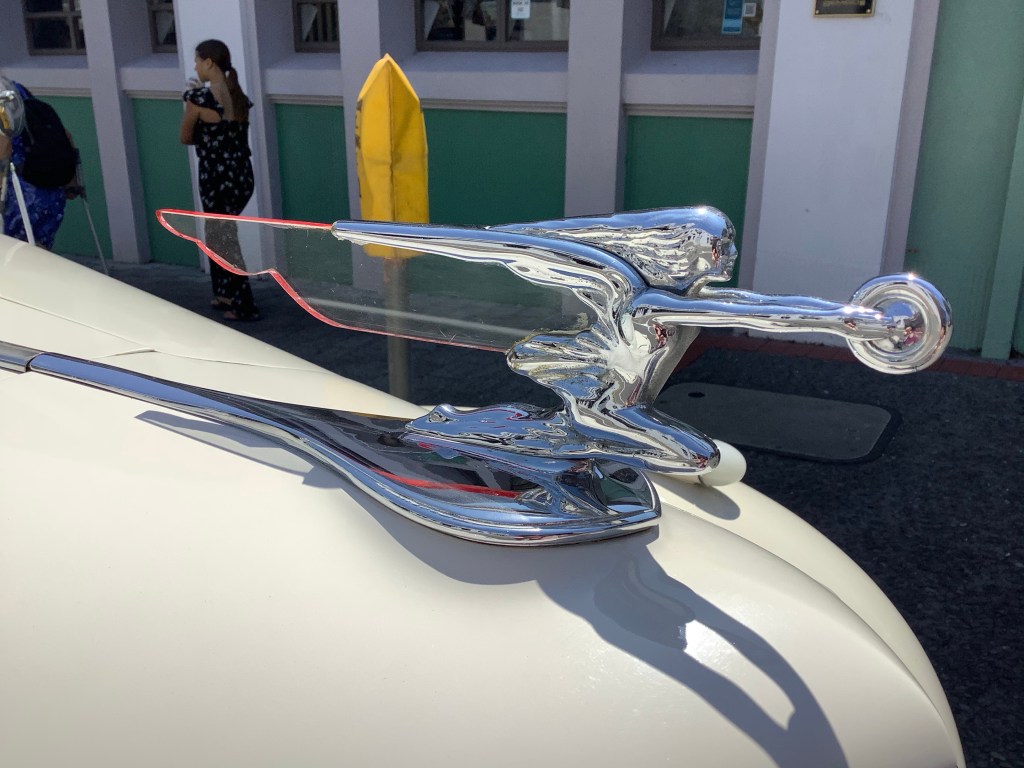
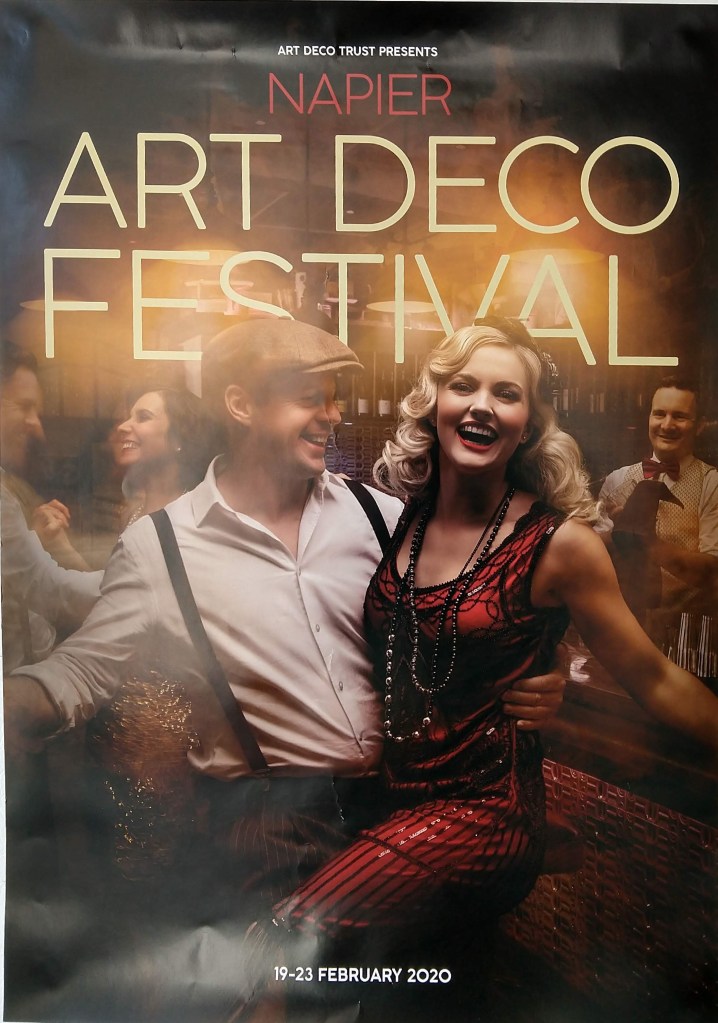
Napier celebrates its Art Deco heritage with a festival every February. Folks converge on the city from all over the world to dress in Roaring Twenties clothes and tool around in vintage cars. We’ll miss the gala this year . . .
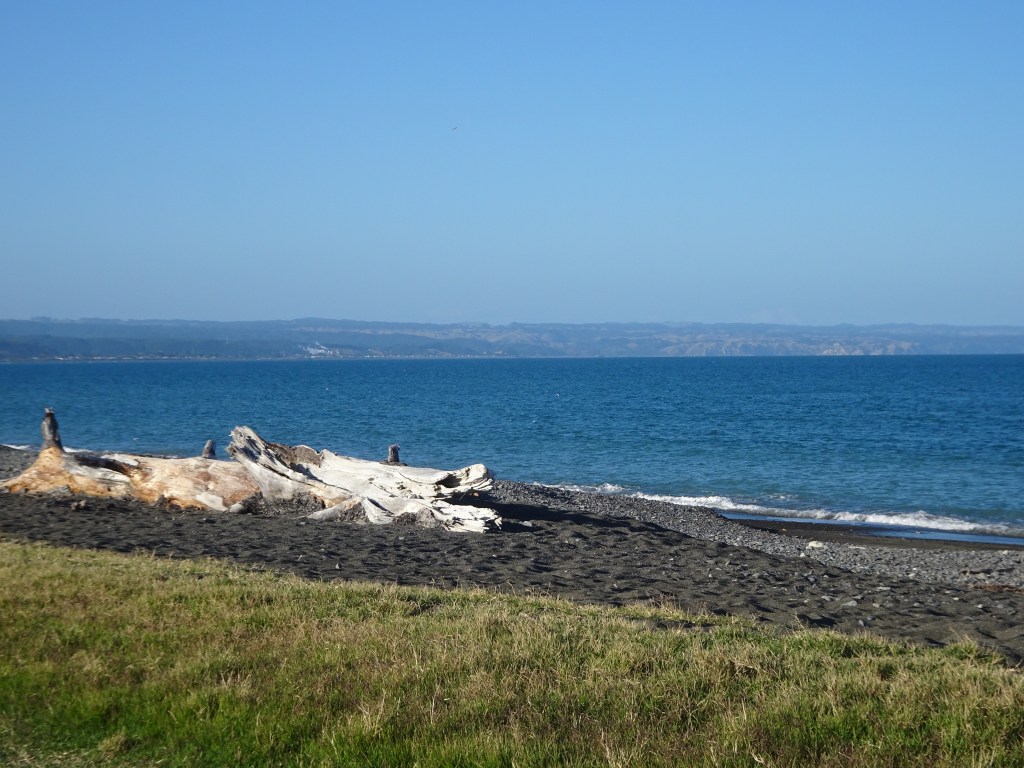
Meanwhile, back at the beach, Mike had a day to work on his tan.
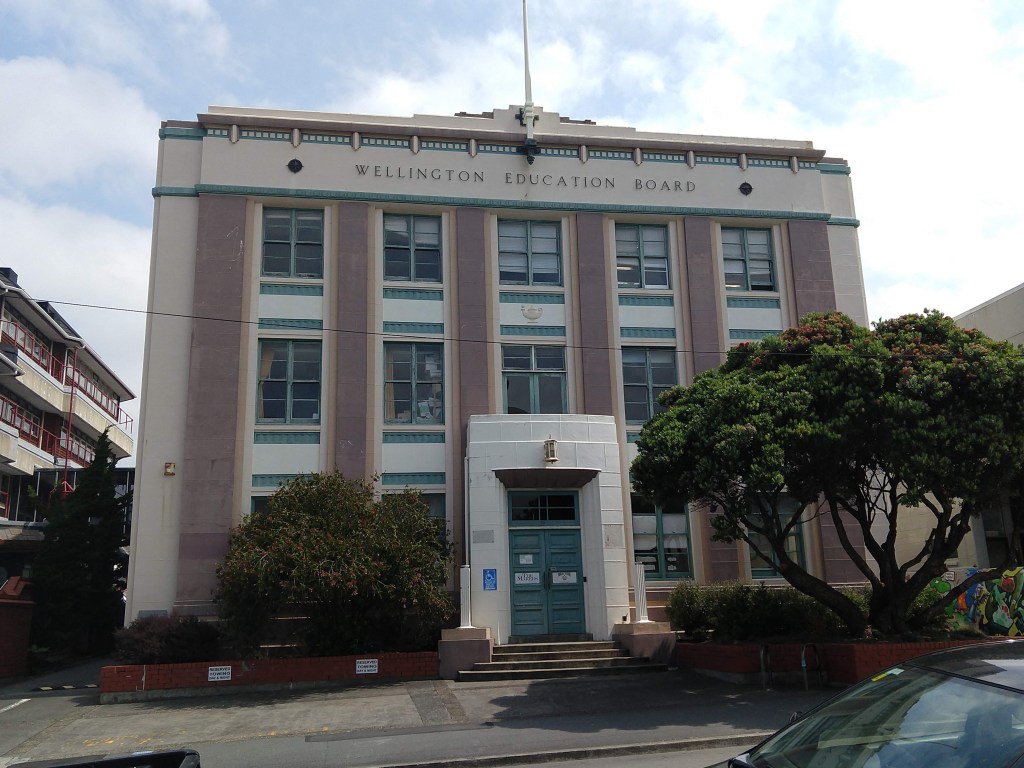
And we’re on to New Zealand’s capital, windy Wellington, where Art Deco has also left its mark.
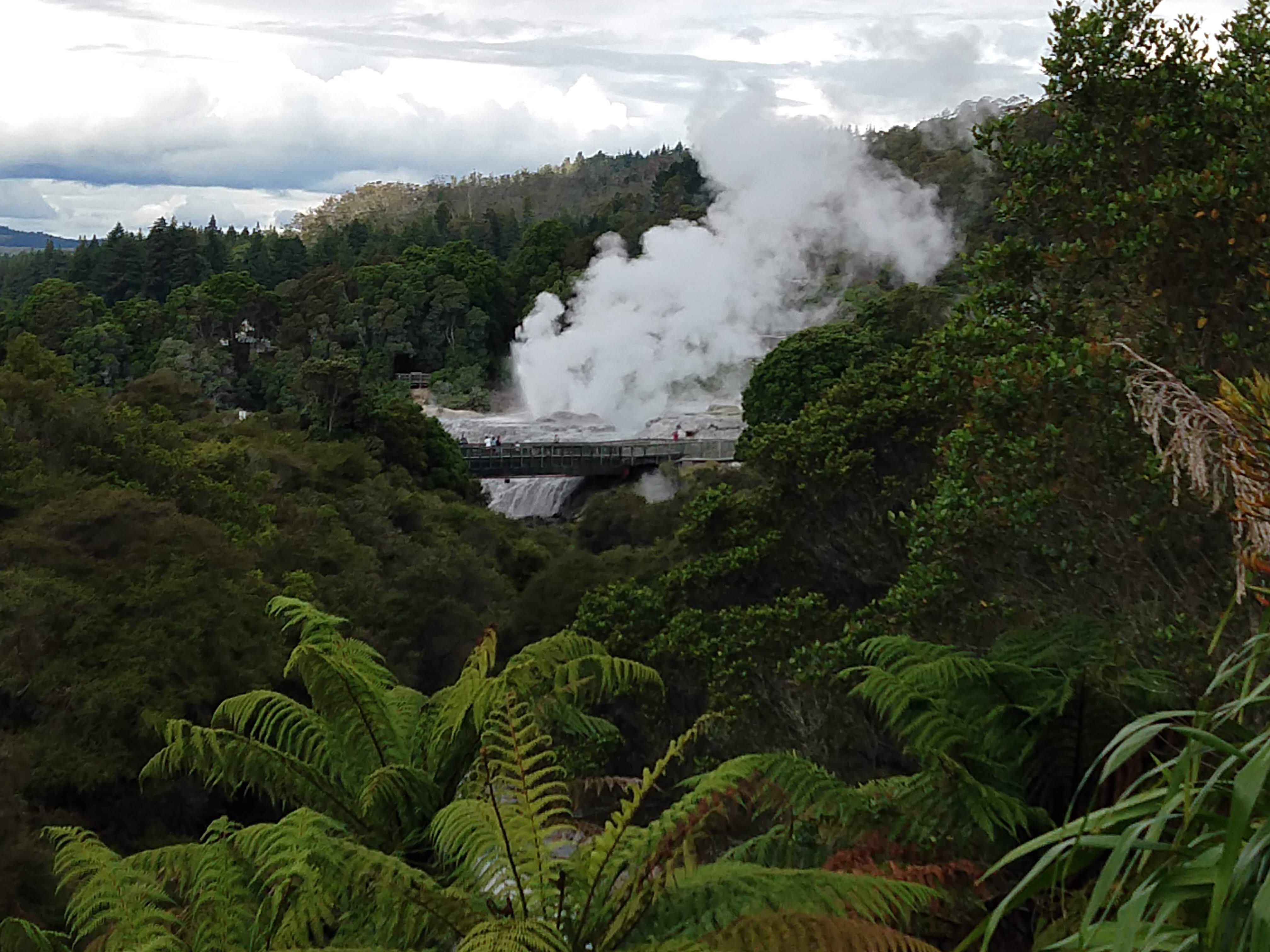
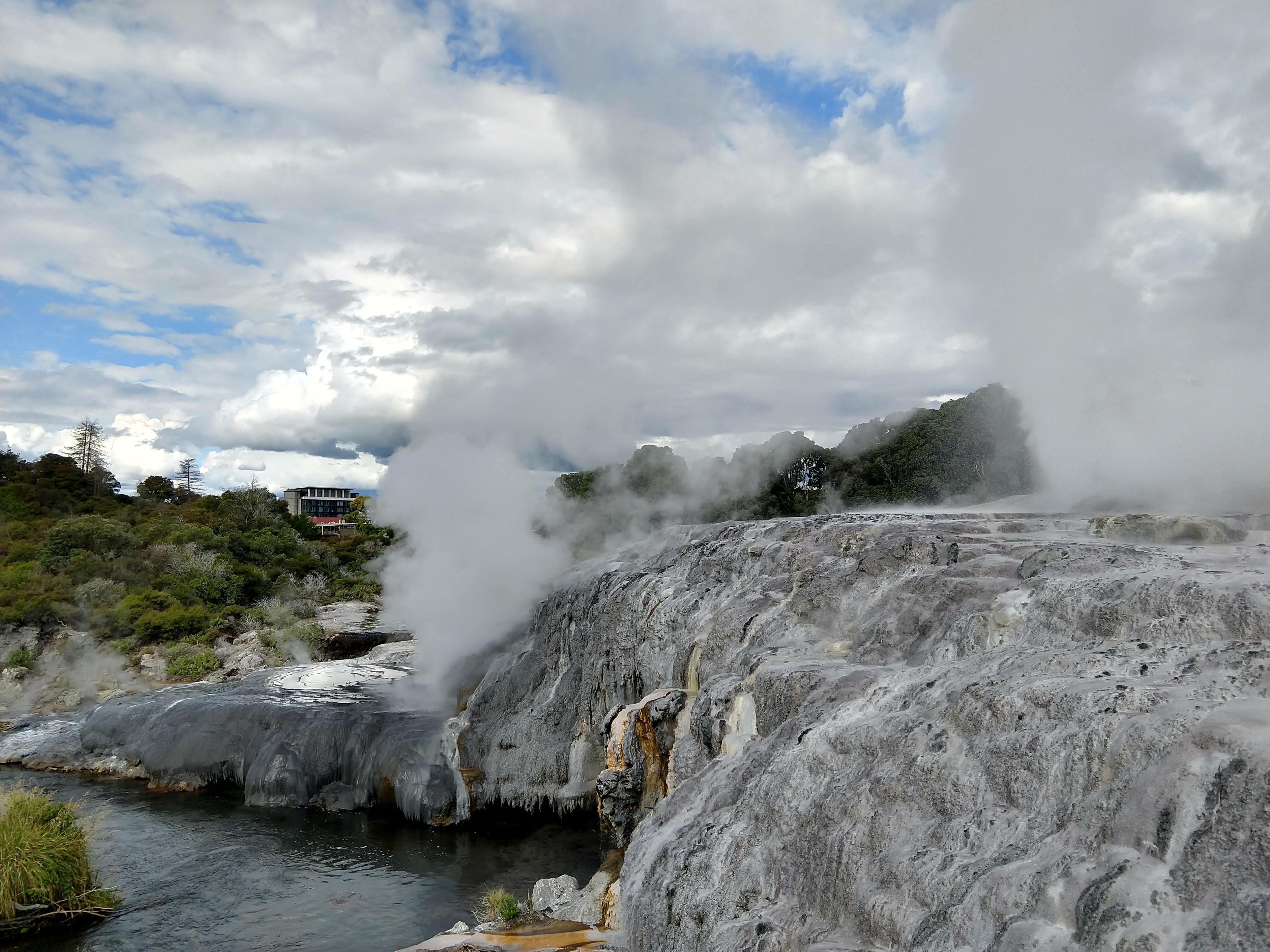
Rotorua is known for two things: Geothermal activity and Maori culture. We saw both during the time we were there. Geysers and hot springs are everywhere. We drove down the highway, seeing steam pouring out of rocks and geysers in the distance. Downtown is immersed in sulfur smell, and geothermal energy is used for electricity in almost every home and business. The government is building more geothermal plants, and they hope to expand over the next decade or two. The only thing that power plants do, essentially, is turn turbines. Nuclear power plants just boil water to produce steam to turn them. Geothermal power plants just focus the steam that is already there.
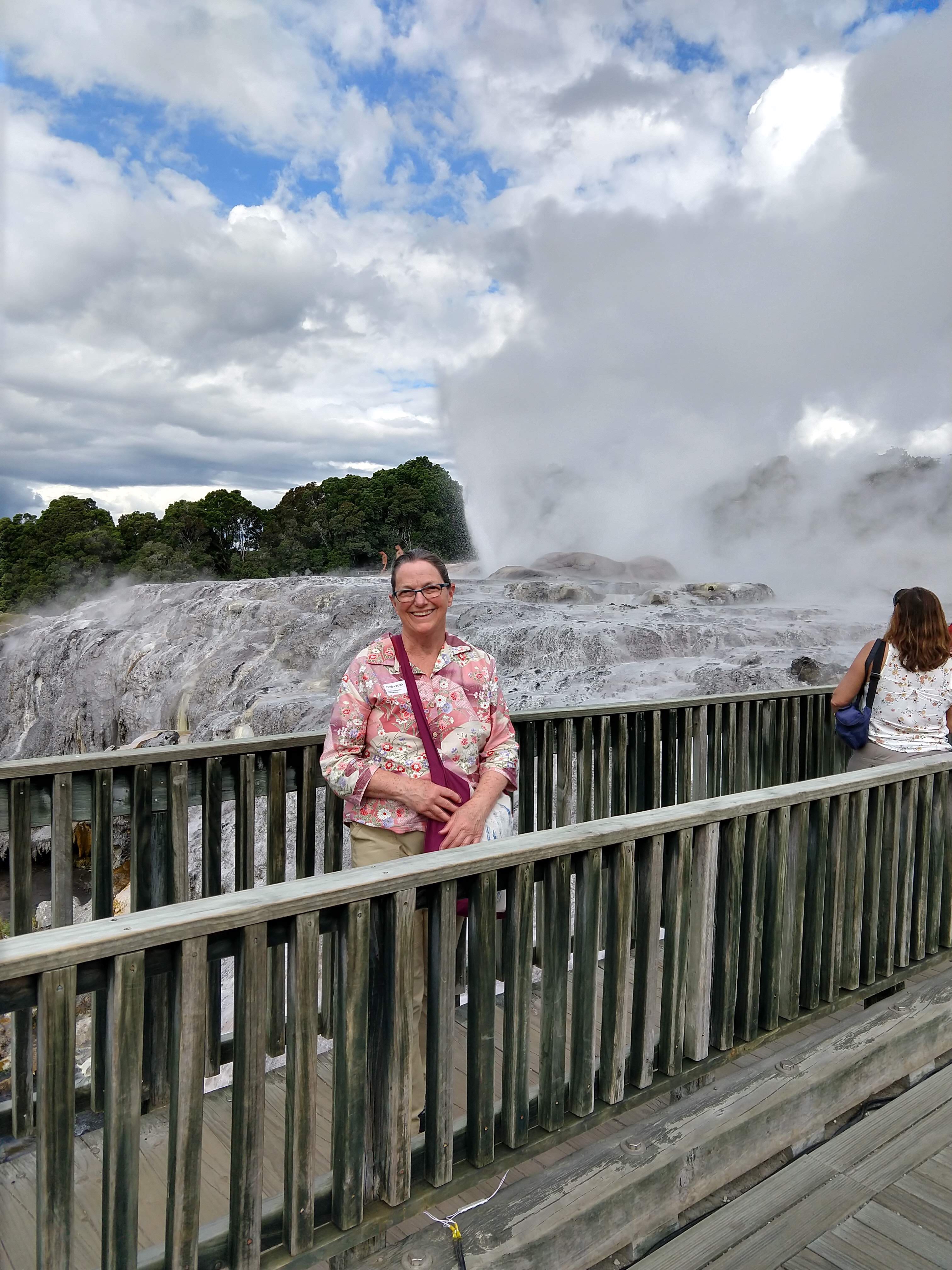
Pohutu Geyser behind Monica. It shoots steam 100 feet up, and sometimes erupts continually for days at a time. This is in the Te Puia Cultural Center.
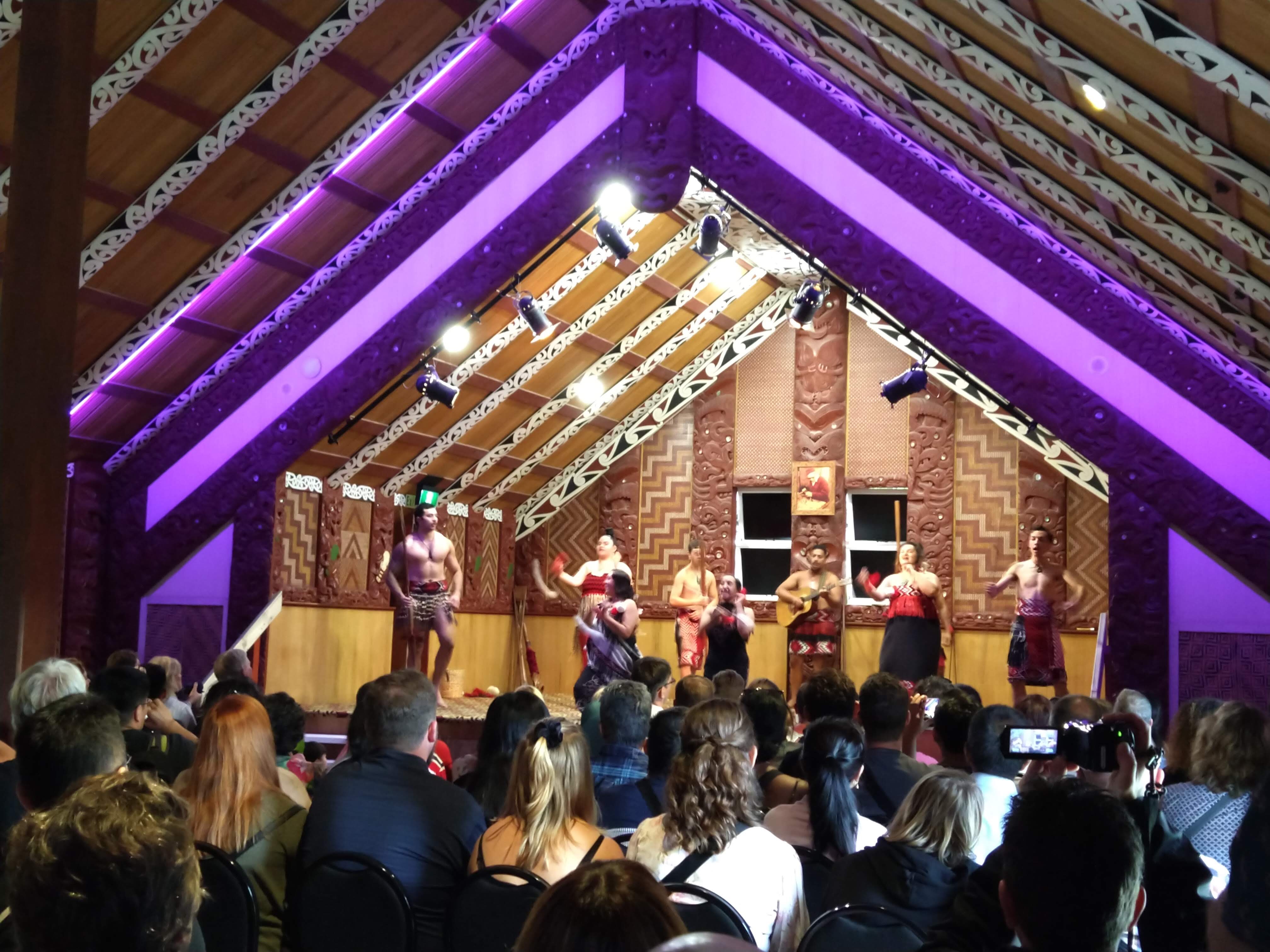
Rotorua’s New Zealand nickname is Rotovegas. This comes from the way that sometimes the tourists are catered to, with Maori shows dominating the scene. Of course, we also went to a center and got a tour and listened to some talks, and saw a show. The show itself was really small and non-glitzy, nothing like Las Vegas.
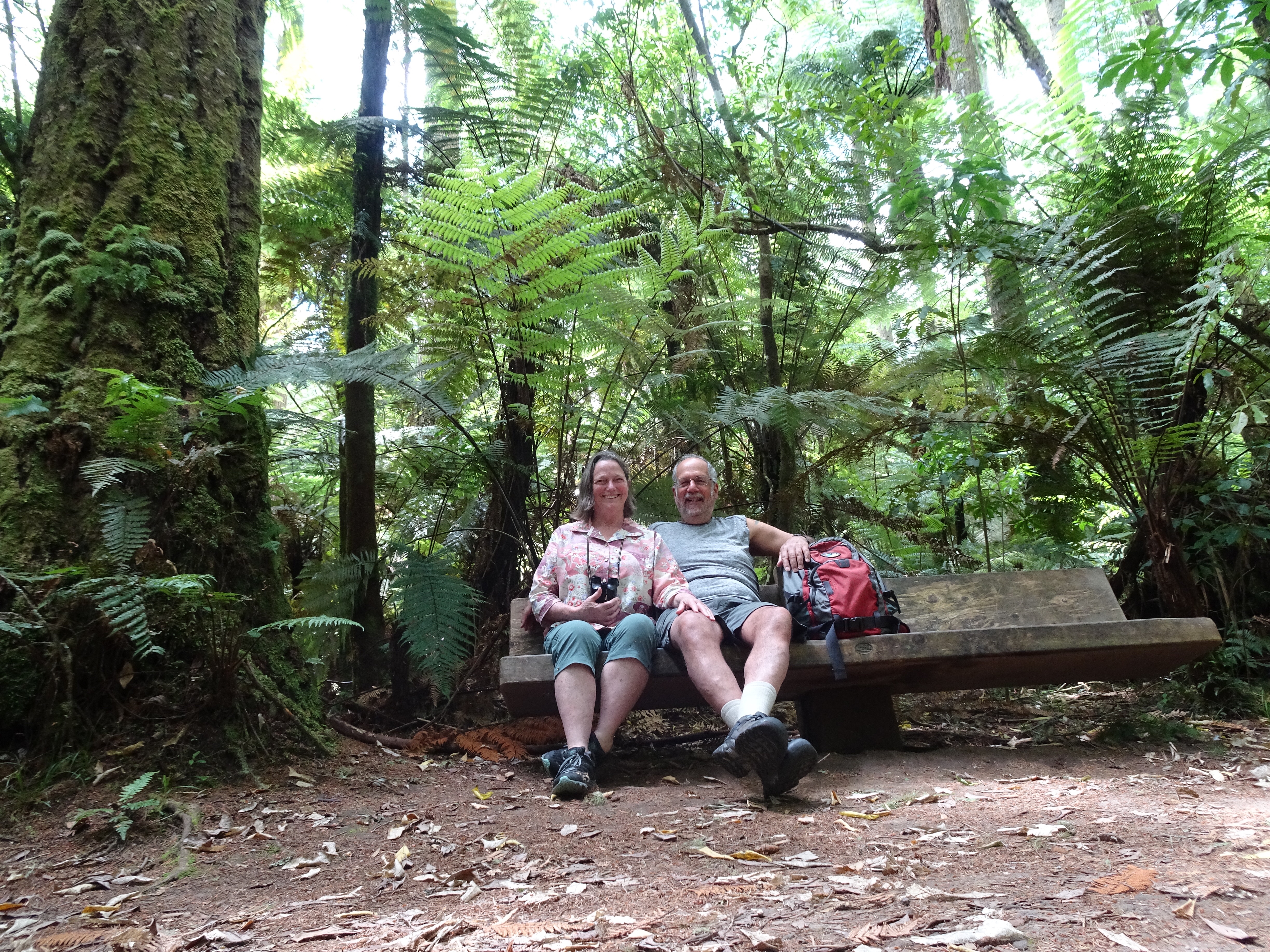
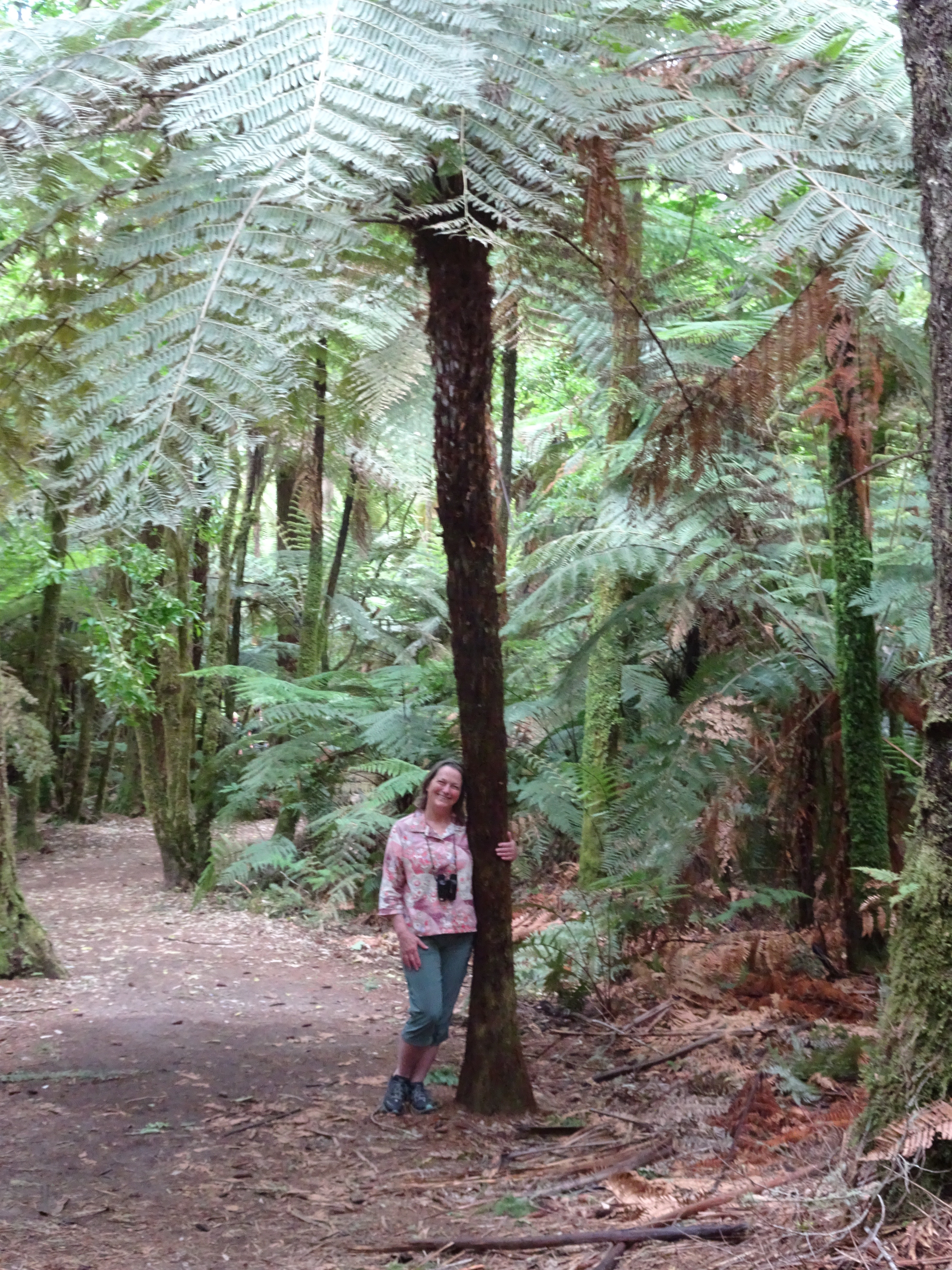
We also strolled through the Redwoods! These are the same redwoods as the California Redwoods, but a bit younger. They were planted here around 1900-1910, and they’re doing fine. They are growing in a protected area, full of ferns and moisture.
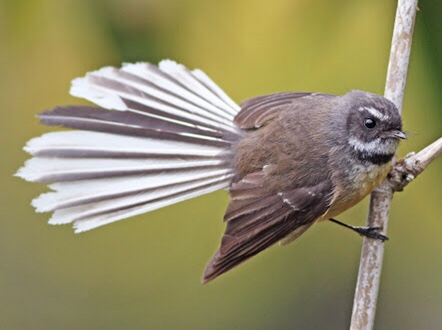
Redwoods and ferns, a great combination.The New Zealand Fantail is a little bird that lives in the forest and flits around like the Winter Wren that we see in Oregon.
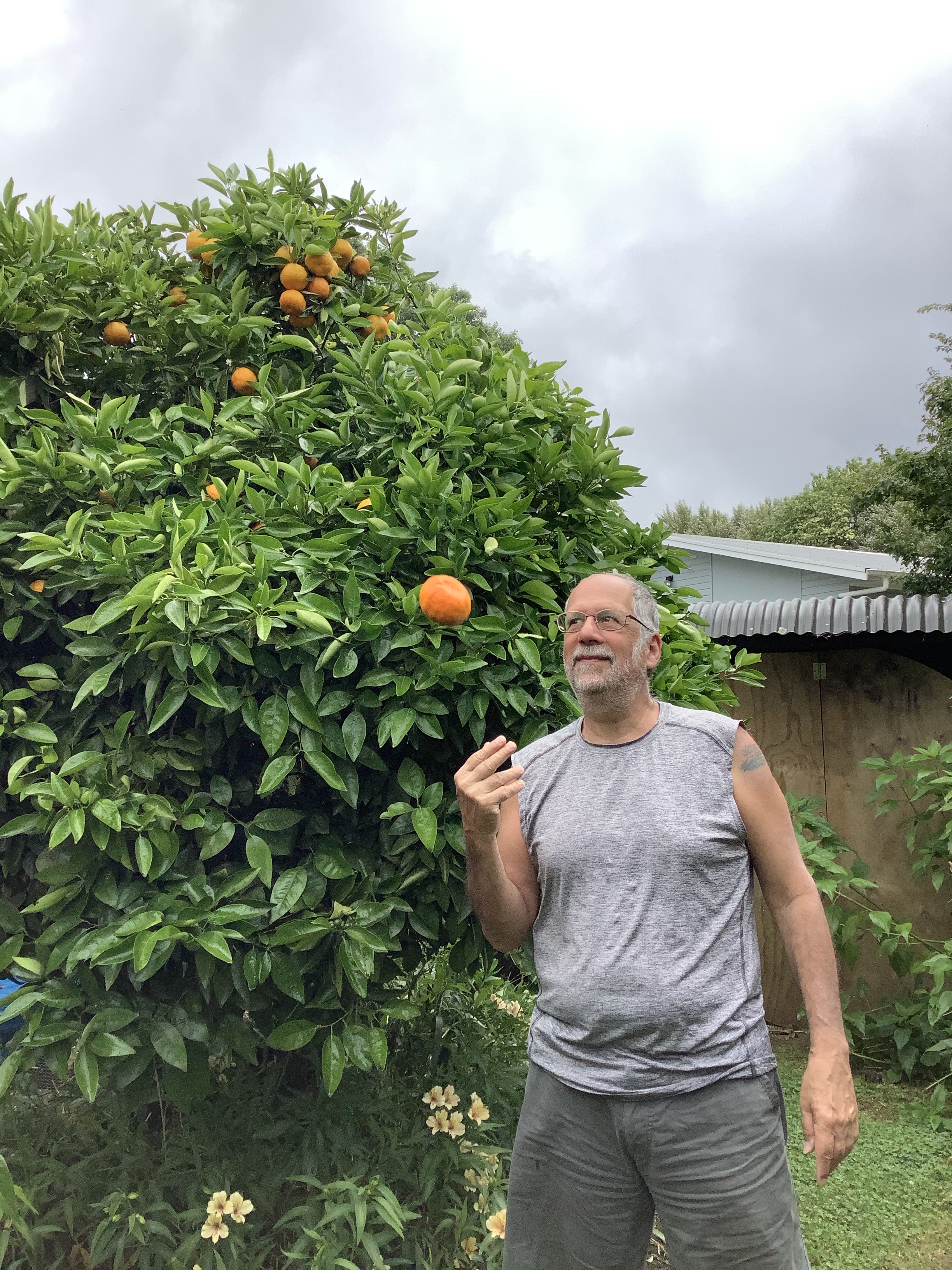
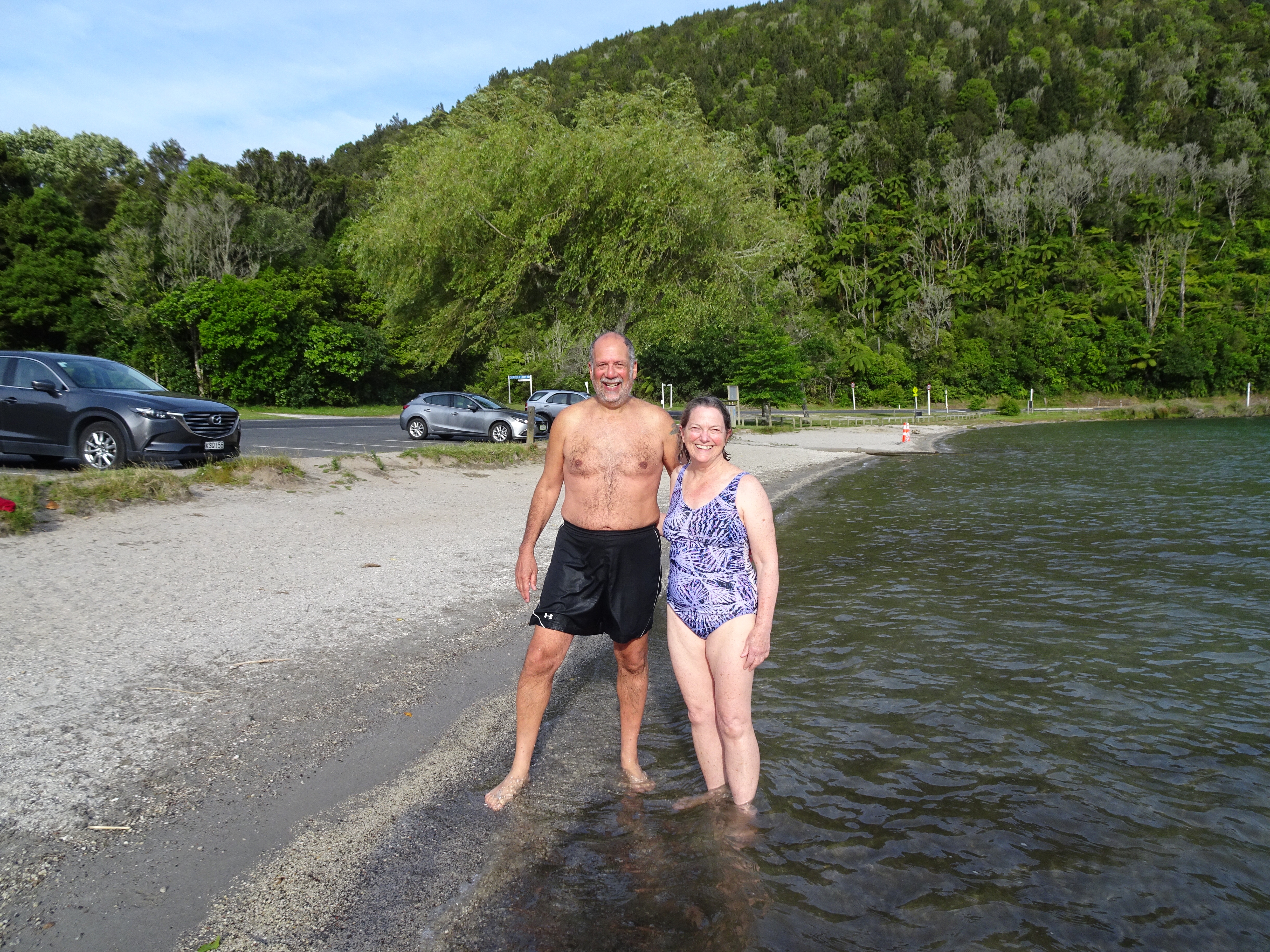
The airbnb that we stayed in had a tangelo tree with ripe fruit. We also went swimming in Blue Lake, a beautiful mountain lake just up the road, and we went to some hot springs in town on Christmas Day.
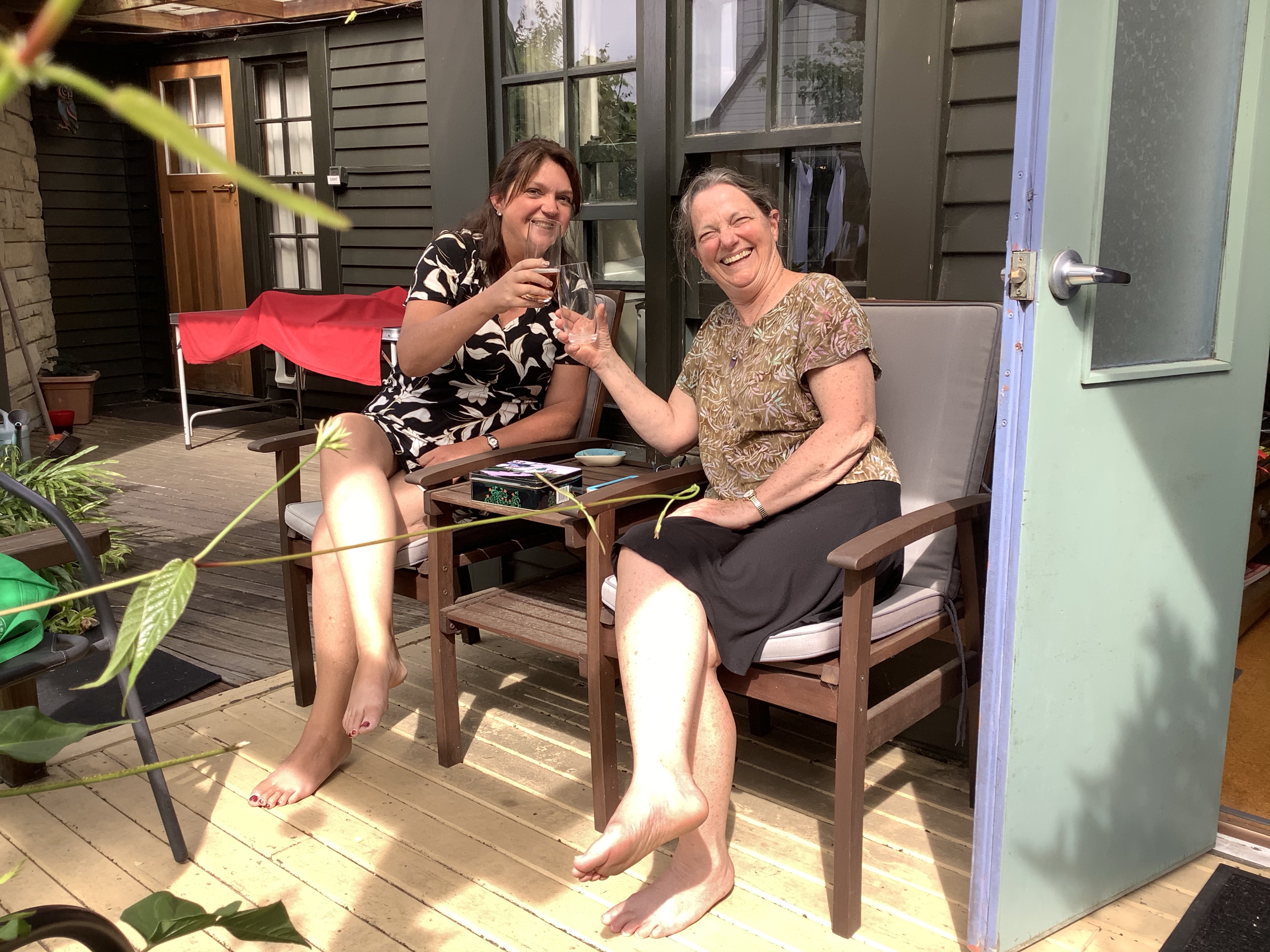
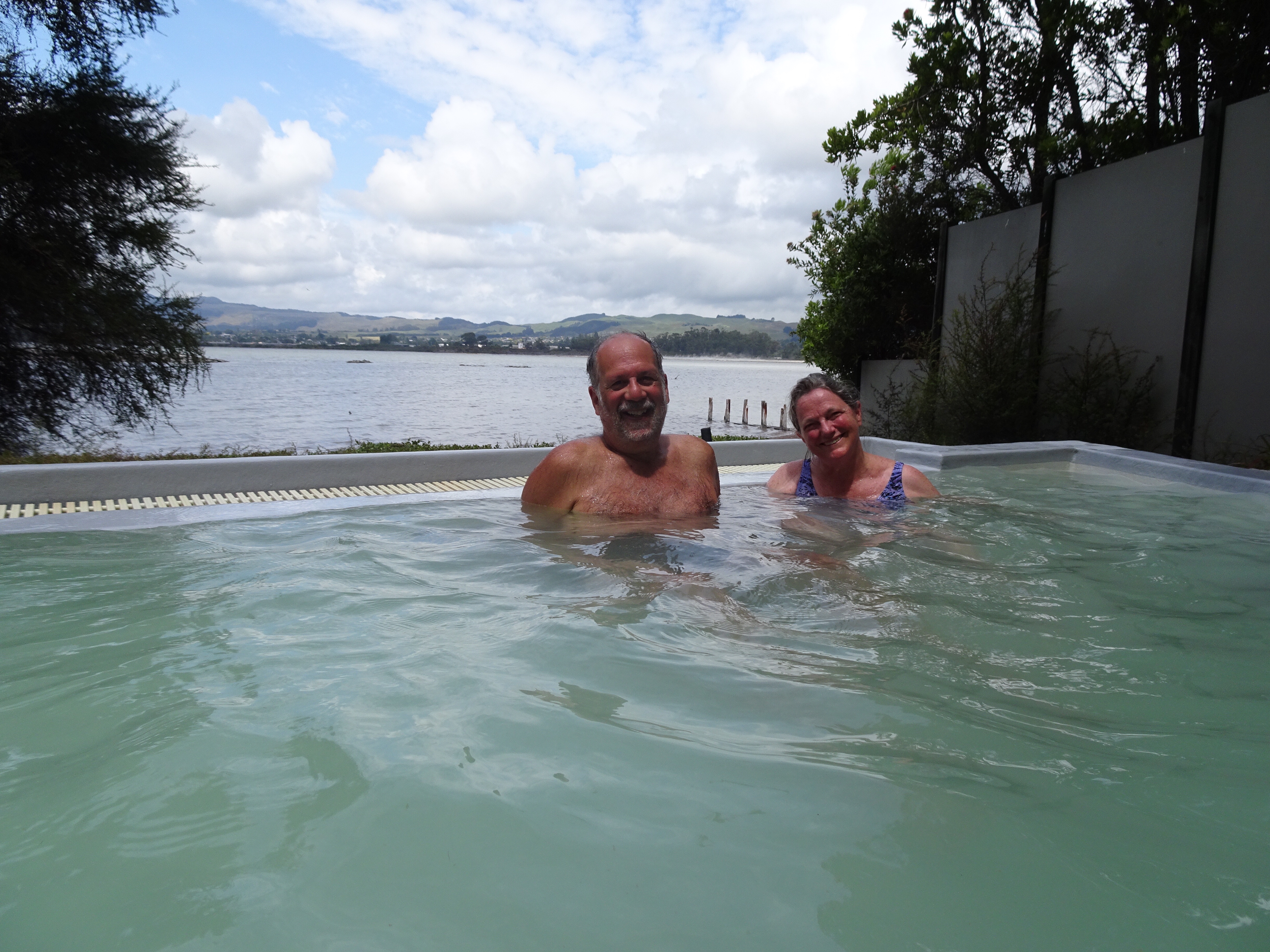
Ingrid was our airbnb host. She came over with lots of food and cheer.Ripe fruit….deliciousBlue Lake. Clear and fresh.The Polynesian Spa has been around since the 1920’s. It’s right in downtown Rotorua, on the banks of Rotorua Lake.
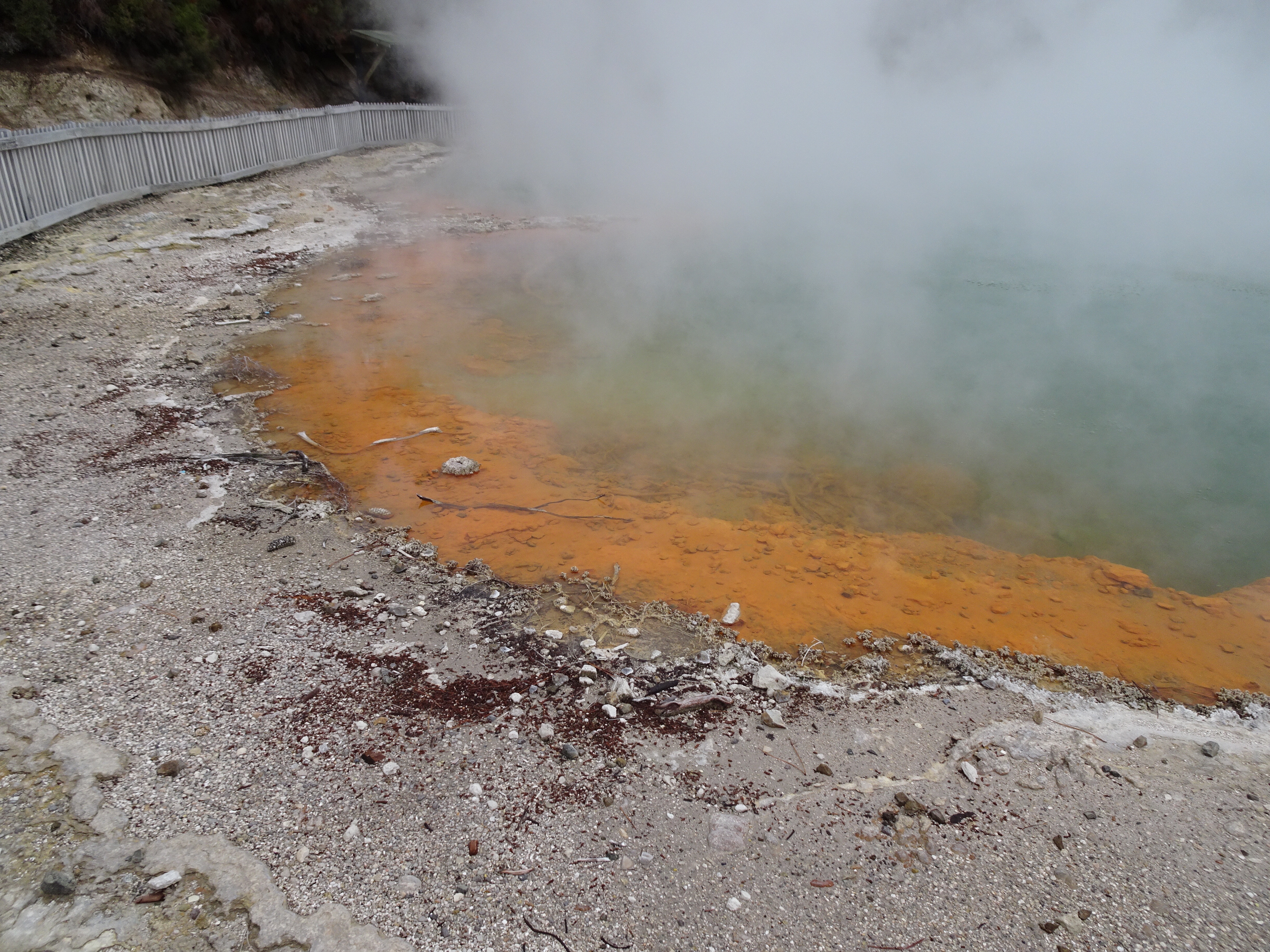
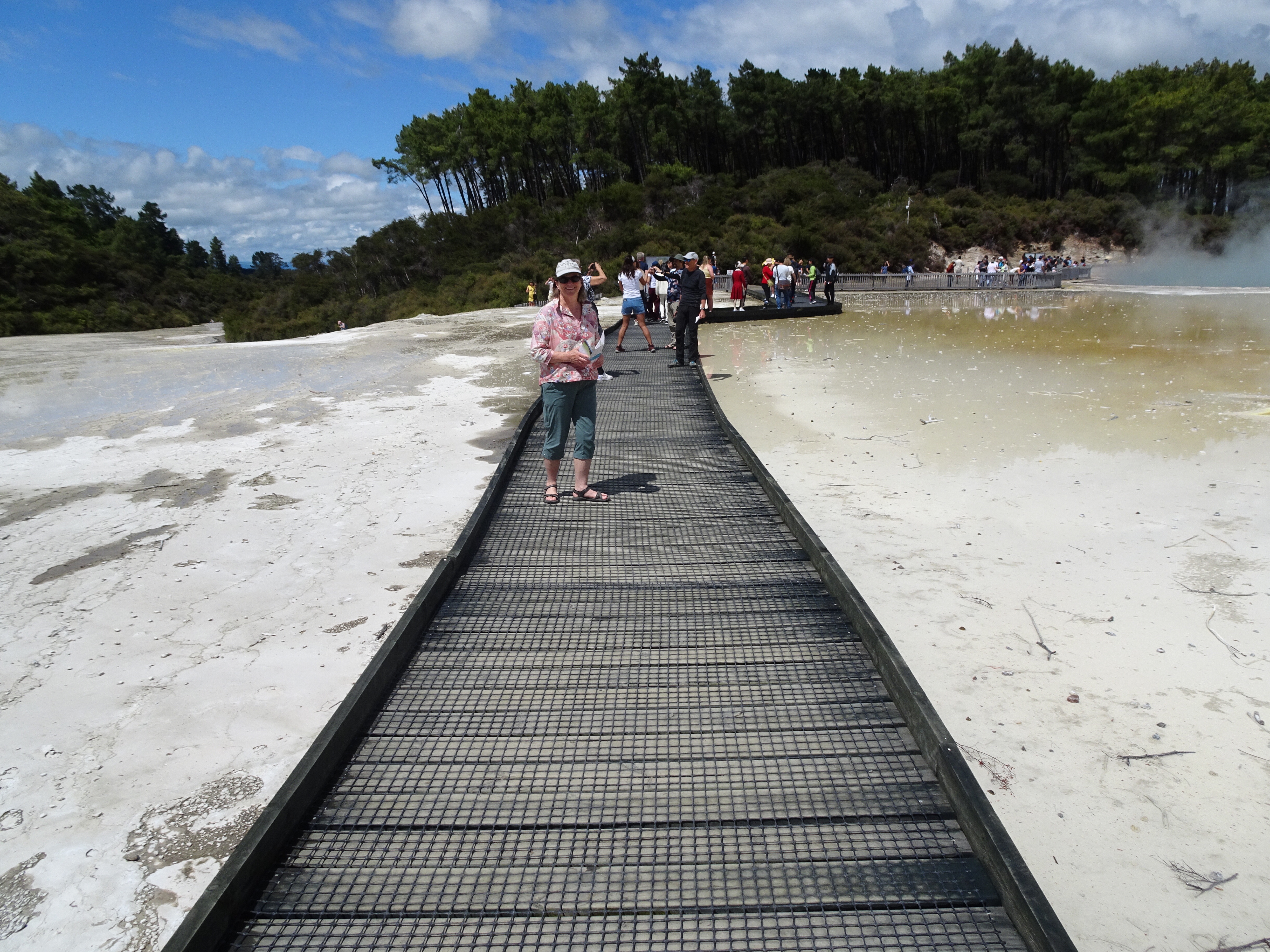
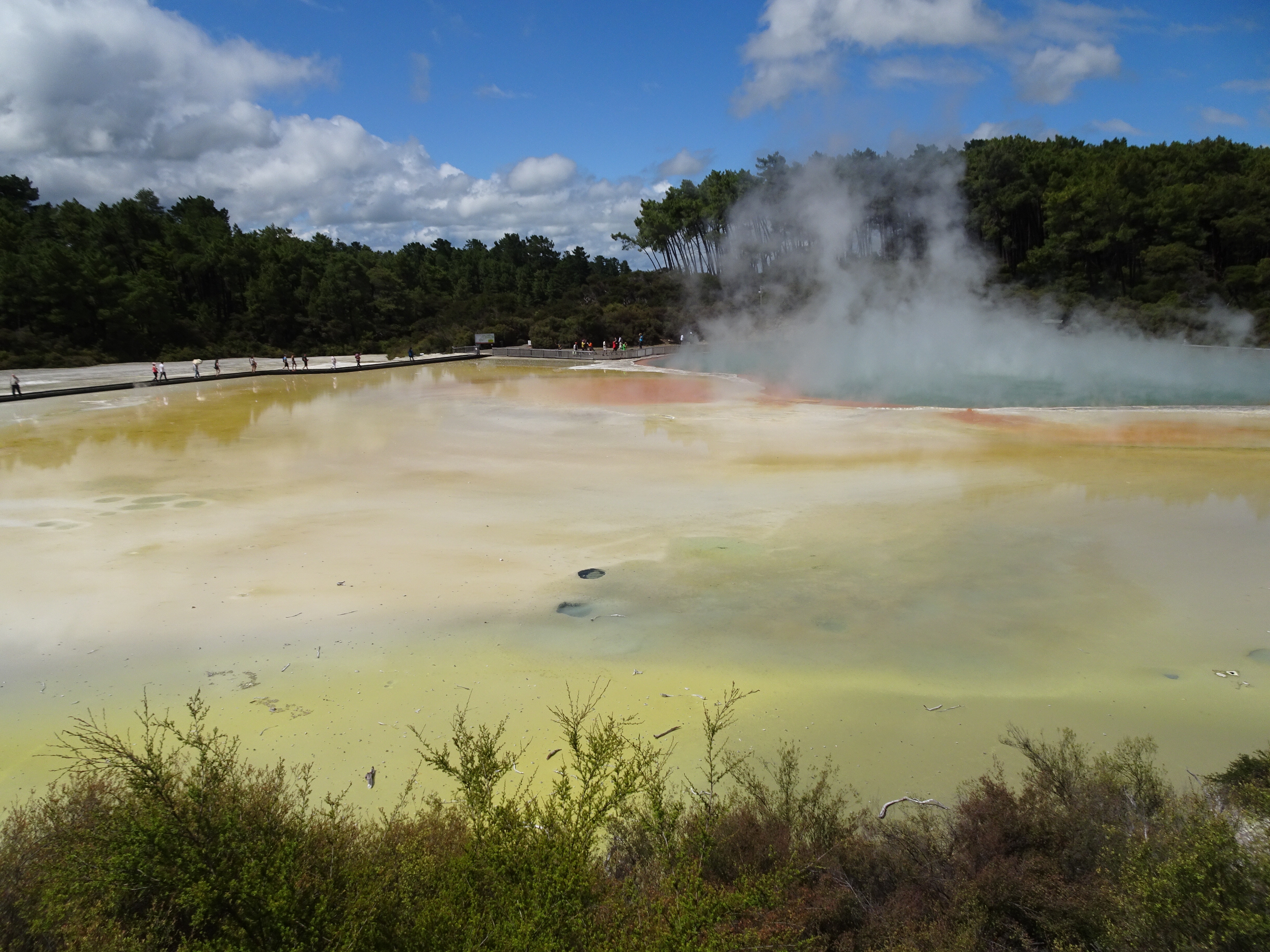
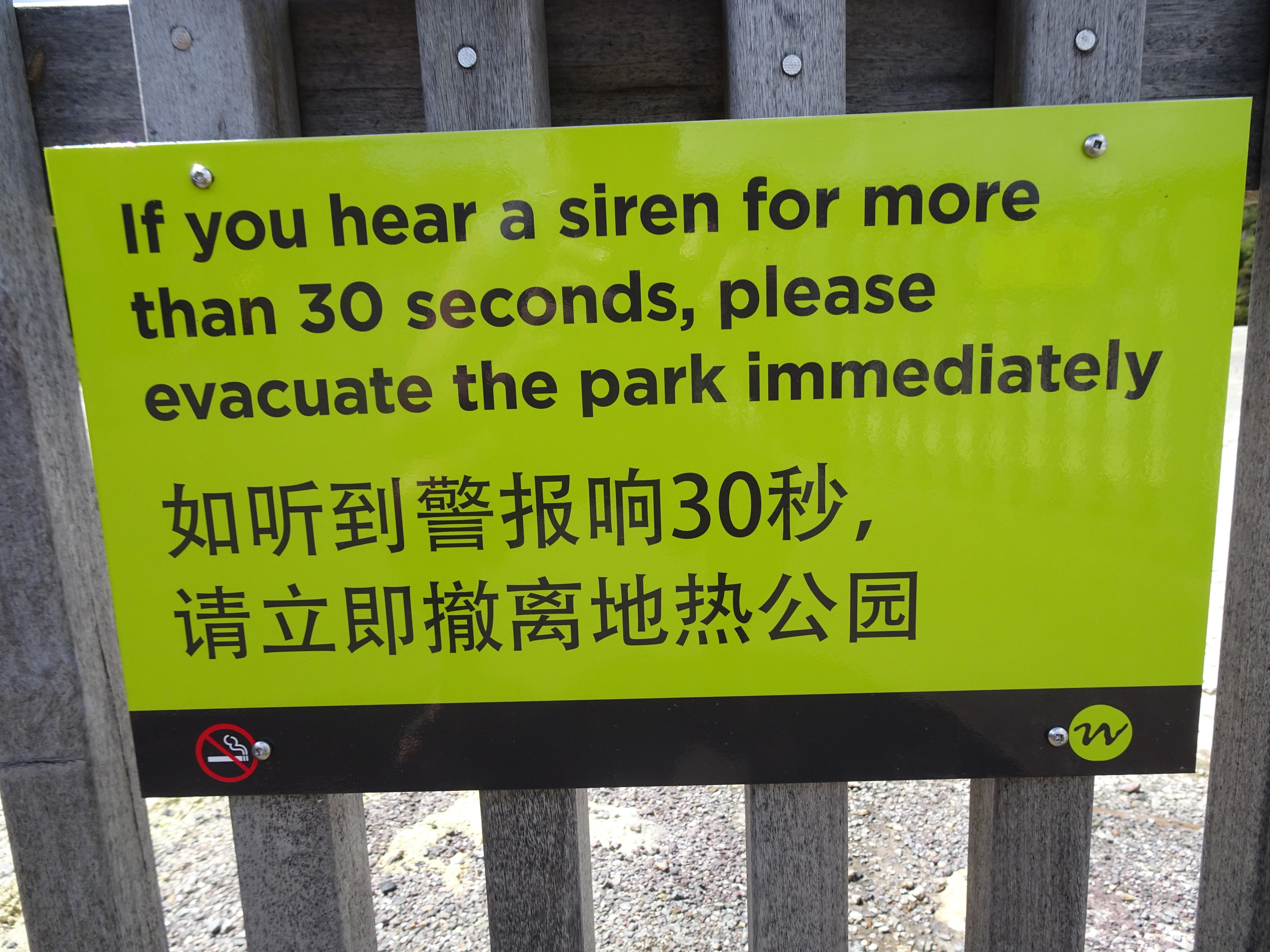
Boxing Day we headed to Taupo. On the highway to Taupo, we stopped at the Waiatapo Geothermal area. It has the largest hot pool in the Southern Hemisphere, as well a bubbling mud pits and caves filled with boiling water. They used the sounds of the boiling water to portray Mordor in the Hobbit movie. They also filmed some scenes here.
Hot mud on either side of the path and no railings?!No need to panic, folks, but…
Taupo
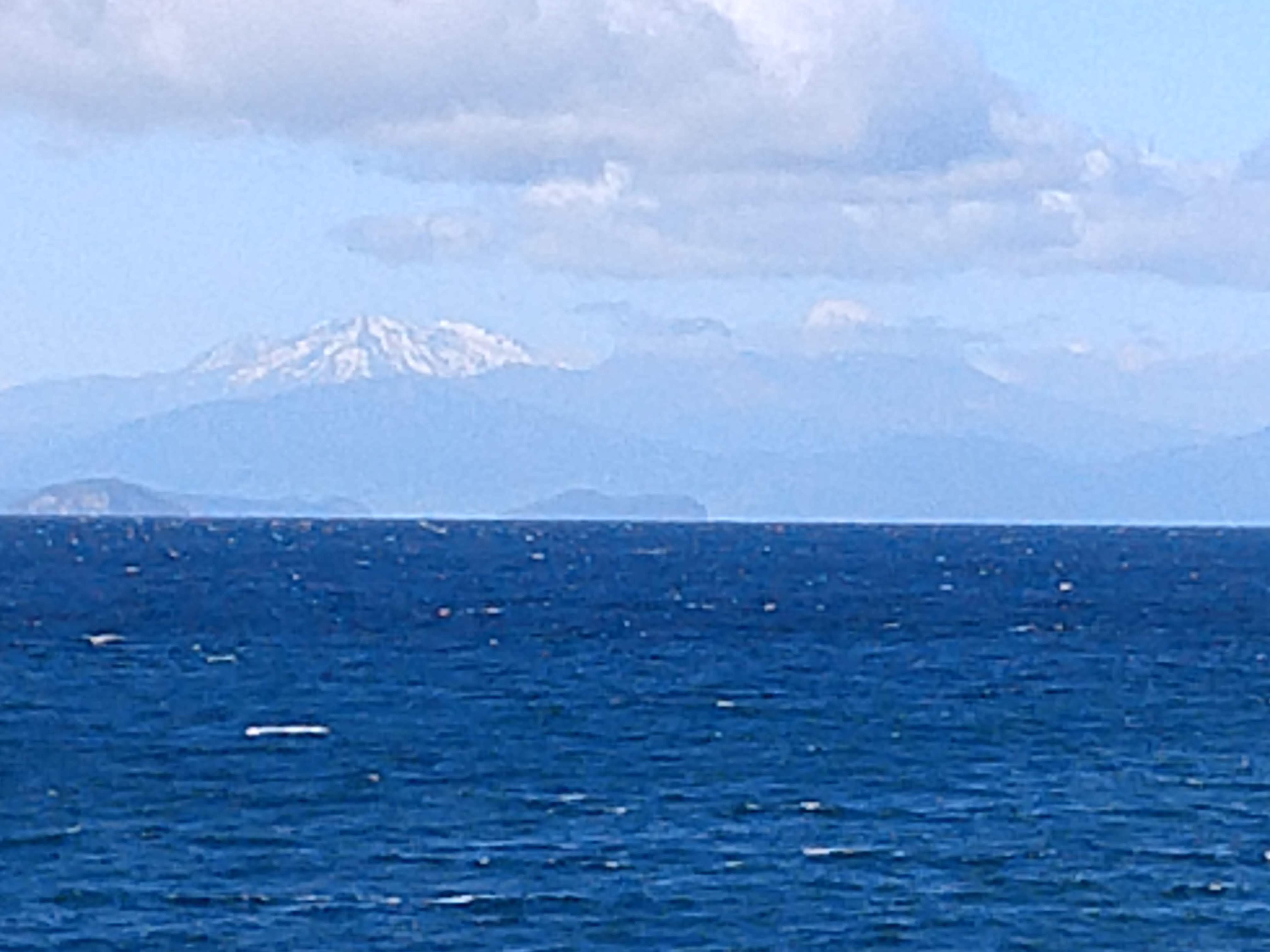
Taupo Lake with volcanoes in the distance. They are way overdue to erupt. New Zealand is volcanic, and everybody knows that any day, there could be an eruption. New Zealand, though, has no natural predators. Legends say that gods decided that people here shouldn’t have to be worried about both.
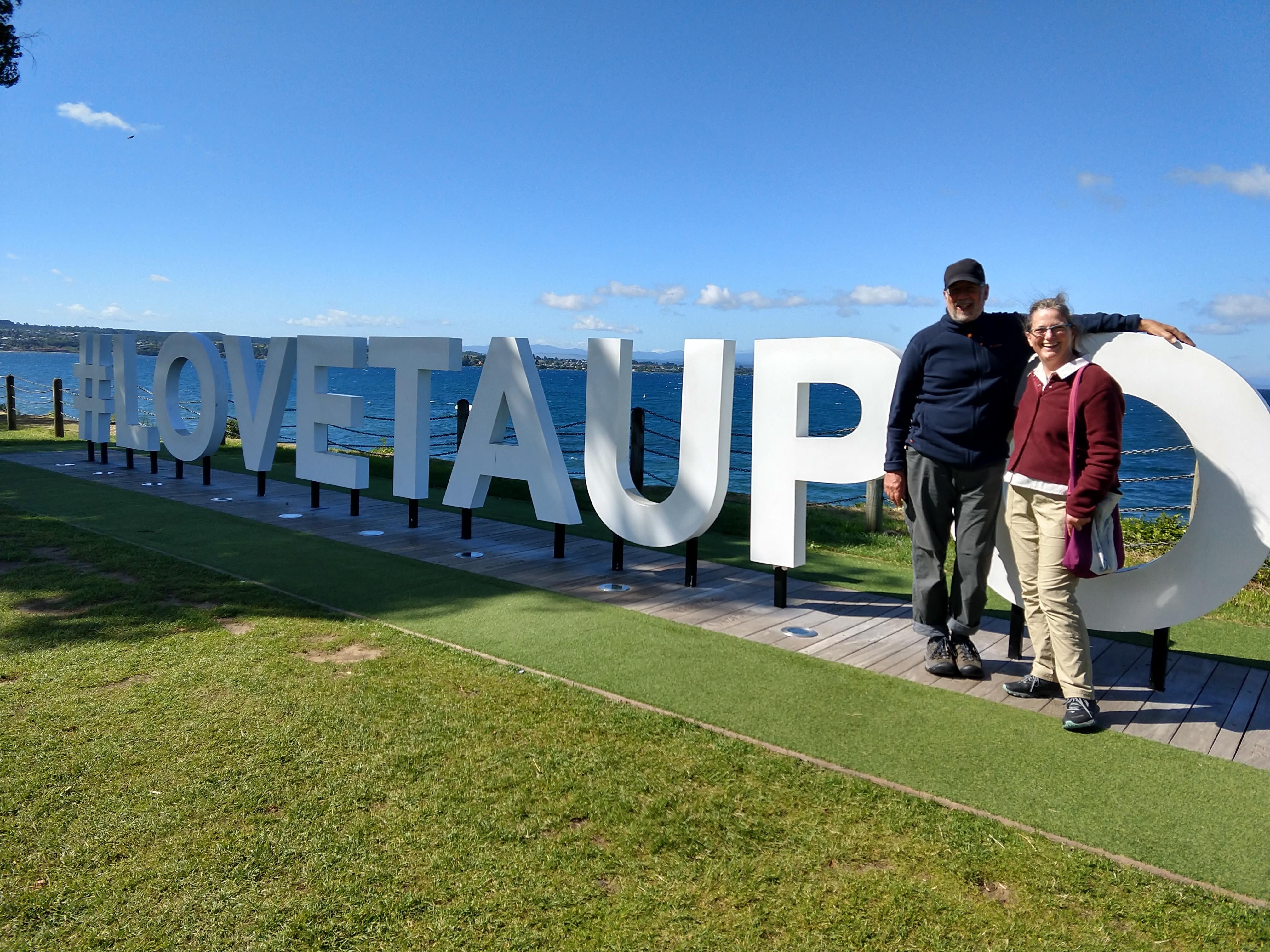
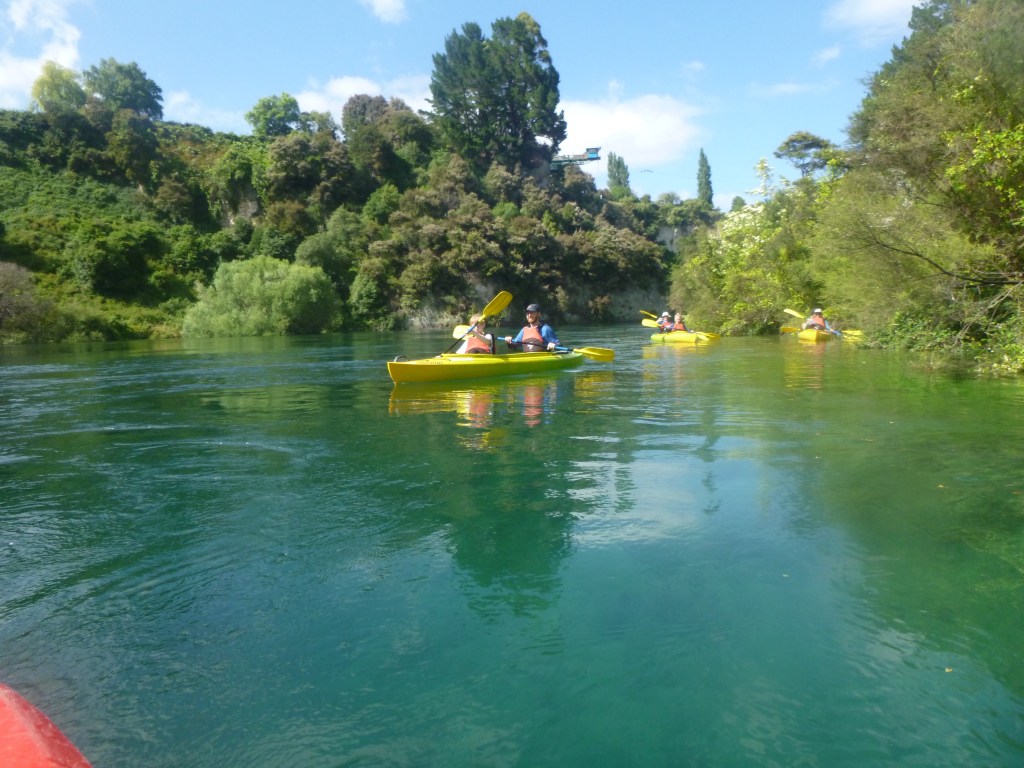
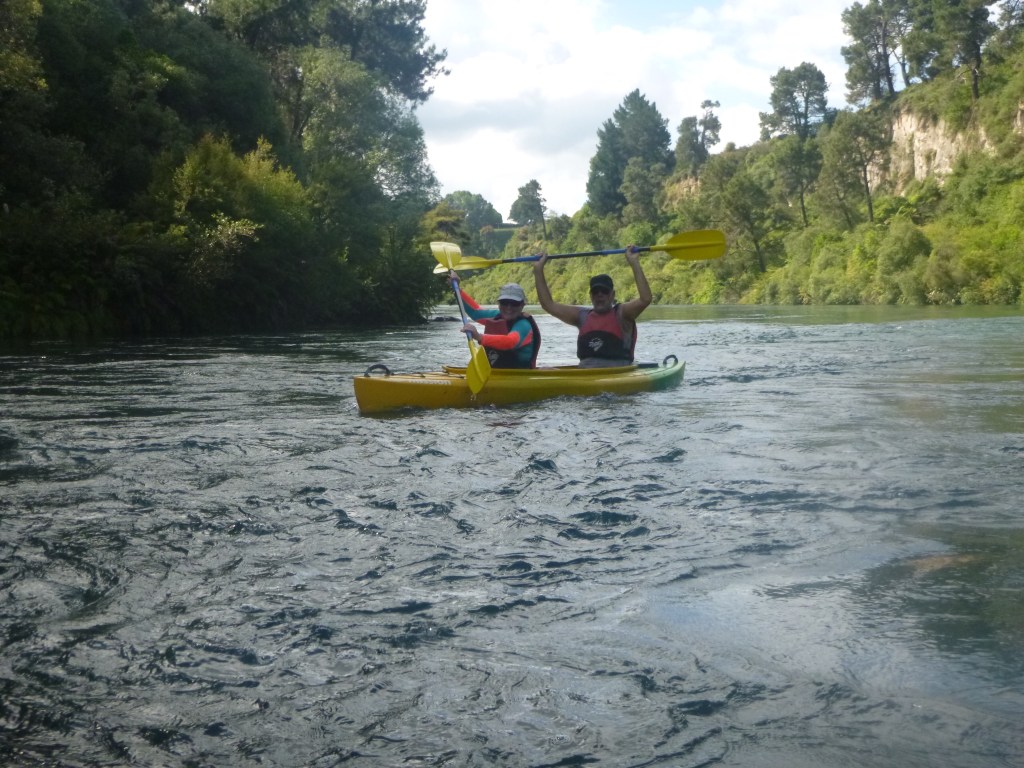
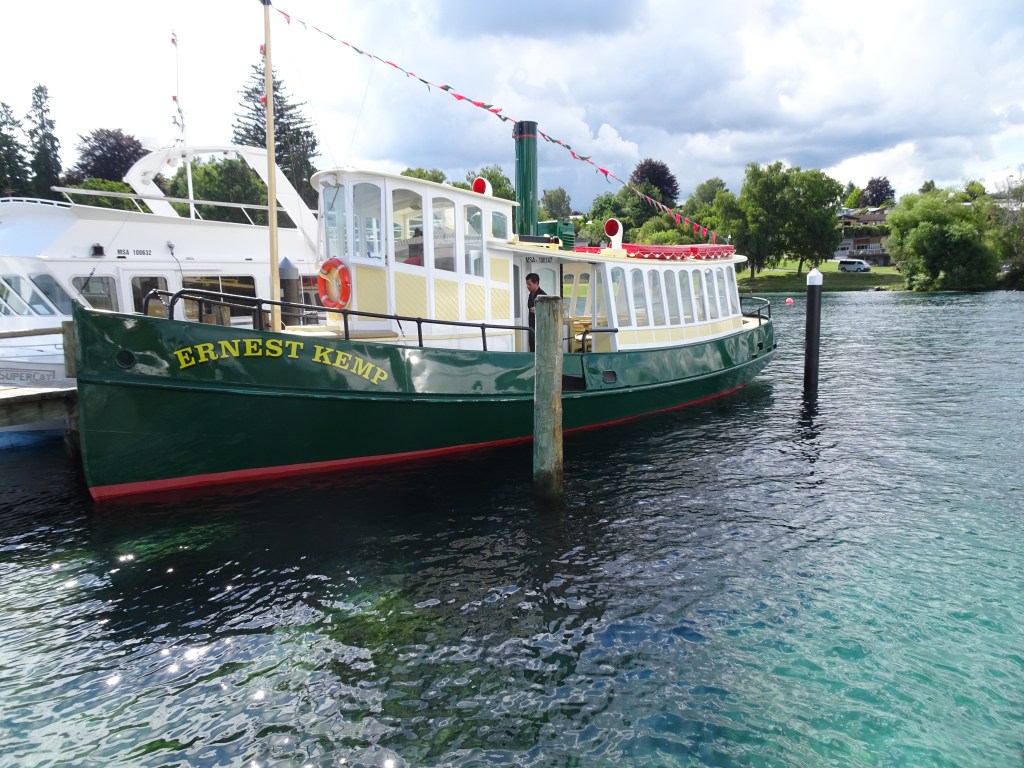
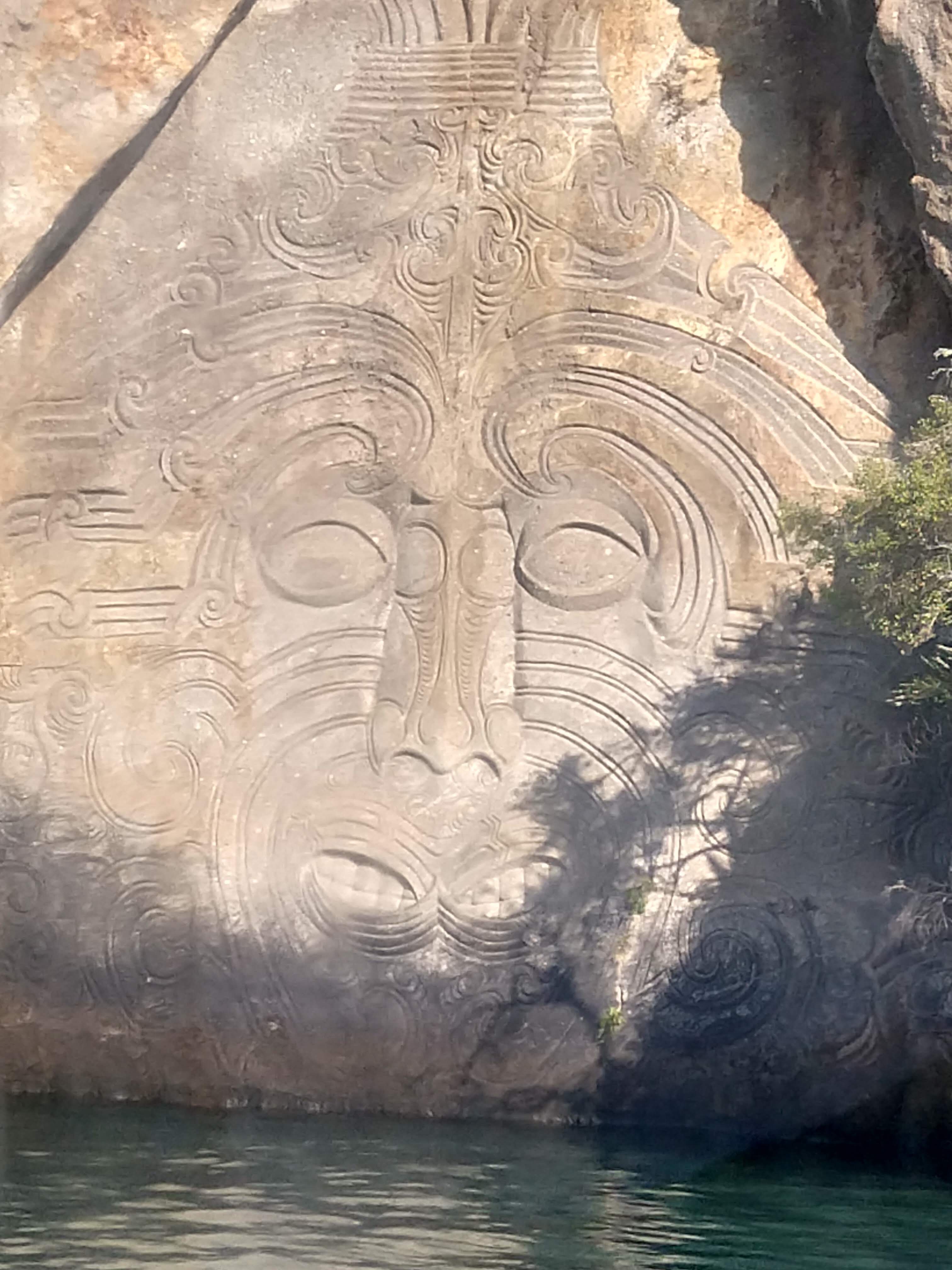
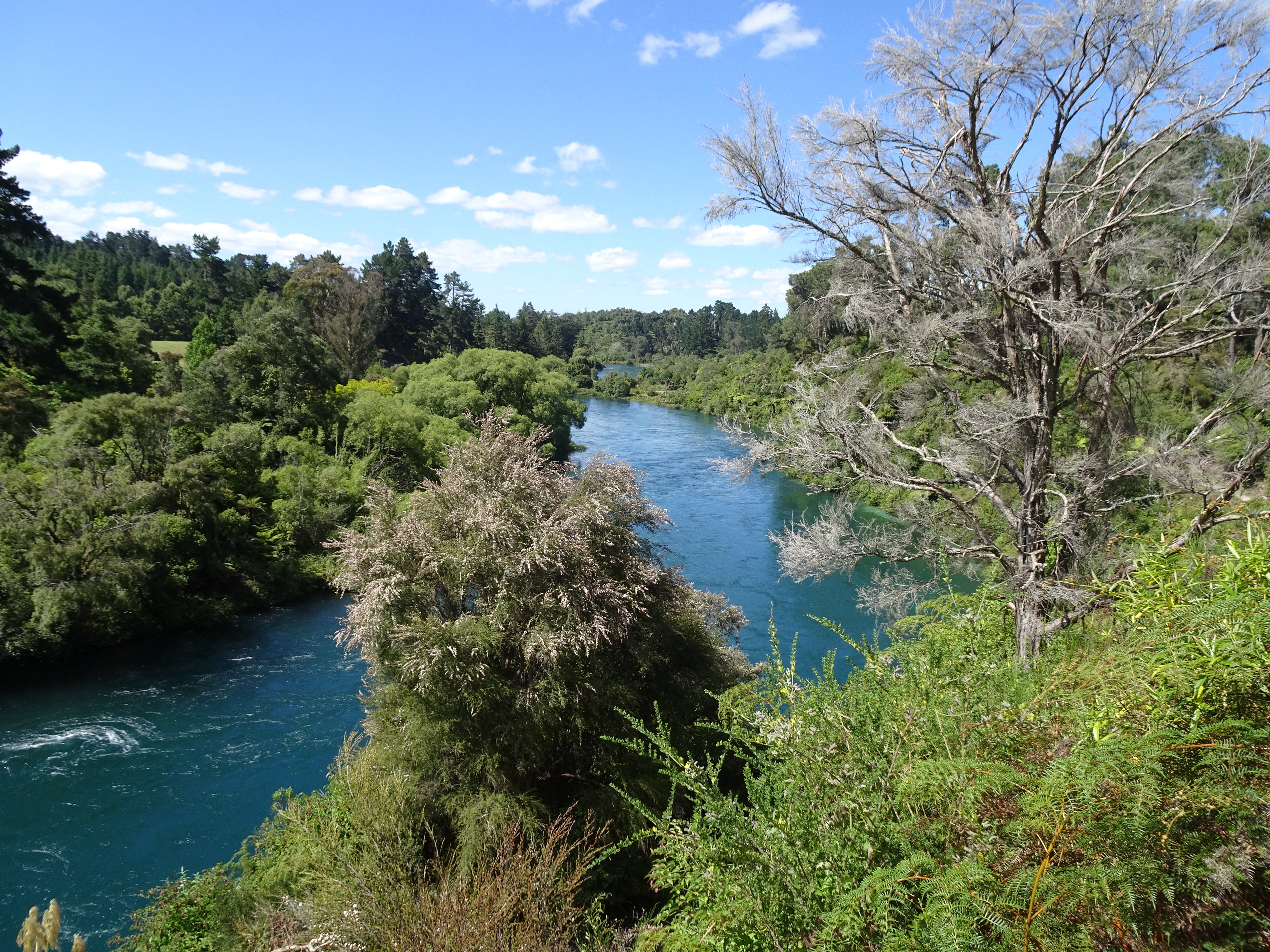
Taupo is just down the road, about an hour south of Rotorua. It also is in the geothermal region. The town is on the banks of Lake Taupo, the largest lake in New Zealand. The Waikato River flows out of the lake, and it is the largest river in New Zealand, flowing up to Auckland. We took an evening boat ride out into the lake to Maori carvings, then the next day we kayaked up the river. The water is some of the clearest that we’ve ever seen. It seems as clear as Waldo Lake, in the Oregon Cascades, which is one of the clearest in the world.
We kayaked for two hours up the Waikato River, which drains Lake Taupo. We went with a guide, and a family from Denmark
Taupo has lots of outdoor events during the year, including Ironman competitions, Swims across the lake, marathons, and mountain bike get-togethers.
These Maori rock carvings were completed in 1978. They depict legends of the lake.
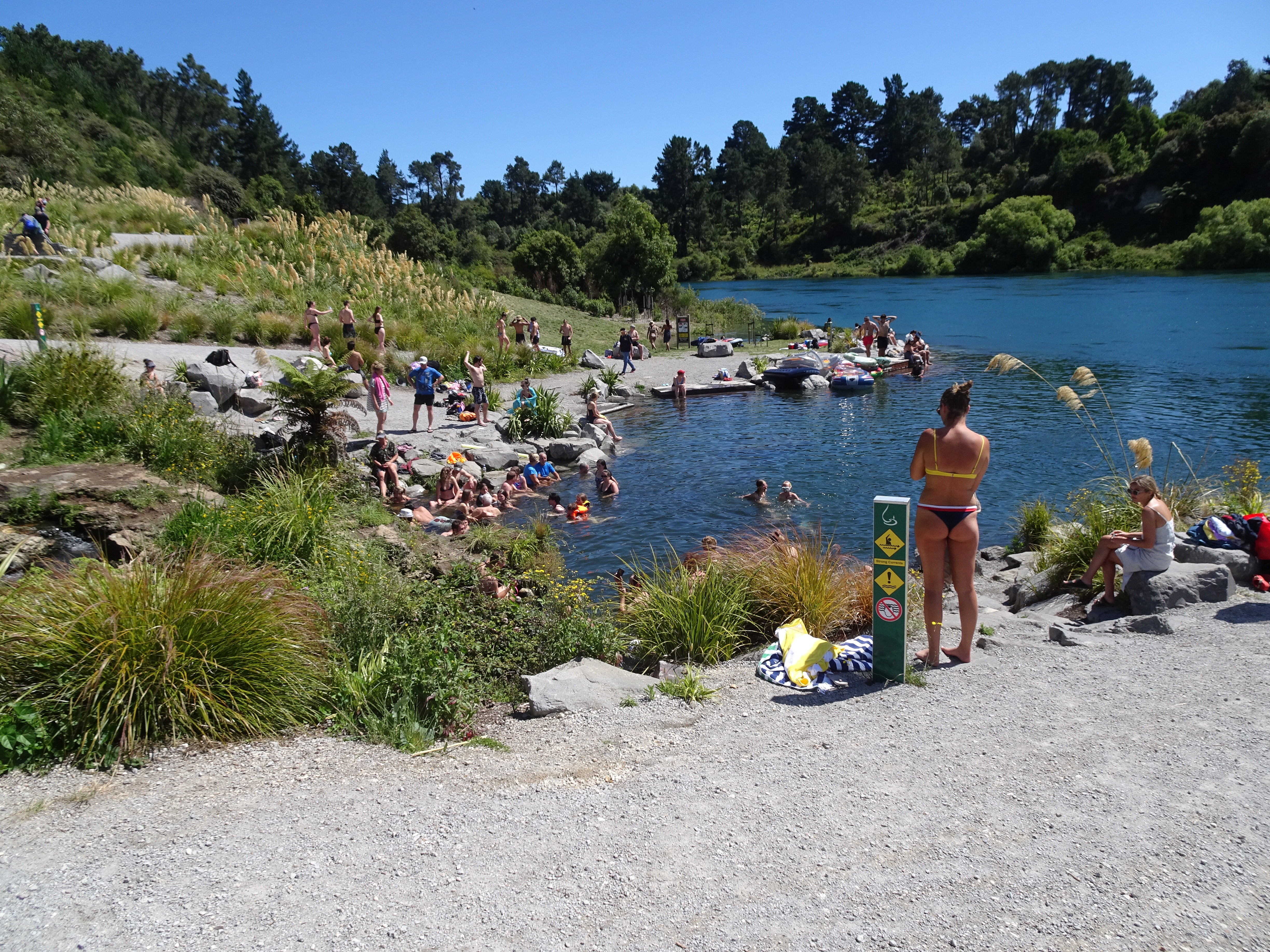
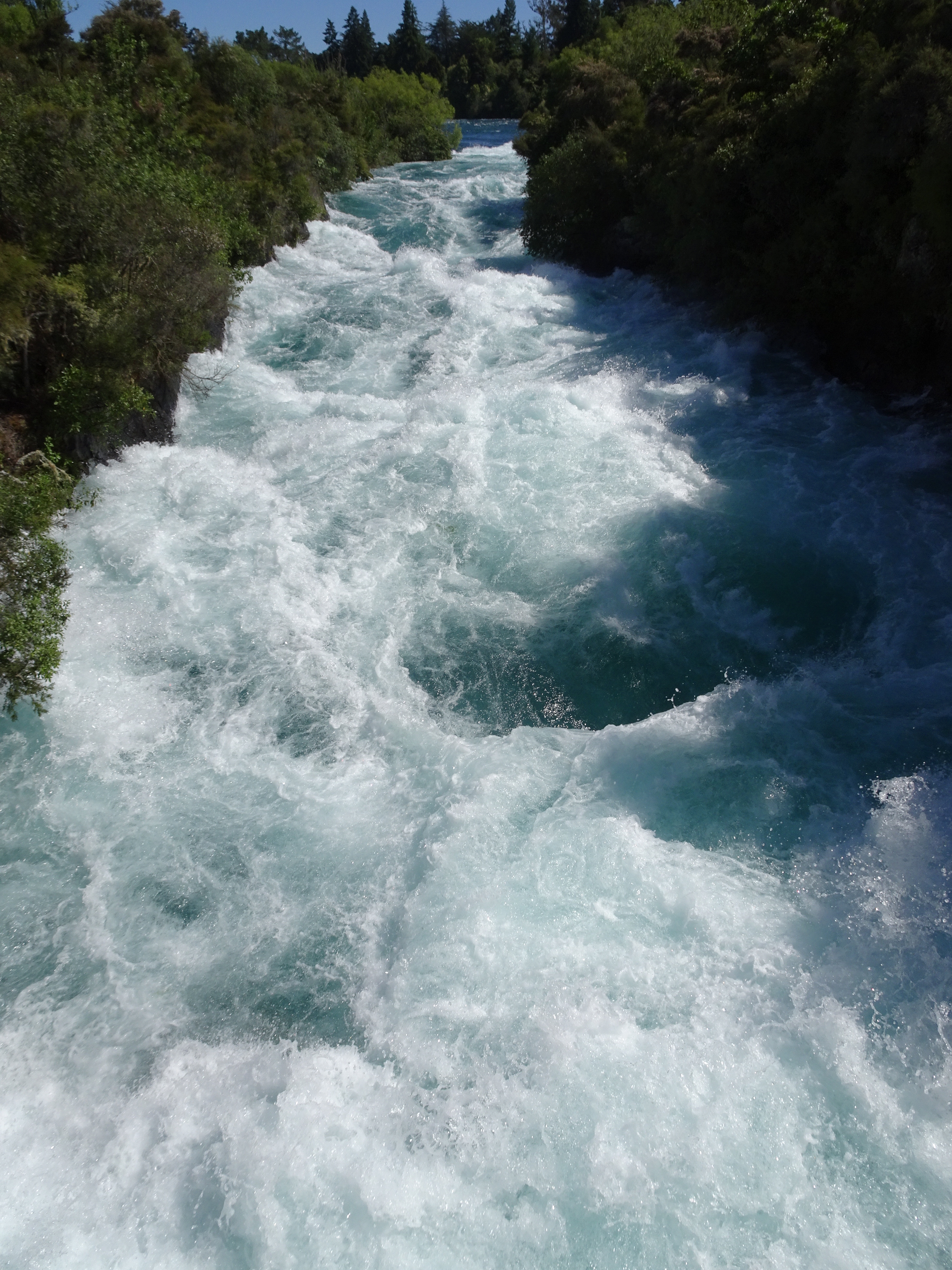
We also took a hike along the river, starting at a thermal pool, and ending up at Huka Falls.
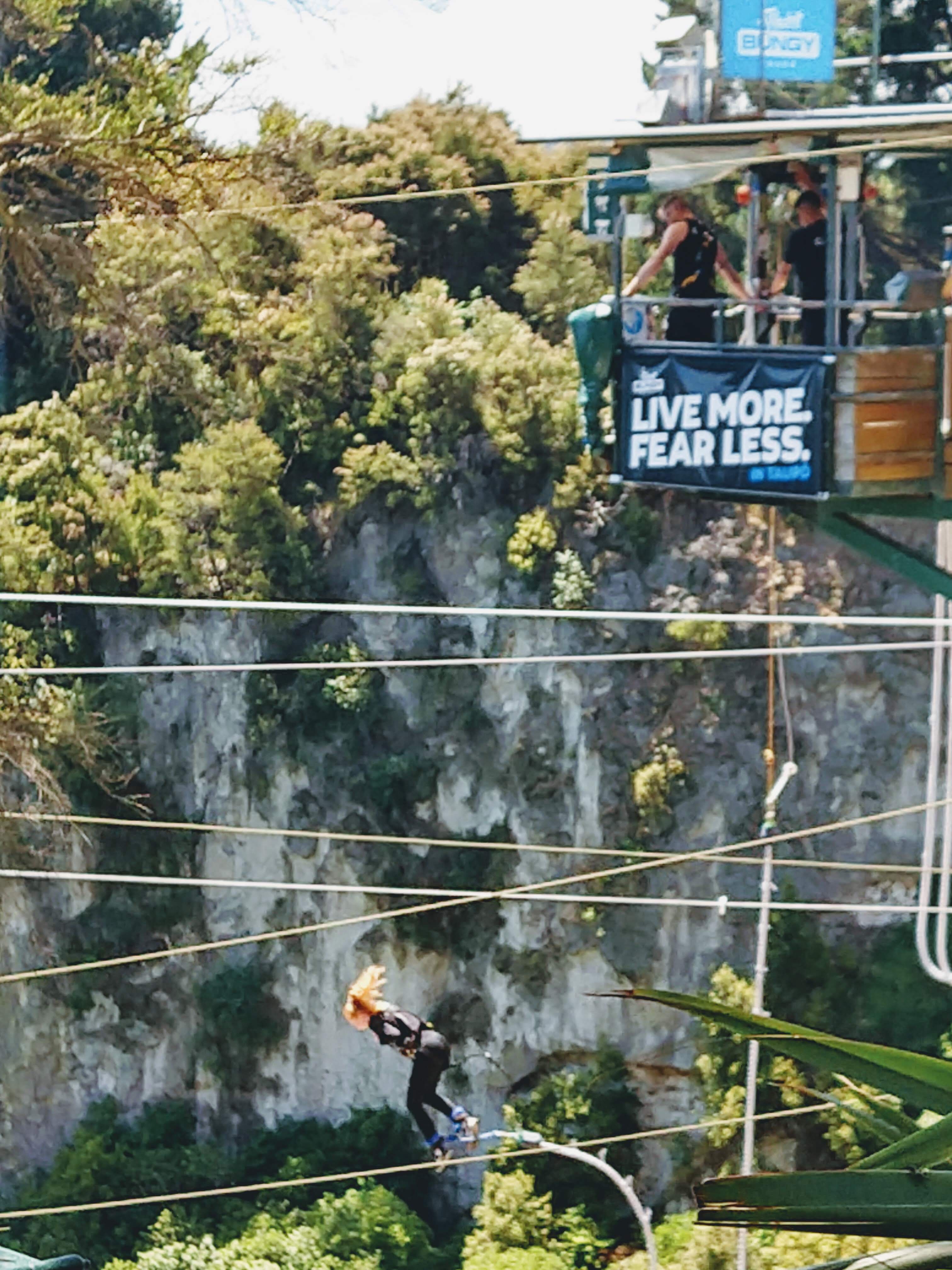
Bungy jumping was invented in New Zealand. The first commercial jump was in 1988 in Queenstown, on the South Island, and the company continues doing it today. People paid, and lined up, and loved it. They still do. Adventure tourism. Adrenaline junkies.
Why do people love it so much? Why do they leap off of bridges and cliffs?
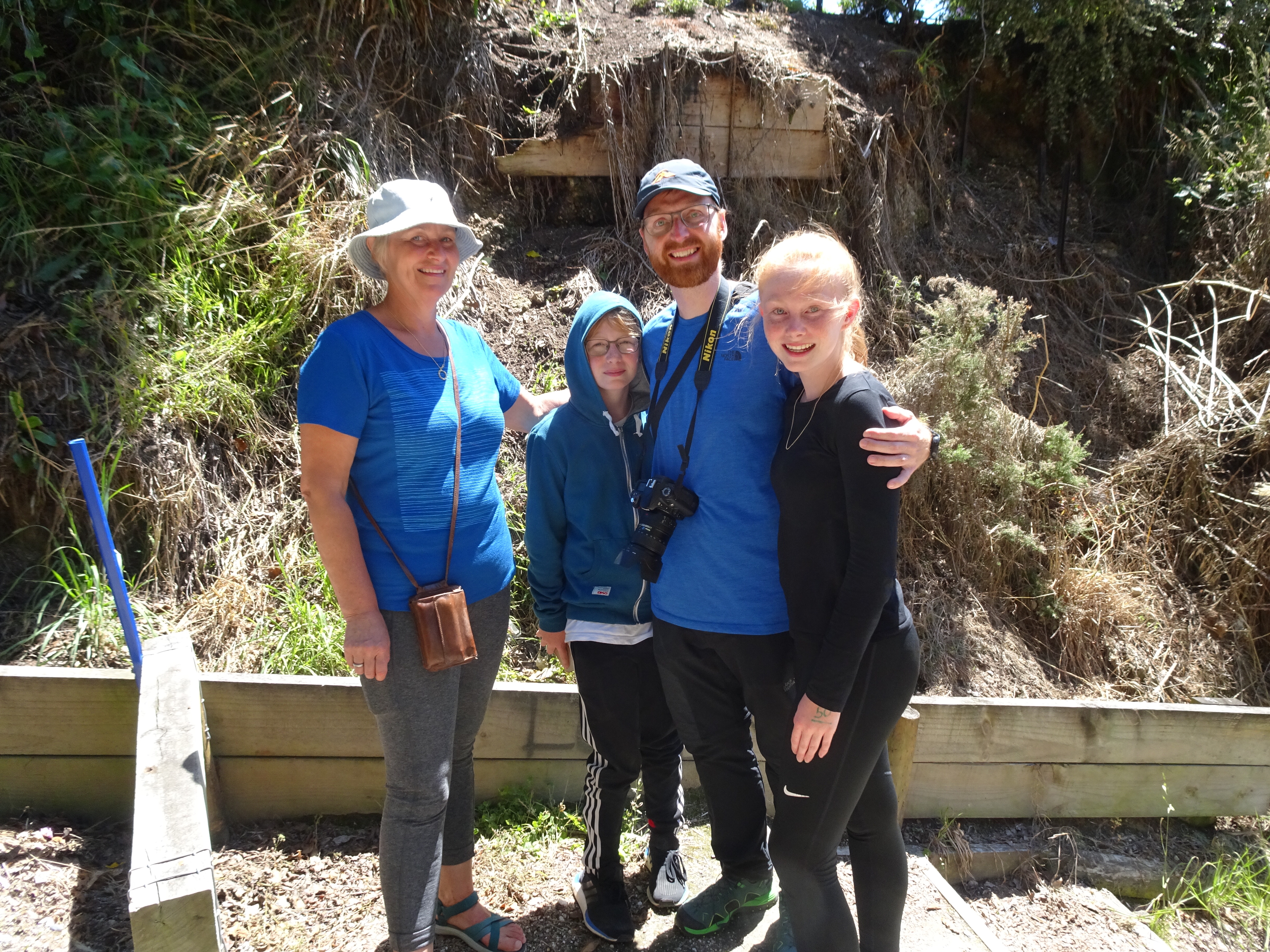
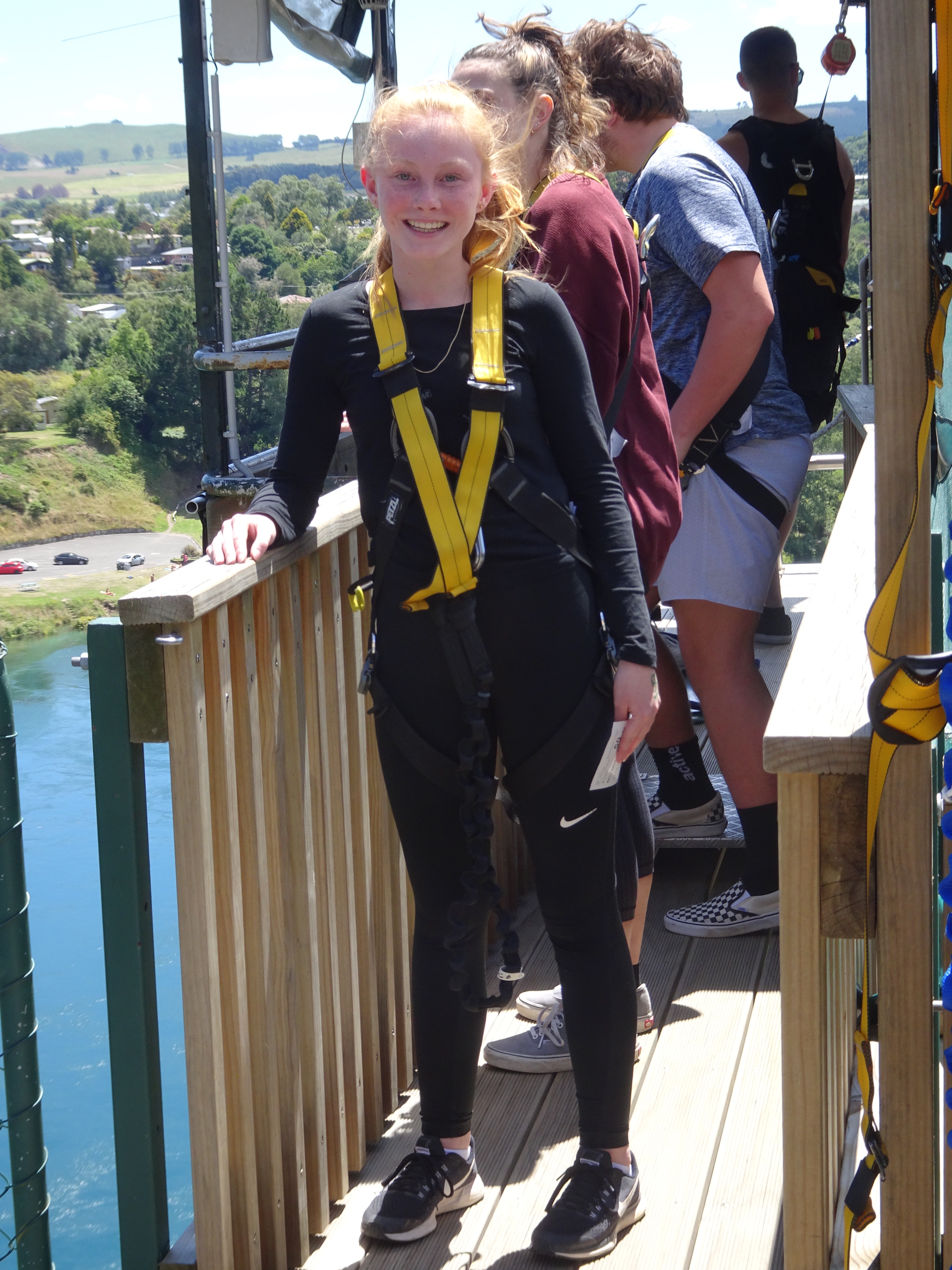
We went kayaking with a Danish family, Karina, Brian, David, and Freyja. Freyja is fourteen, and she really wanted to bungy jump. It was exciting waiting with her for her turn, and watching her make the leap.
Freyja strapped up, just before her turn.Aieeeeeeeeeee!!!Here’s to a cheerful 2020
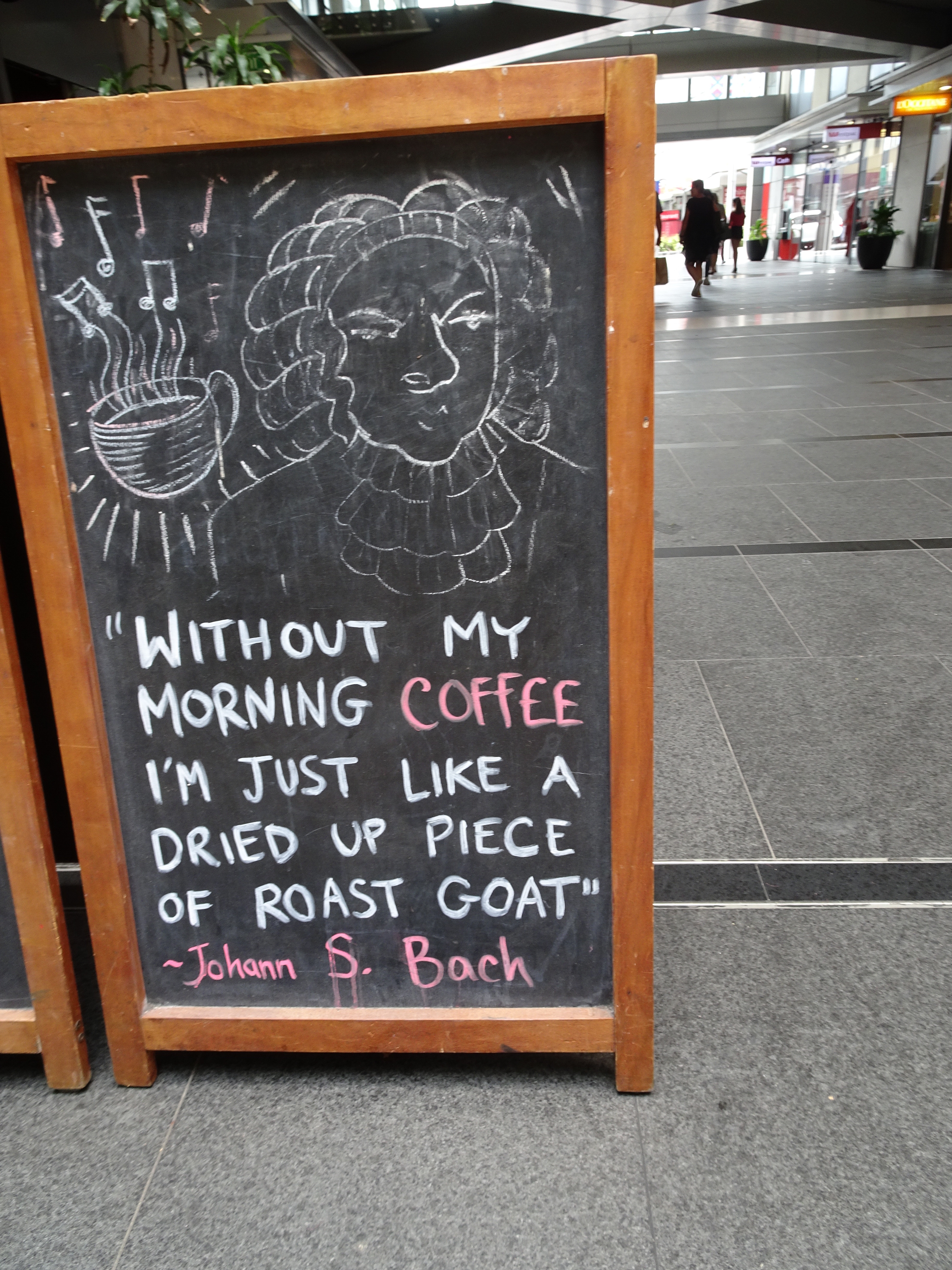
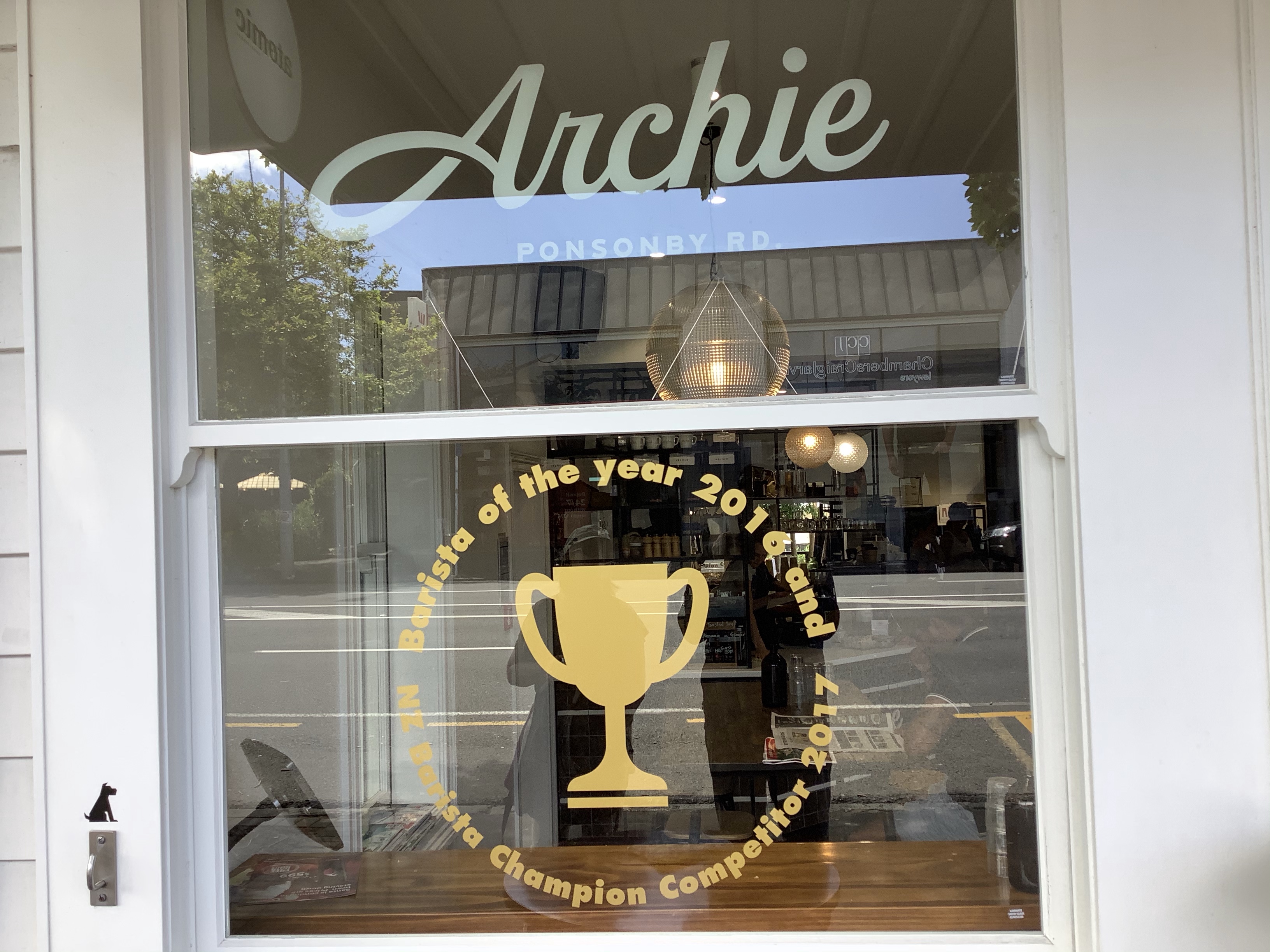
New Zealand takes coffee seriously. Our first morning in Auckland, we strolled down by the downtown waterfront and went into a hip looking coffee shop. I asked for a cup of coffee and the two baristas were immediately in a state of total confusion. Did I want a flat white? A long black? A short black? They tried to clarify things, but when I said I just wanted a cup of coffee, the issue got murkier. They discussed it between themselves, and I ended up getting a cup with four shots of espresso. Quite good, but I knew I needed an education.
New Zealand has the most coffee roasters per capita in the world, and many Kiwis believe strongly that it also has the best coffee in the world. The flat white is the national coffee drink. Roughly one third espresso, two thirds steamed milk. Foam varies. There is frequent debate on who invented it—-The Aussies or the Kiwis. We heard one Kiwi grudgingly admit that yes, it was the Aussies who invented it, but we are the ones who perfected it. My current favorite is a macchiato with an extra shot. We will continue. At home, it seems like almost everybody uses a French press, and our airbnbs so far have had one. Filters and cones, or machines, seem not to exist.
History Becomes Present
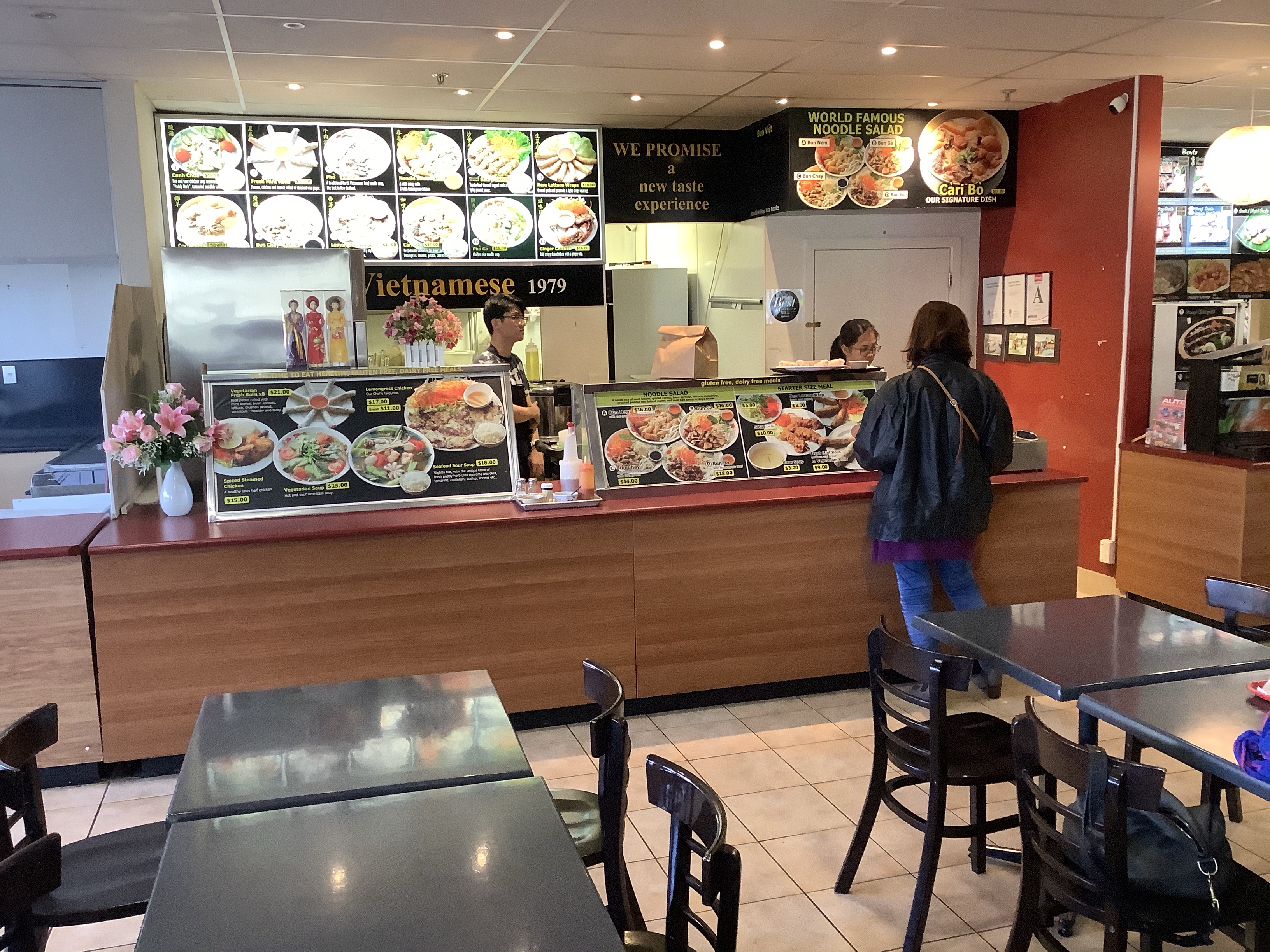
New Zealand is the youngest country in the world, in terms of human habitation. The very first humans (any humans) arrived here about 900 years ago. Today, Auckland is the largest Polynesian city in the world (South Pacific Islanders) and the fourth most ethnically diverse. (Guess which three are in front of it. Answer at the end of this paragraph.) There are people from Samoa, Cook Islands, Marquesa Islands, Society Islands, Tonga, Solomon Islands, as well as from India, Japan, Indonesia, and lots of other nations. We often went to an International Food Court for dinner. You could choose restaurants from Vietnam, Japan, Malaysia, China, India, Laos, or Bali. The term “person of color” is just not used here because it is irrelevant. Everyone is a Kiwi. One third of the New Zealand population lives in Auckland, just over a million people. The country has about 4.5 million, which is about the same as Oregon. (London, Toronto, New York)
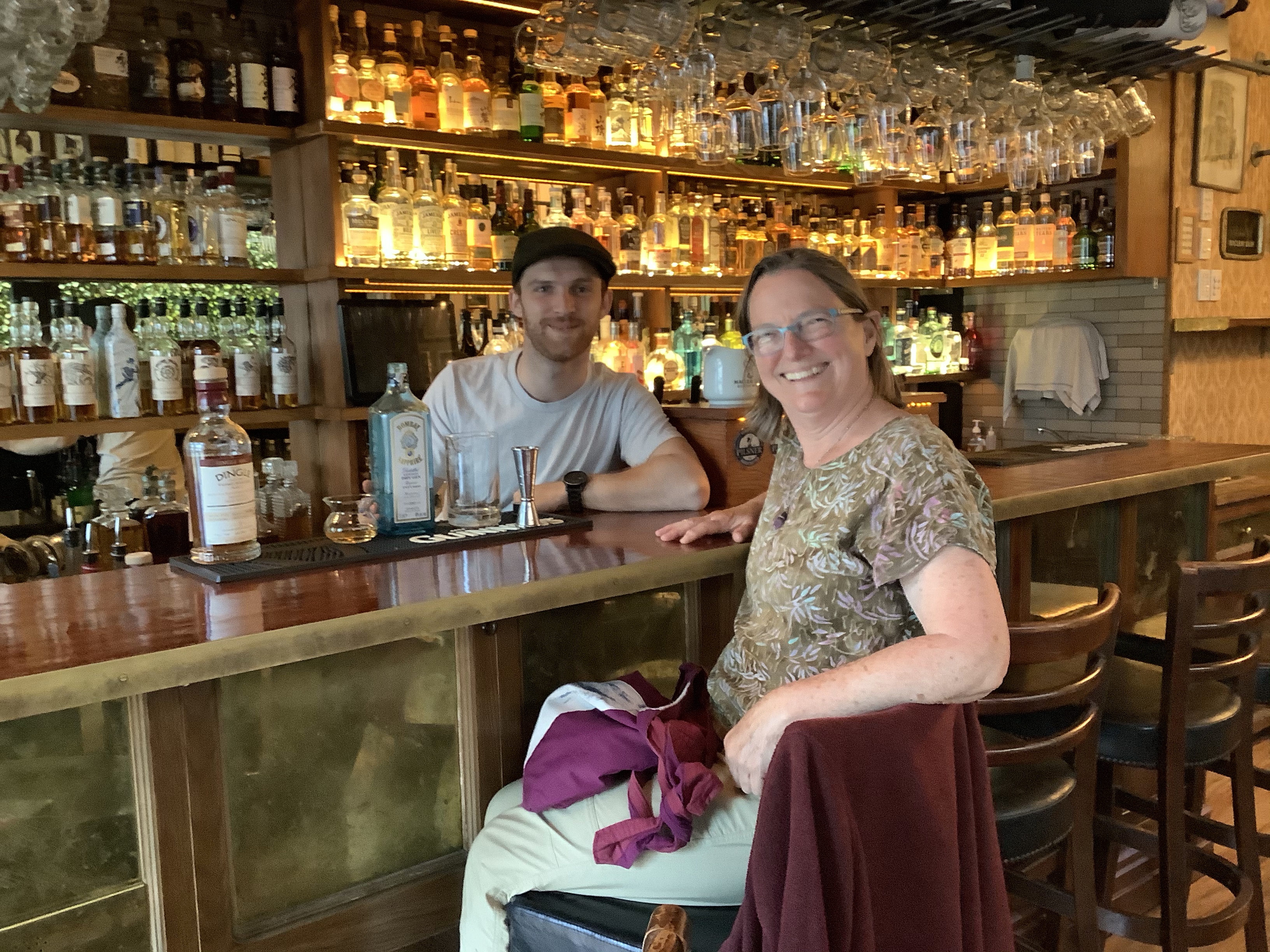
International Food CourtOf course, there also is a lot of influence from the British Isles. Here is Monica with Erin, our favorite Irish bartender, in front of a row of fine Irish whiskeys.
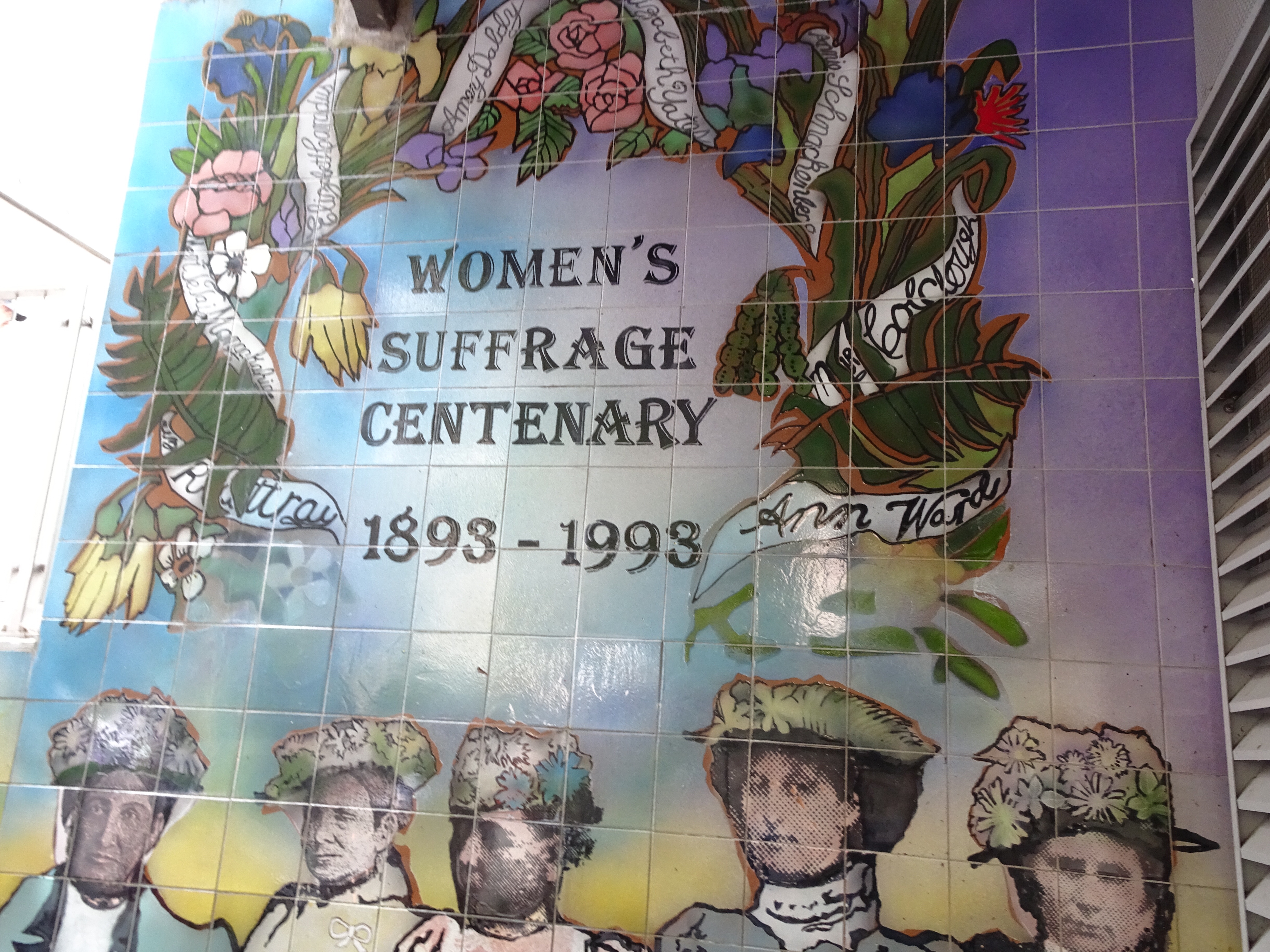
The country prides itself on being small, quick, innovative, and creative. Four and a half million people, almost a million small businesses. Streamlined processes and lack of bureaucracy is a New Zealand hallmark. It makes it easy to get a loan and start a business. After the shootings in Christchurch last March, automatic weapons were banned in two weeks. New Zealand was the first country where women could vote. The Kiwis know how to get things done.
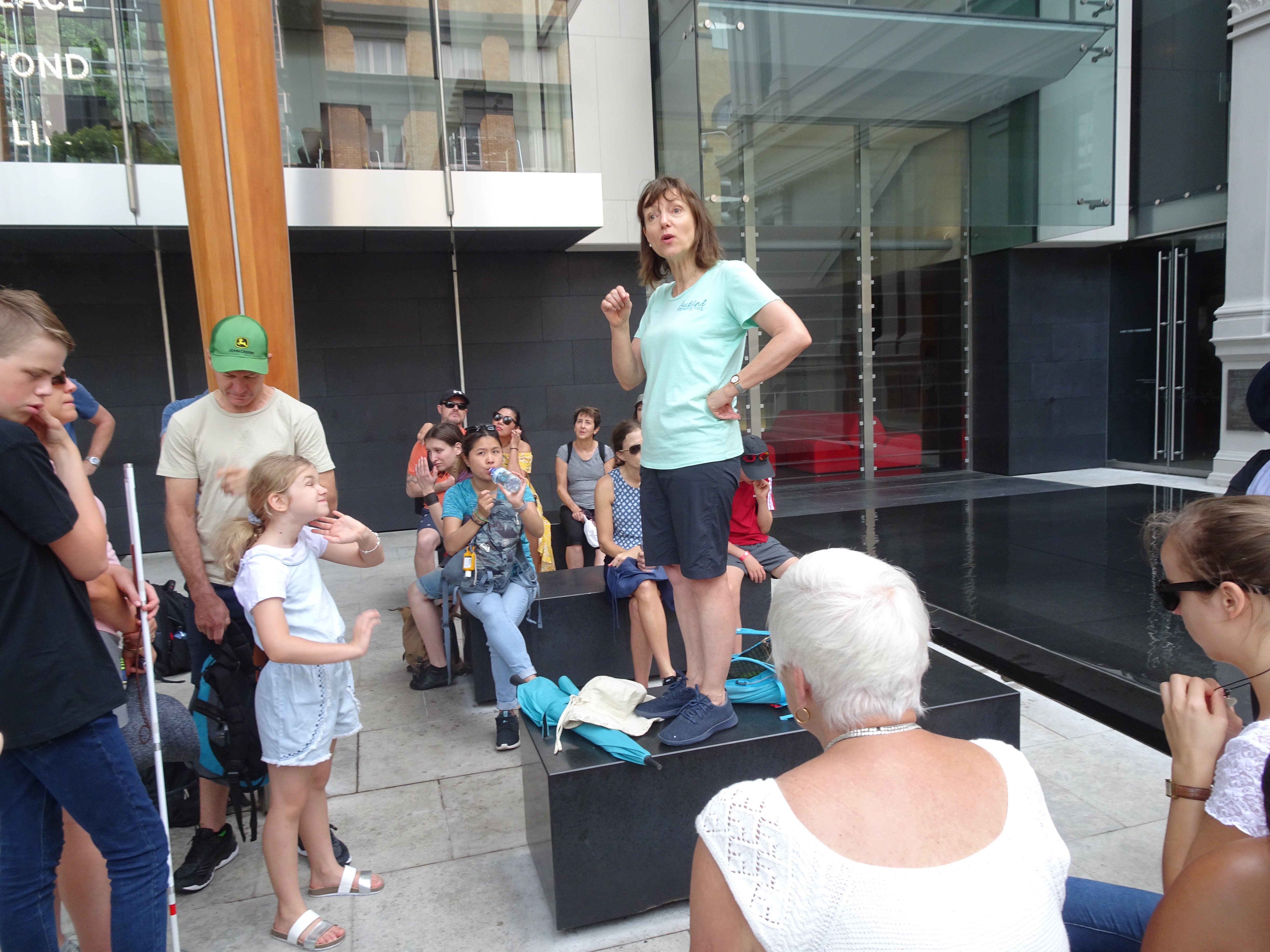
Free walking tours are available in cities all over the world. They are great ways to learn a bit and see some sights.
The Treaty of Waitangi was signed in 1840. This is the most important governmental agreement here. Still a living breathing document, it is the basis of the coexistence that is here. It was an agreement between the colonizers (the British) and the colonizees (the Maoris) and it basically says that all people are equal. The Maoris recognized the need for more organization that the British could provide, and the British acknowledged that the Maoris had a better understanding of the land and the resources. The document strove to eliminate class structure and put everyone on an equal footing. Today, New Zealand officially is still a colony of Great Britain, even though it is totally independent.
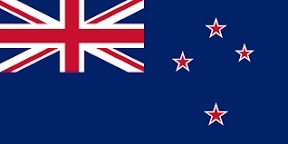
The New Zealand flag is actually a rendition of the Union Jack (Great Britain’s flag) with four stars representing the Southern Cross. That’s the most widely recognized constellation in the Southern Hemisphere, and the guiding light for all sailors here.
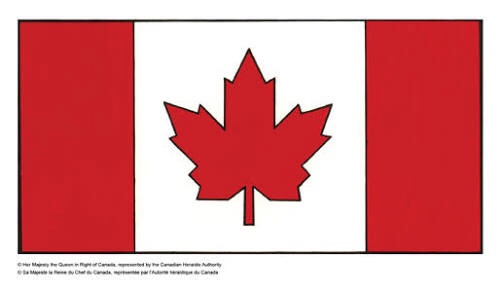
Now, I personally would think that the New Zealanders, being the independent and innovative people that they are, would prefer to have a flag that reflected that independence, rather than have one that pays homage to their colonizers. The Canadians switched flags in 1965, from a Union Jack variation to the Maple Leaf.
And in fact, a few years ago, in 2015, there was a raging controversy in New Zealand about changing their flag, and the whole country voted on a referendum. The vote was whether to keep the flag, or adopt a new one, a depiction of the Silver Fern, which is one of the National symbols (along with the Kiwi bird) of the country. The fern represents strength, stubborn resistance, and enduring power. I would add beauty to the list. The underside is silvery white, which reflects moonlight, making it very useful in following leaders through the forest at night. All significant ideas that you would want in your flag.
The New Zealanders voted whether to adopt this as their flag.
I unreservedly would vote for the fern flag, but 65% of the country wanted to keep the Union Jack. This was due mainly to the conditions set out in the Waitangi Treaty. People here are very comfortable with themselves and their relations with others.
Critters
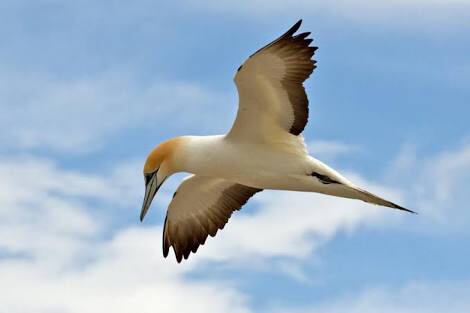
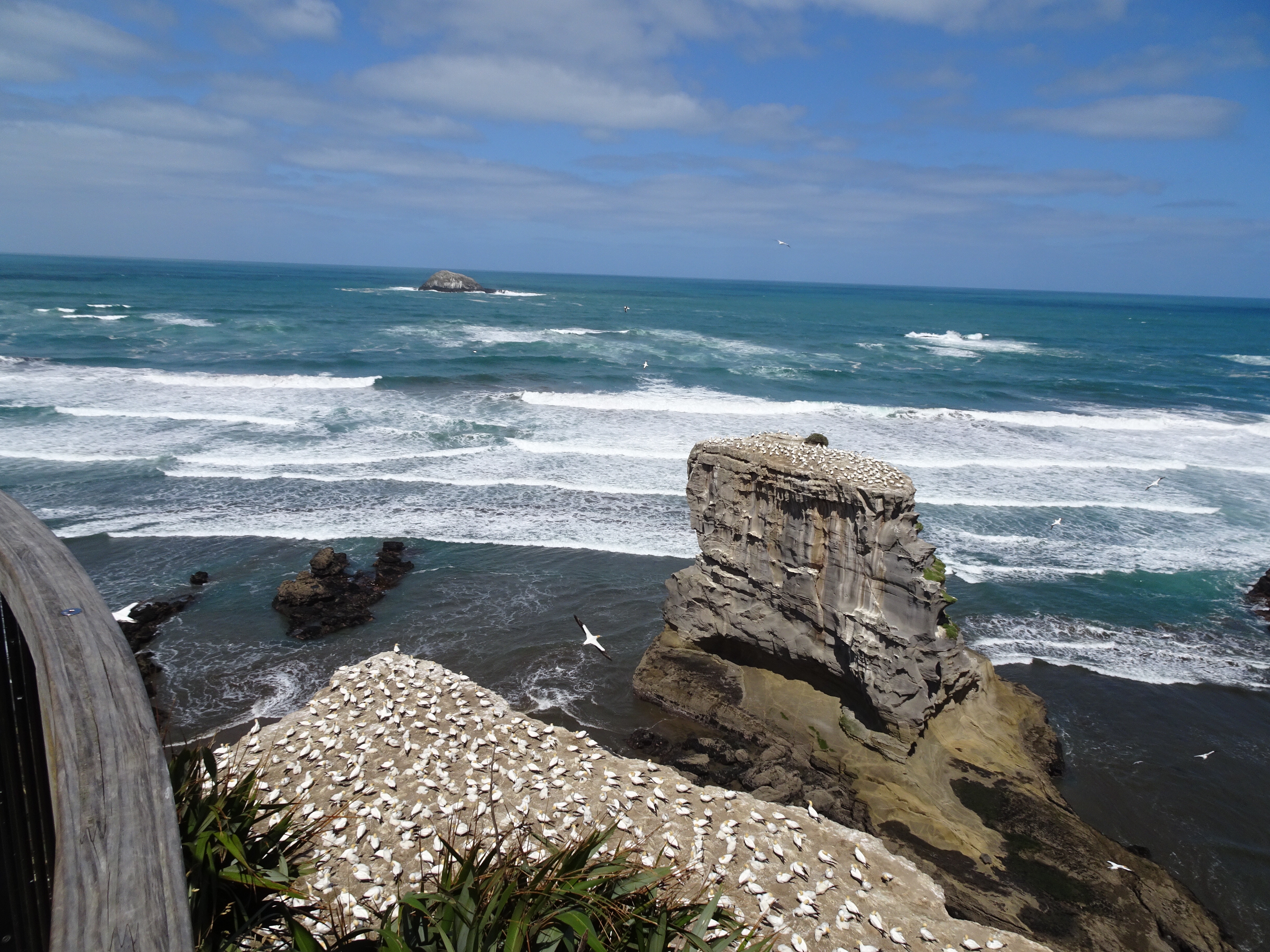
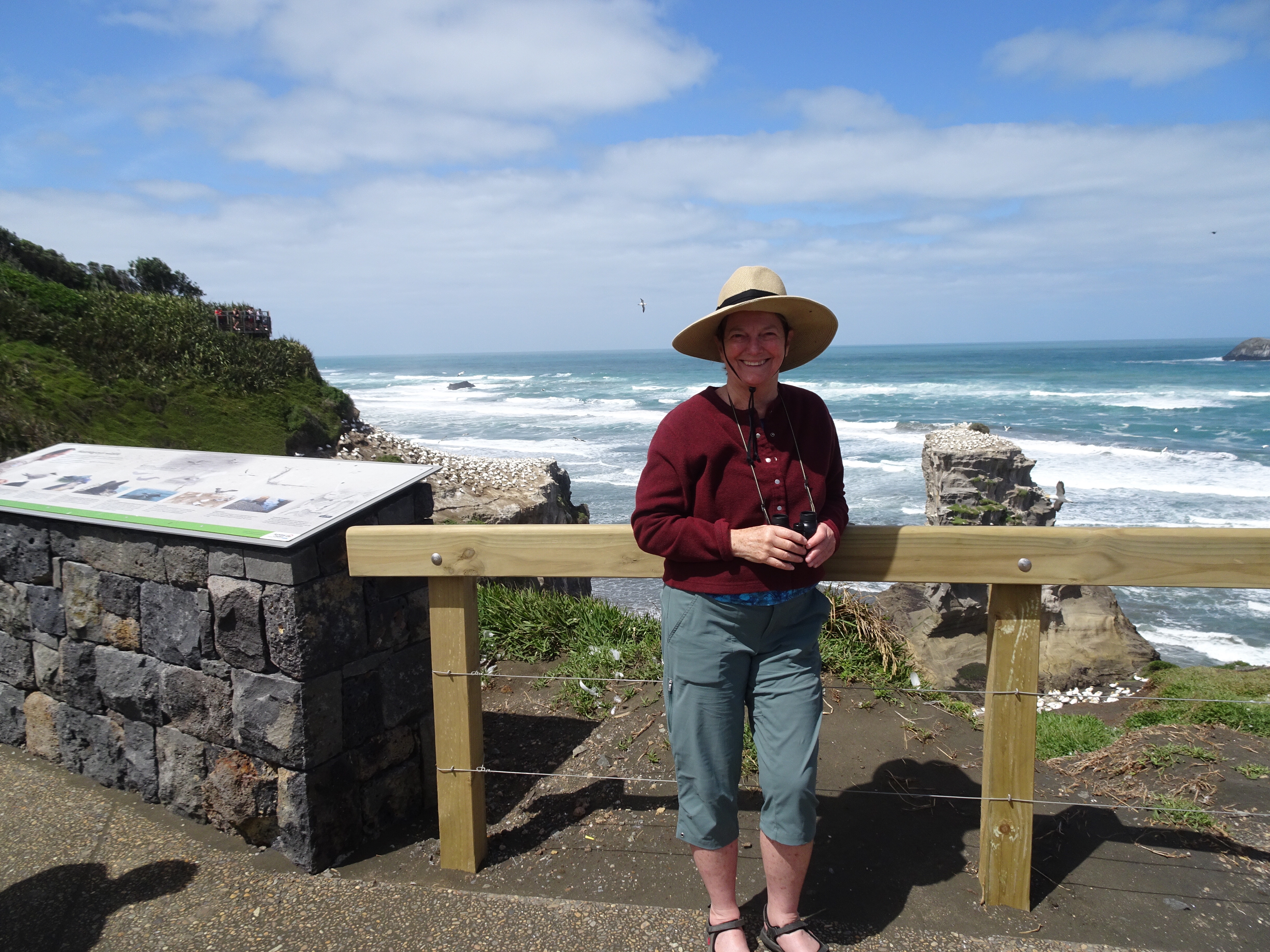
Auckland is a city of the ocean. It has two major harbors, one to the north and one to the east. The city itself has over 2000 miles of coastline, with all of its bays and curves. To the west of the city are stretches of wide open ocean, long beaches, and few people. We drove forty five minutes out to Muriwai Beach, which is home to one of three Australasian Gannet breeding colonies in the country.
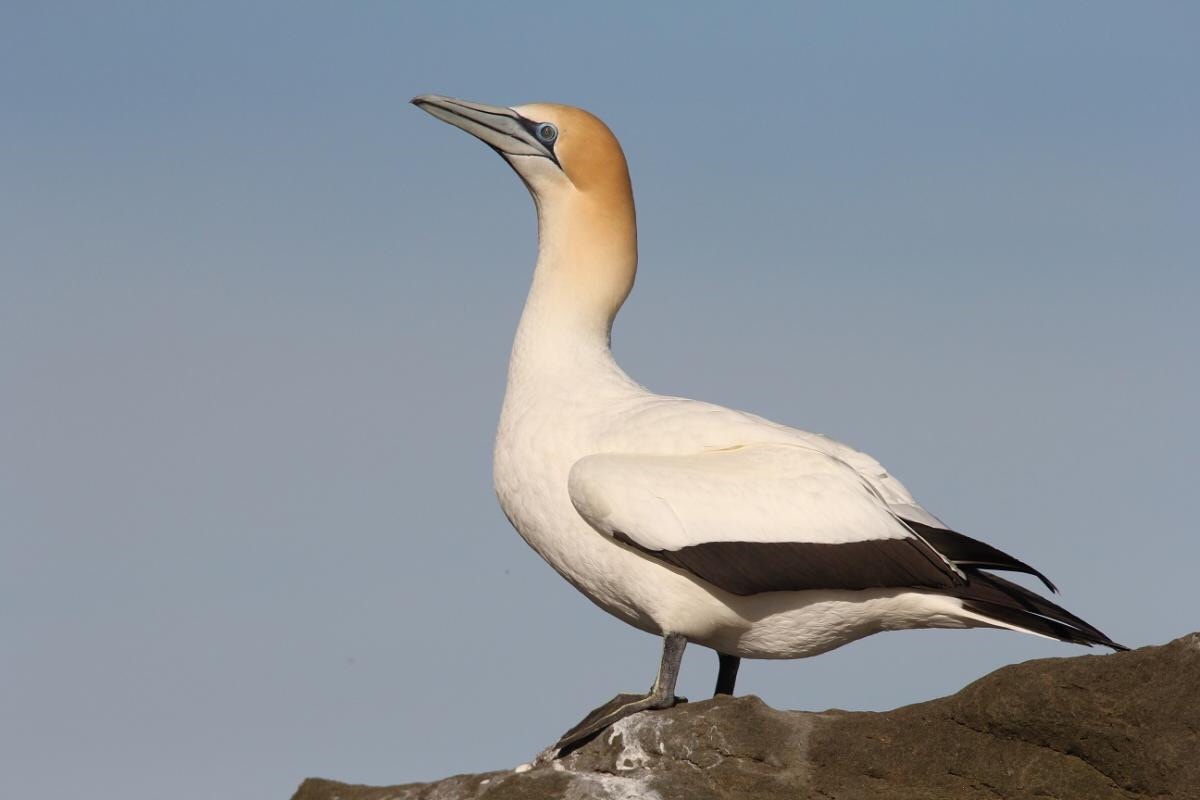
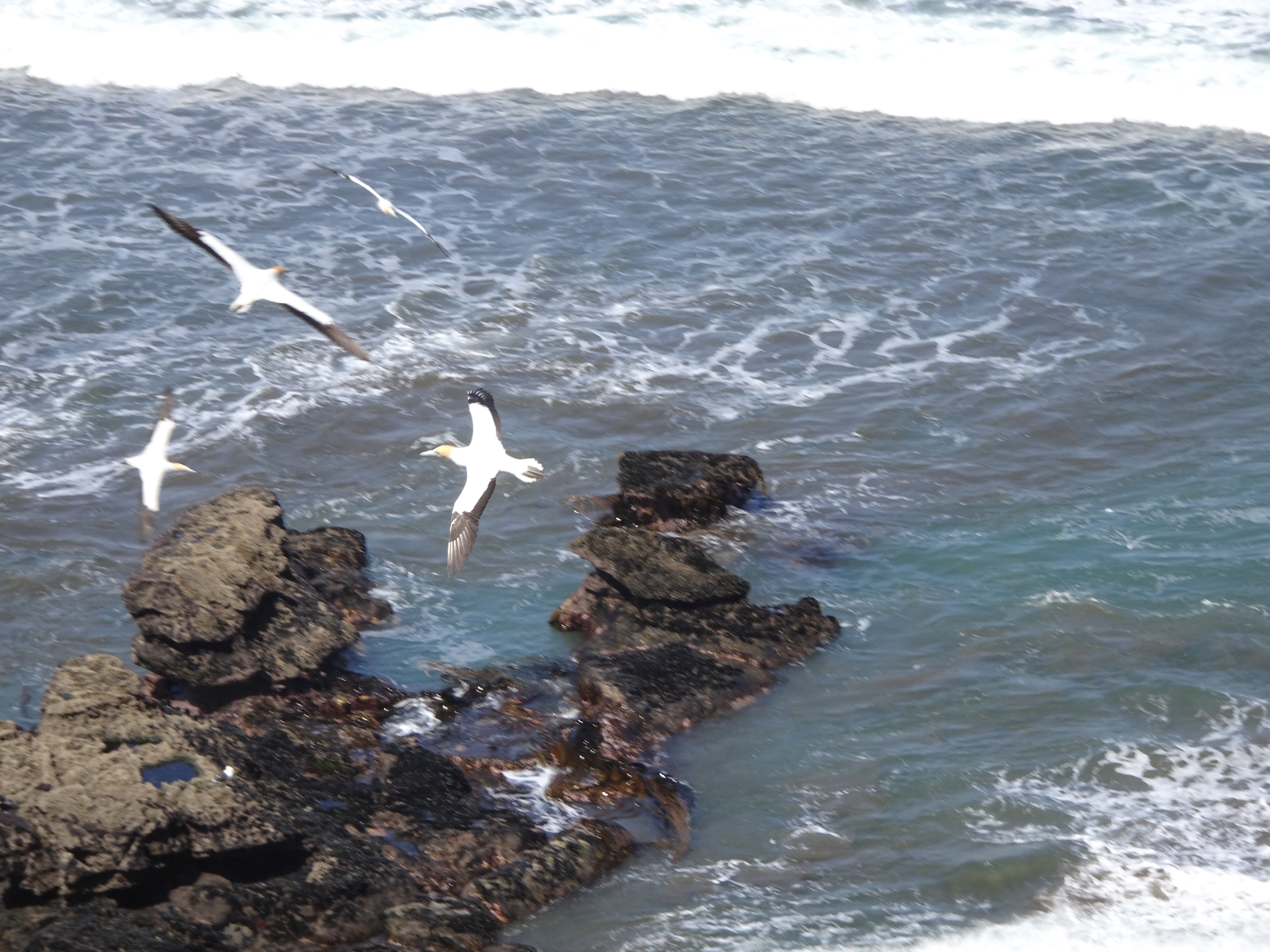
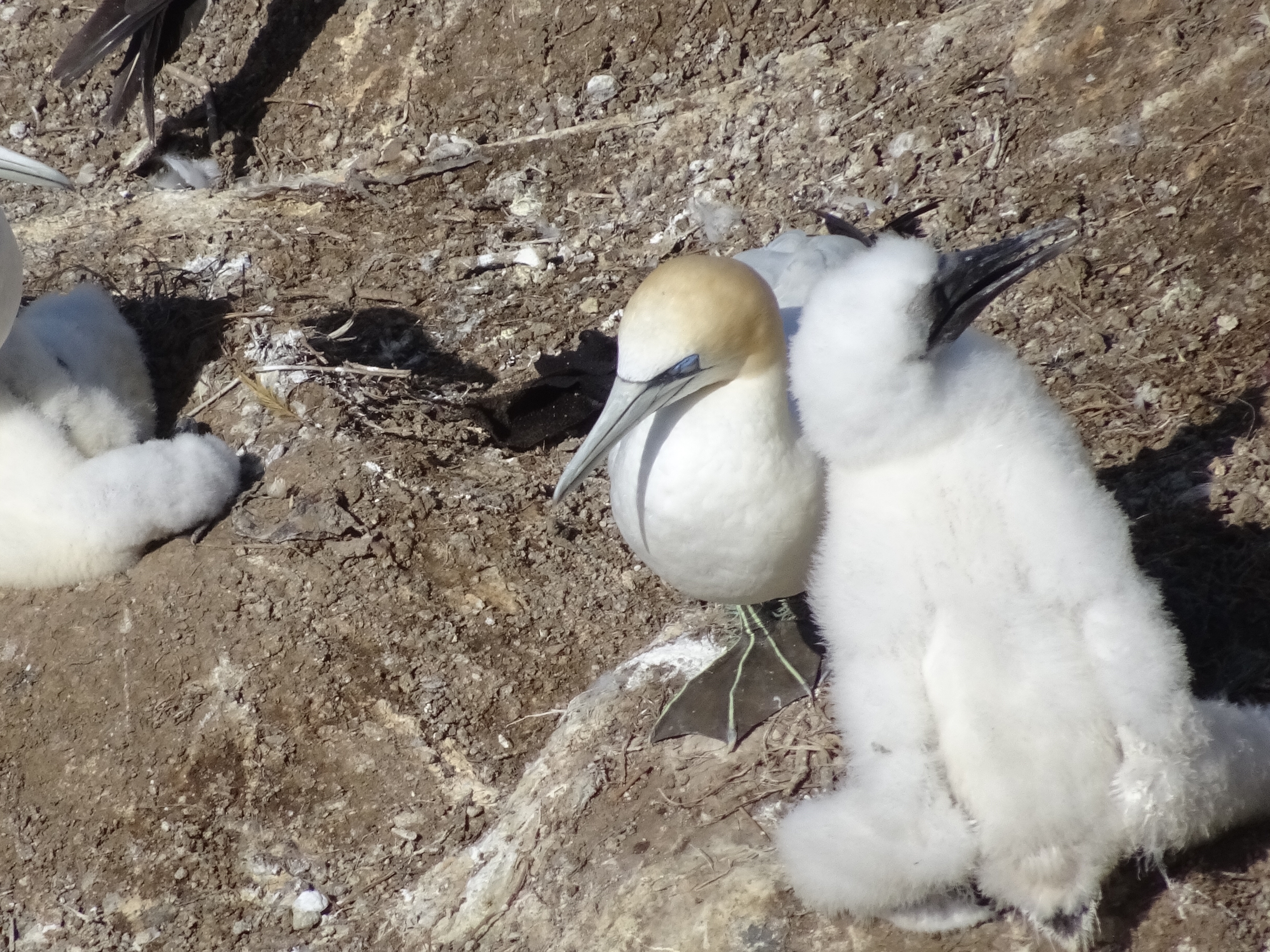
Gannets are large seabirds that are mostly in the Southern Hemisphere. There are some Northern Gannets, near New England and Western Europe, but there aren’t that many, compared to the south. The birds have a six-foot wingspan, and they soar over the ocean. They spend all of their life flying or swimming, except for when they make their little nests, lay and incubate their one egg, and care for their chick. That’s what we saw at Muriwai. The chicks were all born but not yet ready to fly. One of the parents was with the chick, and the other was off finding food. We watched them coming and going.
The birds would fly right below or above us. The chicks are getting almost as big as the parents, but are still helpless. They still have about two months or more until they fledge. Their first attempt at flight is a big step. They lift off of their rock and immediately fly over 1000 miles to Australia.There were over 2000 breeding pairs on these two rocks. Gannets need wind to get flight. They just spread their wings and off they go.
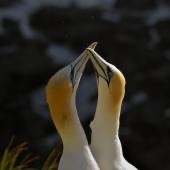
We don’t know how they know where to go. But we know that they spend three years in Australia, then they return to the rock where they were born, find a mate and raise a chick. They often stay with the same mate for life, and they return to the same breeding ground. They are very common all around New Zealand.
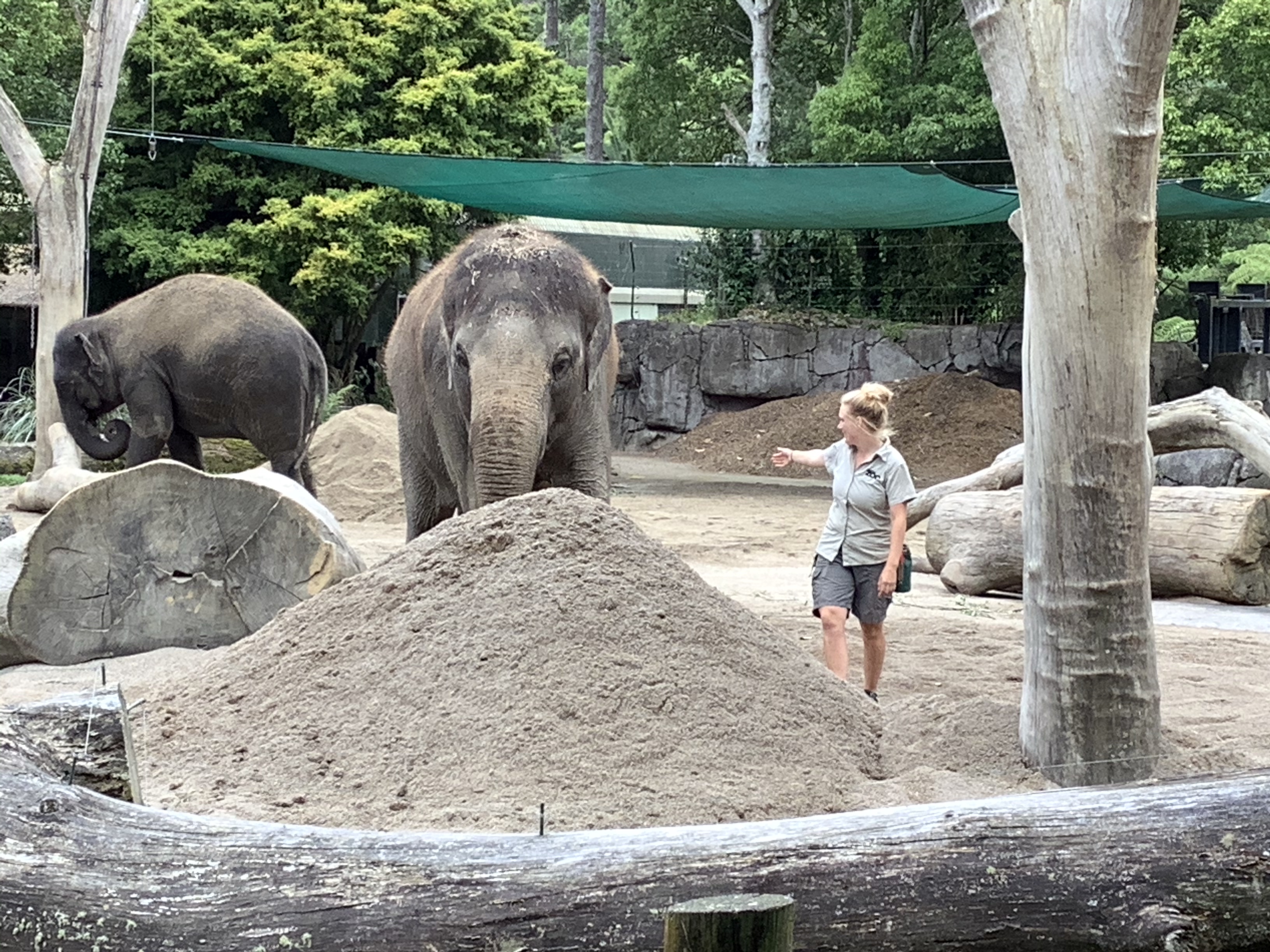
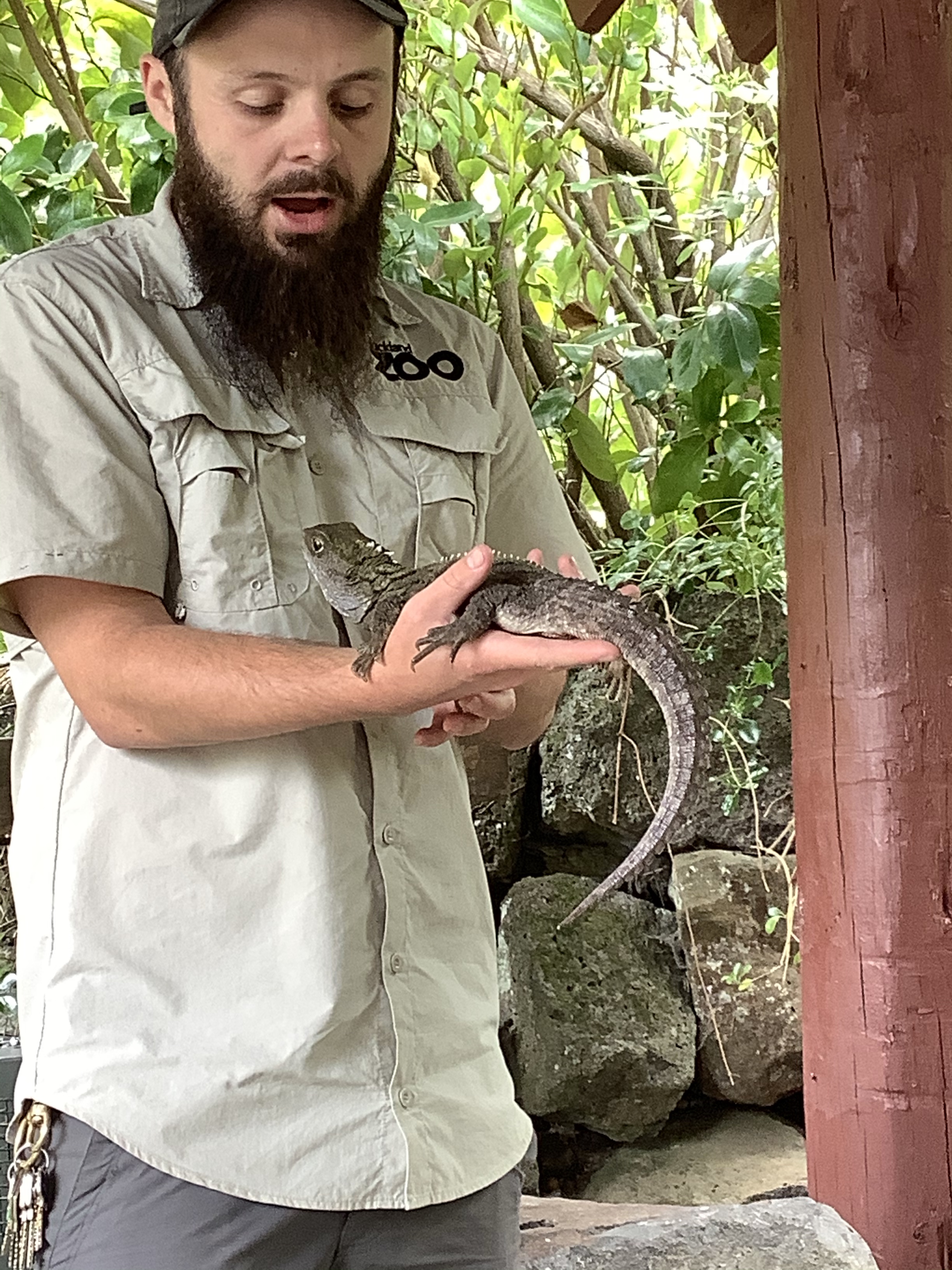
Another day we stayed in the city and went to the zoo. The zoo itself proclaims that it is “one of the best and most widely acclaimed wildlife centers in the Southern Hemisphere.” It has wide-open areas for the animals, huge forested aviaries for the birds, and very accessible keepers who give great talks and engage with the people.
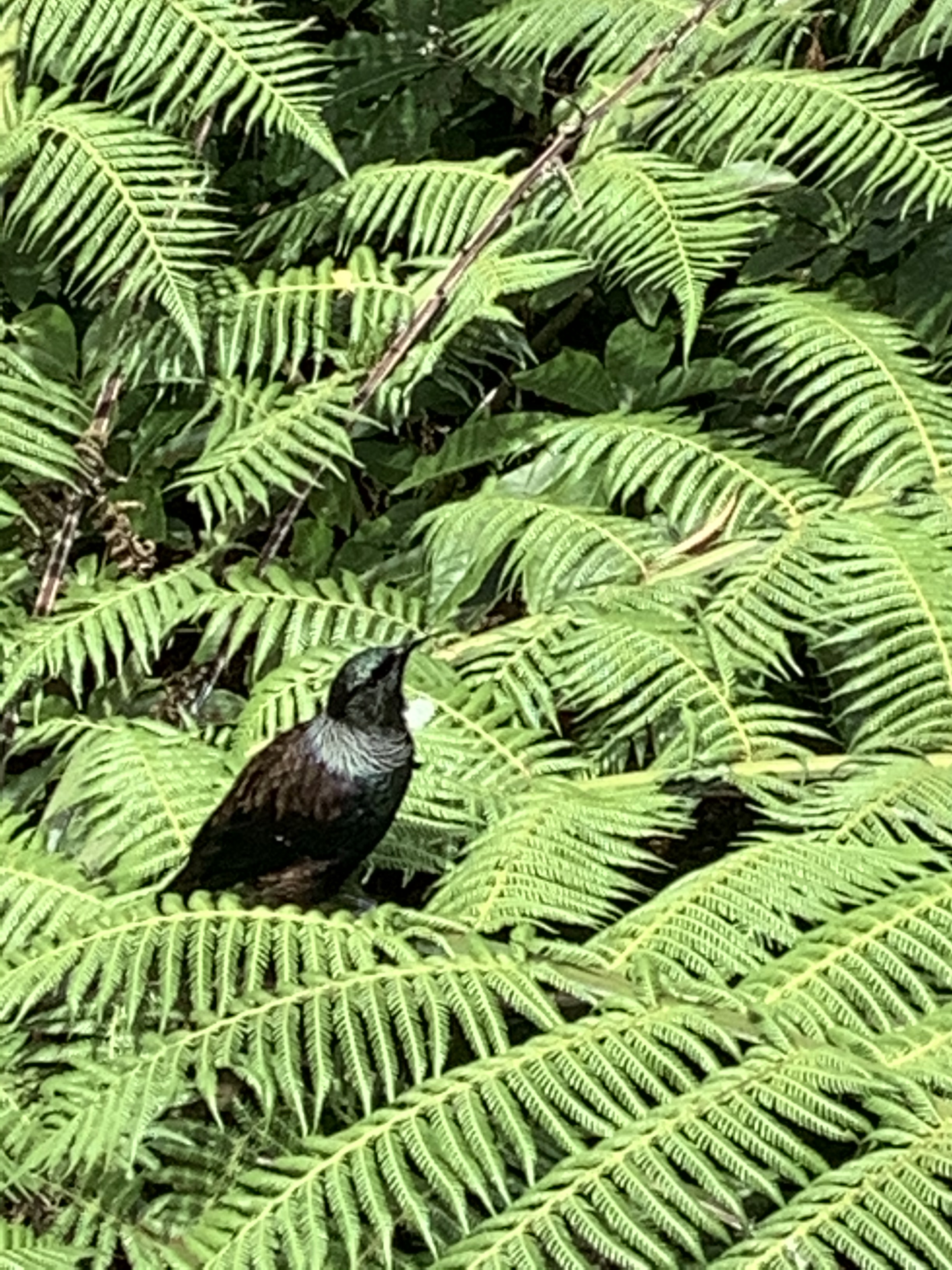
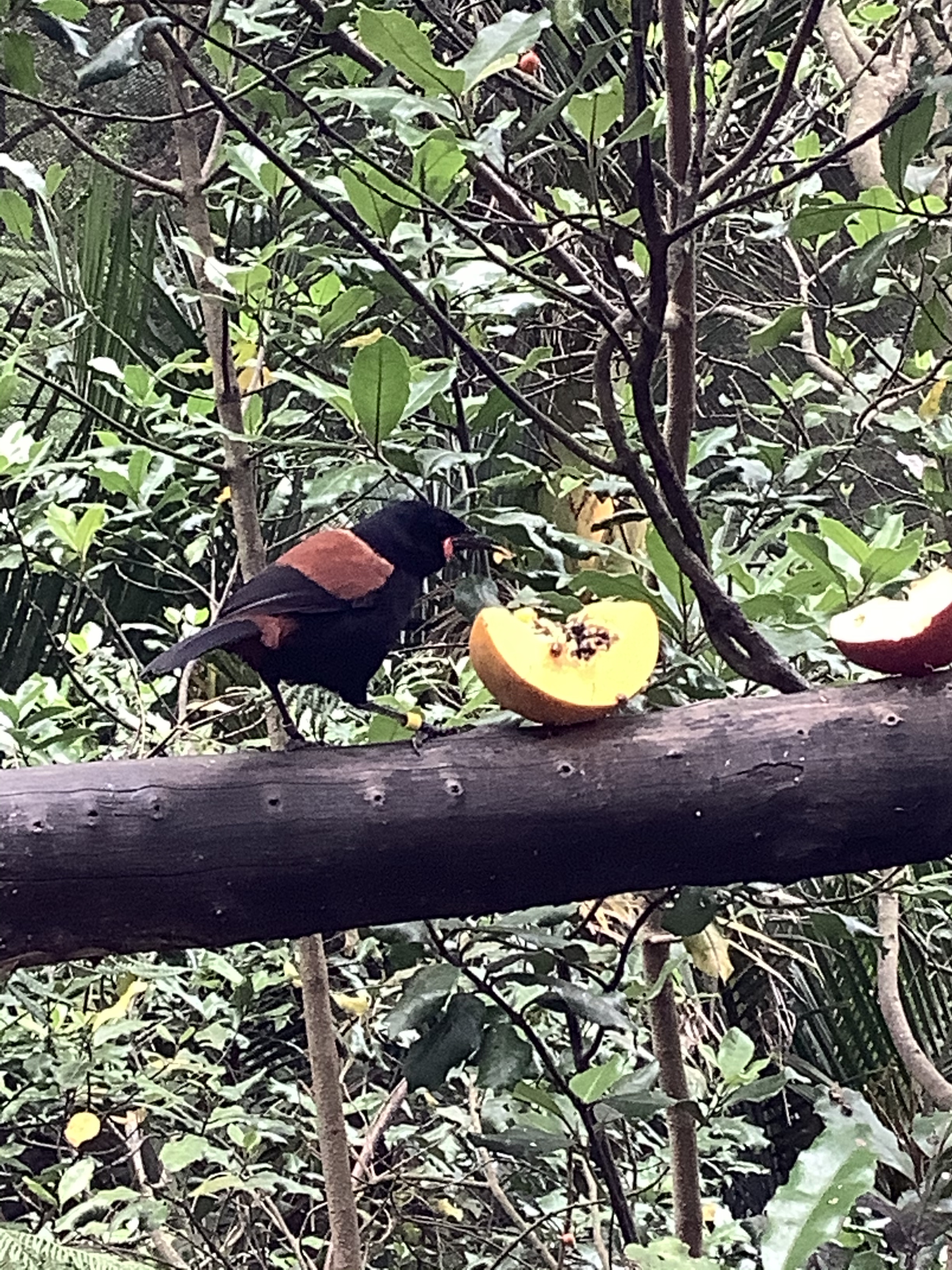
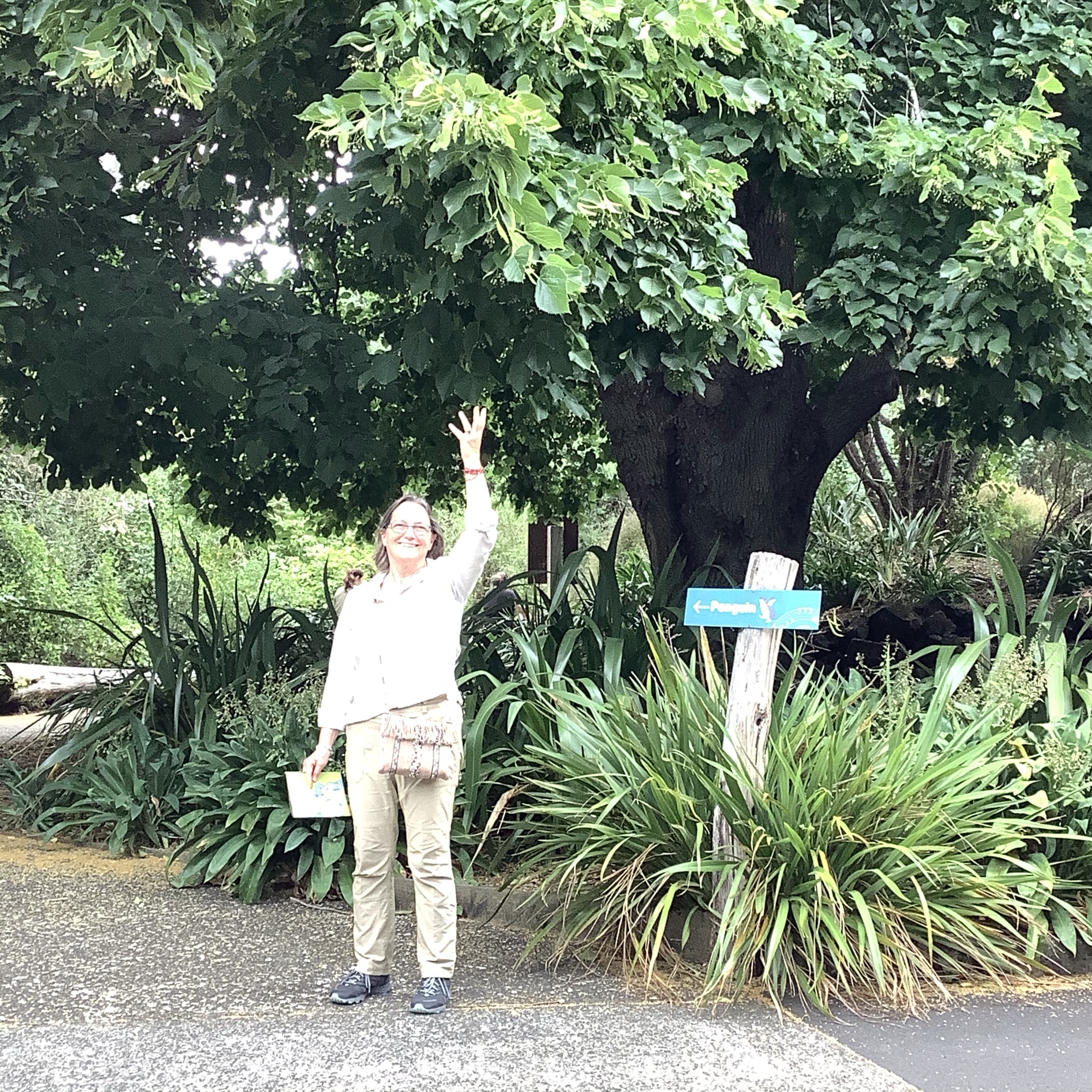
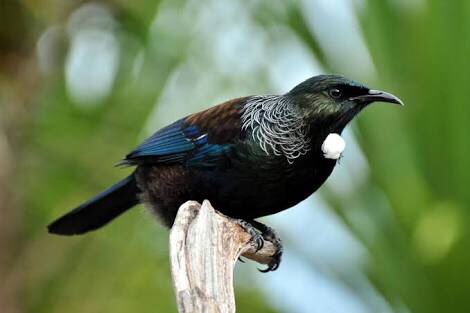
This lizard is a tuatara. New Zealand is the only place where it exists. It pre-dates the dinosaurs, going back 220 million years.Our friend the Tui. Notice the white tuft.North Island saddleback We’ll look for these birds.A linden tree in full blossom on December 20.
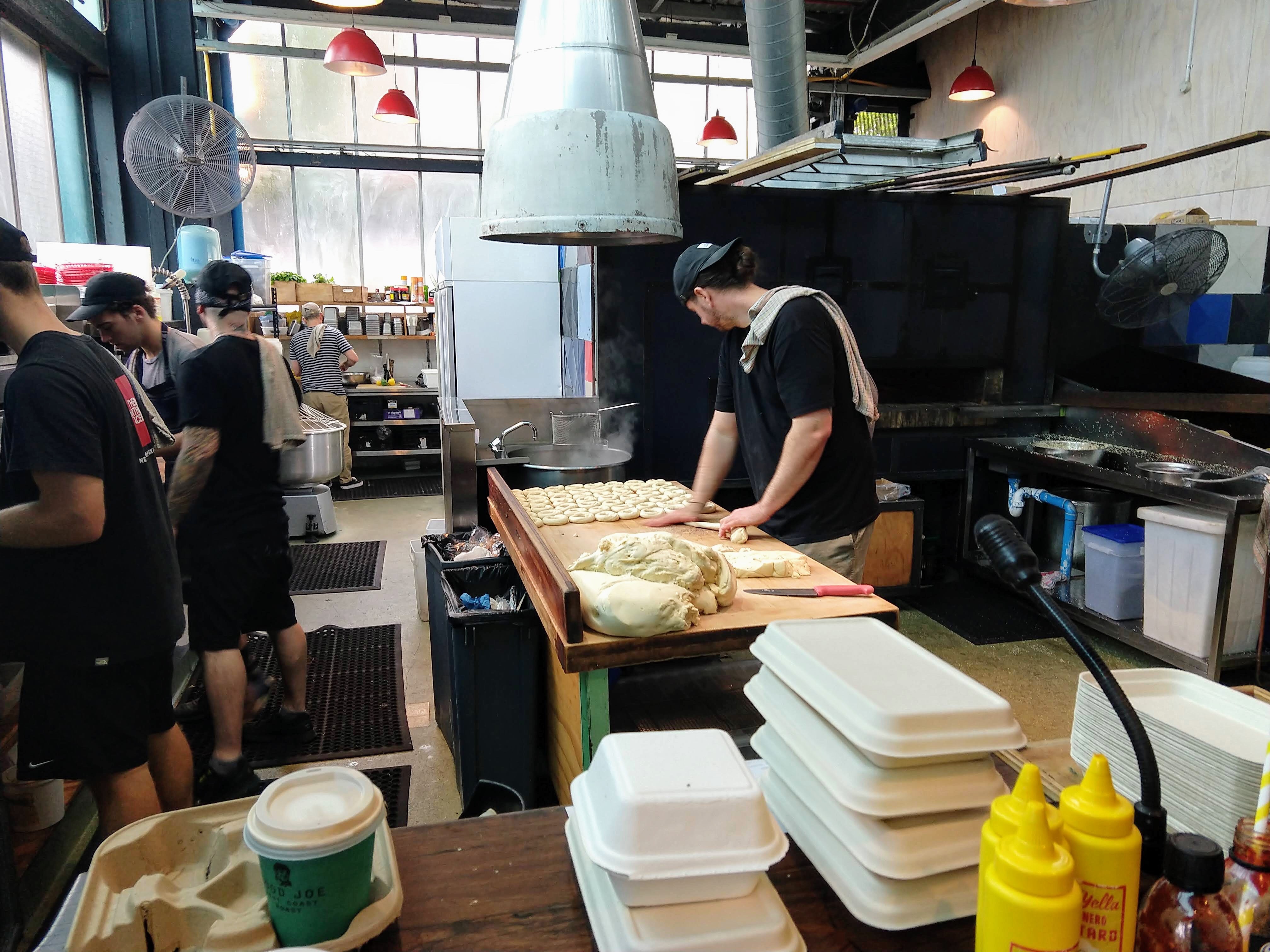
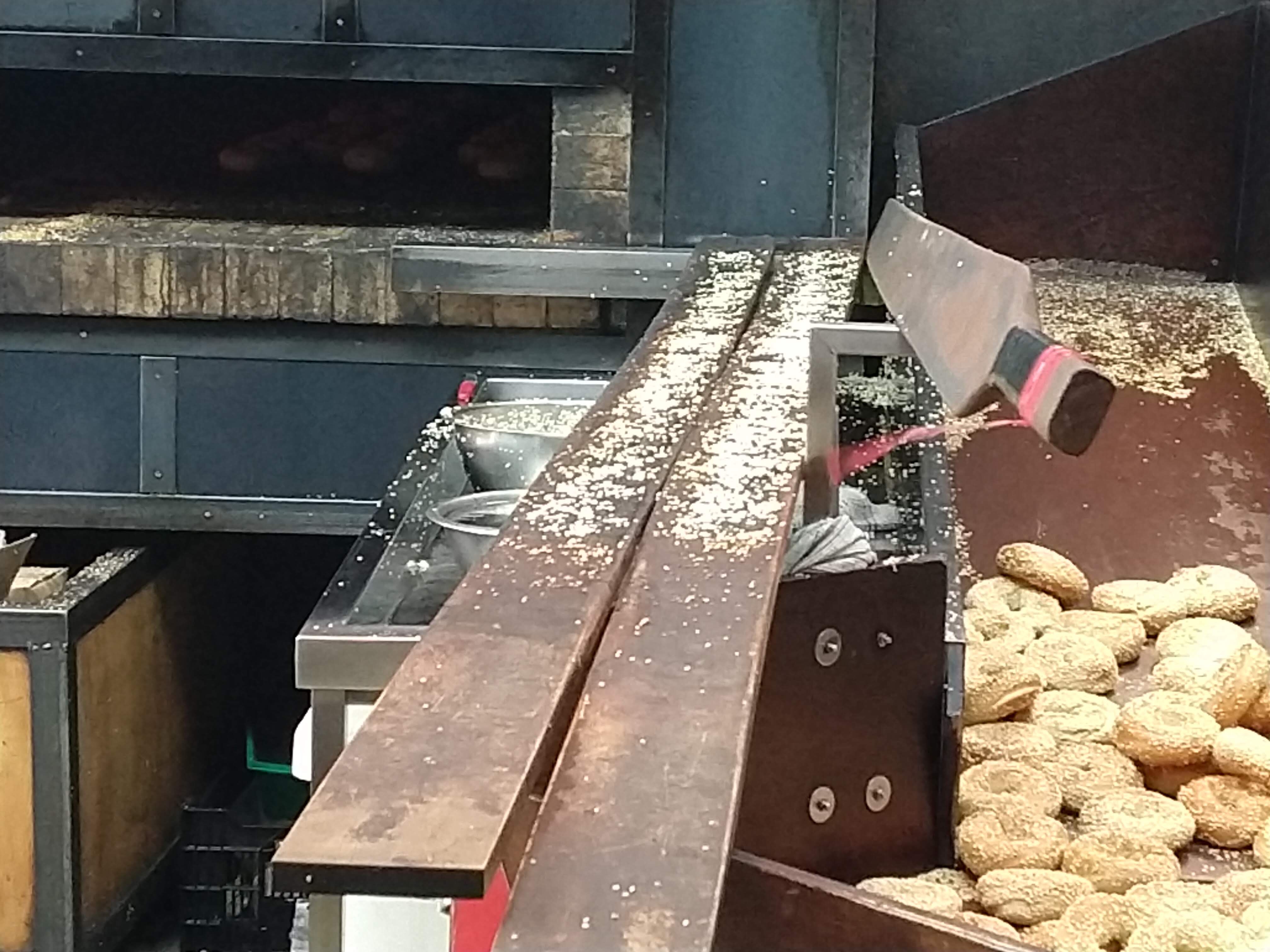
Bagels in New Zealand?
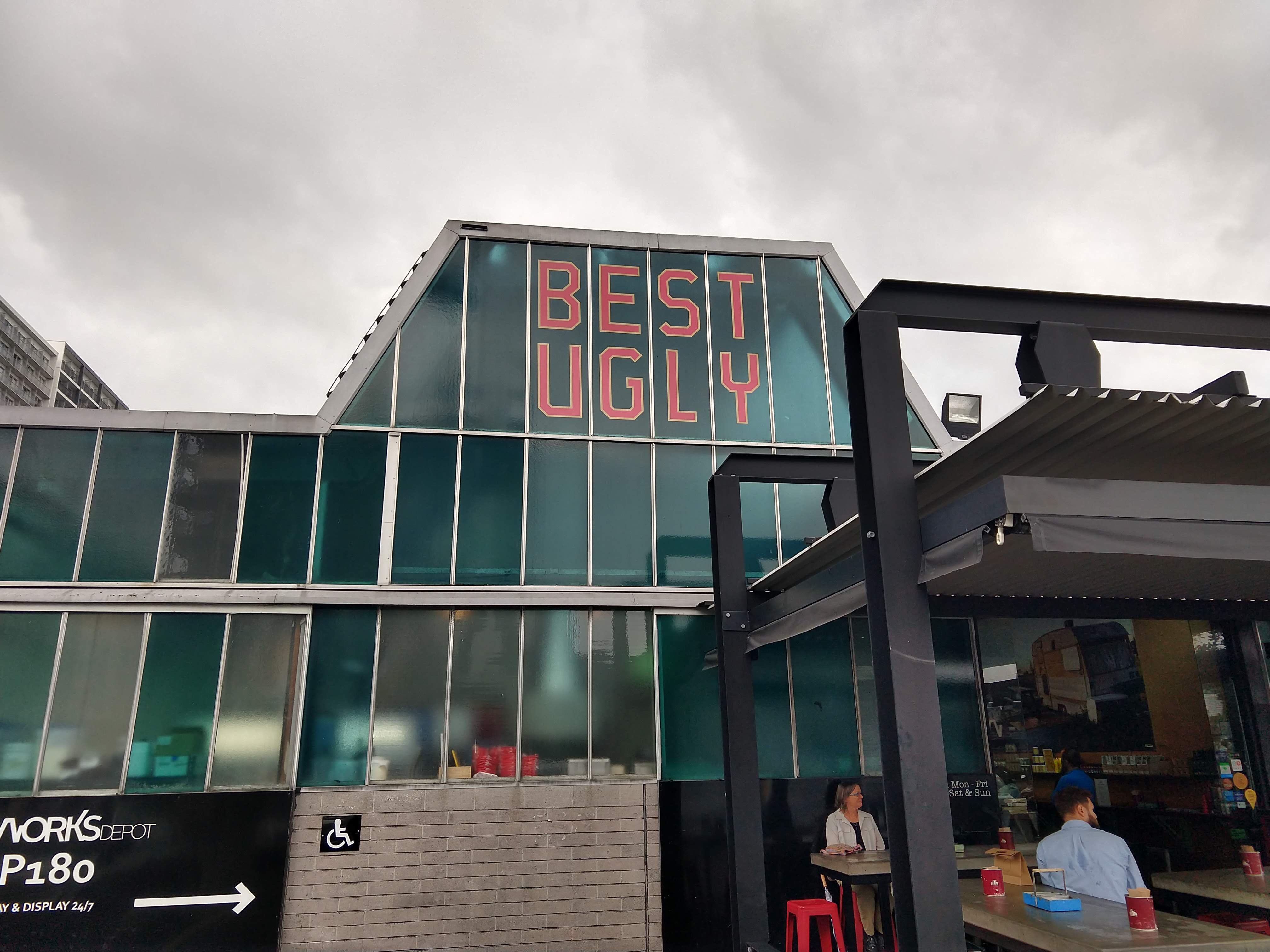
Best Ugly Bagels has a great reputation.
Right in downtown Auckland, a really good place for a great breakfast.
Holiday Time
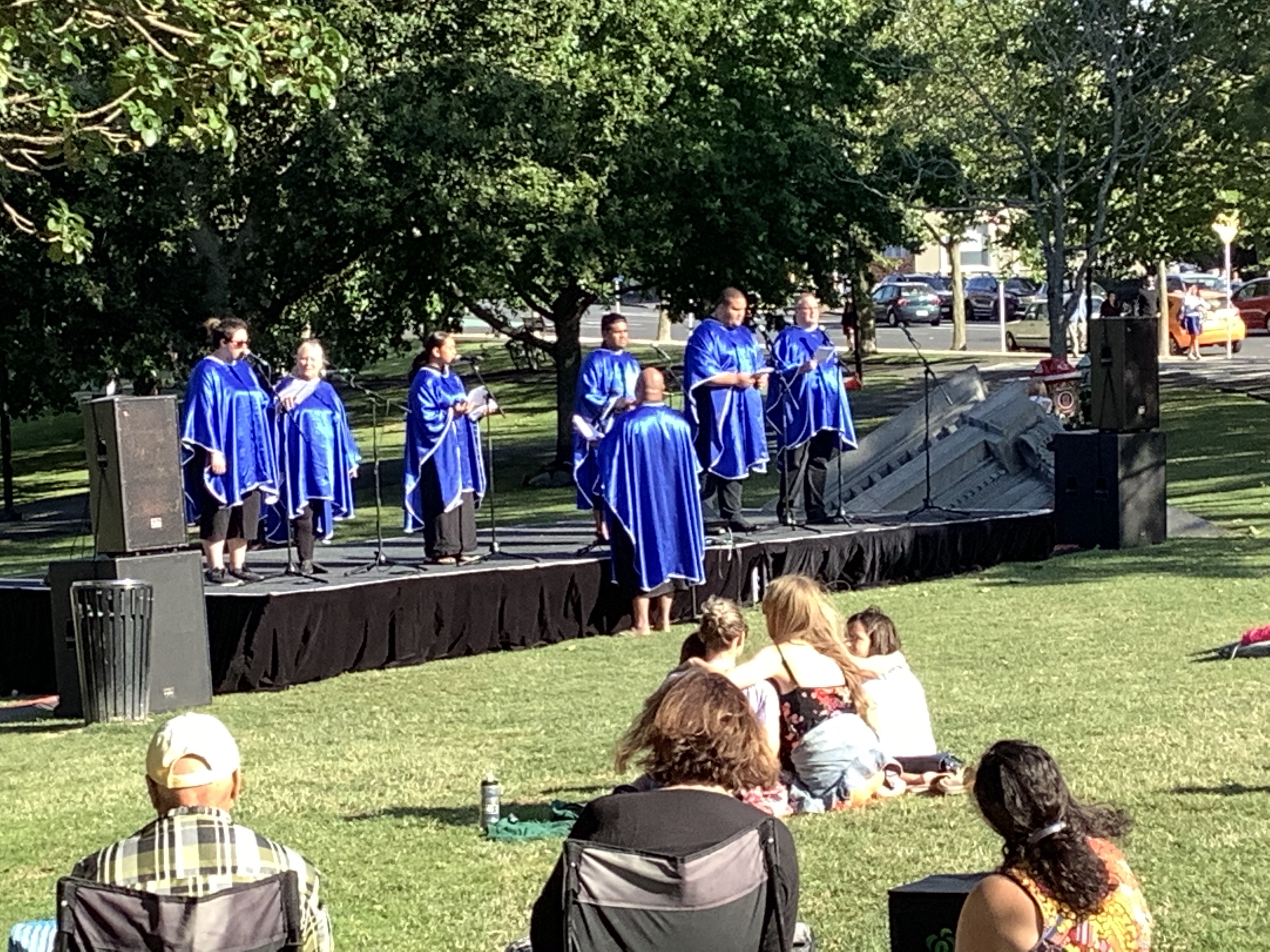
The weekend before Christmas in Auckland is sunny and bright, and there was a little Christmas concert in Western Park, right down the street from where we stayed. The singers were mostly from Samoa, and they sang some traditional and some non-traditional Christmas songs. It was definitely a neighborhood thing.
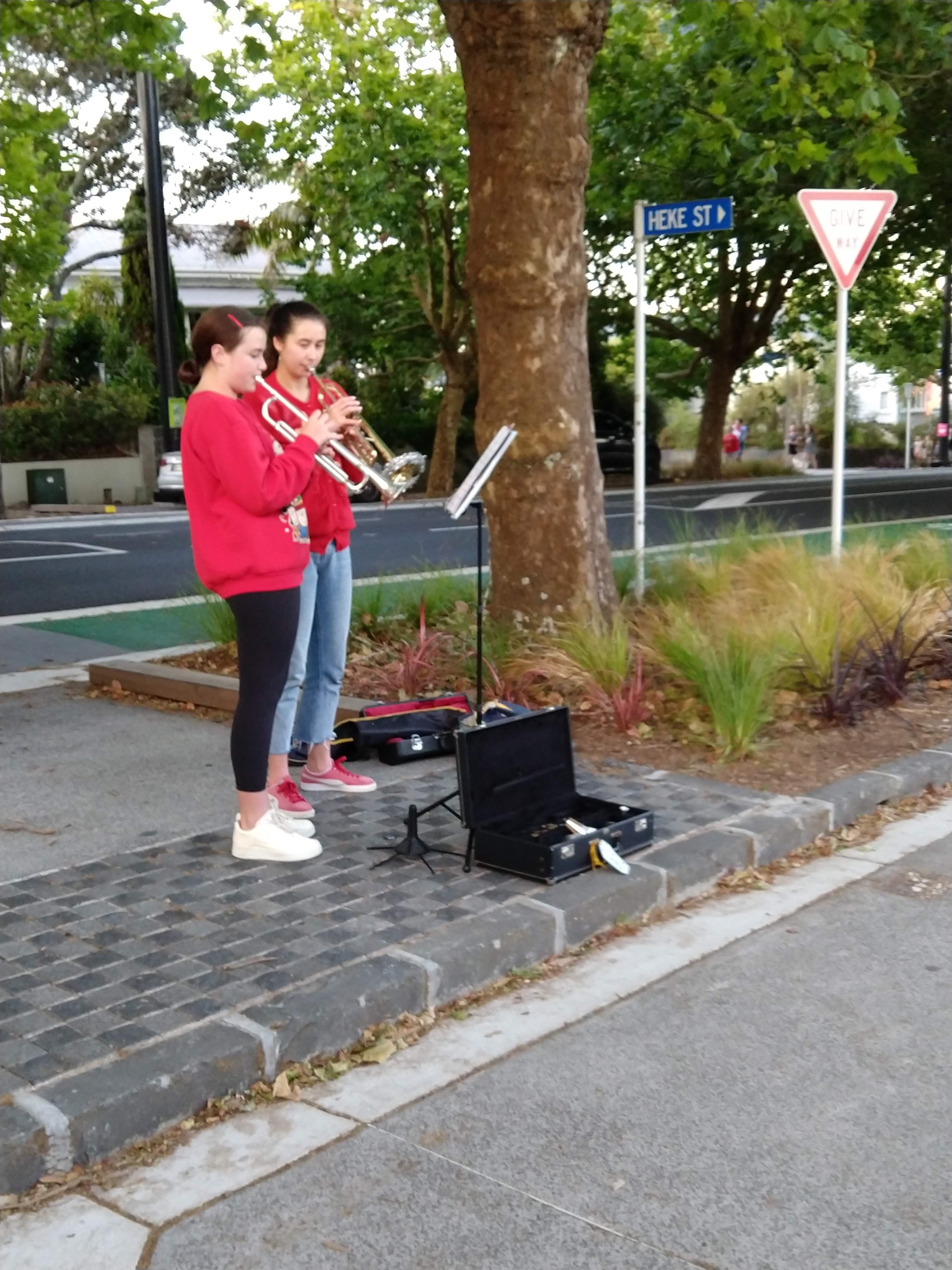
They started with the New Zealand national anthem, sung both in Maori and in English. Some people had little picnics.Nearby residential street known for its Christmas light displays attracts swarms of families with kids. We heard the city gives residents discounts on December’s electric bills and sets up port-a-loos. Buskers also set up shop.
Waiheke Island
We went to Waiheke Island on our last day in Auckland. It’s just a half-hour ferry ride from downtown, with boats leaving every half-hour. There are 10,000 permanent residents, and the whole island is kind of like Auckland’s personal getaway. Summer homes. Boats. Beaches. And——-two words that can bring joy to hearts everywhere——-Wine and Food.
There are thirty six wineries on Waiheke. The island is not really much larger than Manhattan. Waiheke is cradled in the Hauraki Gulf, geographically protected from winds and clouds by the mainland and other islands, and has a climate perfectly suited for grapes.
Waiheke has a history of being an alternative type of place. It was a 60’s era hippie discovery, kind of like a South Pacific Ibiza, and now it is still very laid-back with a certain alternative buzz, but…..
There are all those wineries, and the people that wineries attract. There is also a sizable number of young European and American travelers who can live here and extend their visas by being agricultural workers—-working with the grapes.
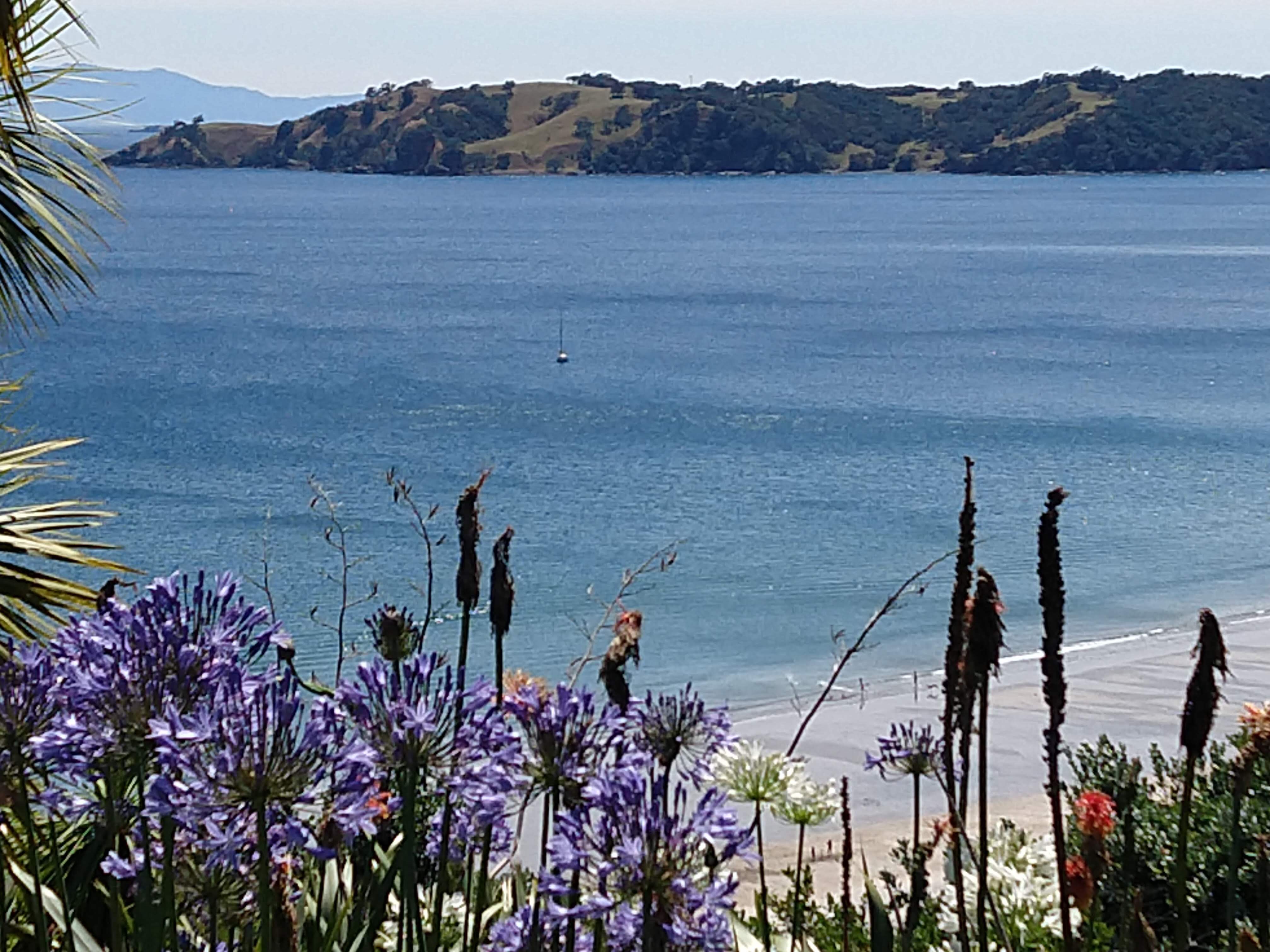
Sweeping vistas and beautiful beaches. We could see Great Barrier Island in the distance.
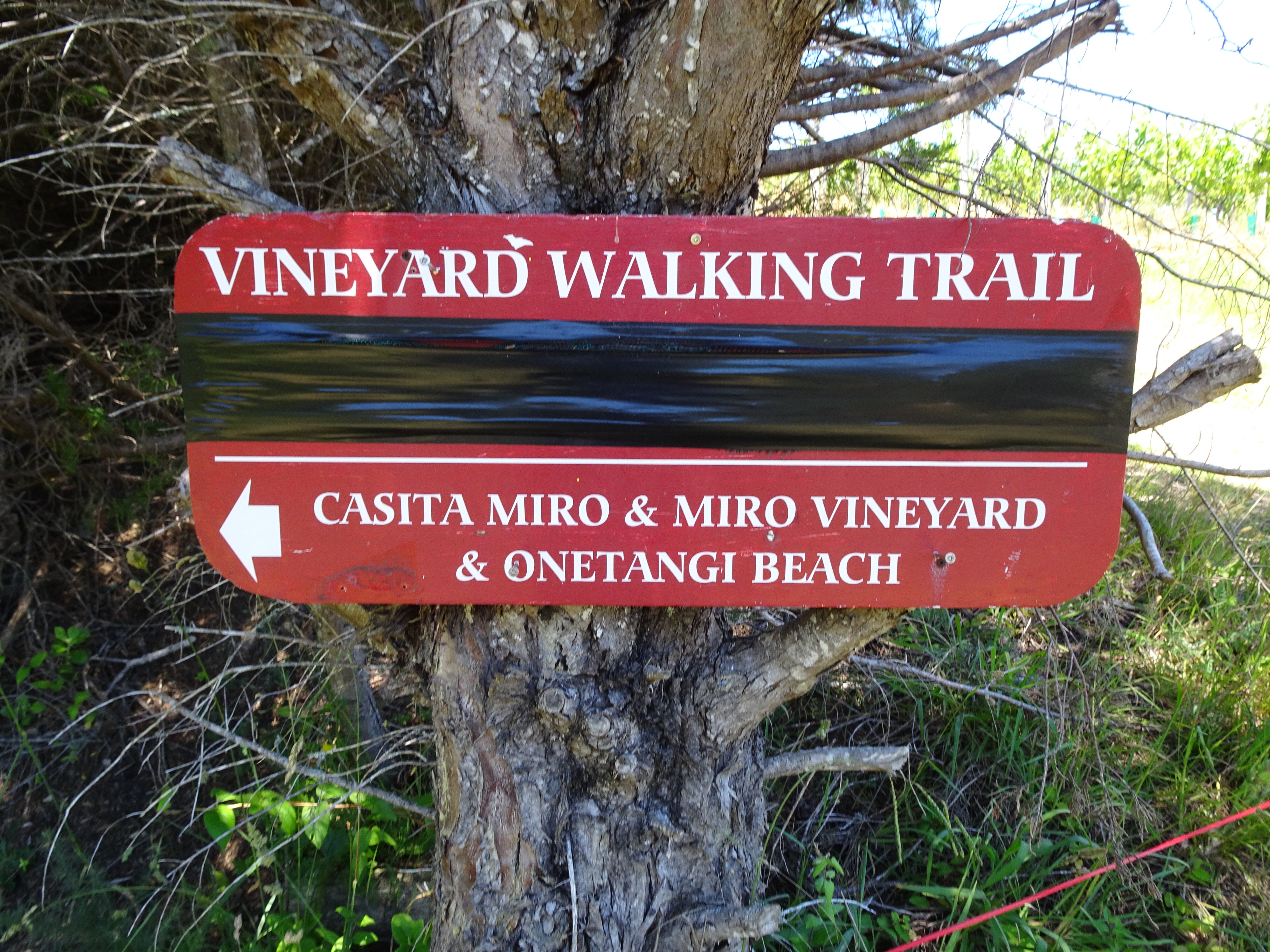
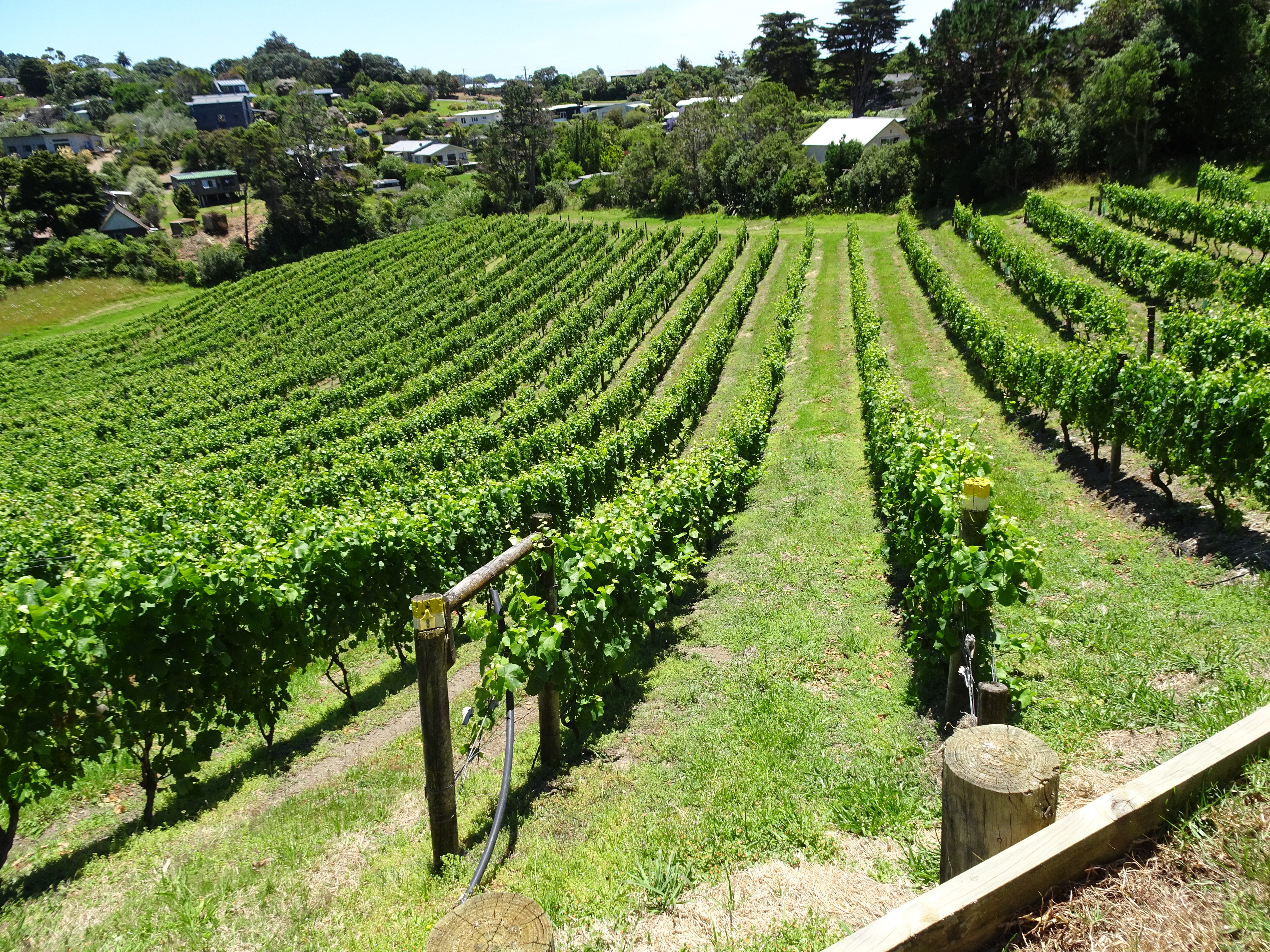
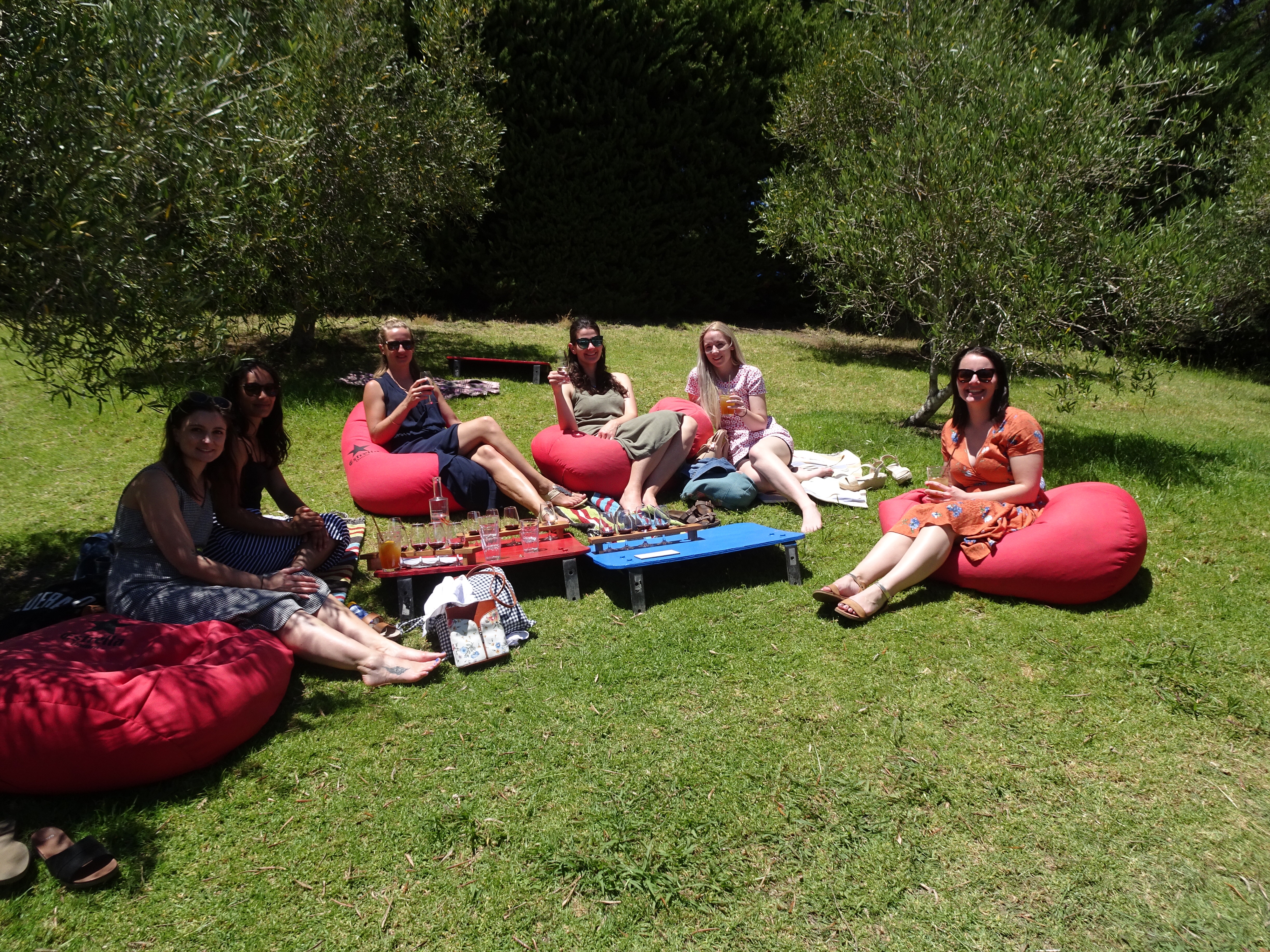
We took a bus to the end of the route, then walked about a half hour to a winery and restaurant called Casita Miro. We were attracted by the Spanish menu, and they did have great food and wine. It being the weekend before Christmas, the place was full of Aucklanders, reveling in their holidays.
Wine and beachesWine tasting and lounging.
Leaving Auckland behind, we head south to Rotorua.
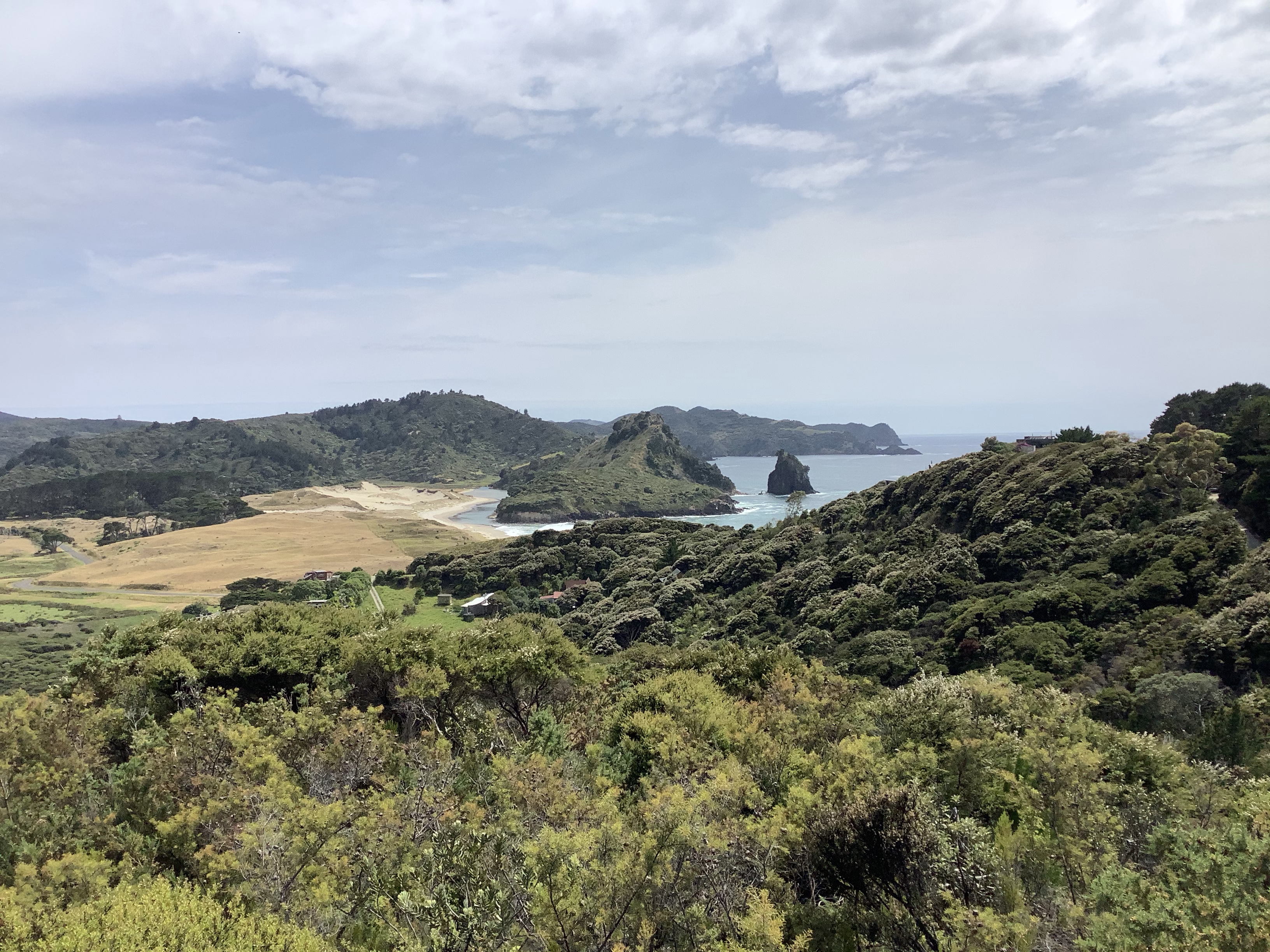
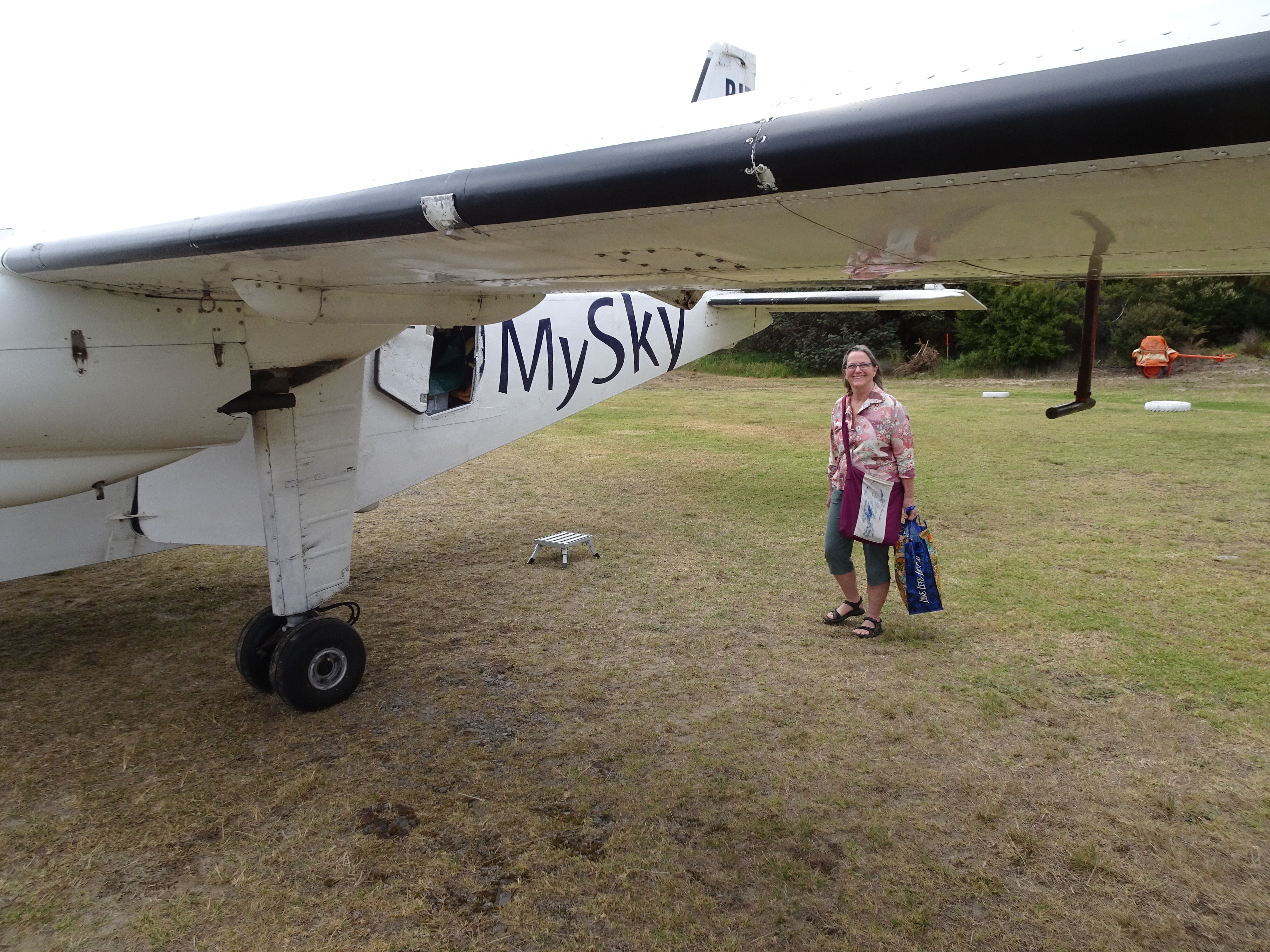
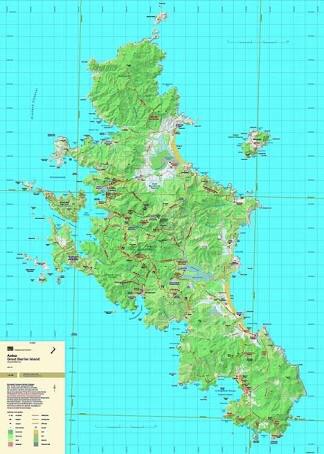
Great Barrier Island, or Aotea, is located about sixty miles northwest of Auckland. We flew there from the mainland and spent a quiet week, hiking on some of the trails, strolling on some of the beaches, driving on some of the roads, listening to birds, relaxing in our island home, and enjoying the peace and quiet. Aotea is about twenty five miles long, and two miles at its widest. There are about 950 residents.
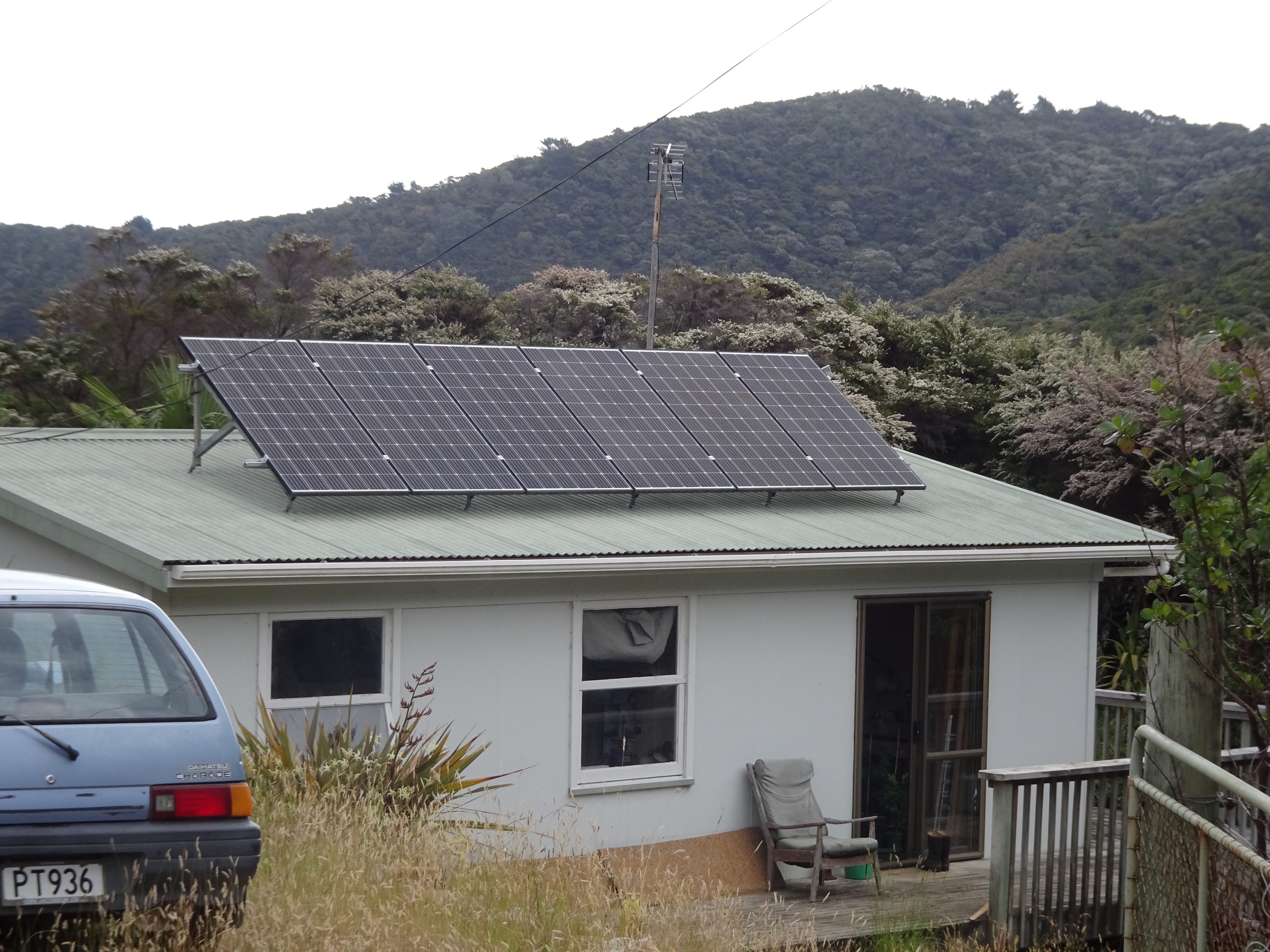
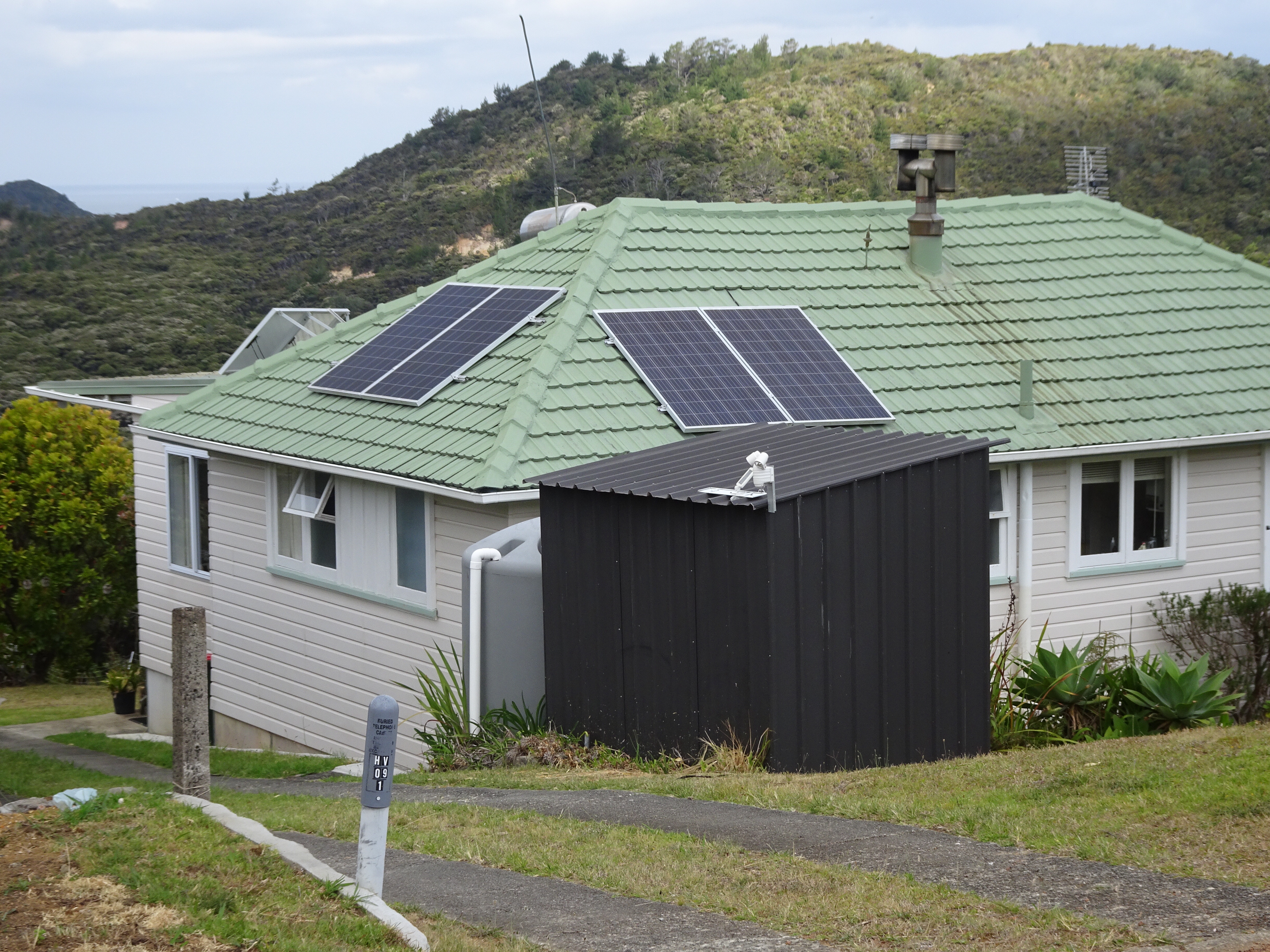
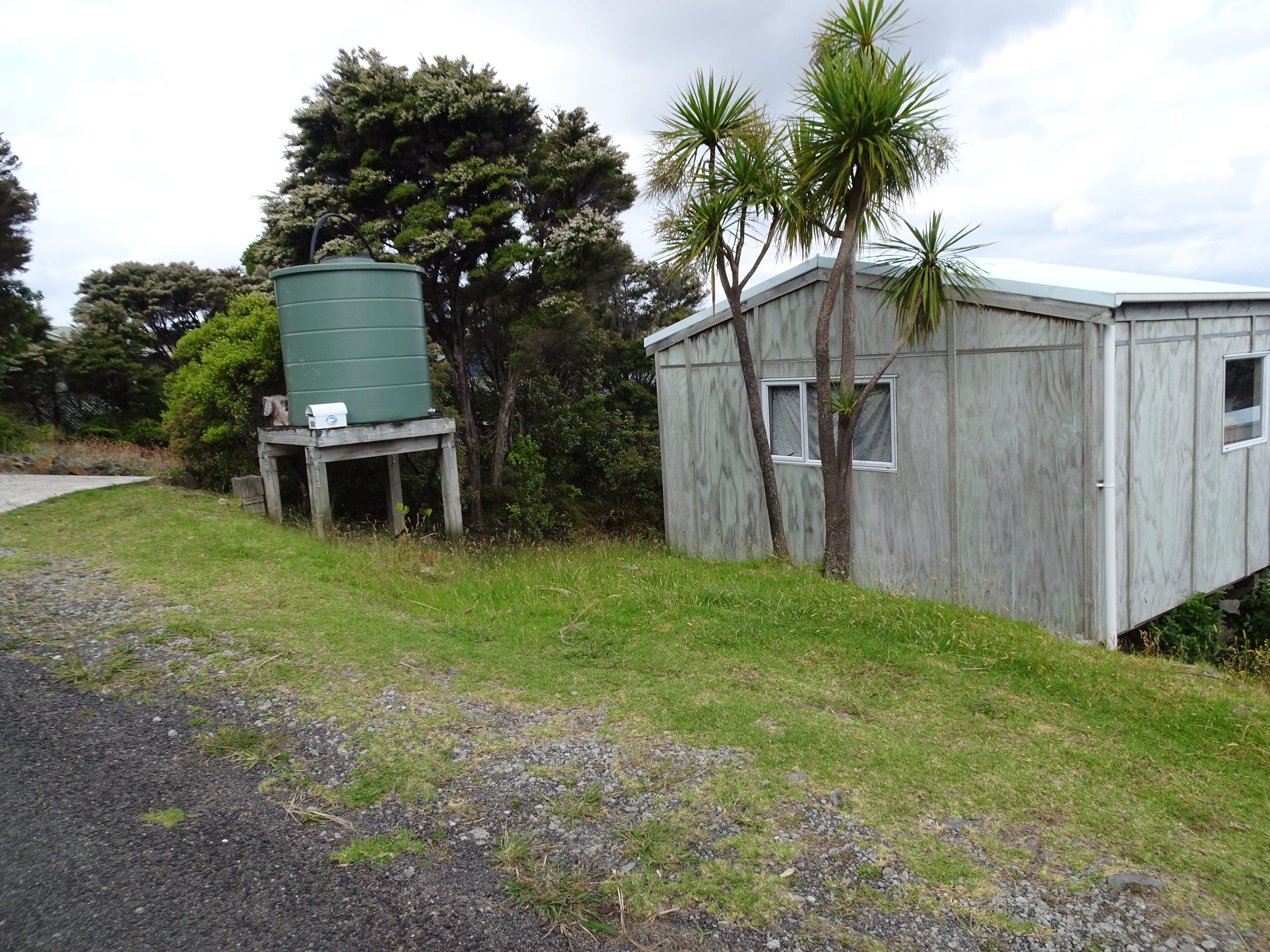
The entire island is off-grid. The only electricity is solar, or in a few cases, by generator. Every residence and business produces its own electricity and collects its own water. Even though it seems quite remote now, just a couple of decades ago it was primitive in comparison. The advent of solar technology, cell phones, and paved roads have drastically changed the character of the island. People really started using solar power just twenty years ago, and the main road was just fully sealed five years ago. Even in the 1980’s and 90’s, people here were isolated by rough dirt roads and limited means of communication. Today people can flick a switch on and off and surf the web and make phone calls to anywhere in the world, but the spirit of self-reliance continues.
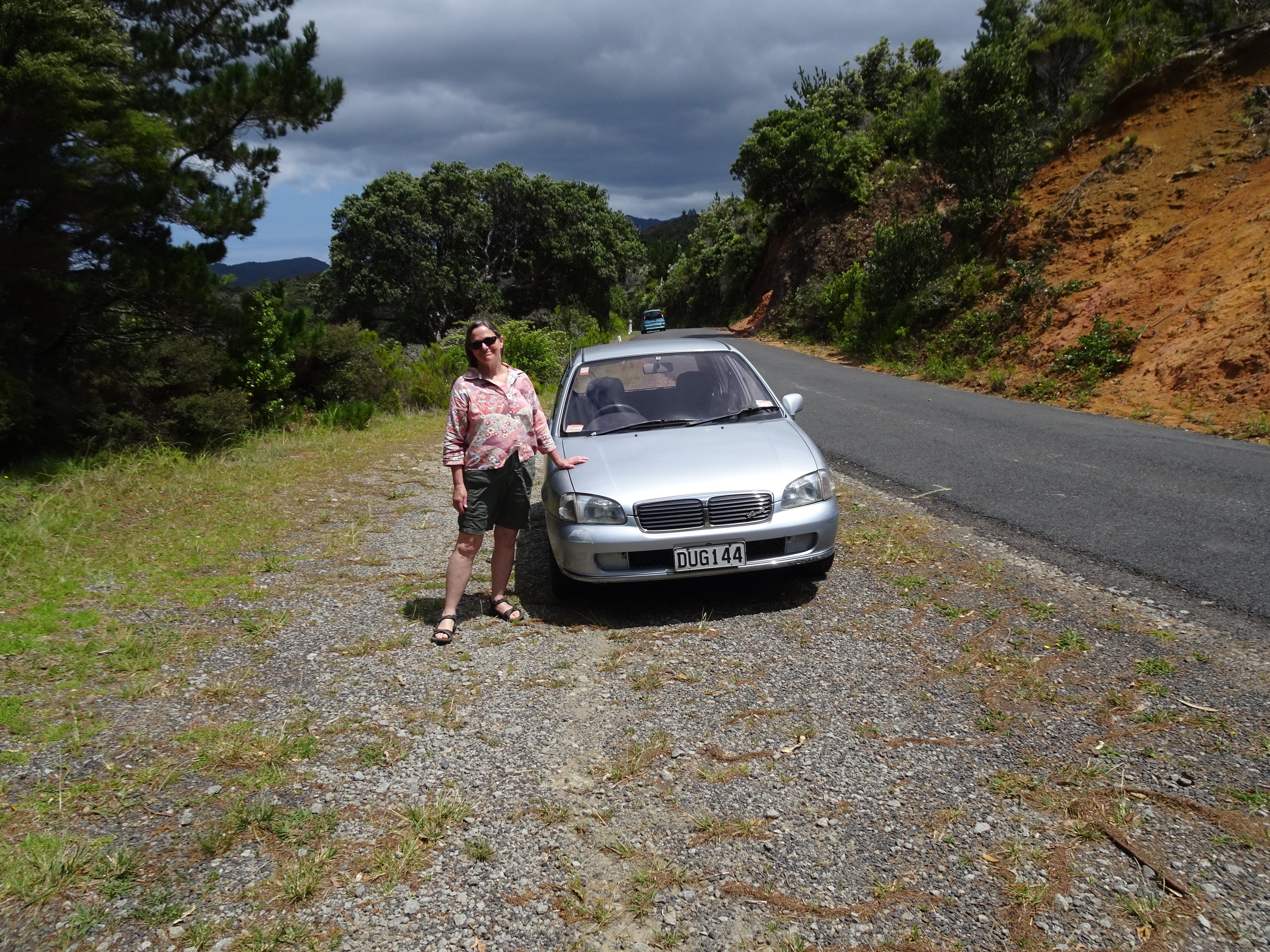
There are no streetlights, no banks, no grocery stores, (small general stores, yes) no ATMs, no markings on the windy narrow roads. Driving on the left was a challenge at first. I was really scared when Monica was driving, and she was really scared when I was driving. The passenger often thought that we were way too close to the road’s edge. When we first got the car, one bloke told us that the island is a great place to learn, because there almost never is a car coming the other way.
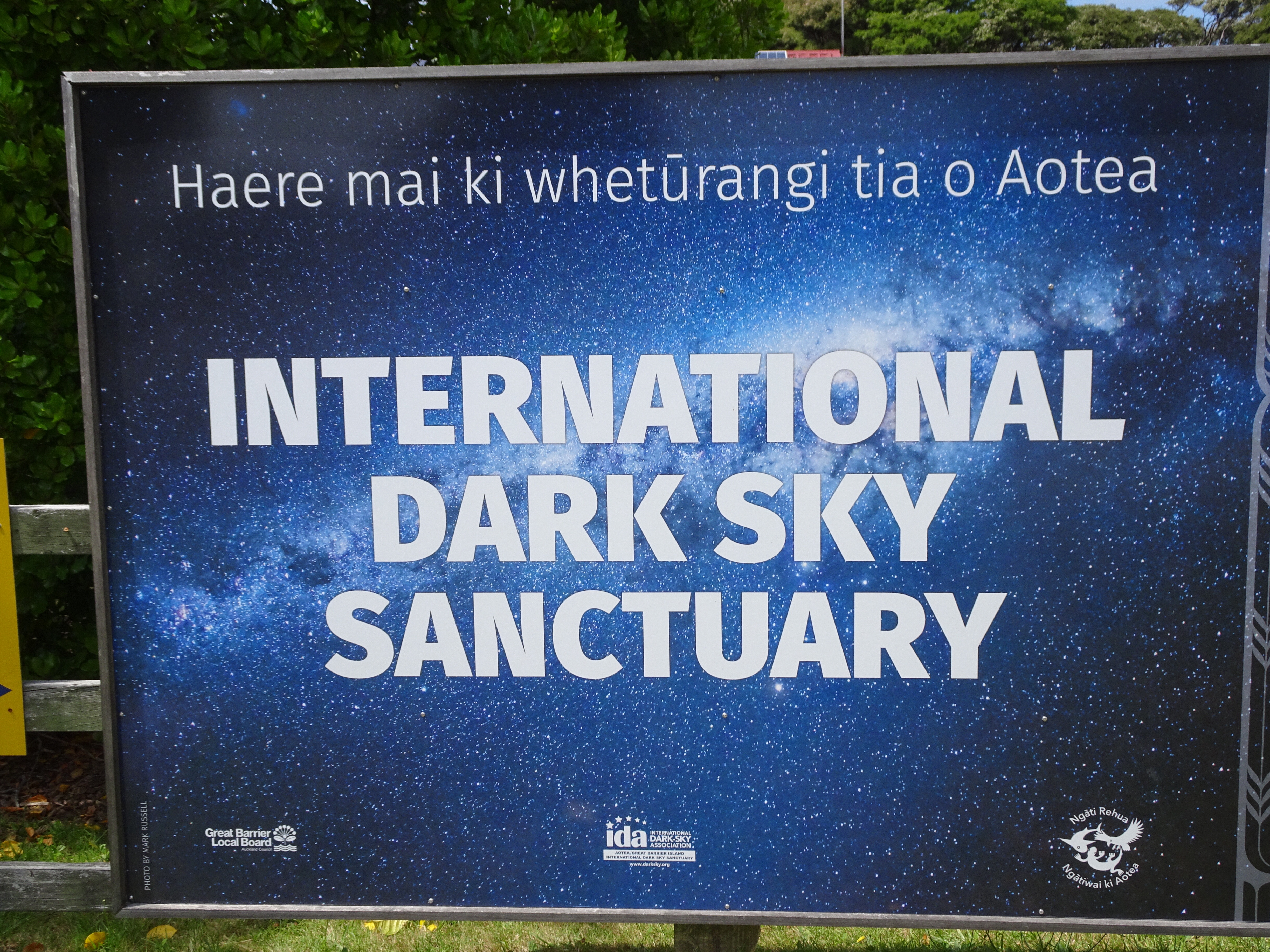
Great Barrier Island, because of its location and lack of electricity, is a worldwide designated dark sky sanctuary. We were looking forward to seeing the Milky Way and the Magellenic clouds, but the full moon was so bright, and then the clouds moved in, so we missed out on this aspect of the island.
The IDA (International Dark-Sky Association) advocates against light pollution and in favor of dark night skies.Every home has solar panelsThe pilot and seven passengers——-A full plane.Driving on the left is a challenge.
All the water on the island is collected either from streams or rainwater. None of it is treated, and people boil water. The water, though, seems to be clean and pure.
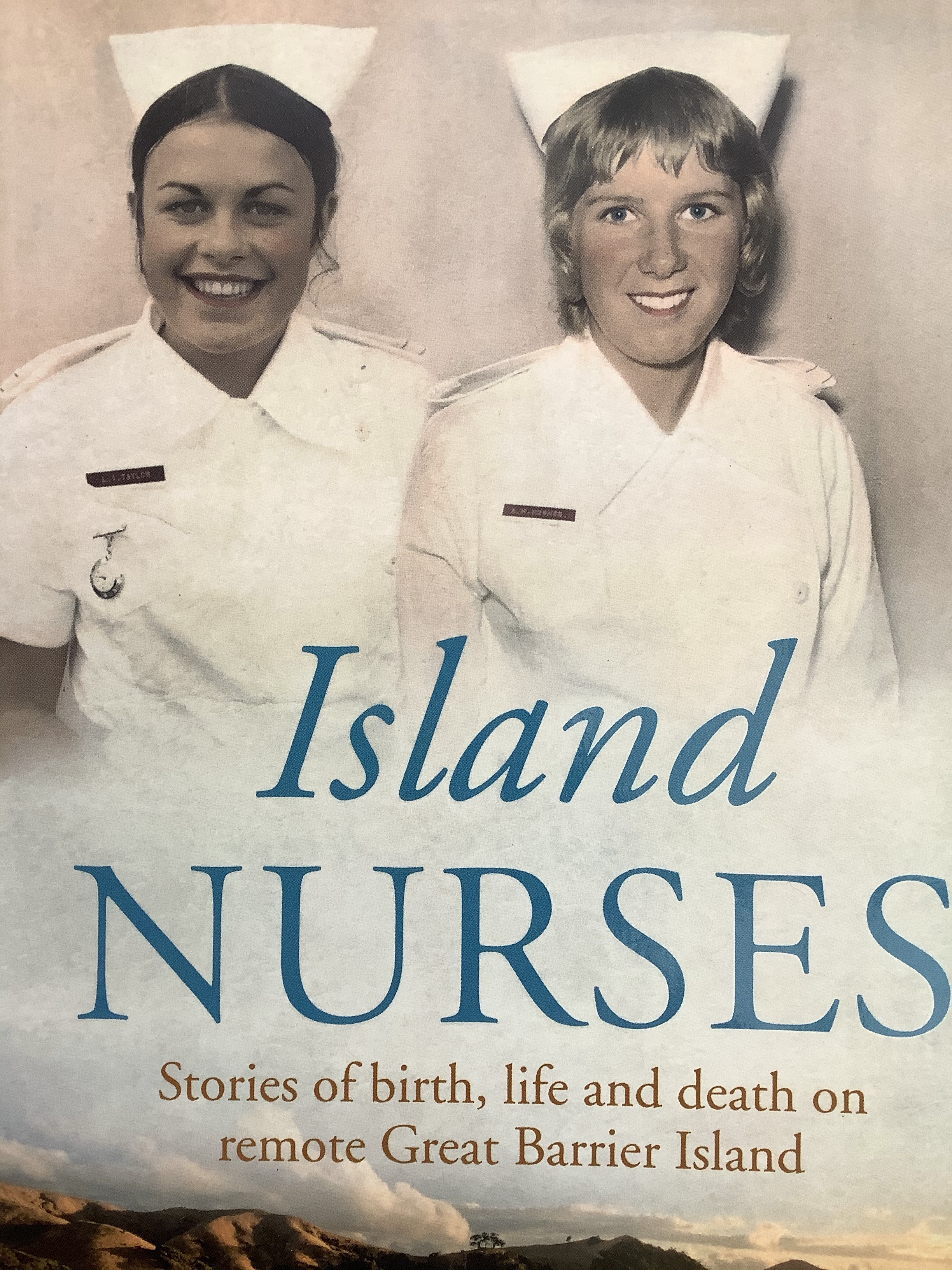
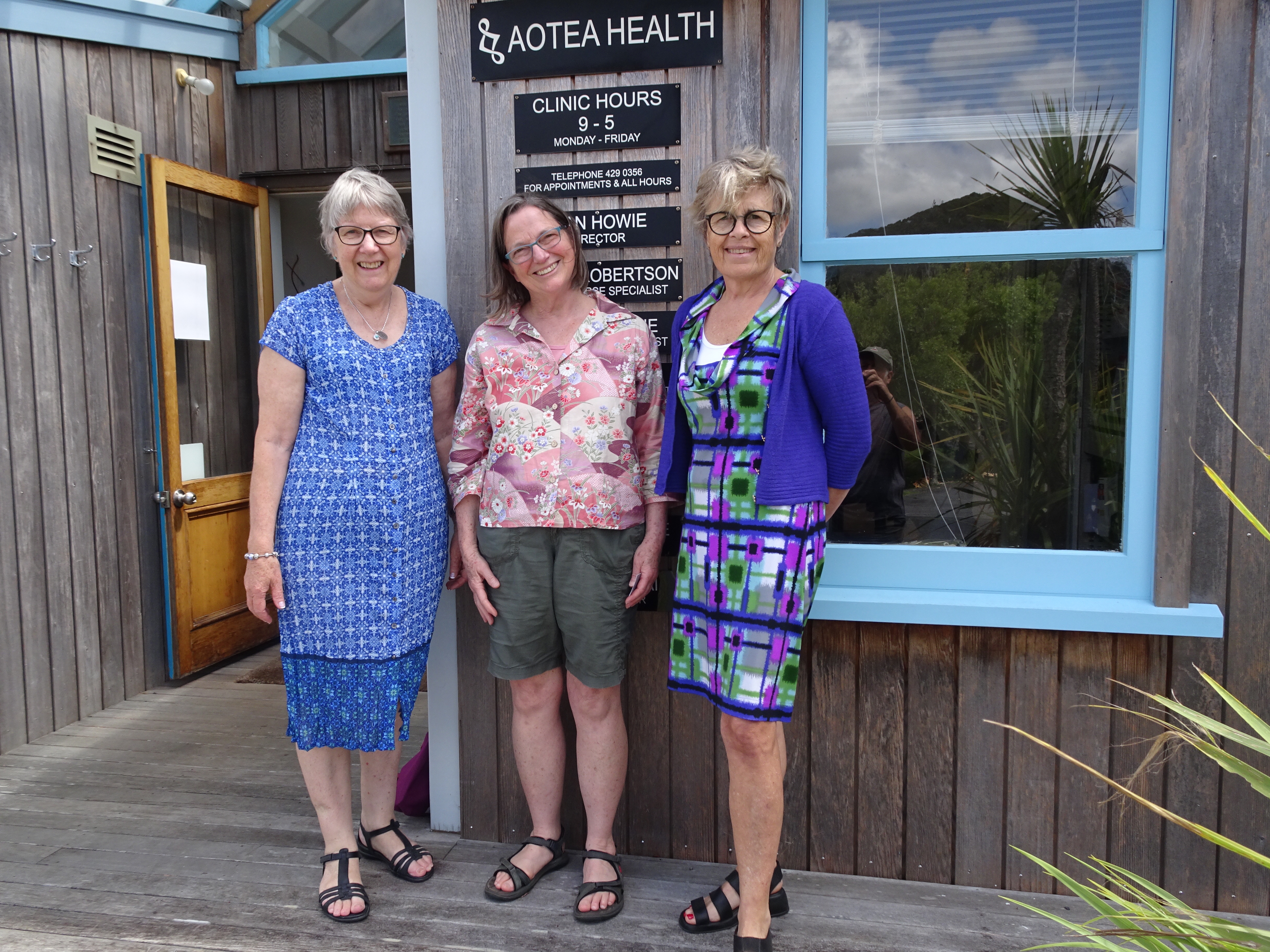
Before we left for New Zealand, Monica read a book called Island Nurses, written by Adele Robertson and Leoni Howie, two nurse practitioners who have been living on and caring for Great Barrier Island for over thirty years now. In their book, they tell stories about delivering health care in the isolated and often primitive conditions that existed. We got in touch with the two of them, and spent a few hours talking with them about the island and their lives as nurse practitioners there. If Monica had been born in a different place, she could have been one of them.
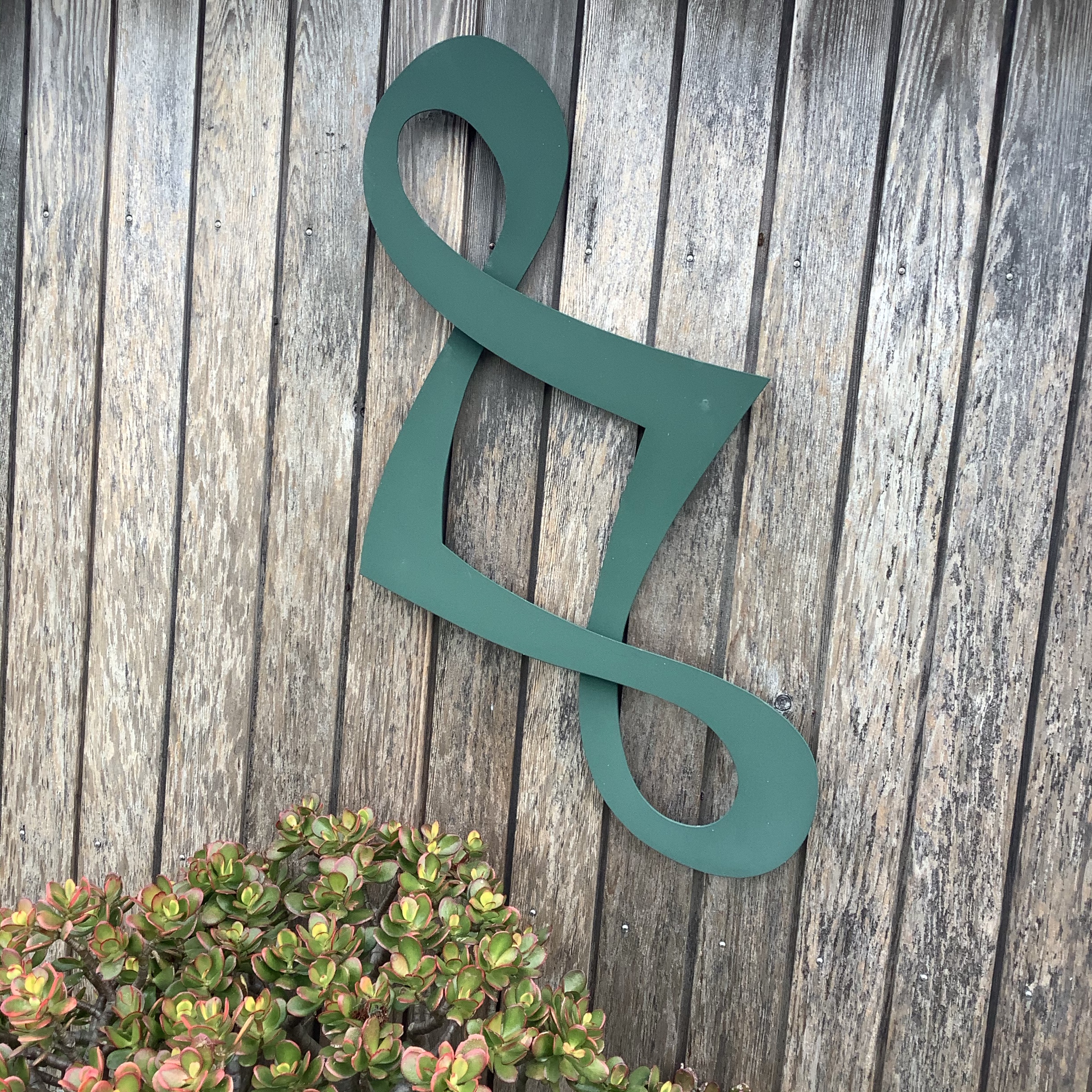
ThenNowThis is the logo of the Aotea Health Center. An infinity sign with a diamond in the middle. An artistic depiction of the island itself.
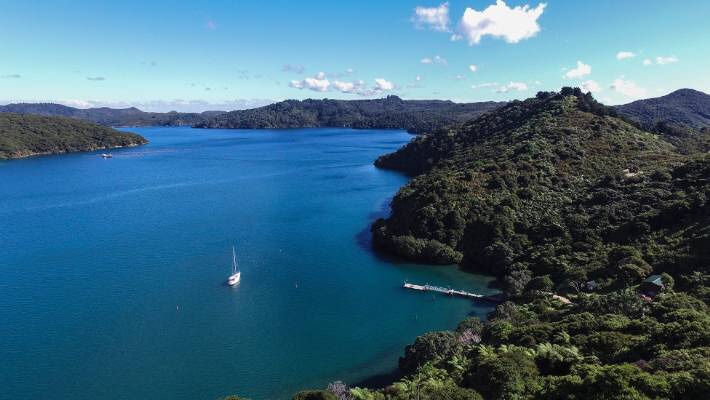
The eastern side of the island has wind-swept beaches with serious swells and lots of surfing. The western side is scalloped with harbors and calm water. Sailors and yachties often sail into the harbors. We met a sailor who had sailed around the world three times, alone. Sailors often come here from Auckland, and this is a popular stop for anybody in the South Pacific.
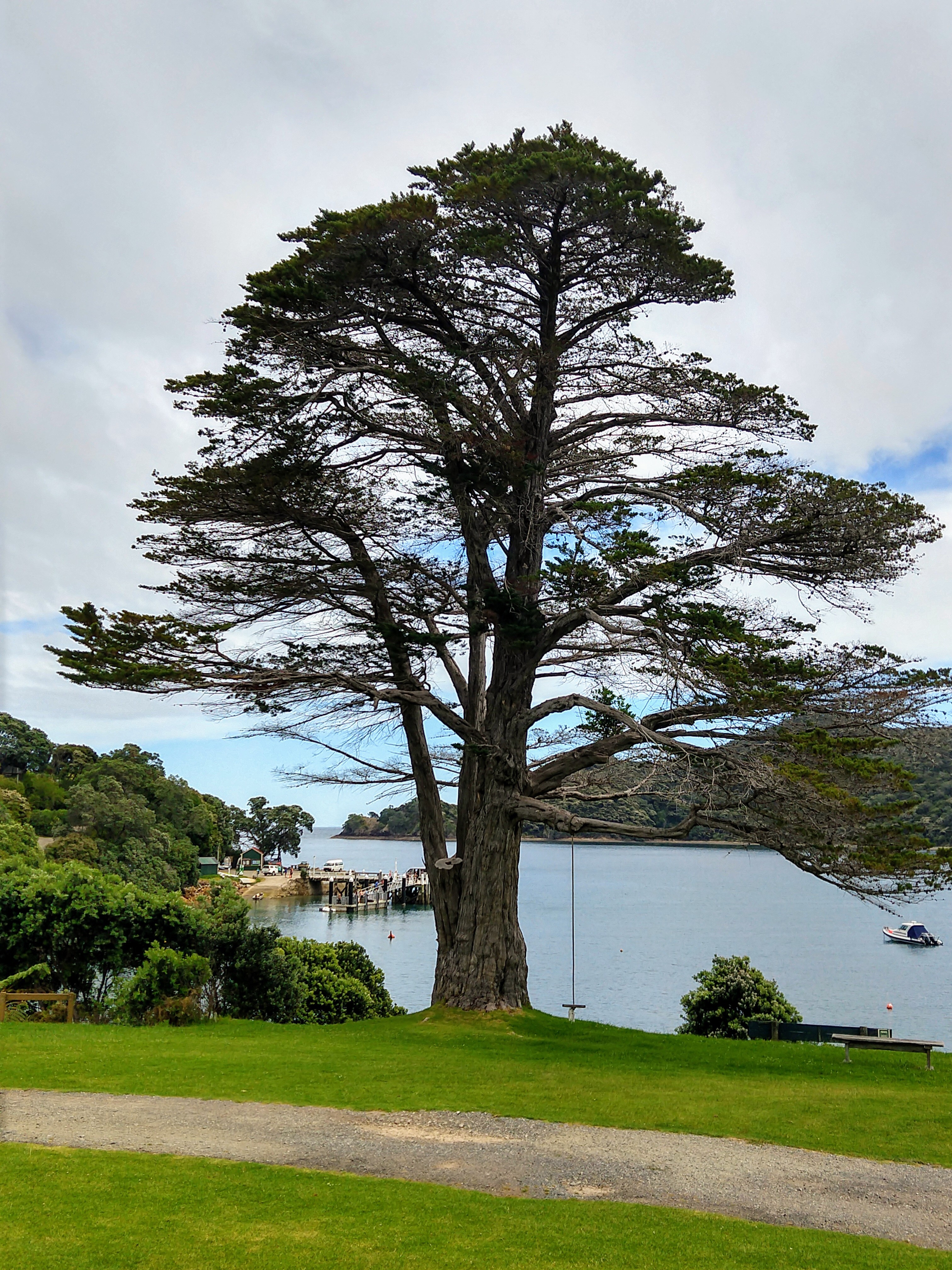
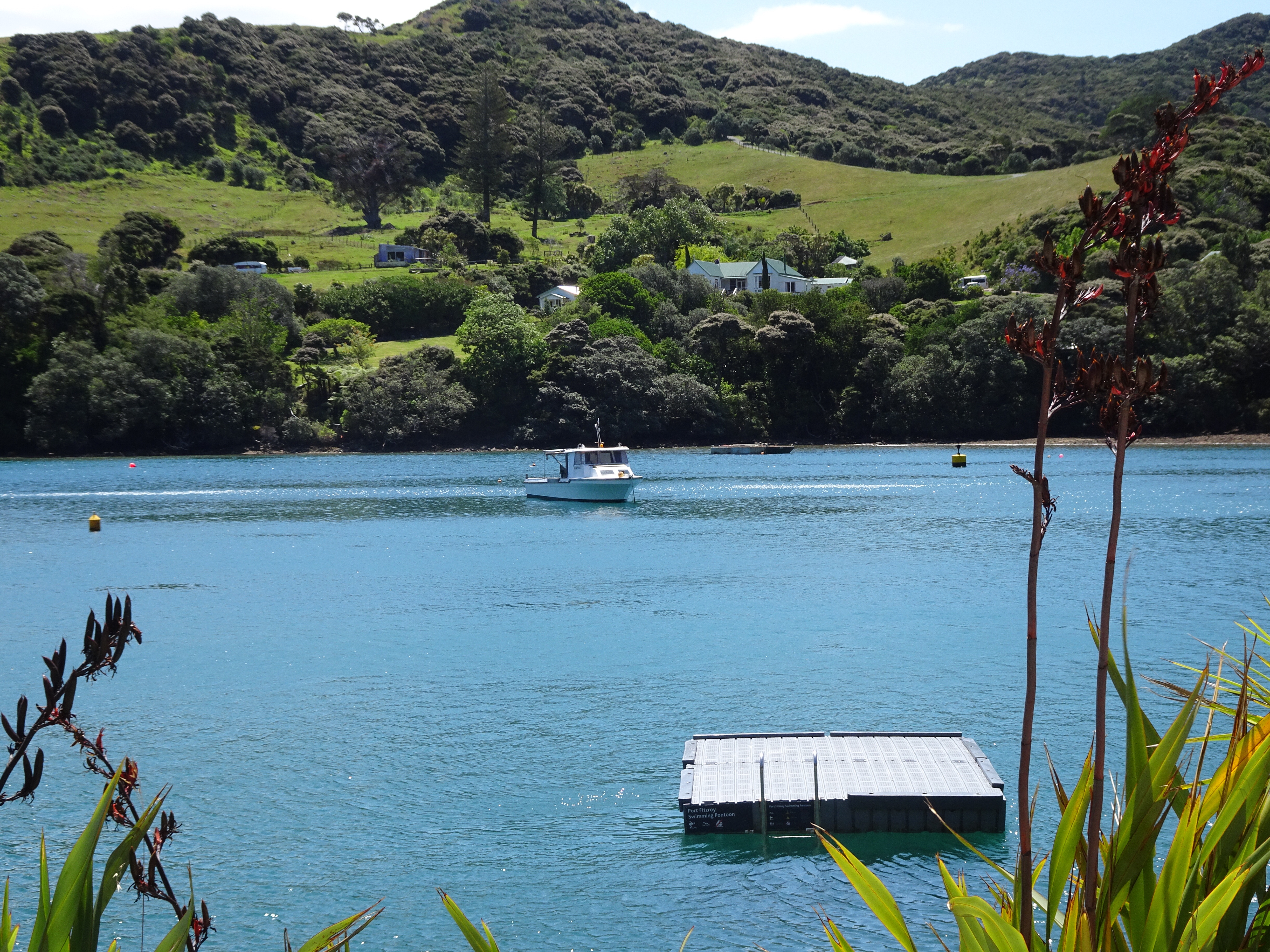
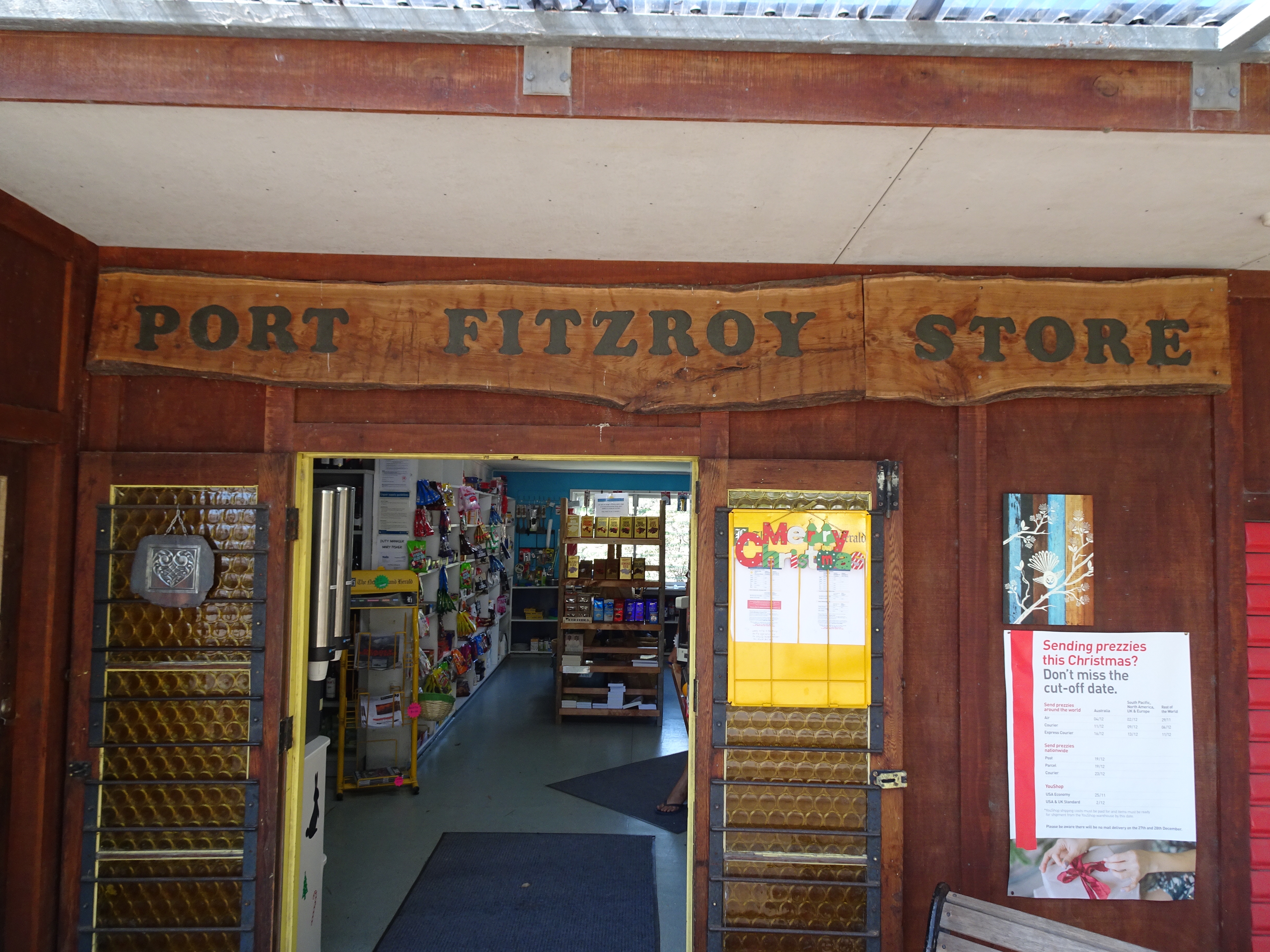
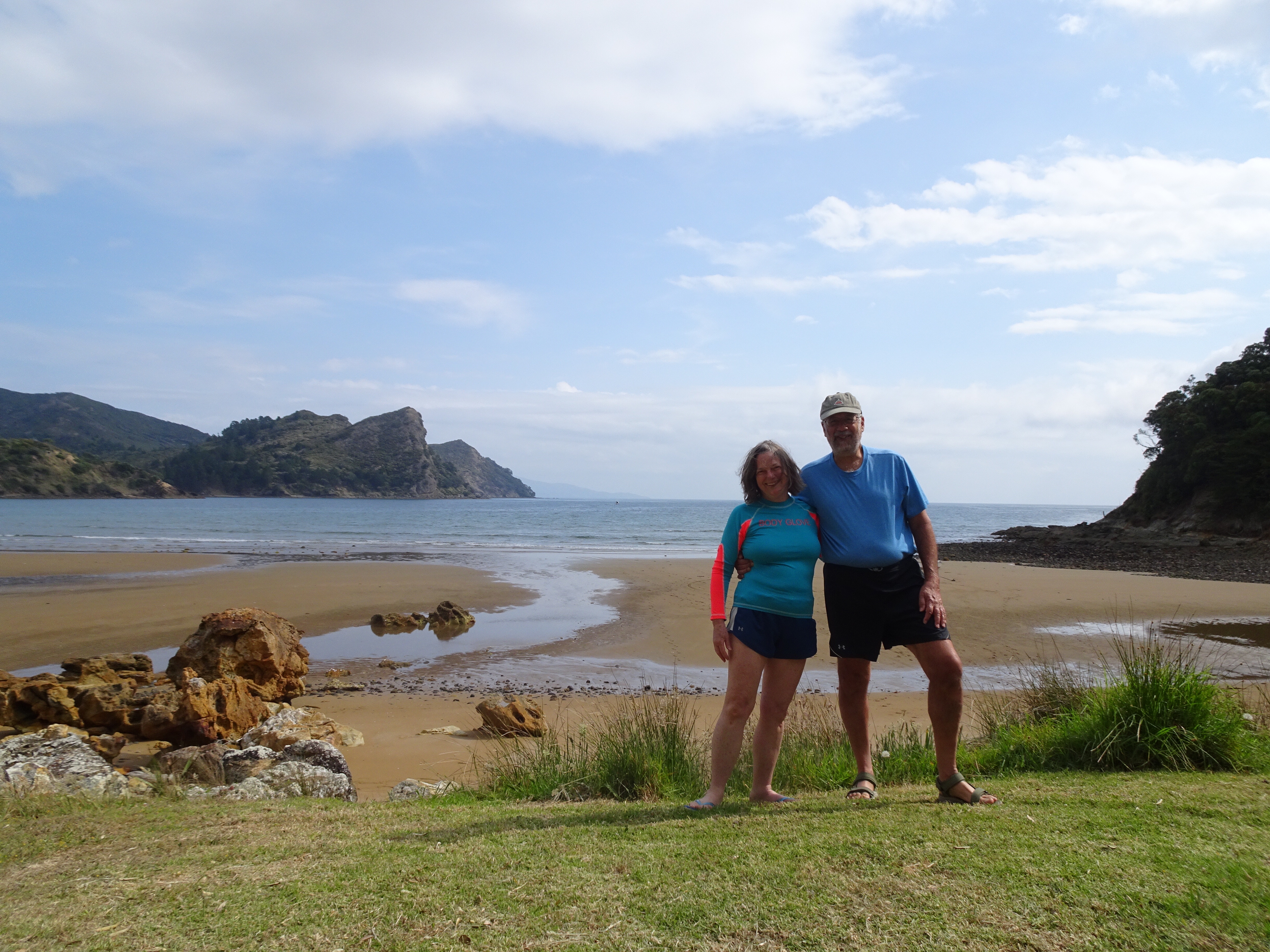
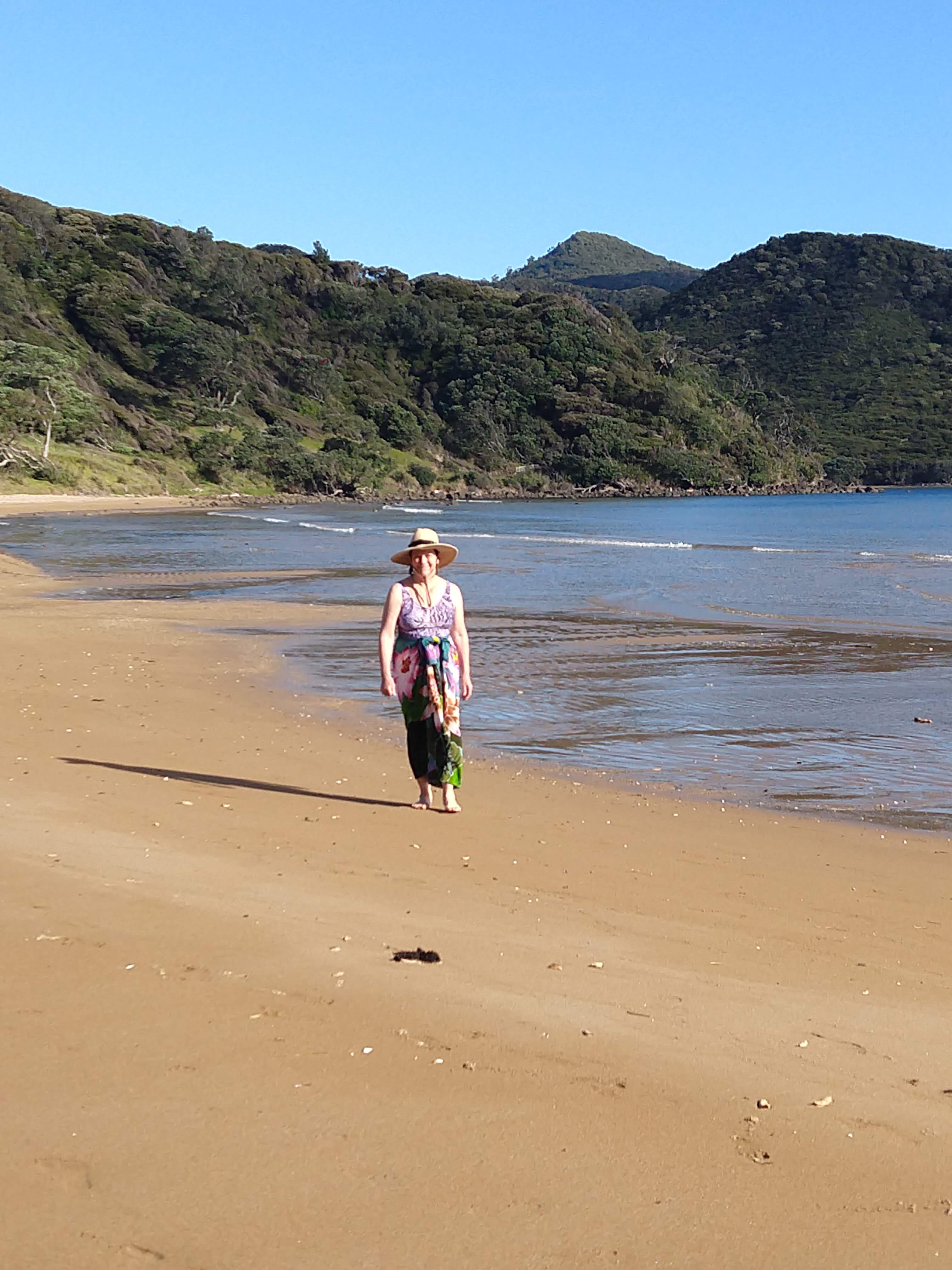
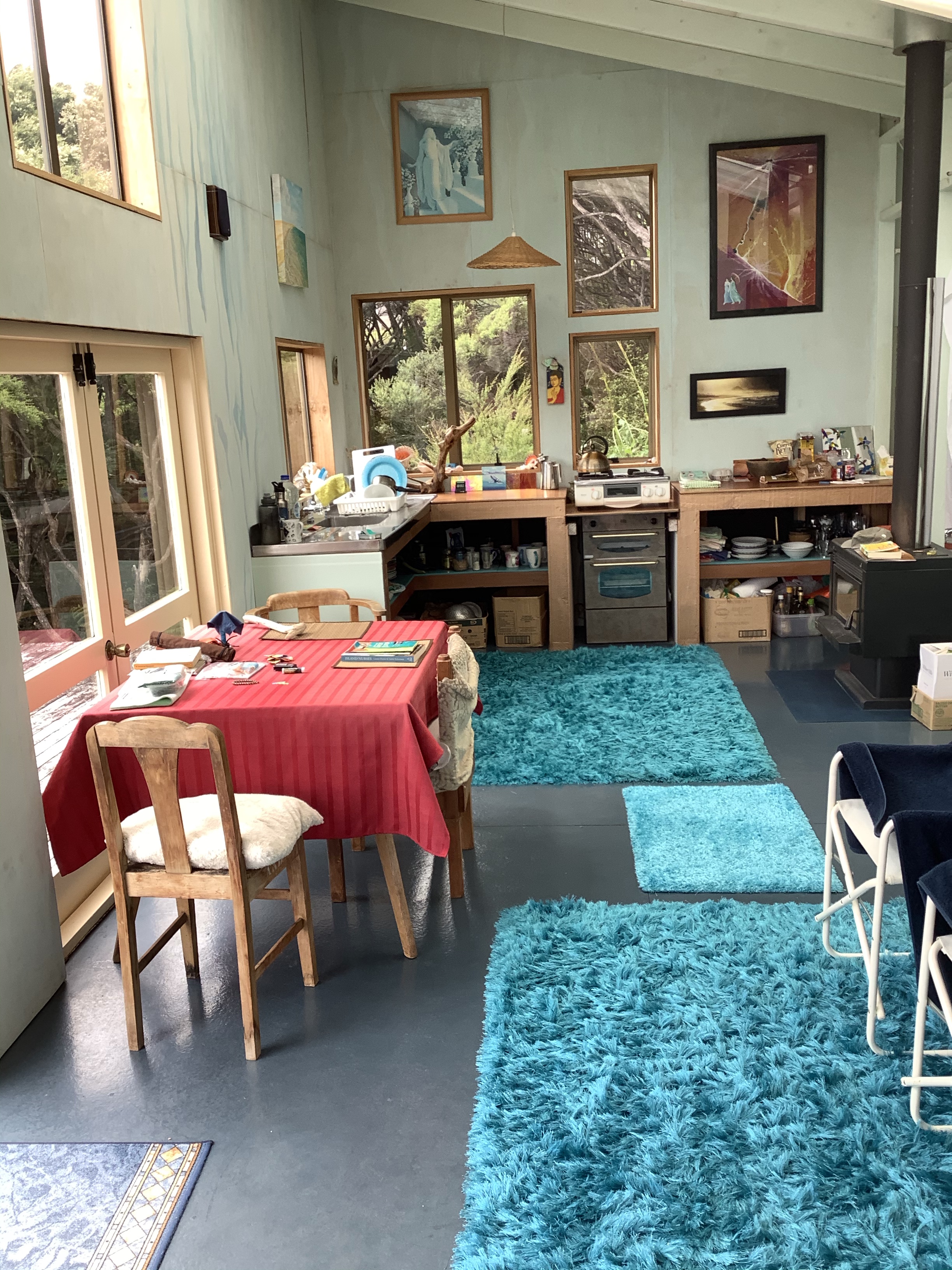
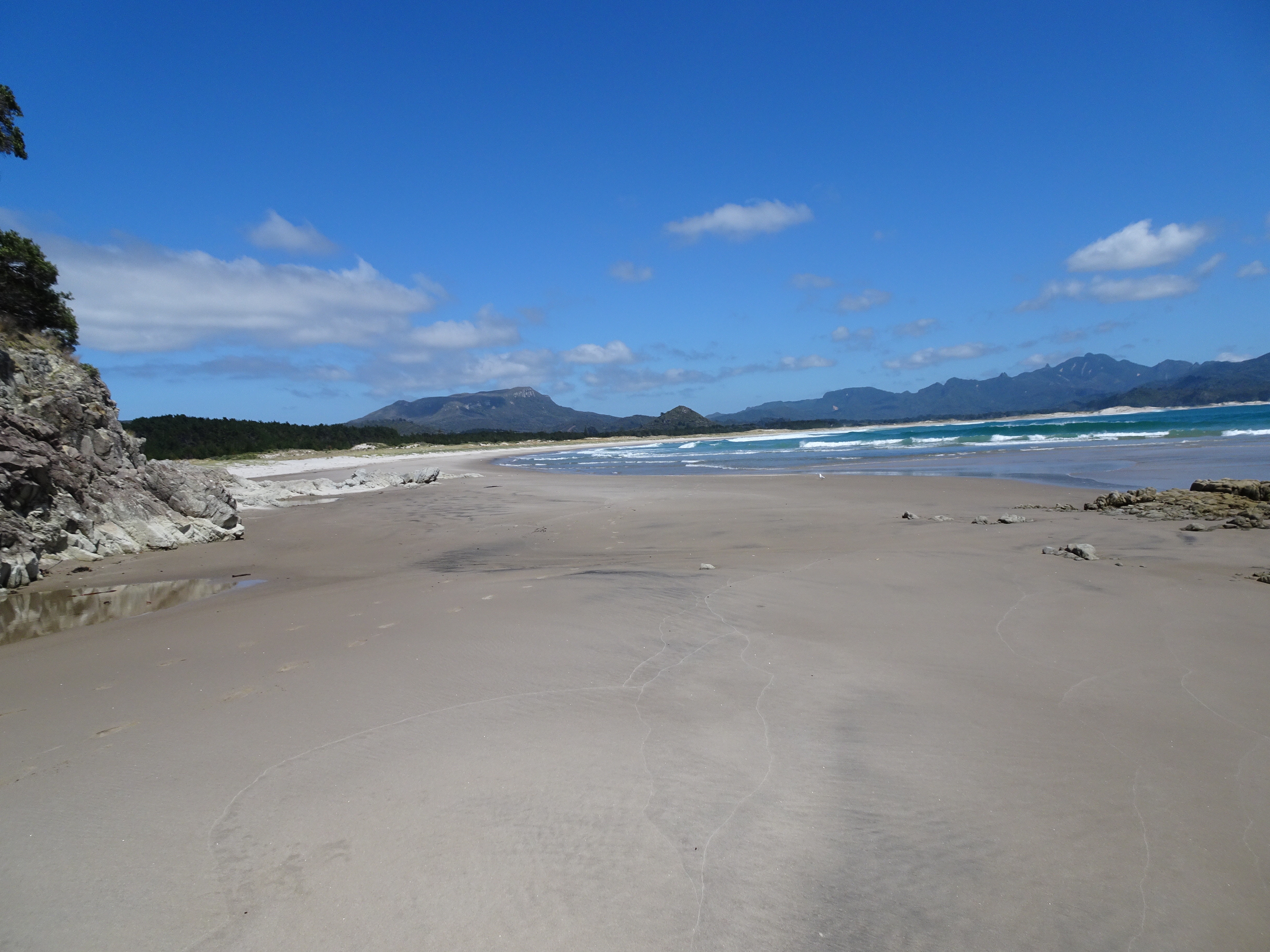
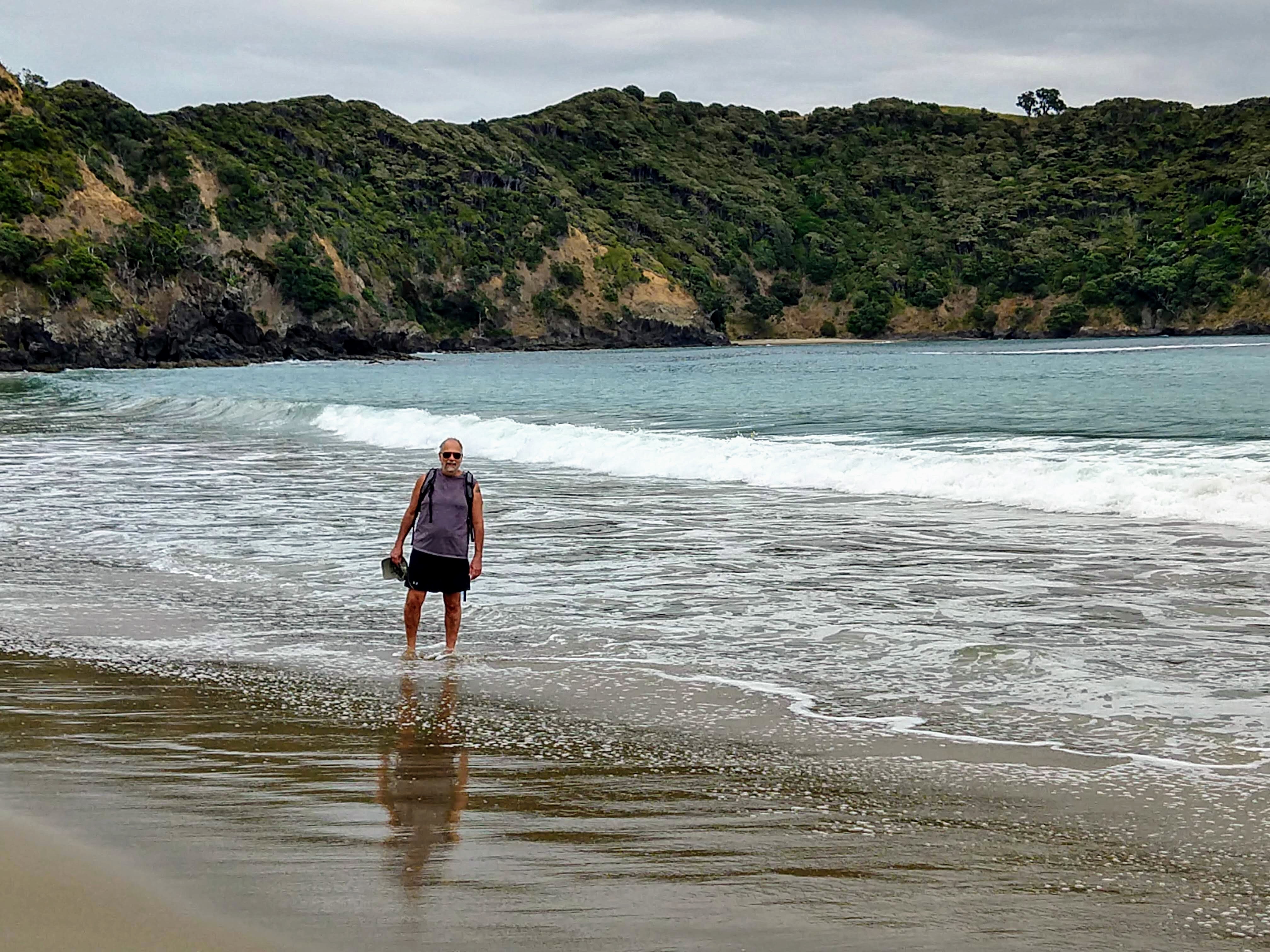
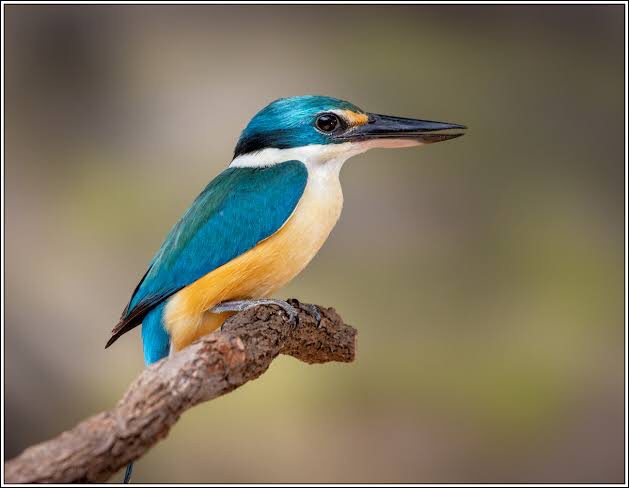
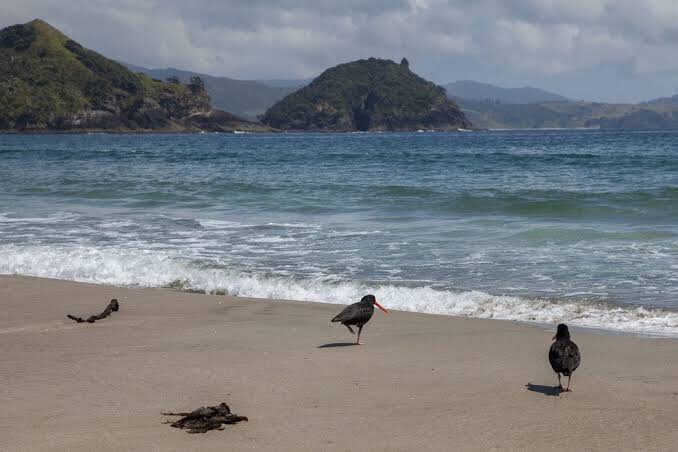
Whangaparapara harbor was a whaling center up until the 1960’s. Now it’s a pleasant little stopover with a lodge.Port FitzRoyYou can get what you need.This is us at “our beach.” Okupu Bay, just a five-minute drive down from our house.We came down here a few times first thing in the morning to start the day with a walk and some exercise, and maybe a little swim. Our island home for a weekPick a beach. It’s probably deserted. This one is Sugarloaf Beach.The Tui is a native bird that we saw almost every day. Very vocal, very visible, very cheerful. It has a lot of sounds, some like a rusty gate, some similar to the red-winged blackbird. They flit around in the trees and you can get really close to them.Harataonga Bay, on the northeast side. The Sacred Kingfisher visited us on our porch one afternoon.Variable Oystercatchers. We saw them on lots of beaches.
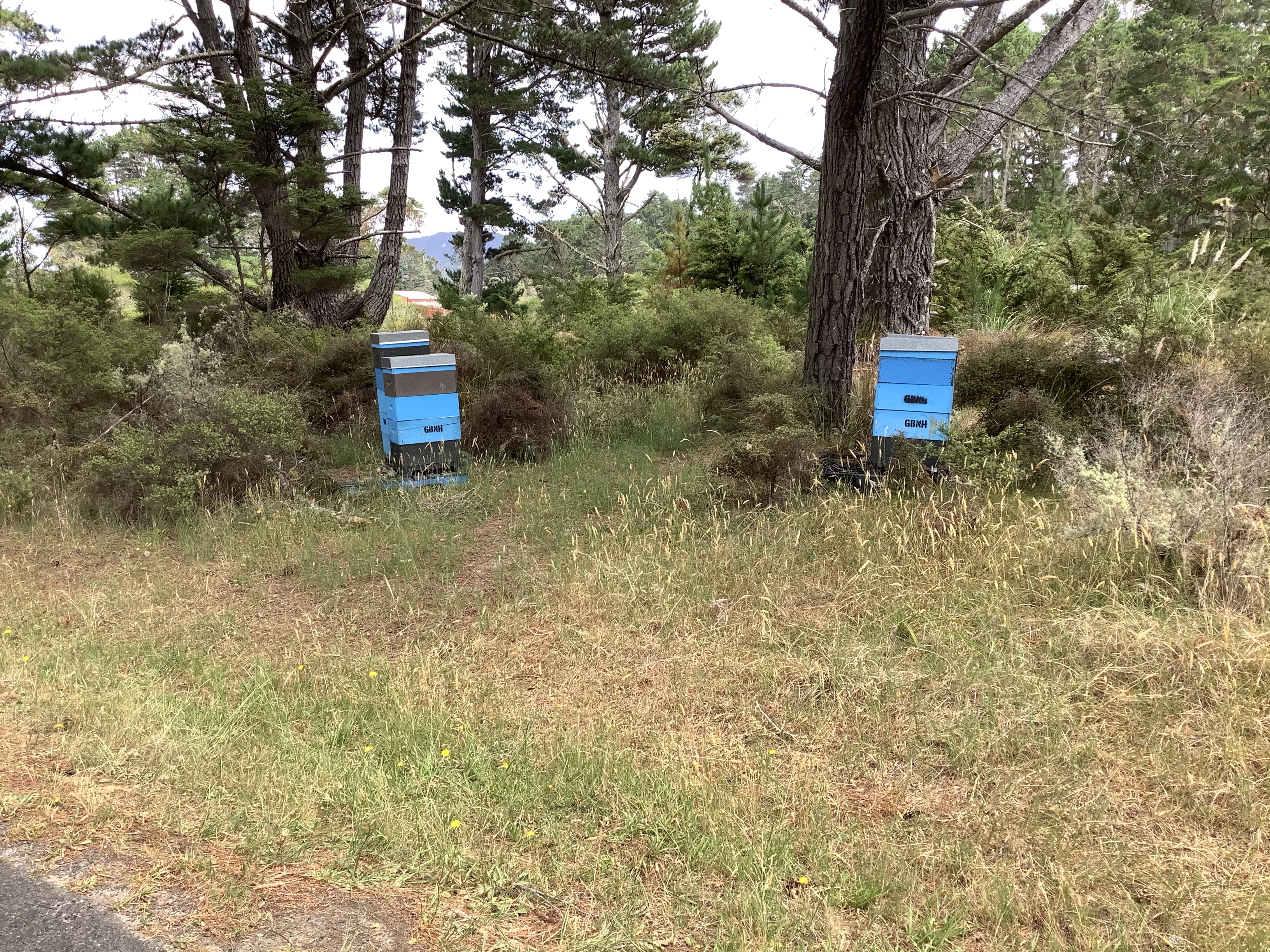
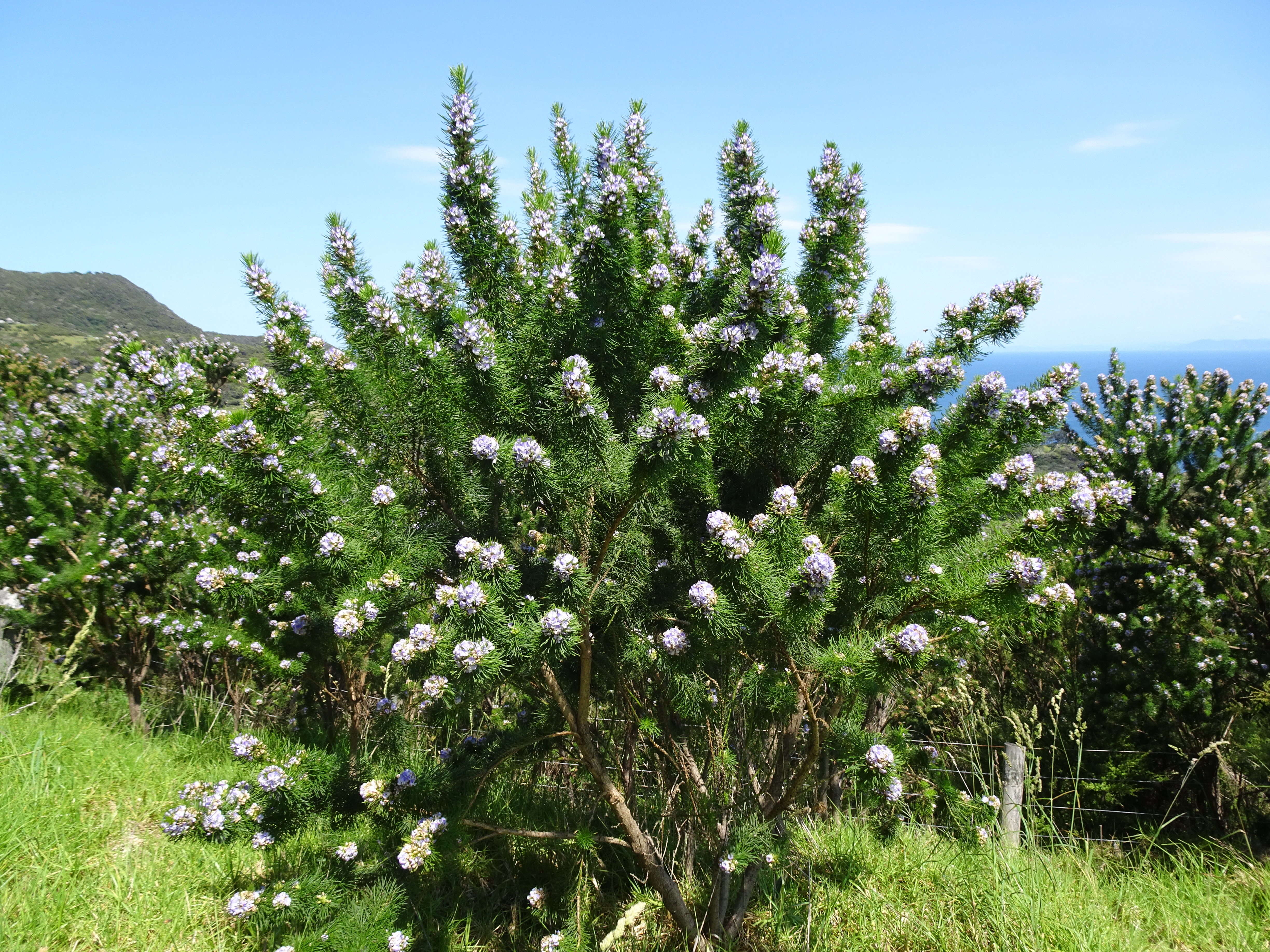
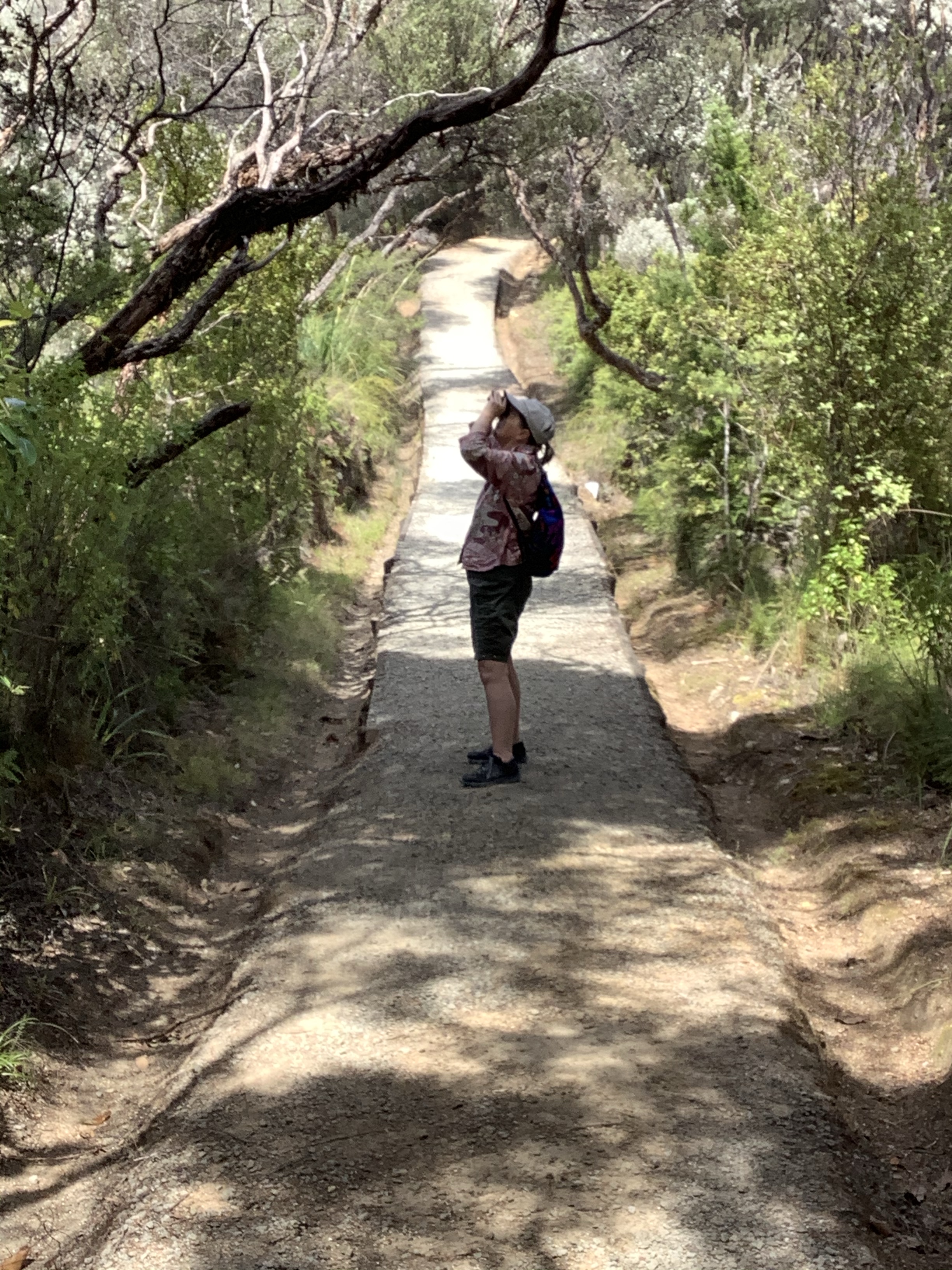
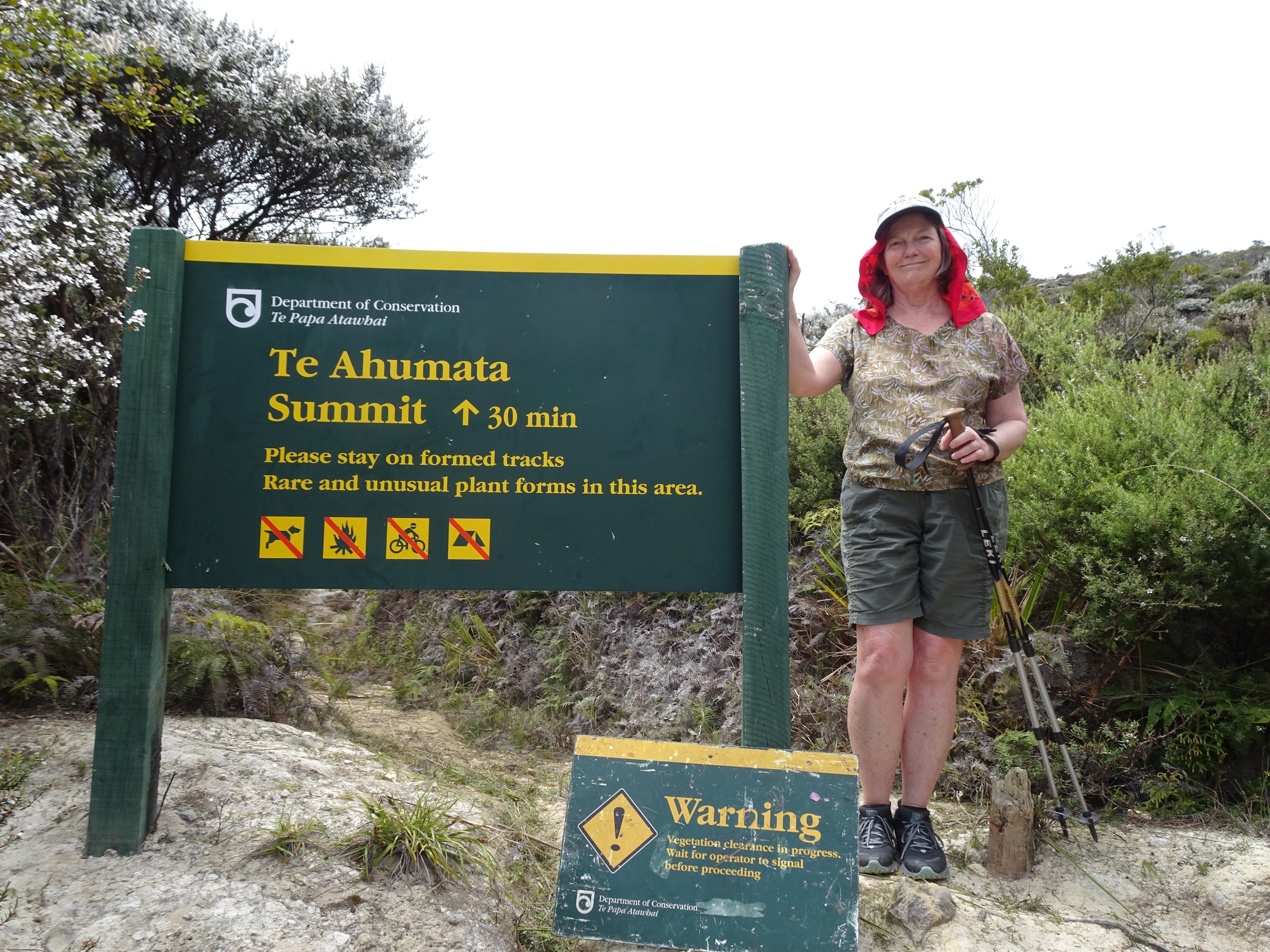
The island has hiking trails (tracks for tramping) all over the place. The tracks are well-marked and relatively well-used. The Kiwis really do appreciate their land and they want to take care of it. One day, we hiked into the hot springs, a lovely hike through forest and swampland. Another day we hiked up to the Te Ahumata Summit for some great views out into the infinite ocean. We also hiked down to some bays to watch the waves. There are honeybees all over the island, with lots of beekeepers and lots of Manuka trees. The bees make honey from the flowers of these trees, and the honey is valued for its medicinal, antibacterial properties.
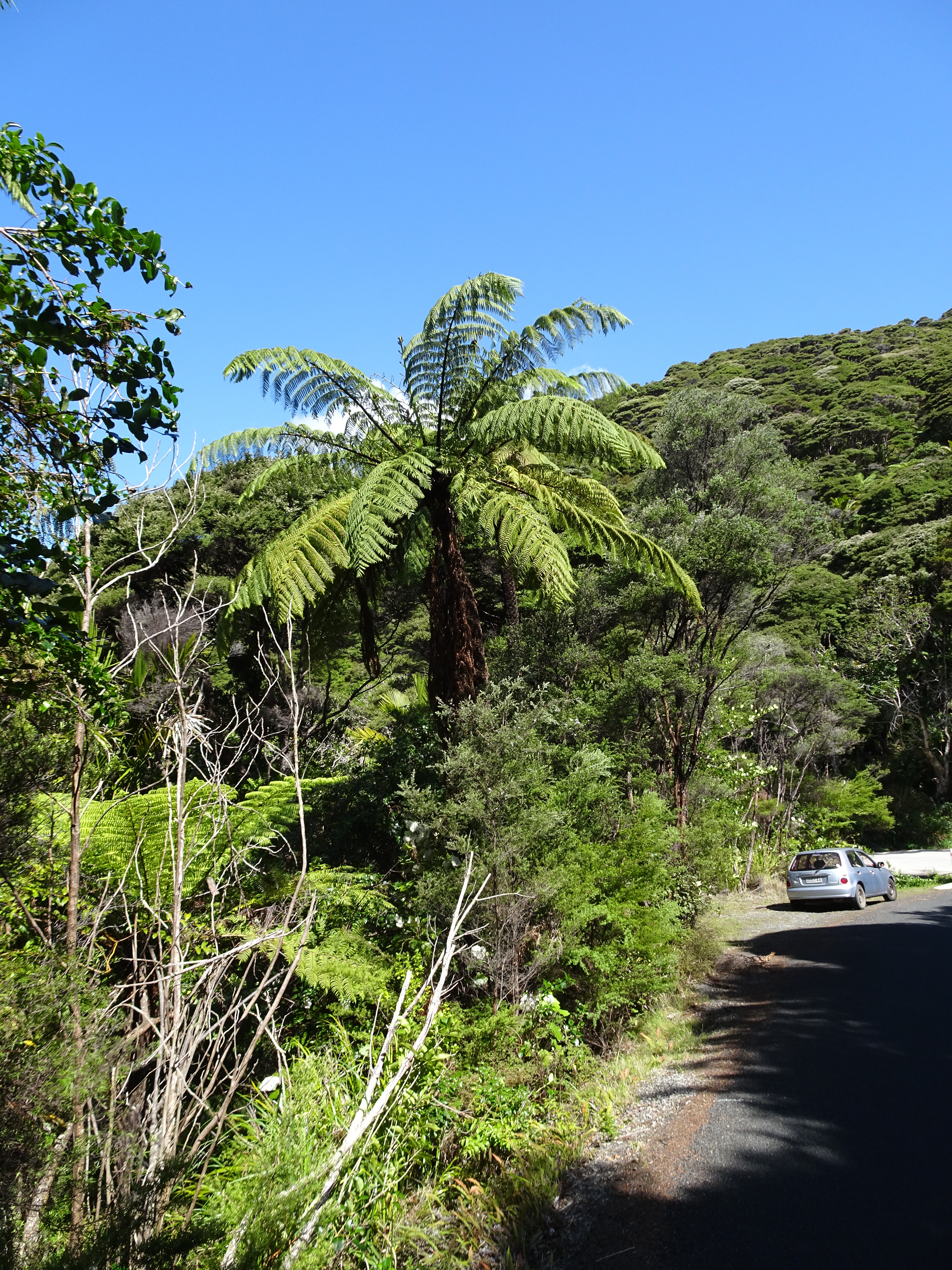
We saw lots of these. The Manuka trees were in full blossom. They go together with the hives like horses and carriages.The beautiful New Zealand tree fern.Tramping into the hot springs, looking for the little Fernbird.A bit more of a challenge——upwards and through the rocks.
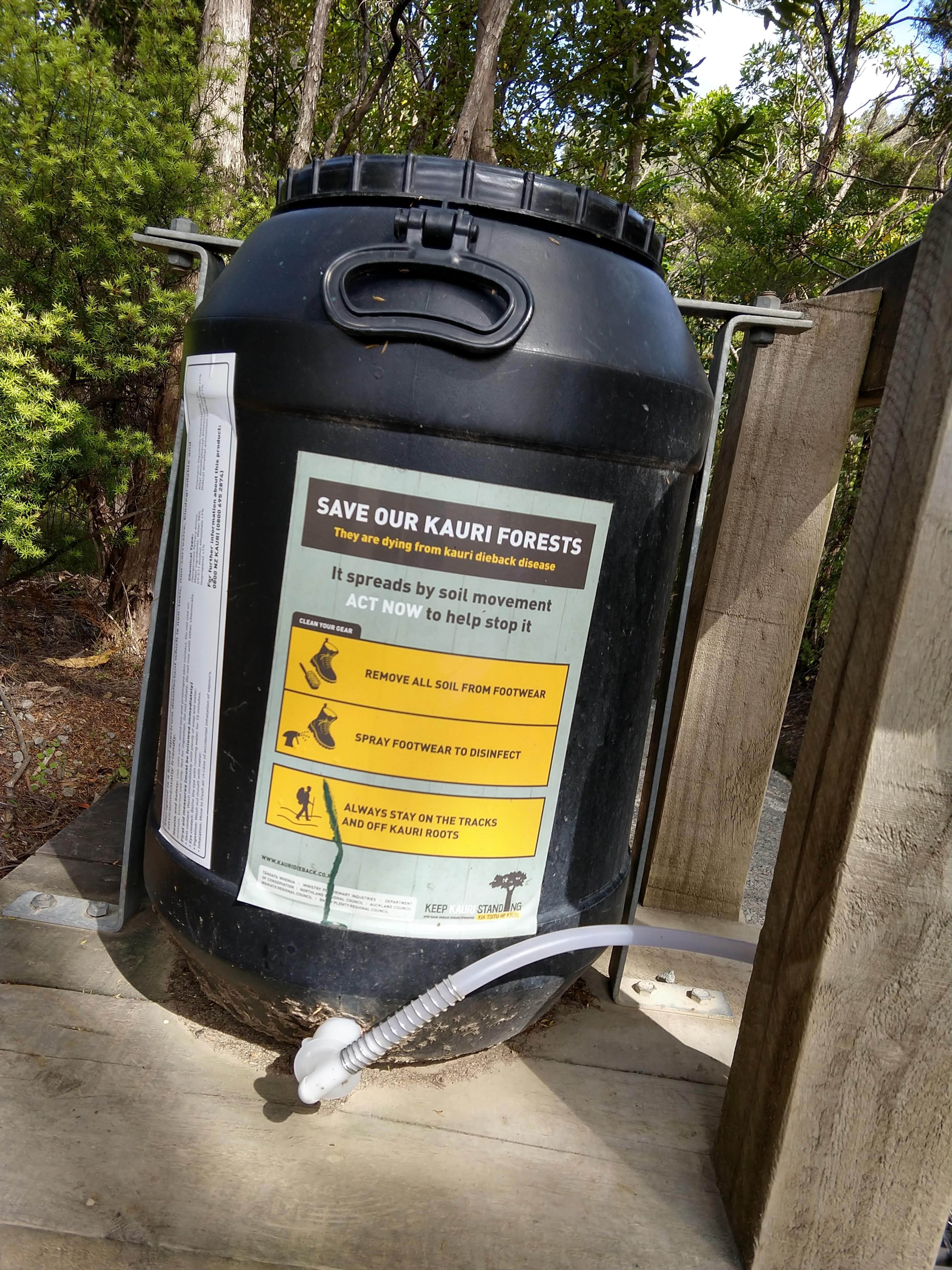
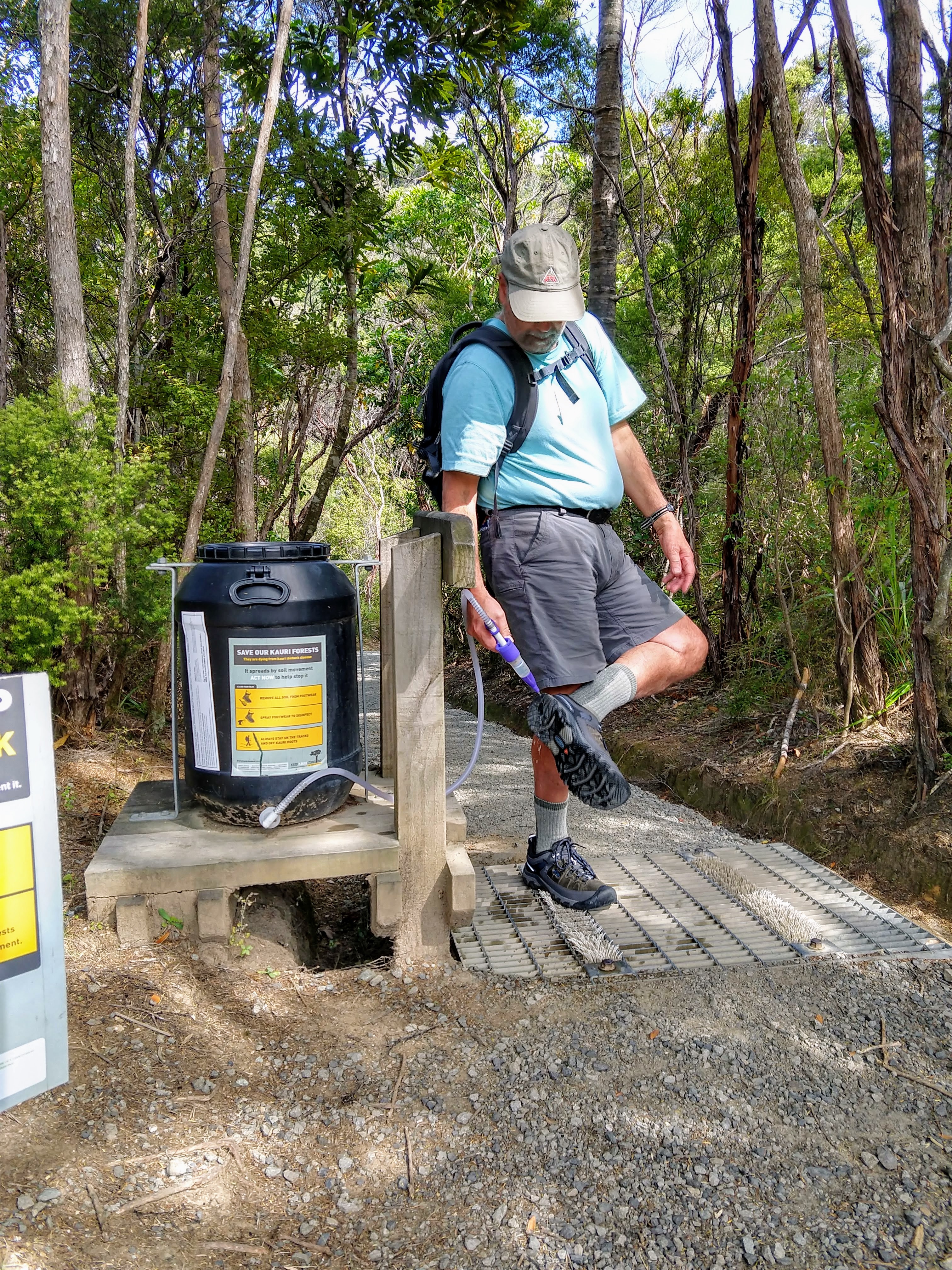
The Kauri tree is a New Zealand treasure that is severely endangered. It is a strong and mighty tree, similar in many ways to the Redwoods, including the fact that it has very shallow roots. It is tall and wide, and grows straight. For that reason, it was heavily logged and almost eradicated over the past century. It is now protected, but is being killed by disease, called the “Kauri die-back disease.” Bacteria enter the soil and seek the roots. One of the ways that the government is trying to save the trees is by having everybody disinfect their shoes before walking in the forest, as the bacteria are carried in and then can do its work. When we arrived at the airport, our shoes were disinfected for this reason also.
So peaceful. So quiet. People leave their car keys in the ignition. (The rent-a-car woman told us, “We’re not too worried about cars disappearing from here.”) The shops and restaurants close up around 4:00 or 5:00. Not much nightlife. All is well.
Update from Great Barrier Island (WiFi at the general store)
Thank you dear friends for all your messages of caring. We are far from the volcano and have experienced no effects of the activity. We’ll be back in Auckland Monday and will report more from there. Love to you all.
We’ve been in Auckland for two days, and tomorrow morning, we will be flying to Aotea, otherwise known as Great Barrier Island. We’ll be there for a week, most likely out of Internet connection. Hasta luego for a little while….see you on the other side.
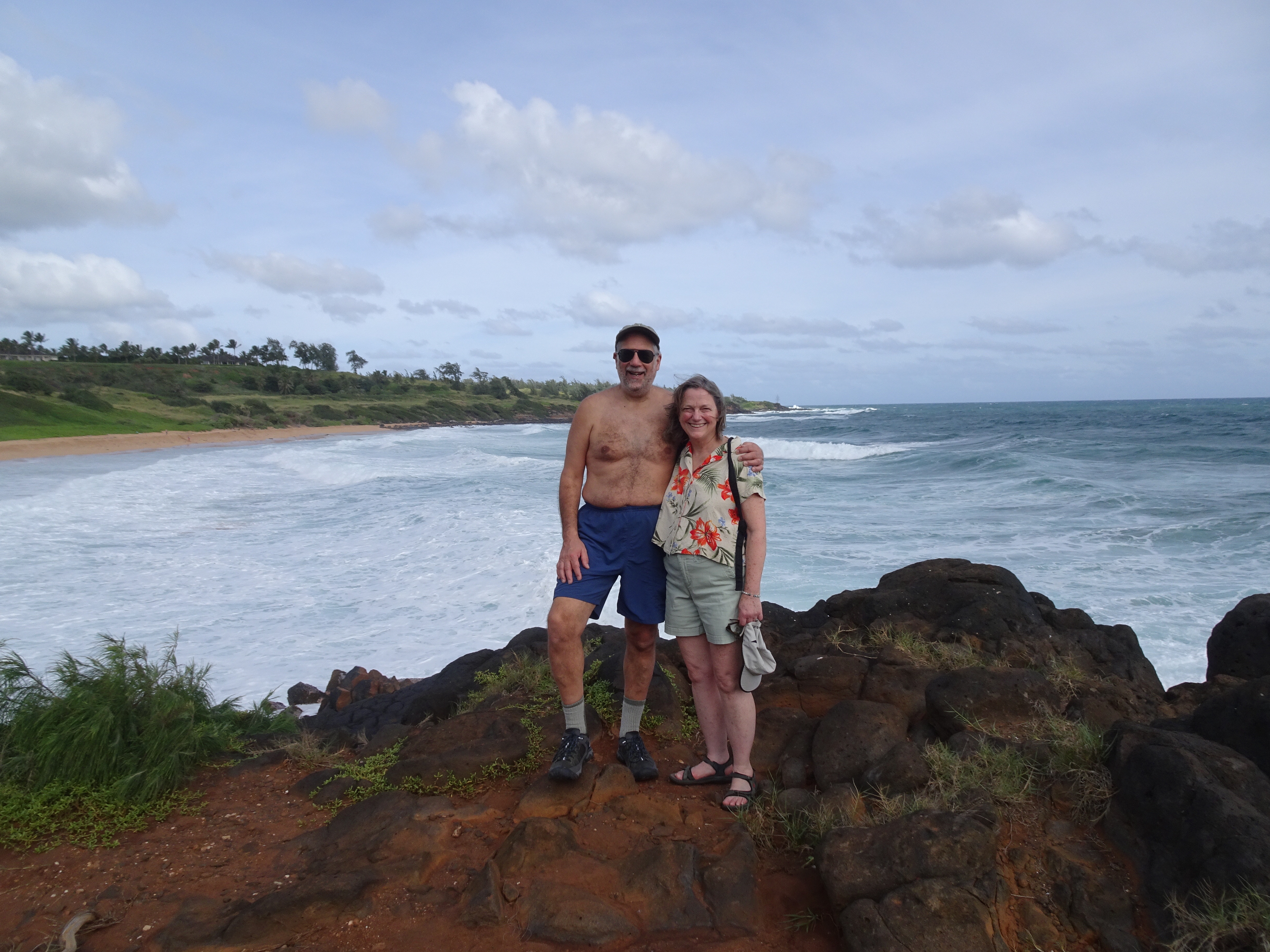
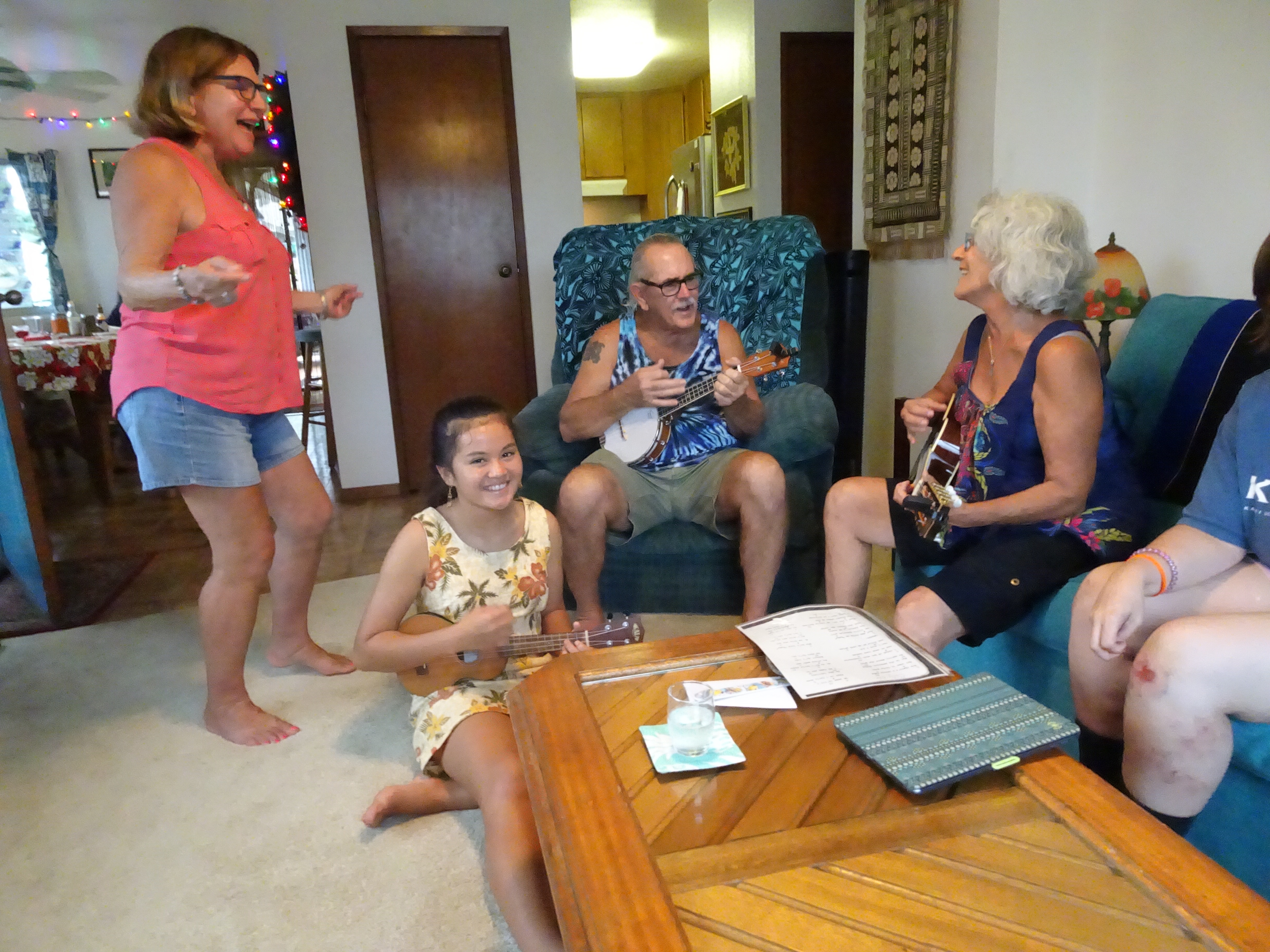
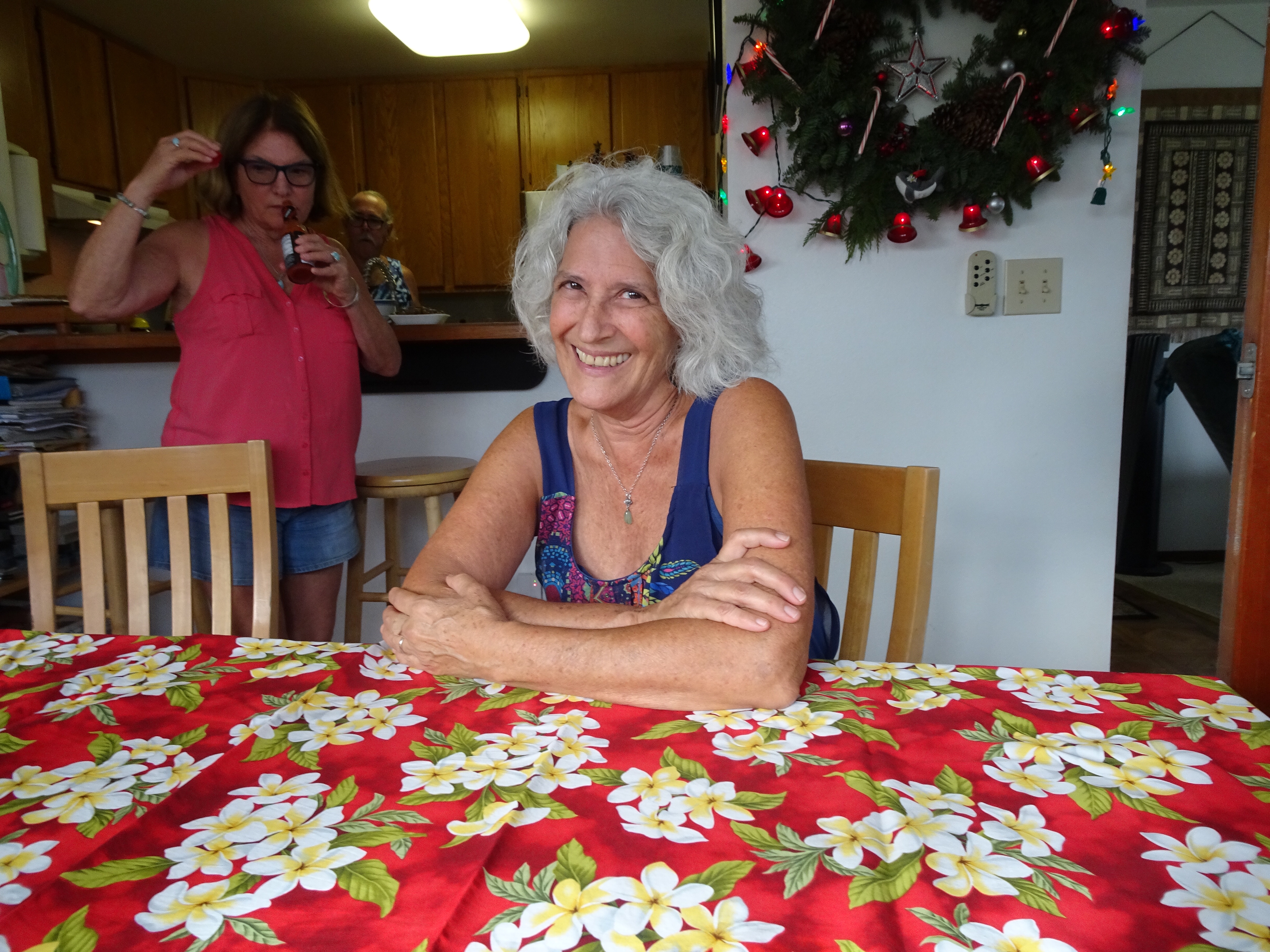
We met on Kaua’i in February of 1973, and it’s always a pleasure to get back to the little island in the Pacific. We’ve changed, the island has changed, and the world has changed, but the waves continue to roll in and the sun continues to rise and set. We spent six days on Kaua’i, visiting with friends and breathing the air, and it was wonderful for us to be able to take some deep breaths before flying to New Zealand. We stayed mostly with our friends Jan and Danny in Lihue. One afternoon, some friends came over for a get-together, and we had a great few hours of talking, eating, and music. Monica, Jan, Louise, and Bonnie all lived together in Valley House in 1974 and ’75, mostly in tree houses and hand-made shelters, and it is like homecoming week when they (and we) have a chance to be together again.
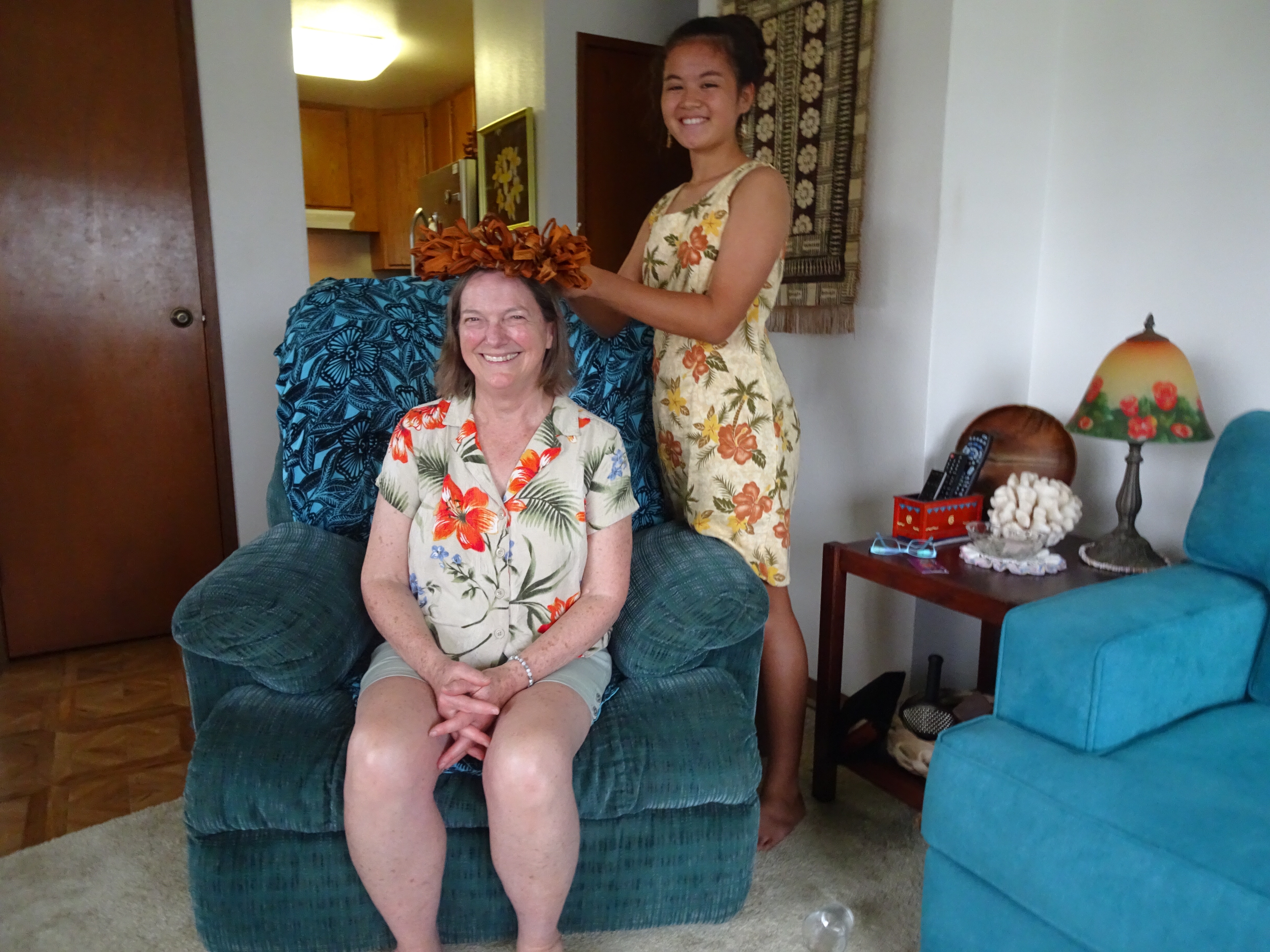
Loea made a po’o lei out of ulu flowers (breadfruit) for Monica, as a symbol of friendship and welcome back.
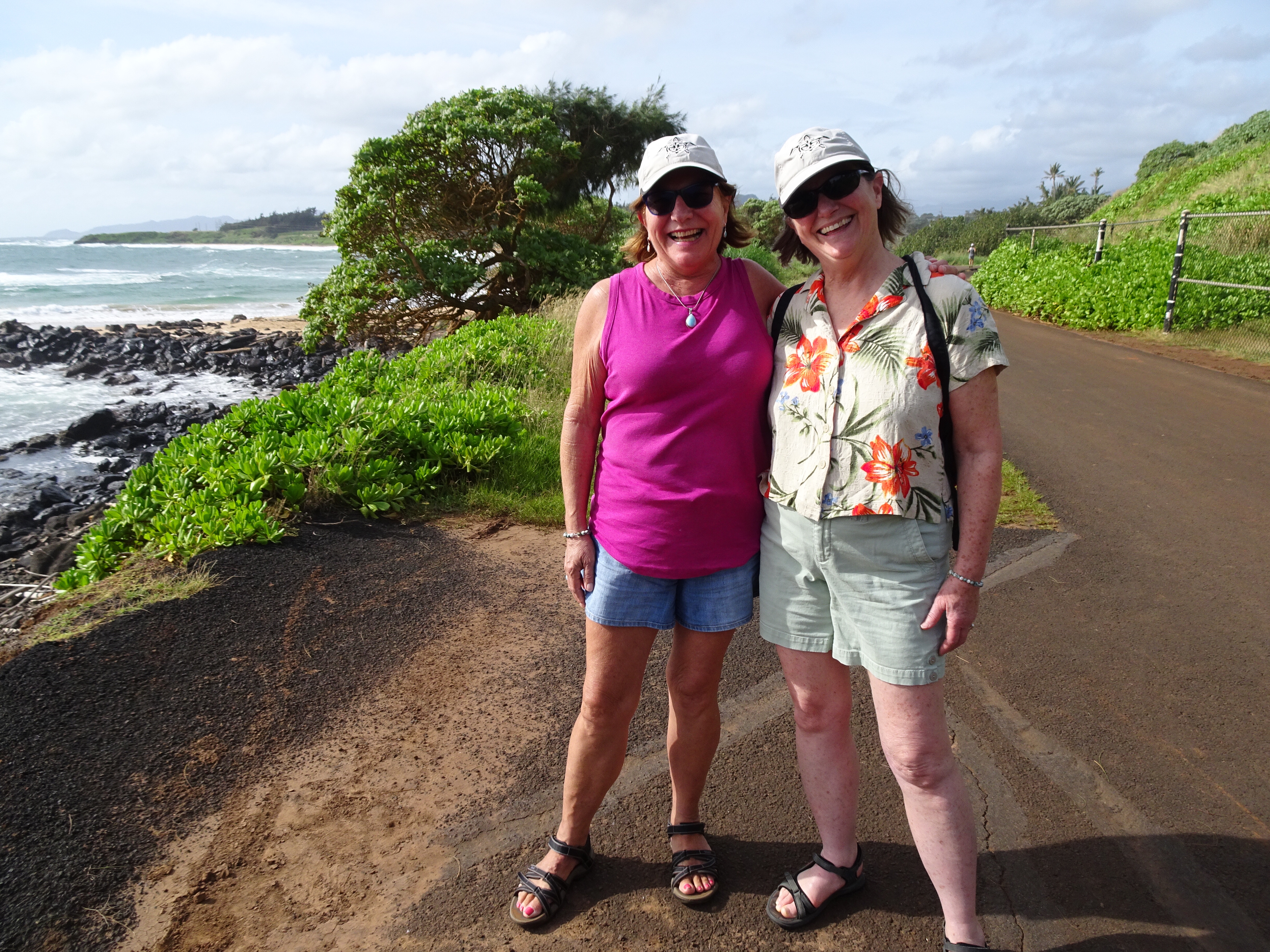
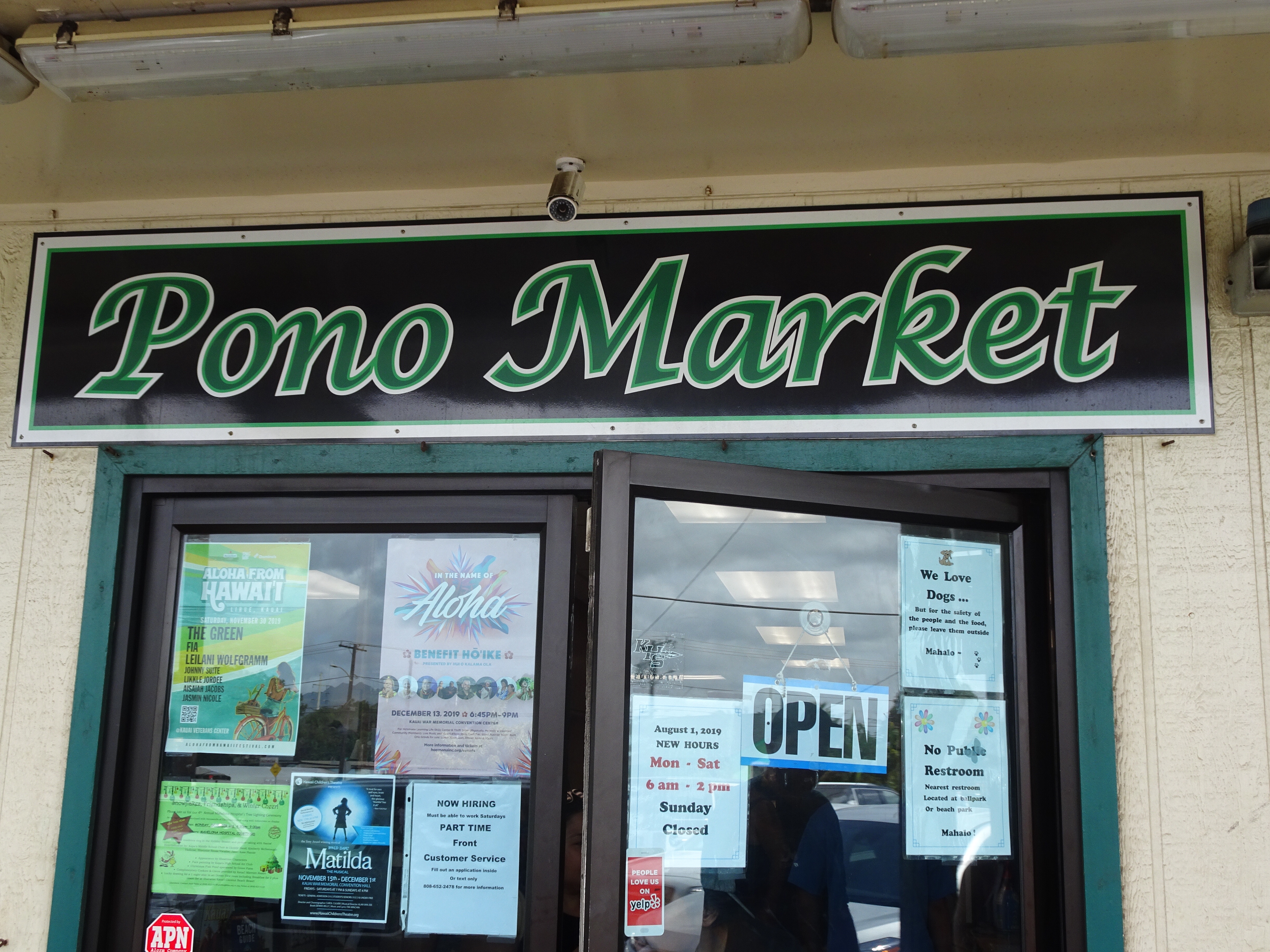
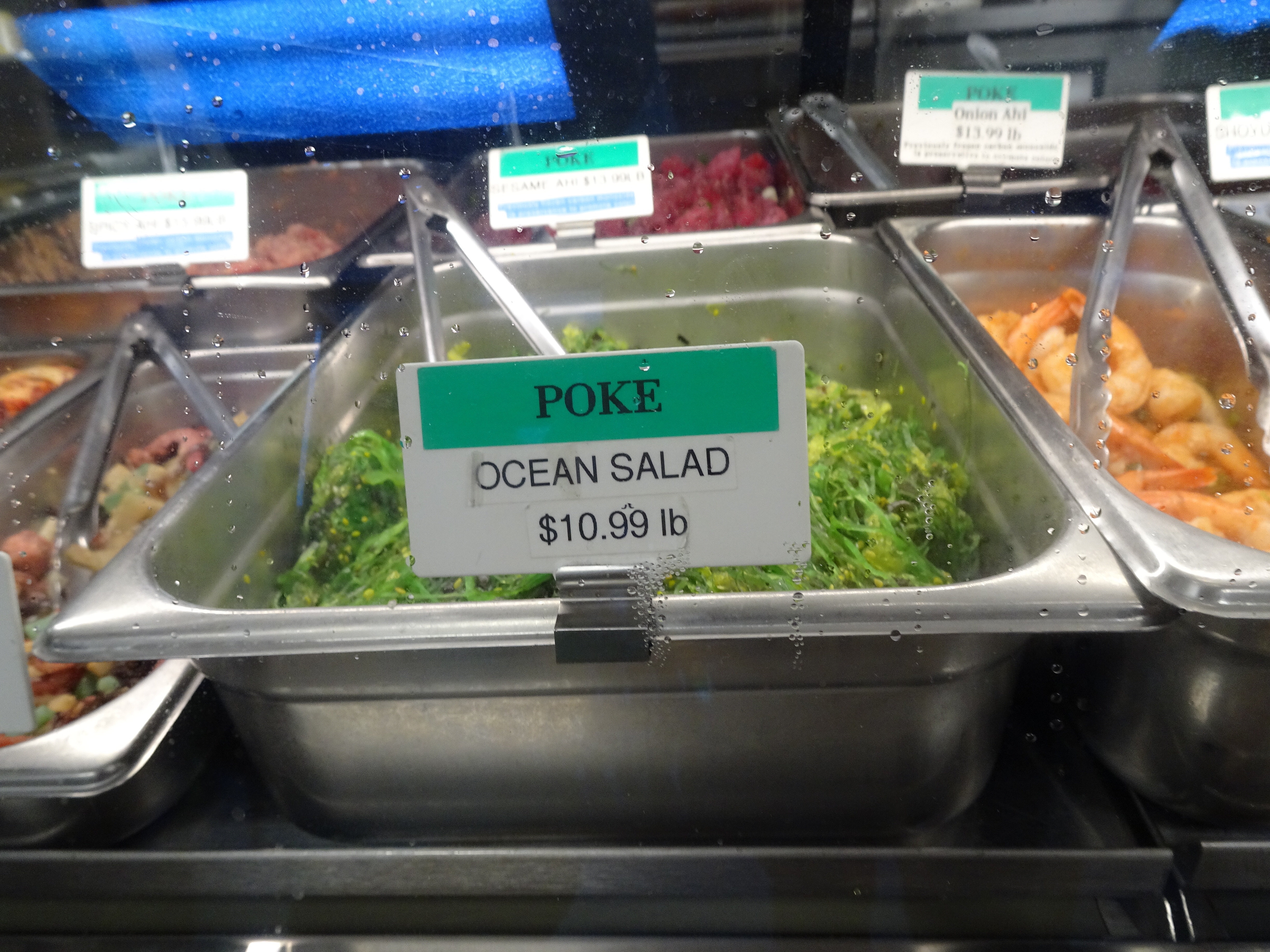
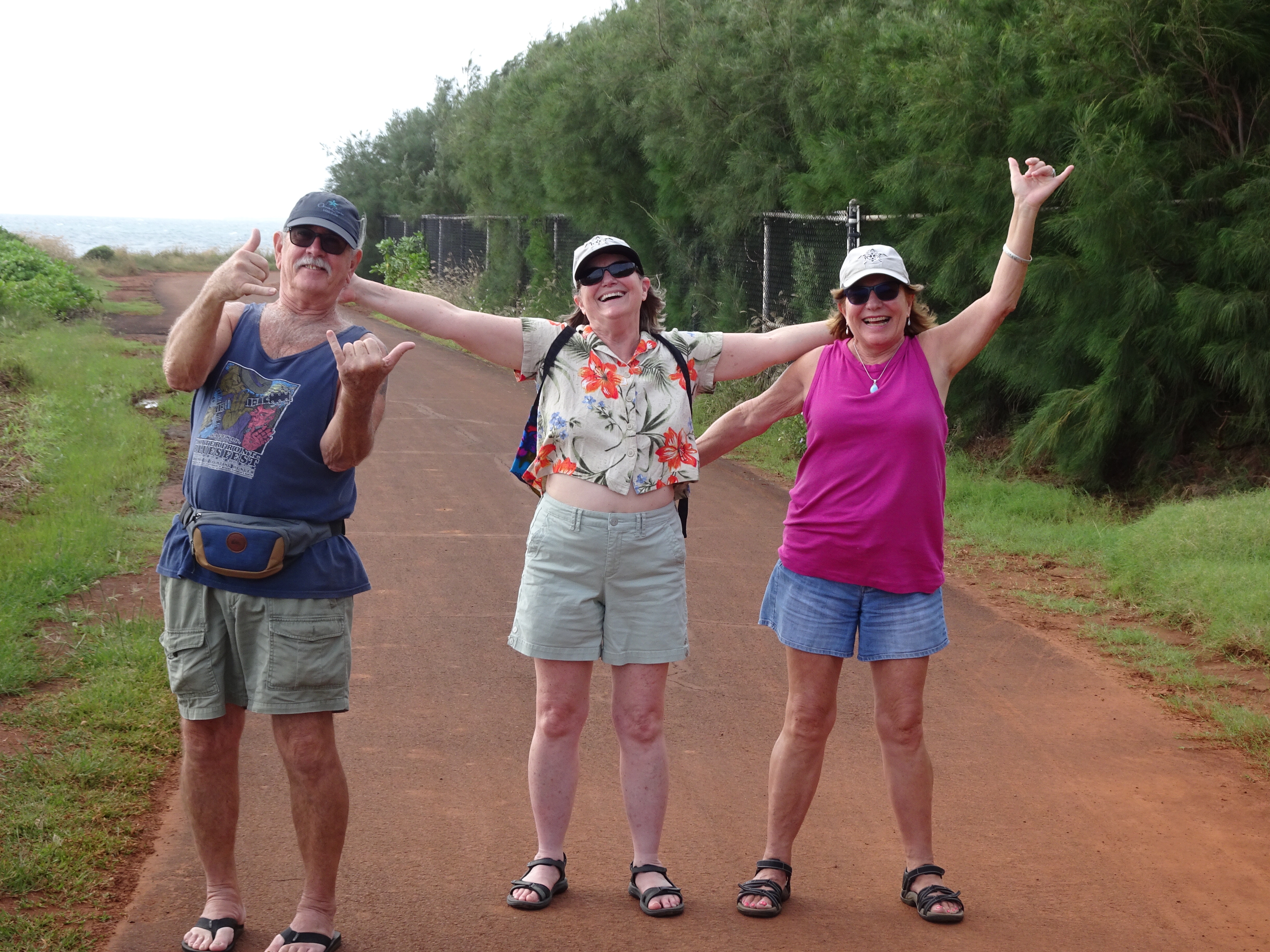
Before the party, we went for a sun and surf filled hike along the Kealia Beach Trail, then we stopped into Pono Market to get some grinds for the afternoon.
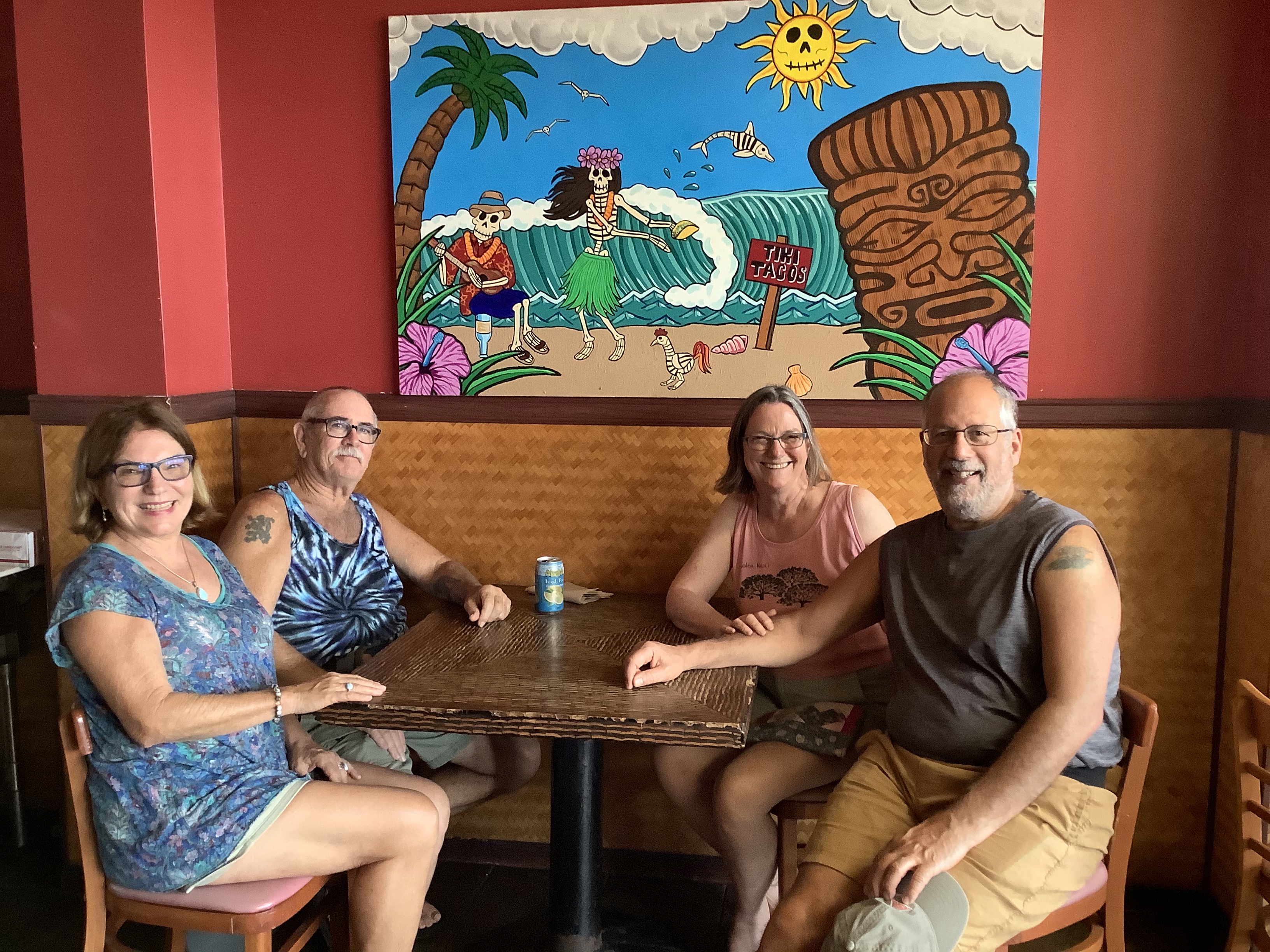
Another one of our favorite places was Tiki Tacos.
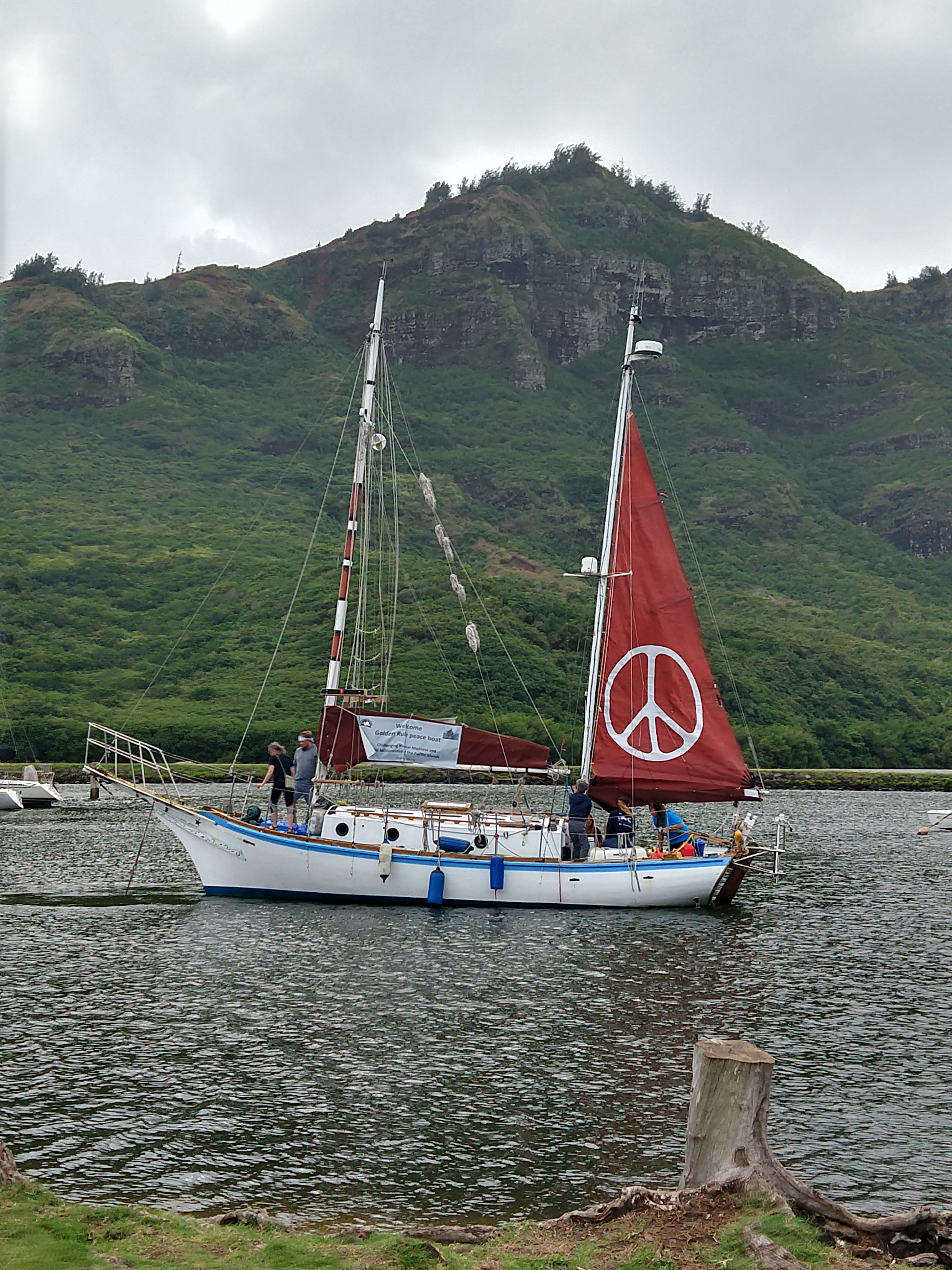
While we were there, the sailboat The Golden Rule sailed in and moored for a while. The Golden Rule was launched in 1958 as a protest against and an attempt to stop nuclear weapons testing. The US government was conducting nuclear tests and bombing in the Marshall Islands. The Golden Rule set sail for ground zero to put itself in the way of the bombing and call attention to what was happening. Although the captain was arrested and the boat impounded in Honolulu, it became an international incident, and it led to the signing of the Nuclear Non-proliferation Treaty. It also was the inspiration for Greenpeace. Now the sailboat continues with its mission, sailing through the Pacific and spreading its message. On its sail is a giant peace sign. The peace sign was invented and first used by the original ship in 1958. It is a combination of letters from the semaphore system of communication. The letters are “N” and “D.” They stand for Nuclear Disarmament.
It really is a small boat for a big ocean.
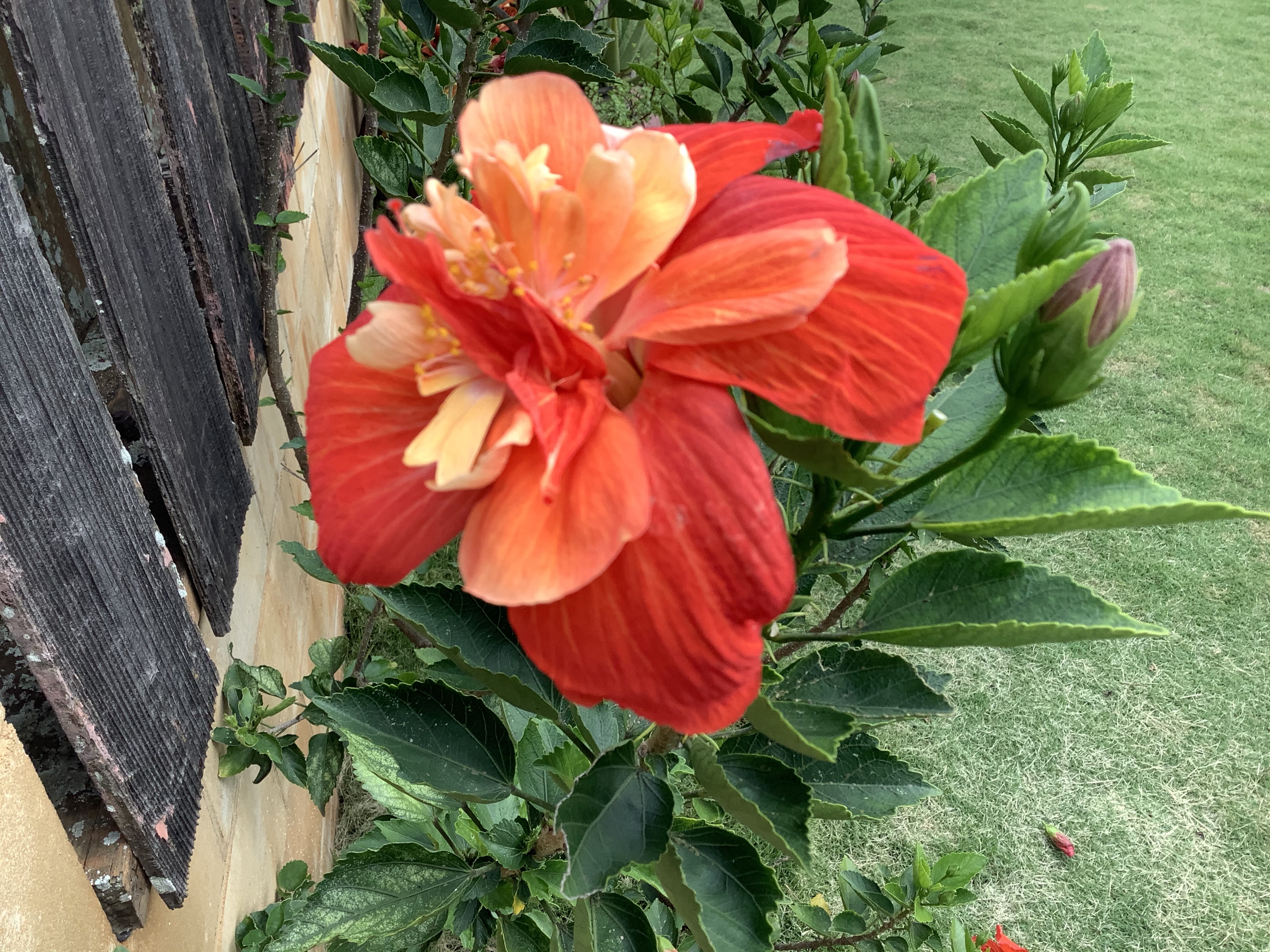
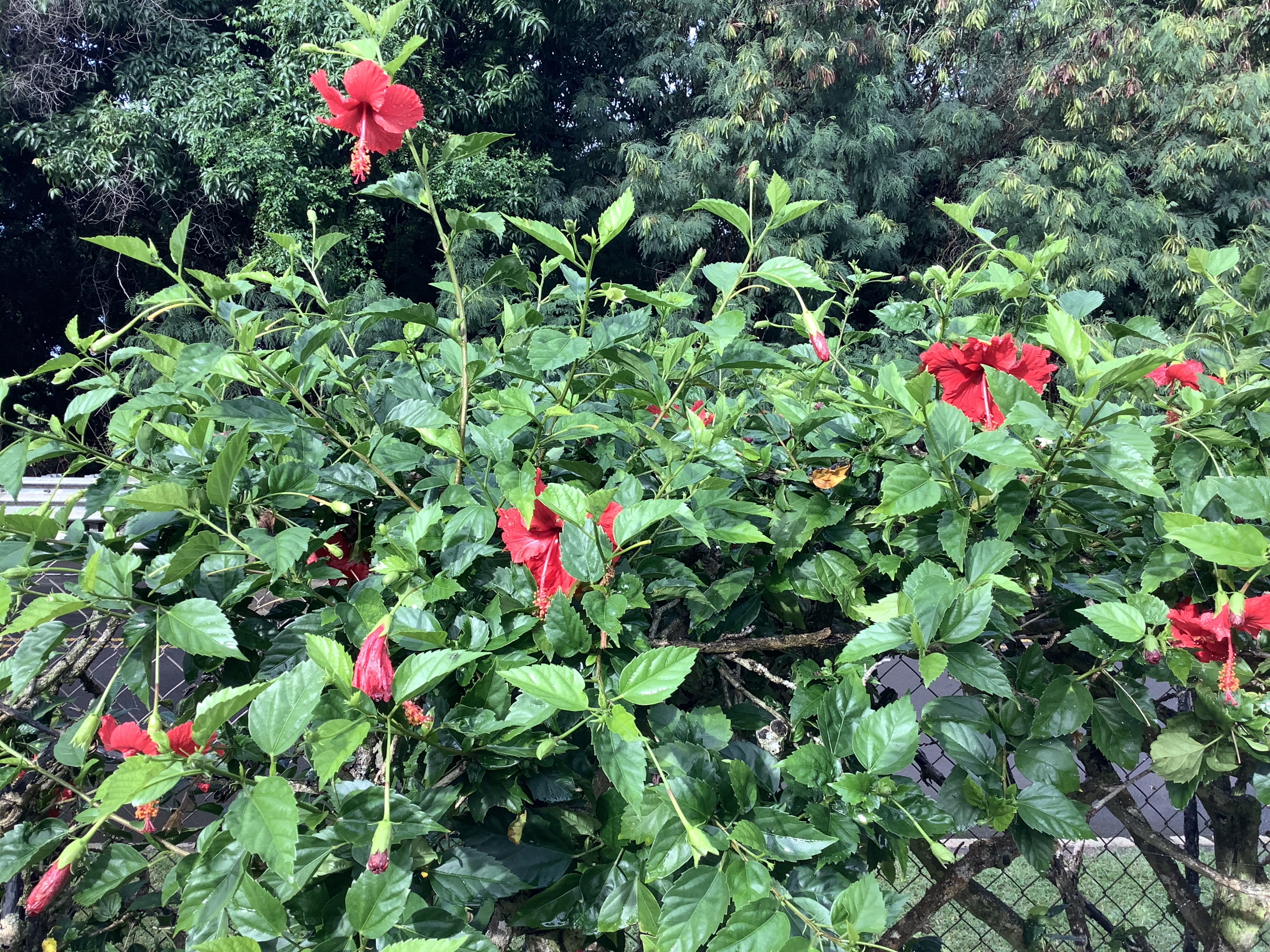
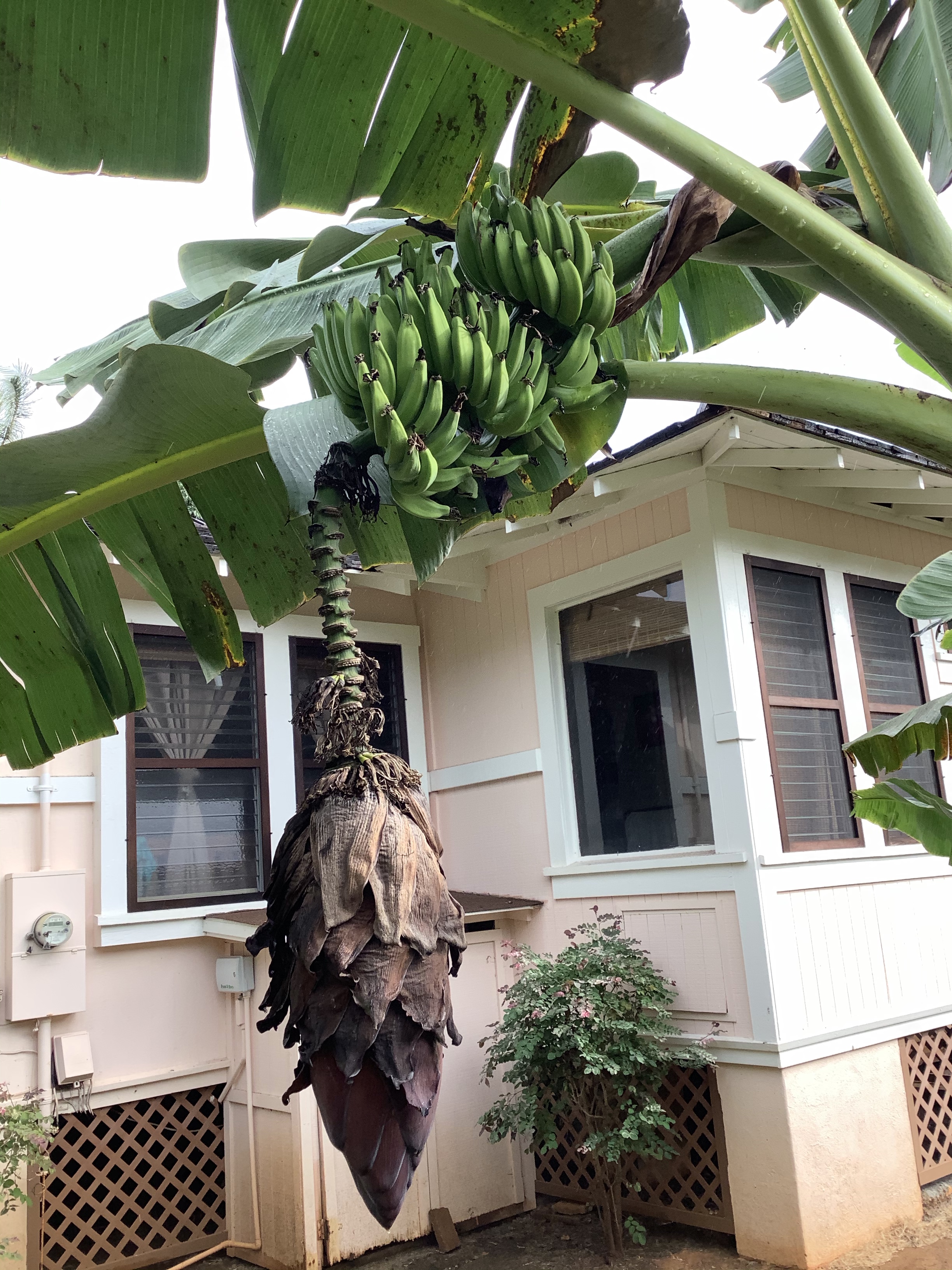
Kaua’i is The Garden Isle, and is full of papayas, bananas, coconuts, mango trees, and guava trees. My new favorite flower, though, is the hibiscus. It grows everywhere on the island, and it is in bloom every single day of the year. Red, yellow, orange, white, purple, pink. The thing about the hibiscus is that the flower blooms, and then it only stays on the plant one day, maybe two. It withers and falls off, and more are on the way. Like Kate Wolf sings, “We only have these times we’re living in . . . The days like flowers bloom and fade, and they do not come again.”
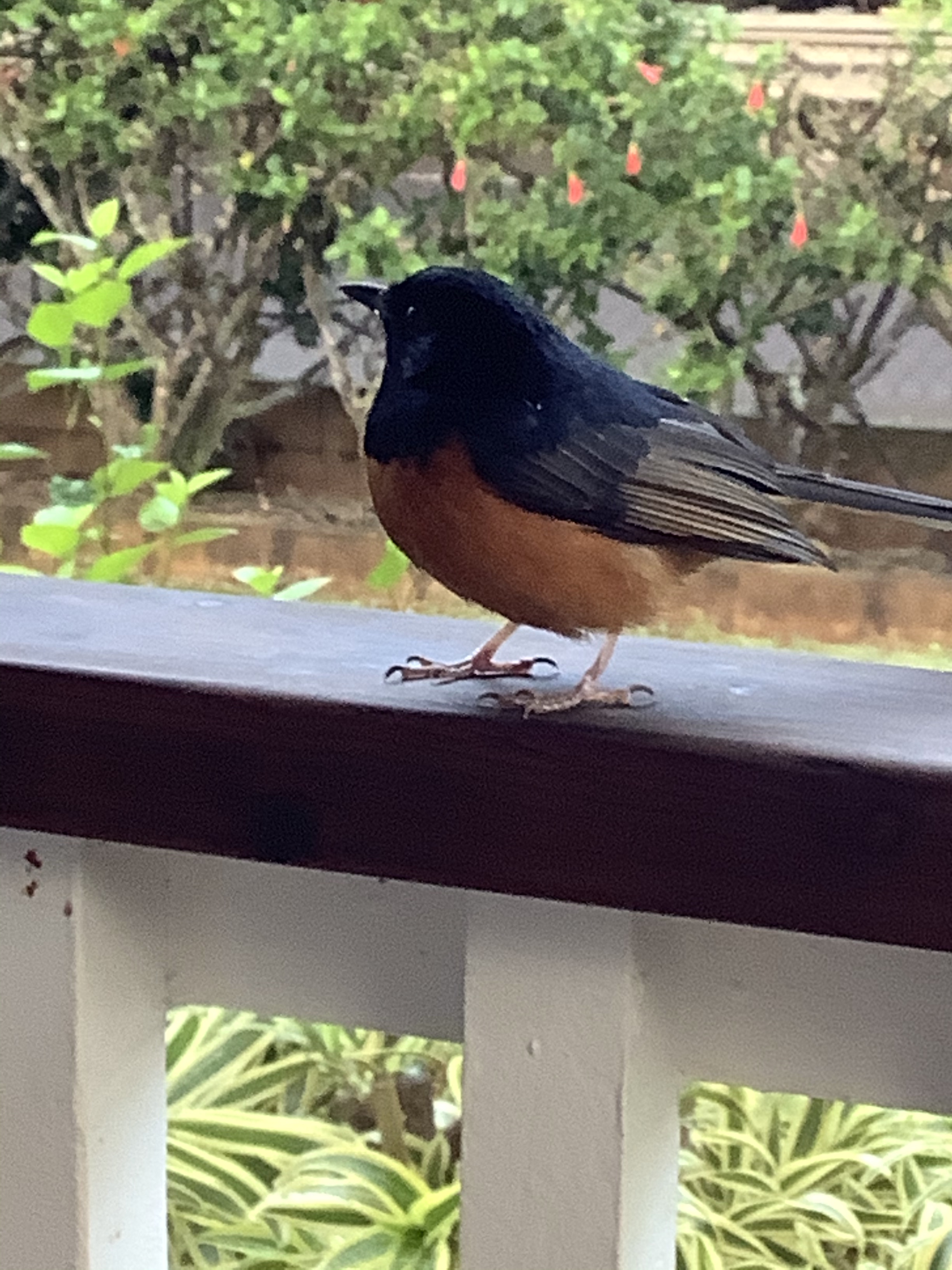
A Shama Thrush pays us a visit.
Tomorrow morning we are going to climb aboard a big jet plane and fly into the South Pacific, across the equator and the international date line, to Auckland, New Zealand. We’ll carry a bit of Kaua’i with us.







 Rolling Through Kiwiland